

Decoding the secrets of whisky maturation can separate a casual sipper from a true connoisseur. For Australian collectors, the world of cask selection and ageing is packed with complexity and hidden value, stretching far beyond the obvious age statement on the label. With climate, wood chemistry, and barrel history all shaping every drop, understanding the real science behind maturation unlocks deeper appreciation and sharper investment choices. Age statements may attract attention, but insight into maturation mechanics reveals a whisky’s authentic story.
Table of Contents
- Defining Whisky Maturation And Common Myths
- Types Of Oak Barrels And Their Influence
- How Time And Climate Shape Whisky
- Evolution Of Flavour, Aroma And Colour
- Maturation Impact On Value And Collectability
Key Takeaways
| Point | Details |
|---|---|
| Whisky Maturation is Complex | Whisky maturation involves extraction, oxidation, and interaction between spirit and wood, significantly influencing flavour and quality. |
| Age is Not the Only Indicator of Quality | The ultimate character of whisky depends on various factors such as cask selection and environmental conditions, not just age. |
| Barrel Type Influences Flavour | Different oak varieties and previous contents of barrels impart distinct characteristics, affecting the whisky’s flavour profile. |
| Climate Affects Maturation Speed | Regional climates play a crucial role in maturation, influencing the speed and resulting character of the whisky produced. |
Defining Whisky Maturation And Common Myths
Whisky maturation represents a sophisticated scientific process where spirits transform through complex chemical interactions within wooden casks. Unlike simple aging, chemical and physical transformations occur that dramatically influence the liquid’s sensory profile and quality.
At its core, maturation involves three fundamental mechanisms: extraction, oxidation, and interaction between spirit and wood. The wooden cask acts not just as a container but as an active participant in flavour development. Different wood types contribute unique characteristics - American oak might impart vanilla and caramel notes, while European oak introduces spicier, more tannic elements. Environmental factors like temperature, humidity, and cask positioning significantly impact these intricate interactions.
Numerous myths surround whisky maturation, with perhaps the most pervasive being that older automatically means better. Scientific evidence challenges this simplistic notion. Age statements provide limited insight, as maturation quality depends on numerous variables beyond chronological time. Factors such as cask selection, previous contents, wood treatment, and storage conditions play equally critical roles in determining a whisky’s ultimate character.
Pro tip: When evaluating whiskies, focus on the specific maturation details rather than relying solely on age statements.
Types Of Oak Barrels And Their Influence
Oak barrels are fundamental to whisky maturation, with different wood types profoundly influencing the spirit’s final character. Wood chemistry plays a pivotal role in determining the complexity and depth of flavour that develops during the ageing process. Primarily, distilleries use two dominant oak varieties: American white oak and European oak, each bringing distinctive characteristics to the whisky.
American white oak, typically sourced from regions like Missouri and Kentucky, is renowned for its porous structure and high vanillin content. These barrels often originate from bourbon production and are characterised by sweeter, smoother flavour profiles featuring notes of caramel, vanilla, and gentle spice. European oak, predominantly from France and Spain, tends to be denser and more tannic, contributing more robust, spicier elements with pronounced woody and dried fruit undertones.
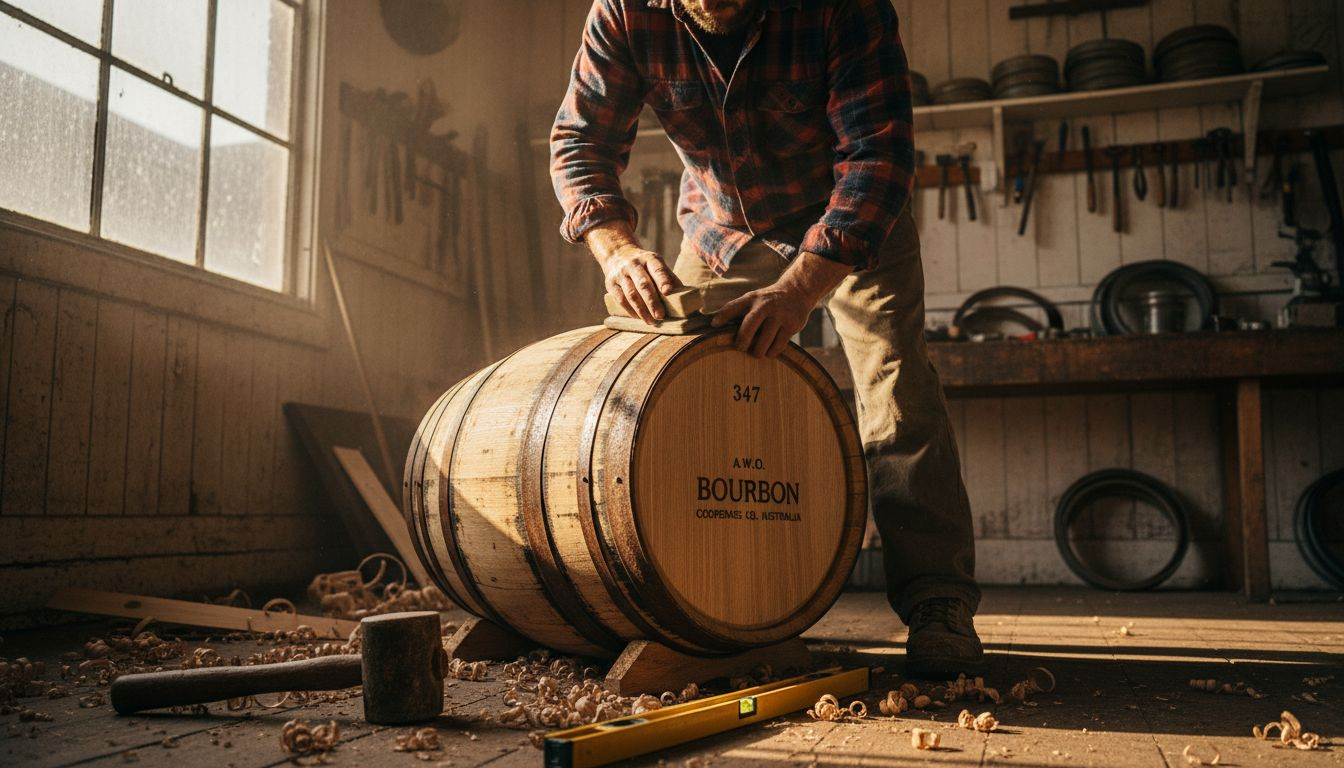
The barrel’s previous history significantly impacts whisky development. Ex-bourbon and ex-sherry casks are particularly prized, with each imparting unique flavour compounds. Ex-bourbon barrels typically introduce lighter, sweeter characteristics, while ex-sherry casks add rich, fruity complexity. Some distilleries even experiment with more unconventional wood treatments like finishing in wine or port casks, creating intricate layered flavour experiences.
Pro tip: When exploring whiskies, pay attention to the barrel type and previous contents - they reveal far more about the spirit’s character than age alone.
To better understand how oak type influences whisky, consider this comparison of barrel characteristics and their flavour impact:
| Oak Type | Origin Regions | Key Flavour Notes | Barrel Texture |
|---|---|---|---|
| American White | Missouri, Kentucky | Vanilla, caramel, spice | Porous and smooth |
| European | France, Spain | Tannin, dried fruit | Dense and robust |
| Ex-Bourbon Cask | USA (reused barrel) | Sweetness, light spice | Charred interior |
| Ex-Sherry Cask | Spain (reused barrel) | Rich fruit, nuttiness | Seasoned wood |
How Time And Climate Shape Whisky
Regional climate variations dramatically influence whisky maturation, transforming simple spirit into complex liquid gold. The interplay between time, temperature, and humidity creates a sophisticated chemical dance within wooden casks, determining a whisky’s ultimate character and depth. Distilleries worldwide understand that maturation is far more nuanced than simply letting spirits rest for years.
In warmer climates like Australia’s inland regions, whisky matures more rapidly, with accelerated chemical interactions between spirit and wood. Higher temperatures cause faster extraction of wood compounds, potentially developing flavour profiles in shorter timeframes compared to traditional Scottish warehouses. Conversely, cooler, more humid environments like Tasmania’s coastal areas promote slower, more measured maturation, allowing more delicate flavour nuances to emerge gradually.
The concept of ‘angel’s share’ becomes critically important when considering climate’s impact. In hotter environments, evaporation rates increase substantially, meaning a higher percentage of spirit is lost during maturation. This natural process not only concentrates remaining liquid but also intensifies flavour compounds. Some Australian distilleries deliberately leverage these climatic conditions, creating unique maturation strategies that distinguish their spirits from traditional European approaches.
Pro tip: When collecting whiskies, consider the distillery’s local climate as a key indicator of the spirit’s potential complexity and character.
Here’s a summary of key climate influences on whisky maturation in different Australian regions:
| Region | Typical Climate | Maturation Speed | Resulting Whisky Character |
|---|---|---|---|
| Inland Australia | Hot and dry | Rapid | Intensely flavoured, dark |
| Tasmanian Coast | Cool and humid | Slow | Delicate, nuanced |
| South Australia | Variable (warm/cool) | Moderate | Balanced, complex |
Evolution Of Flavour, Aroma And Colour
Whisky maturation involves complex chemical transformations that metamorphose a raw spirit into a nuanced, layered beverage. The journey from clear liquid to amber nectar represents a sophisticated interplay of scientific processes, where wood, time, and environmental conditions collaborate to create liquid artistry. Each cask becomes a unique laboratory, generating flavour profiles as distinctive as a fingerprint.
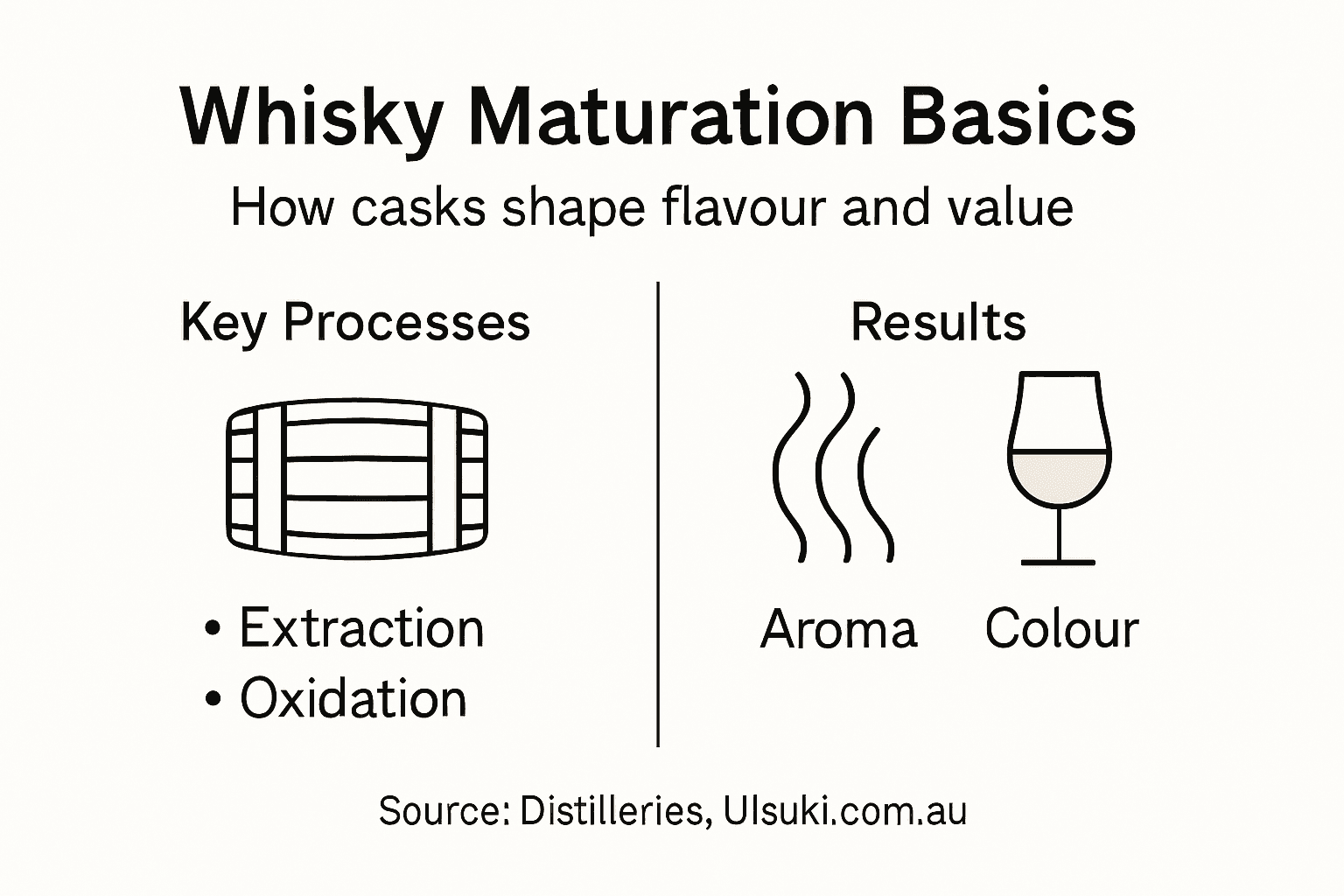
The chemical interactions during maturation are breathtakingly intricate. Compounds like vanillin, guaiacol, and tannins migrate from oak into the spirit, introducing layers of sweetness, spiciness, and subtle smokiness. Simultaneously, subtractive reactions occur, where harsh chemical elements bond and neutralise, smoothing the spirit’s raw edges. This delicate dance transforms aggressive alcohol into a refined, complex beverage with remarkable depth and character.
Colour evolution represents another fascinating aspect of maturation. The initial clear spirit gradually develops rich amber to deep mahogany hues through direct interaction with wooden casks. Factors like barrel charring, previous contents, and wood type dramatically influence the final colour spectrum. Australian distilleries, with their unique climatic conditions, often produce whiskies with more intense colour development due to accelerated chemical interactions and higher evaporation rates.
Pro tip: Examine a whisky’s colour closely - its depth and nuance can reveal fascinating stories about its maturation journey.
Maturation Impact On Value And Collectability
Whisky maturation fundamentally drives market value through a complex interplay of sensory development, rarity, and collector perception. The transformation of spirit into a nuanced, sought-after liquid represents more than simple aging - it’s an intricate dance of craftsmanship, science, and market dynamics that determines a whisky’s ultimate investment potential.
Collectors and investors understand that not all maturation is equal. Limited editions matured in exceptional casks - such as rare wine or port barrels - can command extraordinary premiums. Australian distilleries have become particularly adept at creating unique maturation narratives, leveraging distinctive regional climates to produce whiskies with compelling provenance. Rare cask finishes, unusual wood treatments, and innovative aging techniques can dramatically elevate a whisky’s collectible status and market value.
The investment landscape for mature whiskies is nuanced and dynamic. While extended maturation can enhance complexity, there’s a critical point of diminishing returns where additional years might actually detract from the spirit’s balance. Sophisticated collectors seek whiskies that demonstrate a perfect harmony of time, wood interaction, and flavour development. Factors like provenance, distillery reputation, and production volume play equally significant roles in determining a whisky’s long-term value trajectory.
Pro tip: Research a distillery’s maturation philosophy and track record before considering whisky as an investment - the story behind the bottle can be as valuable as the liquid itself.
Discover the Art and Science of Whisky Maturation with Uisuki
Understanding whisky maturation means appreciating how wood type, climate, and time shape every drop into a rich experience. If you’ve ever wondered how barrel choice influences flavour or why age alone does not guarantee quality, exploring our carefully curated Scotch whisky collections will deepen your knowledge and delight your palate. For example, the intricate profiles developed by expert craftsmanship at distilleries like The Balvenie showcase how maturation creates extraordinary complexity.

Dive into the world of matured whiskies today by browsing our The Balvenie – Uisuki.com.au range or exploring diverse options from Scotch Whisky (all) - Glenglassaugh – Uisuki.com.au. Unlock exclusive insights and rare bottlings at Uisuki.com.au right now. Elevate your collection and experience the magic behind every cask—start your journey with expertly selected whiskies crafted for true enthusiasts.
Frequently Asked Questions
What is whisky maturation?
Whisky maturation is a scientific process where spirits undergo chemical transformations in wooden casks, influencing their flavour, aroma, and overall quality.
How does the type of oak barrel affect whisky flavour?
Different oak types, such as American white oak and European oak, contribute unique characteristics to whisky. American oak typically adds vanilla and caramel notes, while European oak introduces spicier, tannic elements.
What factors influence the maturation quality of whisky?
Maturation quality depends on various elements beyond age, including cask selection, previous contents, wood treatment, and environmental conditions like temperature and humidity.
How does climate impact whisky maturation?
Regional climate variations greatly affect whisky maturation by accelerating or slowing chemical interactions in the cask. For instance, warmer climates may lead to faster maturation and intensified flavour development, while cooler areas allow for more delicate nuances.