

TL;DR:
- Malt whiskey is made entirely from malted barley and aged in used oak casks, while bourbon contains at least 51% corn and ages in new charred American oak barrels. These differences influence their flavor profiles, with bourbon being sweeter and malt whiskey offering a drier, layered taste. Price-wise, bourbon is generally more accessible, making it a good starting point for beginners to explore whisky.
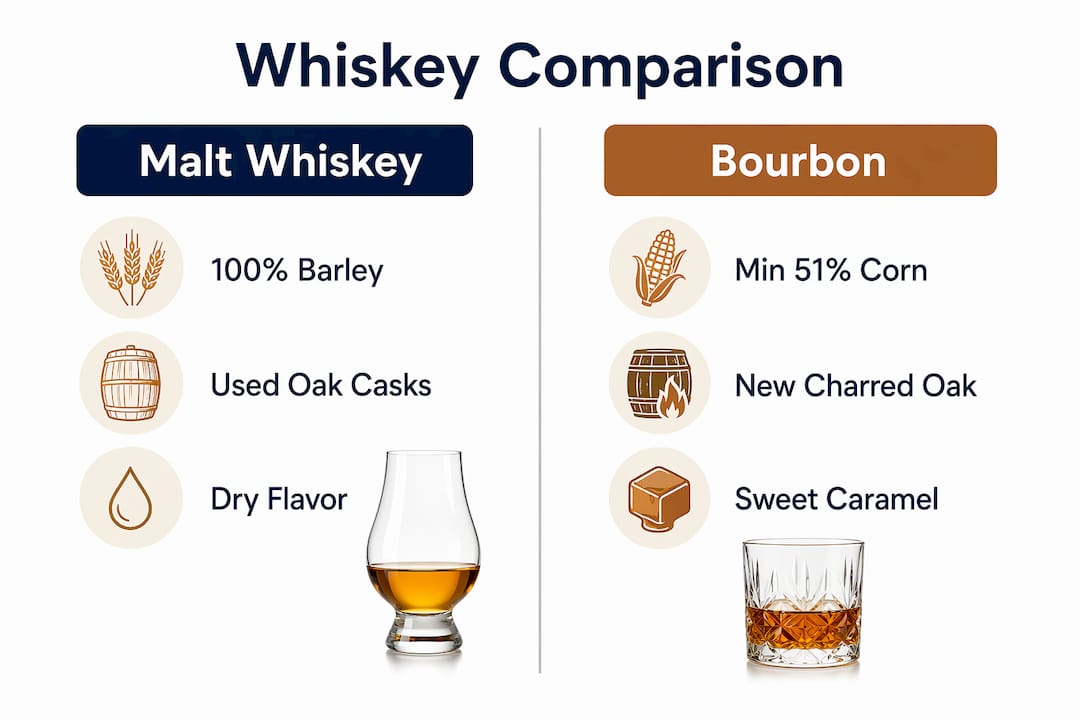
Malt whiskey is defined as whisky made predominantly from malted barley, while bourbon is an American whiskey produced from a mash containing at least 51% corn and aged in new charred American oak barrels. These two categories sit at opposite ends of the whisky spectrum, shaped by different grains, different casks, and different legal frameworks. Understanding the malt whiskey vs bourbon divide is the fastest way to build a confident whisky palate and make smarter buying decisions. The differences run deeper than geography.
What are the core production differences between malt whiskey and bourbon?
Grain composition is the defining split between these two styles. Malt whiskey uses 100% malted barley, while bourbon requires a minimum of 51% corn alongside other grains such as rye, wheat, or malted barley. That corn content is not a minor detail. It drives bourbon’s characteristic sweetness from the very first stage of production.
Cask selection separates them further. Bourbon ages exclusively in new, charred American oak barrels, which means every drop of spirit interacts with fresh wood. Malt whiskey, by contrast, typically ages in used oak casks, most commonly ex-bourbon or ex-sherry barrels. Used casks provide gentler flavour extraction, allowing the barley character to stay prominent rather than being overwhelmed by wood.
Yeast plays a larger role than most drinkers realise. Proprietary yeast strains generate unique esters that shift the final flavour from fruity to floral to spicy, even when the grain bill stays the same. Two distilleries using identical corn percentages can produce bourbons that taste nothing alike, purely because of yeast selection.
Legal requirements also differ on distillation proof and ageing. Bourbon must be distilled to no more than 160 proof and entered into the barrel at no more than 125 proof. There is no minimum age requirement for standard bourbon, though straight bourbon must age for at least two years. Scottish single malt must age for a minimum of three years in oak casks in Scotland.
| Feature | Malt whiskey | Bourbon |
|---|---|---|
| Primary grain | 100% malted barley | Minimum 51% corn |
| Cask type | Used oak (ex-bourbon, ex-sherry) | New charred American oak |
| Minimum age | 3 years (Scotch) | 2 years (straight bourbon) |
| Distillation limit | Varies by region | 160 proof maximum |
| Flavour base | Biscuit, fruit, peat | Vanilla, caramel, oak |
Pro Tip: When reading a bottle label, check whether it says “single malt” or “straight bourbon.” These two terms carry legal weight and tell you exactly what production standards were followed.
How do flavour profiles differ between malt whiskey and bourbon?
Bourbon’s flavour is dominated by sweetness, driven by corn content and the caramelisation effect of new charred oak. Expect vanilla, caramel, brown sugar, and baking spice as the core notes. The new barrel contact also adds a distinct toasted oak character that gives bourbon its rich, dessert-like quality.
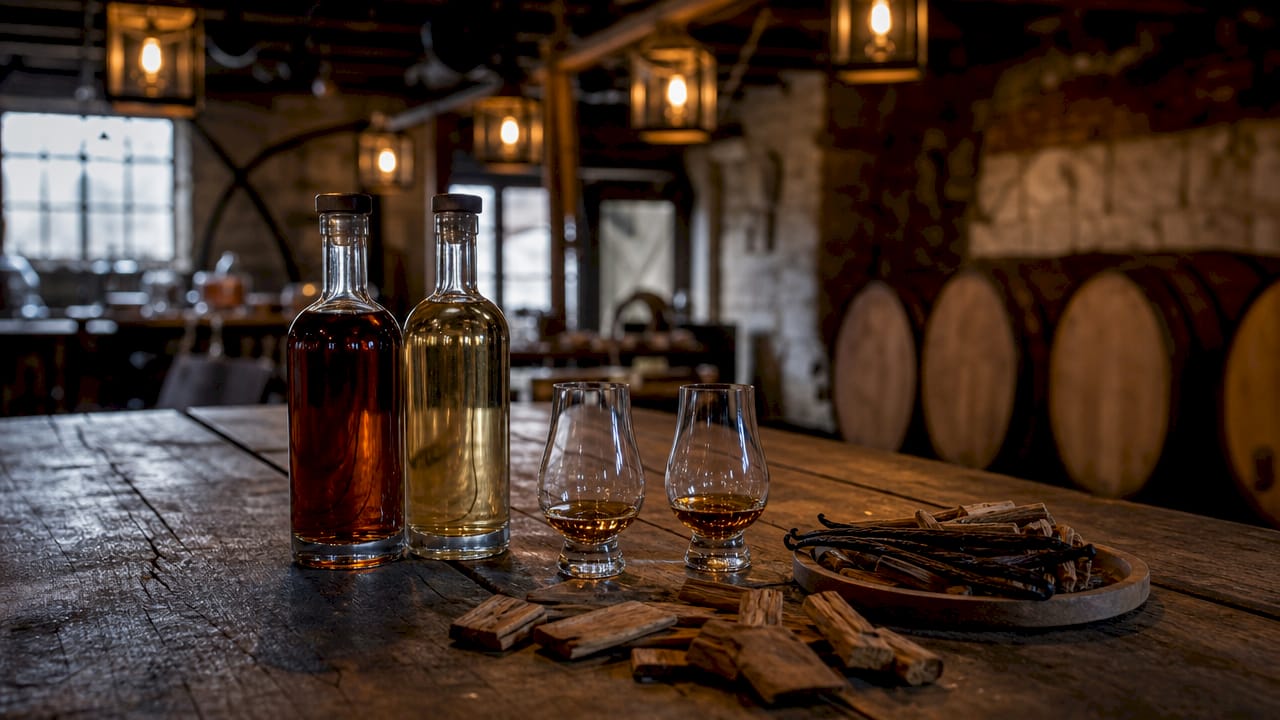
Malt whiskey delivers a drier, more layered experience. Characteristic malt flavours include biscuit, bread dough, and orchard fruit, often with a lighter body than bourbon. Peated expressions from distilleries like Laphroaig or Ardbeg add smoke and iodine to the mix, which sits at the far end of the flavour spectrum from bourbon’s sweetness.
Texture is another clear point of difference. Malt whiskey carries an oilier, richer mouthfeel due to barley proteins, while bourbon tends toward a syrupy viscosity driven by corn sugars and charred oak compounds. Neither is superior. They simply suit different moments and different moods.
Bourbon also varies considerably within its own category. Wheated bourbons like Maker’s Mark use wheat instead of rye as the secondary grain, producing a softer, gentler sweetness. High-rye bourbons like Four Roses Single Barrel push spice and pepper to the front. Understanding this variation helps you choose the right bourbon for your palate rather than treating the category as a single flavour.
Key bourbon flavour notes:
- Vanilla and caramel from new oak contact
- Brown sugar and honey from corn fermentation
- Baking spice, cinnamon, and clove from rye content
- Toasted oak and leather in aged expressions
Key malt whiskey flavour notes:
- Biscuit, cereal, and bread dough from malted barley
- Orchard fruit such as apple and pear from ester development
- Dried fruit and spice from sherry cask ageing
- Smoke, peat, and coastal salt in heavily peated expressions
Pro Tip: Ageing time matters enormously for both styles. Younger bourbons feel raw and grainy, while mature expressions balance grain sweetness with deep oak richness. Give age statements serious attention when selecting a bottle.
What does pricing look like for malt whiskey vs bourbon?
Bourbon offers a more accessible entry point for most drinkers. Quality starter bourbons are priced from around £22–28, while comparable single malt whiskies start at £38–45. That price gap reflects the cost of longer minimum ageing requirements for Scotch, the premium on imported spirits, and the prestige attached to established distilleries like Glenfarclas or Springbank.
The bourbon market also benefits from high domestic production volume in the United States, which keeps prices competitive at the entry level. Bottles like Buffalo Trace and Wild Turkey 101 deliver genuine quality without a steep price tag. Single malt Scotch, Japanese whisky from distilleries like Nikka or Yamazaki, and Australian expressions from Lark or Starward tend to command higher prices due to smaller production runs and import costs.
| Category | Entry-level price range | Mid-range price range |
|---|---|---|
| Bourbon | £22–28 | £40–80 |
| Single malt Scotch | £38–45 | £60–120 |
| Japanese single malt | £50–80 | £100–200+ |
| Australian single malt | £45–70 | £80–150 |
Regional availability also shapes the decision. In Australia, American bourbon is widely stocked in bottle shops and online, but premium single malts and Japanese expressions can be harder to source. Specialist retailers like Uisuki stock rare and allocated bottles that standard retail channels rarely carry.
Pro Tip: If you are new to whisky, start with a mid-shelf bourbon before moving to single malt. The sweetness and lower price make it a lower-risk first purchase, and the flavour contrast with malt whiskey becomes much clearer once you have a bourbon reference point.
How can beginners taste and appreciate the differences?
Beginners often find bourbon’s alcohol heat the biggest hurdle, but that sensation fades quickly with practice. Mid-proof, sweeter bourbons are the right starting point. They let you focus on flavour rather than fighting the burn.
A side-by-side tasting is the single most effective way to understand the single malt whiskey vs bourbon divide. Pour a small measure of each, nose them separately, and take your first sip without water. Then add a few drops of water to each glass and nose again. Water opens up both spirits considerably and reveals flavours that alcohol suppresses.
Malt whiskey rewards patient exploration, while bourbon tends to be immediately hospitable. That contrast is useful for beginners. Bourbon tells you what it is straight away. Malt whiskey asks you to slow down and pay attention.
Step-by-step tasting guide:
- Pour 30ml of each whisky into separate glasses
- Nose each glass for 30 seconds before tasting
- Take a small sip and let it sit on your palate for five seconds
- Note sweetness, spice, fruit, and texture separately
- Add a few drops of water and repeat the process
- Compare the two side by side on sweetness and mouthfeel
- Avoid eating strongly flavoured food for at least 30 minutes before tasting
Common mistakes to avoid:
- Drinking too quickly and missing the mid-palate flavours
- Adding too much water, which strips the spirit of character
- Starting with heavily peated malts before your palate is ready
- Judging a whisky on the first sip alone
For a deeper look at how malt whisky is produced and what makes each style distinctive, building that background knowledge sharpens your tasting instincts considerably.
Key takeaways
Malt whiskey and bourbon differ fundamentally in grain composition, cask type, and flavour profile, making a side-by-side tasting the clearest way to understand both styles.
| Point | Details |
|---|---|
| Grain defines the base | Malt whiskey uses 100% malted barley; bourbon requires at least 51% corn. |
| Cask type shapes flavour | Bourbon’s new charred oak drives sweetness; malt’s used casks preserve barley character. |
| Flavour profiles contrast sharply | Bourbon delivers vanilla and caramel; malt whiskey offers biscuit, fruit, and occasional smoke. |
| Bourbon is more affordable | Entry-level bourbon starts around £22–28 versus £38–45 for comparable single malts. |
| Side-by-side tasting works best | Comparing both styles in one session reveals texture, sweetness, and complexity differences clearly. |
Brendan’s take on choosing between the two
Bourbon is the friendlier spirit. I have watched people who claimed they did not like whisky change their minds after a glass of Buffalo Trace or Maker’s Mark. The sweetness disarms them. It does not demand anything from the drinker, and that is genuinely valuable when you are trying to build a whisky habit.
Single malt is a different conversation. The first time I tried a well-aged Springbank or a sherried Glenfarclas, I understood why collectors obsess over these bottles. The complexity is not just variety for its own sake. It reflects the grain, the cask, the climate, and the distillery’s specific choices across years of maturation. That is a lot of information in a single glass.
My honest advice: do not skip bourbon on the way to malt. The contrast teaches you more than reading about either style ever will. Once you understand what new oak does to a spirit, you immediately grasp why used casks produce something so different. And once you have tasted a wheated bourbon alongside a sherry-finished Speyside malt, the whisky types comparison stops being abstract and becomes something you can actually feel on your palate.
The drinkers who get the most out of whisky are the ones who stay curious across both categories. Buy a bottle of each. Taste them together. The differences will do the teaching.
— Brendan
Whisky worth exploring at Uisuki
Uisuki stocks a curated range of both malt whisky and bourbon-influenced expressions, sourced from Scotland, Japan, the USA, and Australia.

One standout for drinkers who want to experience both worlds in a single bottle is the Hobart Whisky Bourbon Matured Rum Finished Single Malt, which combines bourbon cask maturation with a rum finish on an Australian single malt base. It is a genuine bridge between styles and a smart choice for anyone curious about how cask influence shapes flavour. For drinkers ready to explore further, Uisuki also carries the Ichiro’s Malt and Grain Limited Edition World Blended Whisky, a rare Japanese expression that demonstrates how malt and grain whiskies interact at the highest level. If you need guidance selecting your first bottle, Uisuki’s team is available to help you find the right fit.
FAQ
What is the main difference between malt whiskey and bourbon?
Malt whiskey is made from 100% malted barley and aged in used oak casks, while bourbon contains at least 51% corn and ages in new charred American oak barrels. These two differences in grain and cask produce distinctly different flavour profiles.
Is bourbon sweeter than single malt whiskey?
Bourbon is generally sweeter, with vanilla, caramel, and brown sugar notes driven by corn content and new oak contact. Single malt whiskey tends to be drier, with biscuit, fruit, and sometimes smoky or peaty characteristics.
Which is better for beginners, malt whiskey or bourbon?
Bourbon is the more approachable starting point due to its sweetness, lower entry price, and wide availability. Mid-proof expressions like Buffalo Trace or Maker’s Mark are commonly recommended for new drinkers.
Does ageing affect bourbon and malt whiskey differently?
Ageing affects both styles significantly but in different ways. Bourbon gains sweetness and oak richness from new barrel contact, while malt whiskey develops complexity more gradually through used casks that allow the barley character to remain central.
Why does malt whiskey feel oilier than bourbon?
Malt whiskey’s oilier mouthfeel comes from barley proteins, while bourbon’s syrupy texture is driven by corn sugars and compounds extracted from heavily charred oak. Both textures are intentional results of their respective production methods.