

Deciphering whisky labels can feel like unlocking a secret code, especially for collectors in Australia where regulations add another layer of complexity. Every detail, from the country of origin to the type of bottling, shapes not only what is poured into the glass but also the spirit’s story and value. By exploring the difference between informative label features and clever marketing, collectors can make smarter choices, avoid common misconceptions, and build a collection with true authenticity and character.
Table of Contents
- Defining Whisky Label Details And Misconceptions
- Types Of Whisky Labels And Distinctions
- Breaking Down Age, Abv, Region, And Origin
- Legal Requirements For Whisky Labelling In Australia
- Risks, Pitfalls, And Common Mistakes Decoding Labels
- How Label Details Impact Value, Authenticity, And Rarity
Key Takeaways
| Point | Details |
|---|---|
| Understanding Label Components | Whisky labels convey essential information, including brand, origin, and production details, which are critical for collectors. |
| Misconceptions About Age Statements | An age statement does not guarantee superior quality; younger whiskies can sometimes be exceptional. |
| Legal Labelling Compliance | Australian regulations require clear labelling of ABV, origin, and health warnings to ensure consumer protection. |
| Value and Authenticity Indicators | Specific label features like distillery name and edition size significantly impact a whisky’s collectibility and value. |
Defining whisky label details and misconceptions
Whisky labels are complex communication tools that provide far more than simple decoration. Understanding whisky label components requires a nuanced approach that goes beyond surface-level information. Each label serves as a detailed passport for the spirit, revealing critical details about its origin, production, and unique characteristics.
The fundamental elements of a whisky label typically include the brand name, product name, country of origin, alcohol percentage, and regional specification. However, collectors must understand that these details are not always straightforward. A brand name does not necessarily indicate the distillery where the whisky was produced, and marketing can sometimes obscure the true provenance of the spirit. Experienced collectors learn to decode these subtle distinctions, recognising that the information presented is both informative and strategically crafted.
Misconceptions about whisky labels are common among both novice and experienced collectors. Many assume that an age statement automatically guarantees superior quality, which is not always true. Some distilleries produce exceptional young whiskies, while older expressions might not always deliver the expected depth of flavour. Similarly, regional designations provide insight into production styles but do not definitively predict the whisky’s taste profile. The complexity lies in understanding these nuanced details as part of a broader narrative about the spirit’s creation and character.
Pro tip: Always examine the entire label carefully, looking beyond the prominent marketing elements to understand the whisky’s true composition and potential value for your collection.
Types of whisky labels and distinctions
Whisky labels represent a sophisticated system of classification that goes far beyond simple product identification. Rare whisky types showcase remarkable diversity in labelling approaches, each conveying unique information about the spirit’s heritage and production. These labels serve as intricate storytelling mechanisms, providing collectors with critical insights into the whisky’s origin, craftsmanship, and potential value.
The primary categories of whisky labels can be broadly classified into standard production labels, limited edition releases, single cask expressions, and commemorative editions. Standard labels typically include fundamental details such as distillery name, age statement, alcohol percentage, and region of origin. Limited edition labels often feature more elaborate design elements, with specific numbering, special artwork, or unique packaging that signals exclusivity. Single cask labels are particularly prized among collectors, as they represent a truly unique expression from an individual barrel, often including precise details about the specific cask’s characteristics.
Collectors must develop a discerning eye for distinguishing between marketing-driven label design and genuinely informative documentation. Some labels might emphasise aesthetic appeal over substantive information, while others provide granular details about the whisky’s production process, including specific barrel types, maturation conditions, and distinctive flavour profiles. Understanding these nuanced distinctions requires not just visual analysis but also comprehensive knowledge of whisky production techniques and regional variations.
Pro tip: Invest in a magnifying glass to examine label details closely, as minute print can often reveal the most fascinating insights about a whisky’s true provenance and potential collector’s value.
Here is a comparison of key whisky label types and what they indicate to collectors:
| Label Type | Main Characteristics | Impact on Value |
|---|---|---|
| Standard Production | Common design, core details included | Typically modest value |
| Limited Edition | Numbered, special artwork, unique pack | Often higher value |
| Single Cask | Specific cask info, one-off bottling | Highly collectable |
| Commemorative | Themed, marks an event or anniversary | Variable, depends on theme |
Breaking down age, ABV, region, and origin
Whisky labels are intricate documents that provide critical insights into the spirit’s composition and character. Key label features reveal nuanced details that distinguish one whisky from another, offering collectors a comprehensive understanding of what makes each bottle unique. These elements serve as a sophisticated roadmap to the whisky’s identity, encapsulating its production history, strength, and regional heritage.
The age statement represents the minimum number of years the youngest whisky in the blend has been matured, which significantly impacts flavour complexity and collector value. Alcohol by Volume (ABV) indicates the spirit’s strength, with higher percentages typically suggesting more intense flavour profiles and potentially greater rarity. Regional designations like Islay, Speyside, or Highland provide immediate context about traditional production methods, flavour expectations, and historical significance. Each region carries its own distinctive character: Islay whiskies are known for their peaty, maritime qualities, while Speyside expressions often showcase more delicate, fruity characteristics.
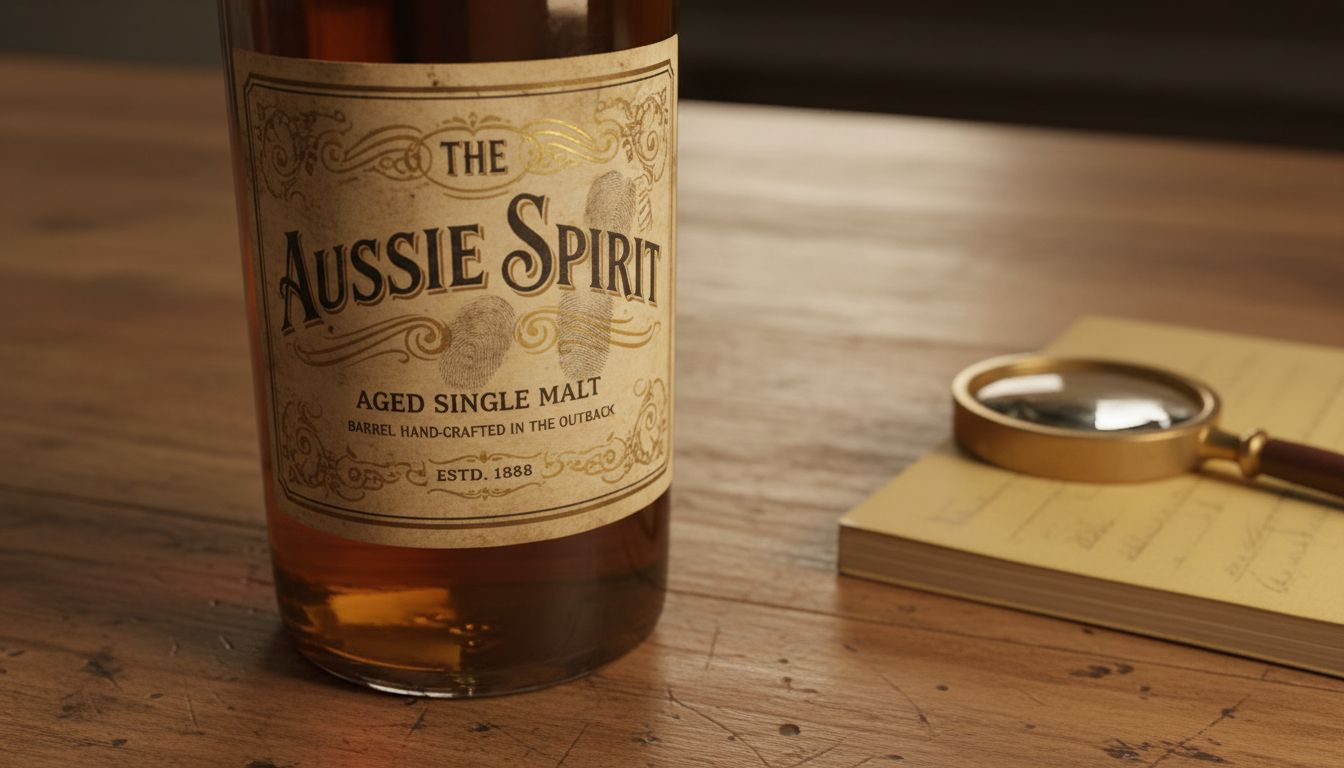
Understanding origin goes beyond simple geographical notation. It encompasses the distillery’s reputation, production techniques, and cultural heritage. Collectors pay close attention to nuanced details such as non-chill filtered status, which suggests a more traditional production approach, and natural colour indicators that signal minimal intervention during the whisky’s preparation. These subtle markers can dramatically influence a whisky’s collectibility and perceived authenticity, transforming a simple label into a rich narrative of craftsmanship and tradition.
Pro tip: Develop a systematic approach to reading labels by creating a personal reference guide that helps you quickly decode and compare the intricate details of different whisky expressions.
This table offers a quick reference for essential whisky label features and their significance:
| Label Feature | What It Reveals | Why It Matters |
|---|---|---|
| Age Statement | Youngest whisky in the bottle | Impacts taste and collectibility |
| ABV Percentage | Alcohol strength | Indicates flavour intensity |
| Region | Production tradition and style | Suggests flavour expectations |
| Non-Chill Filtered | Minimal filtration used | Perceived authenticity |
| Natural Colour | No artificial colouring added | Signals traditional approach |
Legal requirements for whisky labelling in Australia
Whisky labelling in Australia represents a complex regulatory landscape designed to protect consumers and ensure transparency. Food Standards Code regulations provide a comprehensive framework that dictates precise requirements for alcoholic beverage packaging. These regulations go far beyond simple aesthetic considerations, establishing critical guidelines that every whisky producer must carefully navigate.
The mandatory labelling requirements are extensive and specific. Producers must clearly display the alcohol by volume (ABV) percentage, with beverages over 1.15% ABV required to include a standard pregnancy warning label. Additional critical elements include declaring standard drink quantities, ensuring legible font sizes, and avoiding any misleading health claims. Alcohol labelling regulations also mandate comprehensive origin information, allergen declarations, and precise product naming conventions that provide consumers with transparent and accurate information about their purchase.
Beyond basic information requirements, the regulations address nuanced aspects of whisky presentation. Labels must not only be truthful but also prevent potential consumer misunderstandings. This includes restrictions on therapeutic claims, ensuring energy content information is accurate, and maintaining clear typography that allows consumers to easily read and understand the product details. Enforcement mechanisms include potential penalties for non-compliance, underscoring the Australian government’s commitment to maintaining high standards in alcoholic beverage labelling.
Pro tip: Always cross-reference whisky labels with official regulatory guidelines to ensure you understand the full context of the information presented.
Risks, pitfalls, and common mistakes decoding labels
Decoding whisky labels requires a sophisticated understanding that goes beyond surface-level marketing claims. Whisky label interpretation demands critical analysis and an awareness of potential misleading terminology. Collectors and enthusiasts must develop a nuanced approach to navigate the complex landscape of label information, recognising that not all claims are created equal.
Several significant risks emerge when interpreting whisky labels. Marketing terms like ‘small batch’, ‘rare’, or ‘limited edition’ can be deliberately ambiguous, designed to create an illusion of exclusivity without substantive meaning. Many collectors mistakenly equate age statements with guaranteed quality, overlooking the fact that younger whiskies can be exceptional, while older expressions might not necessarily deliver superior taste. The distinctions between malt and blended whiskies are particularly crucial, as misleading label practices can obscure the true nature of the spirit’s composition.
Experienced collectors understand that comprehensive label literacy involves examining multiple elements beyond marketing language. This includes scrutinising the alcohol content, understanding precise geographic origin, recognising production methods, and interpreting subtle indicators of authenticity. Collectors must learn to look past prominent branding and investigate the nuanced details that truly reveal a whisky’s character. Potential pitfalls include over-relying on brand reputation, misinterpreting technical terminology, and failing to understand the contextual significance of seemingly minor label elements.
Pro tip: Develop a personal checklist of critical label details to systematically evaluate each whisky, ensuring you don’t get swayed by superficial marketing claims.
How label details impact value, authenticity, and rarity
Whisky collectors understand that label details are far more than decorative elements they are critical indicators of a bottle’s intrinsic value and authenticity. Collectible whisky evaluation requires a sophisticated understanding of how specific label components directly influence investment potential and collector desirability. Each minute detail serves as a cryptic language that experienced collectors learn to decode with precision.
The most crucial label elements impacting value include the distillery name, bottler type, age statement, vintage year, and edition size. Official distillery bottlings typically command higher values compared to independent bottler releases, while single cask expressions represent pinnacle collectibility. Rare markers like limited production runs, specific vintage years, or unique cask finishes can exponentially increase a whisky’s market value. Collectors meticulously examine these nuanced details, understanding that a seemingly insignificant annotation can transform an ordinary bottle into a highly sought-after collector’s item.
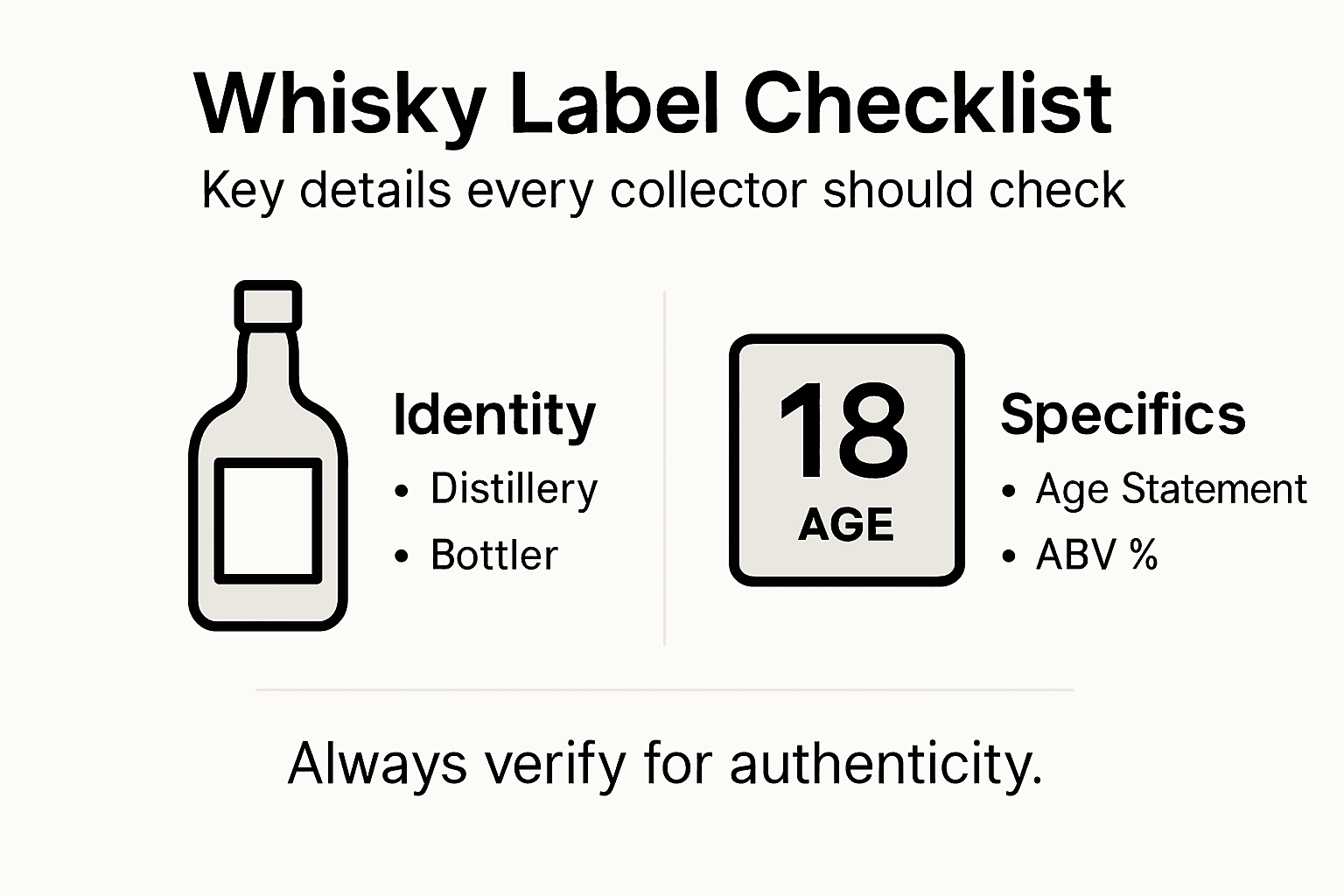
Authenticity emerges as a paramount concern in whisky collecting, with label details serving as the primary validation mechanism. Discerning collectors scrutinise elements such as holographic security features, precise bottling information, cask numbers, and production batch details. These microscopic indicators help distinguish genuine collectible bottles from potential counterfeits. The provenance suggested by label information becomes a critical factor, with bottles featuring comprehensive, transparent documentation typically attracting higher interest from serious collectors and investors.
Pro tip: Photograph and digitally archive your whisky labels, creating a personal reference database that helps you track subtle variations and authentication markers.
Unlock the True Value Behind Every Whisky Label
Understanding the complexities and nuances of whisky labels is essential for any collector determined to make informed investments. From age statements and ABV percentages to regional origins and limited edition markers, every detail tells a story that can reveal authenticity, rarity, and flavour profiles. At Uisuki, we bring this knowledge to life by offering a carefully curated selection of premium whiskies including exceptional Scotch Whisky and diverse World Whiskies designed to satisfy collectors and enthusiasts seeking rare and meaningful bottles.
Explore our comprehensive catalogue today at Uisuki.com.au and connect with a community passionate about whisky craftsmanship. Don’t miss your chance to acquire authentic bottles with transparent label details and trusted provenance. Dive deeper into the whisky world with expert guidance and discover your next prized collectible now.
Frequently Asked Questions
What should I look for on a whisky label?
When examining a whisky label, focus on critical details such as the brand name, product name, age statement, alcohol by volume (ABV), and any regional specifications. Understanding these elements can help you assess the whisky’s origin and production methods.
How do age statements impact the perceived value of whisky?
Age statements indicate the minimum number of years the youngest whisky in a blend has been matured. Generally, older whiskies are considered more valuable due to their complexity, but some younger expressions can also be exceptional. Quality is not solely determined by age.
Why is understanding whisky label details important for collectors?
Understanding the intricacies of whisky labels helps collectors differentiate between genuine quality expressions and marketing illusions. Knowledge of label components can significantly impact decisions regarding investment potential and authenticity verification.
What are single cask whiskies, and why are they prized by collectors?
Single cask whiskies are bottled from a single barrel rather than blended from multiple casks. They are often unique in flavour and character, making them highly sought after and collectible due to their rarity and distinctiveness.