

Many Australian whisky collectors have heard the claim that decanting whisky dramatically improves flavour, much like it does for wine. Yet, research confirms whisky is already fully matured before bottling, so decanting does not significantly alter its character or aromatic compounds. Decanting offers other rewards, though, from enhancing presentation and ceremony to safeguarding prized bottles. If you’re eager to separate myth from fact and achieve better tasting experiences, understanding the real impact of whisky decanting is essential.
Table of Contents
- Defining Whisky Decanting And Common Myths
- Types Of Decanters And Choosing The Right One
- How Decanting Affects Aroma And Presentation
- Tradition, Ceremony, And Collector Value
- Risks, Mistakes, And Alternatives For Storage
Key Takeaways
| Point | Details |
|---|---|
| Whisky Decanting is Different from Wine | Decanting whisky does not enhance its flavour as it does in wine; whisky is already matured and does not benefit significantly from oxidation. |
| Presentation Matters | Decanting is primarily for aesthetic presentation and ritual rather than flavour improvement, showcasing the whisky’s colour and engaging the drinker in a sensory experience. |
| Proper Decanter Selection is Crucial | Choosing the right decanter made of glass with an airtight seal can help preserve whisky quality, while decorative options may not provide adequate protection. |
| Avoid Long-Term Decanting | Decant only when planning to drink soon; leaving whisky exposed to air for extended periods can lead to flavour degradation and loss of complexity. |
Defining whisky decanting and common myths
Whisky decanting is the practice of pouring whisky from its original bottle into a separate vessel, typically a glass decanter. But here’s where things get interesting: decanting whisky is fundamentally different from decanting wine. Many Australian collectors assume the process works the same way across all beverages, but the chemistry tells a different story. Wine improves with decanting because it needs air exposure to soften tannins and develop complexity. Whisky, however, arrives at your glass already fully matured and stabilised from its time in the cask. The distillery has already done the heavy lifting during the ageing process in oak, so decanting doesn’t chemically transform what’s in your bottle.
The biggest myth surrounding whisky decanting is that the spirit needs to “breathe” to improve its flavour. This misconception borrows directly from wine culture, where oxidation plays a crucial role. In reality, scientific studies about whisky decanter myths demonstrate that whisky is already fully matured before bottling, and decanting does not significantly alter its aromatic compounds in beneficial ways. Ethanol evaporation in an open decanter may mildly affect perceived flavours, but this represents loss rather than improvement. Another persistent myth claims that the glass composition of the decanter interacts chemically with whisky to enhance taste. In truth, glass doesn’t chemically interact with whisky to enhance flavour, regardless of whether you’re using crystal, standard glass, or specialty decanters. The spirit sits inert inside whatever vessel holds it.
To clarify the distinct roles of whisky and wine decanting, here is a direct comparison:
| Aspect | Whisky Decanting | Wine Decanting |
|---|---|---|
| Purpose | Presentation and ritual | Flavour and aroma improvement |
| Chemical change | None significant | Softening tannins, oxidation |
| Ideal for | Display and short-term use | Enhancing young or tannic wines |
| Risk factors | Evaporation, oxidation | Over-oxidation in delicate wines |
So why do collectors and enthusiasts still decant whisky? The answer has little to do with flavour enhancement and everything to do with presentation, storage, and the sensory ritual of whisky appreciation. A quality decanter matters for collectors because it allows you to store whisky away from direct light, serves as an elegant centrepiece for your collection, and transforms the tasting experience into something intentional and measured. Decanting also prevents your original bottles from being exposed repeatedly to air and light as you pour drinks over time. Think of it this way: you’re protecting your investment and creating an aesthetic presentation that matters to people who care deeply about their whisky.
Pro tip Decant only when you plan to regularly drink from that decanter; leaving whisky exposed to air for weeks or months will cause unnecessary evaporation and oxidation that genuinely does diminish what’s in your glass.
Types of decanters and choosing the right one
When you walk into a homeware shop or browse online retailers, you’ll notice decanters come in wildly different shapes, sizes, and materials. The choice matters more than you might think, though perhaps not for the reasons you’d expect. The fundamental rule is straightforward: select a material that does not affect whisky flavour, which means glass or crystal are your only real options. Cheap plastic decanters will leach chemicals into your spirit over time, and metal vessels don’t allow you to see what you’re storing. Beyond material selection, the decanter’s design influences how well it protects your investment. A good decanter should have an airtight seal to minimise oxidation and evaporation, preserving your whisky’s freshness over weeks and months. Without proper sealing, you’re essentially just transferring your problem from a sealed bottle to an unsealed container.
You’ll encounter three main decanter styles in the Australian market. The traditional stopper decanter features a ground glass or cork stopper that creates a seal when properly fitted. These look magnificent on a shelf and work well if you’re regularly drinking from them, but the stopper can stick if not cleaned regularly. The crystal carafe with a heavy base offers aesthetic appeal and stability on your bar cart, though many lack airtight closures entirely, making them better for immediate consumption rather than storage. The modern sealed decanter with screw or snap closures provides the best protection for long-term storage, prioritising function over fussy elegance. When selecting your decanter, proper whisky storage practices recommend filling no more than three-quarters full to allow proper breathing space and minimise the air volume that can cause oxidation.
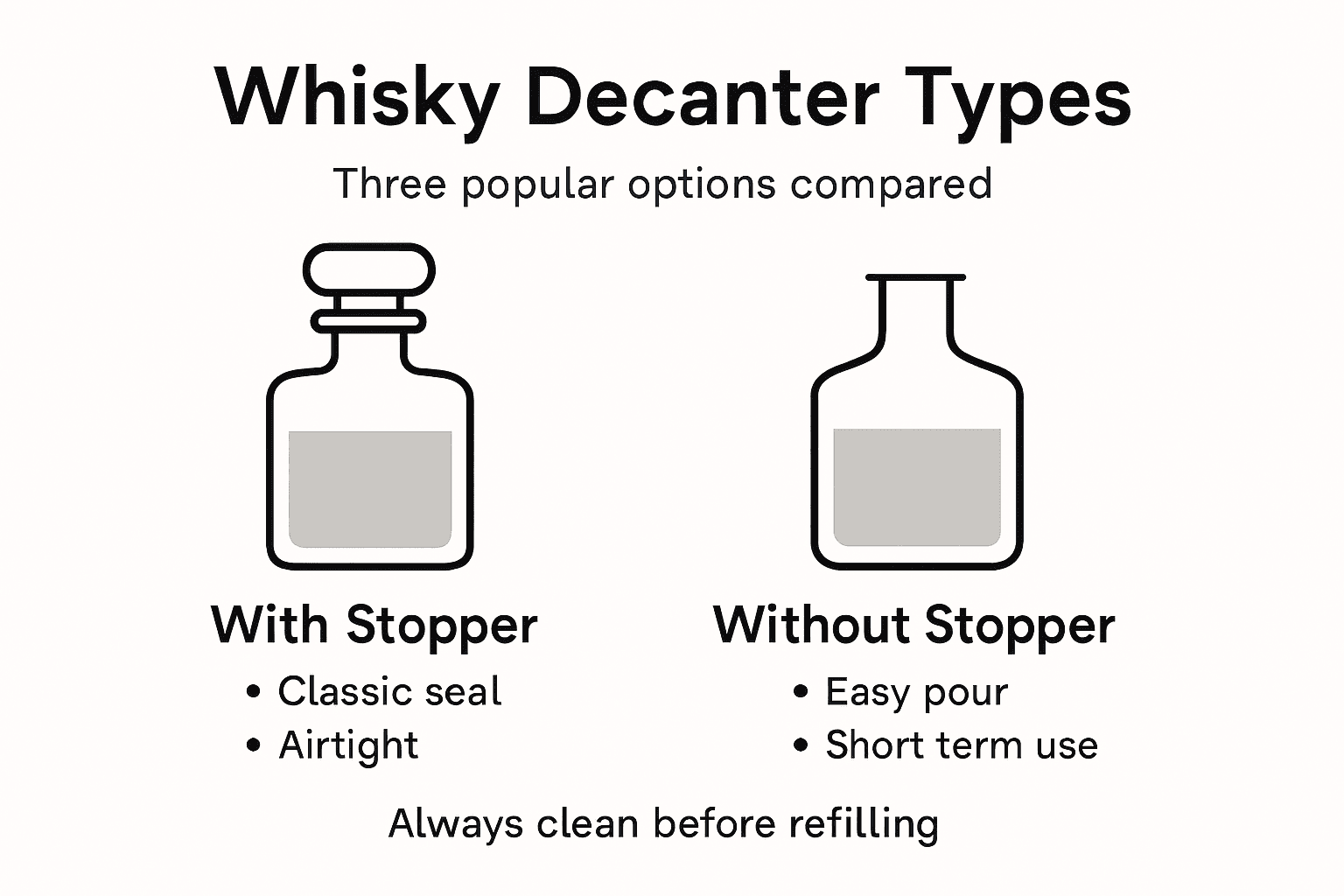
Here’s a quick guide comparing common decanter types available to Australian collectors:
| Decanter Type | Key Benefit | Potential Drawback |
|---|---|---|
| Stopper decanter | Airtight seal, decorative | Stopper may stick without cleaning |
| Crystal carafe | Impressive looks, stable base | Often lacks airtight closure |
| Modern sealed | Superior long-term storage | Less visually traditional |
Maintenance separates collectors who preserve their whisky from those who inadvertently degrade it. Always clean your decanter with mild detergent and warm water after use, then dry it completely with a soft cloth. Never leave whisky sitting in a decanter for months without use, and avoid placing your decanter in direct sunlight, which can fade both the spirit and any labels you’ve attached. For Australian collectors storing decanters in warm climates, consider keeping them in a cool, dark cupboard rather than on an open bar, where temperature fluctuations accelerate evaporation. The size of your decanter matters too: larger vessels expose more surface area to air, increasing oxidation rates.
Pro tip Invest in a decanter with a proper ground glass stopper and airtight seal if you plan to store whisky for longer than a few weeks; the small additional cost protects your collection far more effectively than decorative options without closures.
How decanting affects aroma and presentation
When you pour whisky into a decanter, something subtle shifts in how you experience it. The visual transformation happens instantly, but the sensory changes develop over time. A decanter showcases your whisky’s colour and clarity in ways a bottle simply cannot. You’ll notice the golden amber, rich mahogany, or pale straw tones far more vividly when light passes through a clear glass vessel. This visual elevation transforms the act of pouring a drink into something more intentional and ceremonious. For Australian collectors who’ve invested in premium bottles, this presentation element matters enormously. You’re not just drinking whisky; you’re engaging with it as an object of appreciation. The decanter becomes a conversation starter, a display piece that tells guests something about your taste and knowledge.
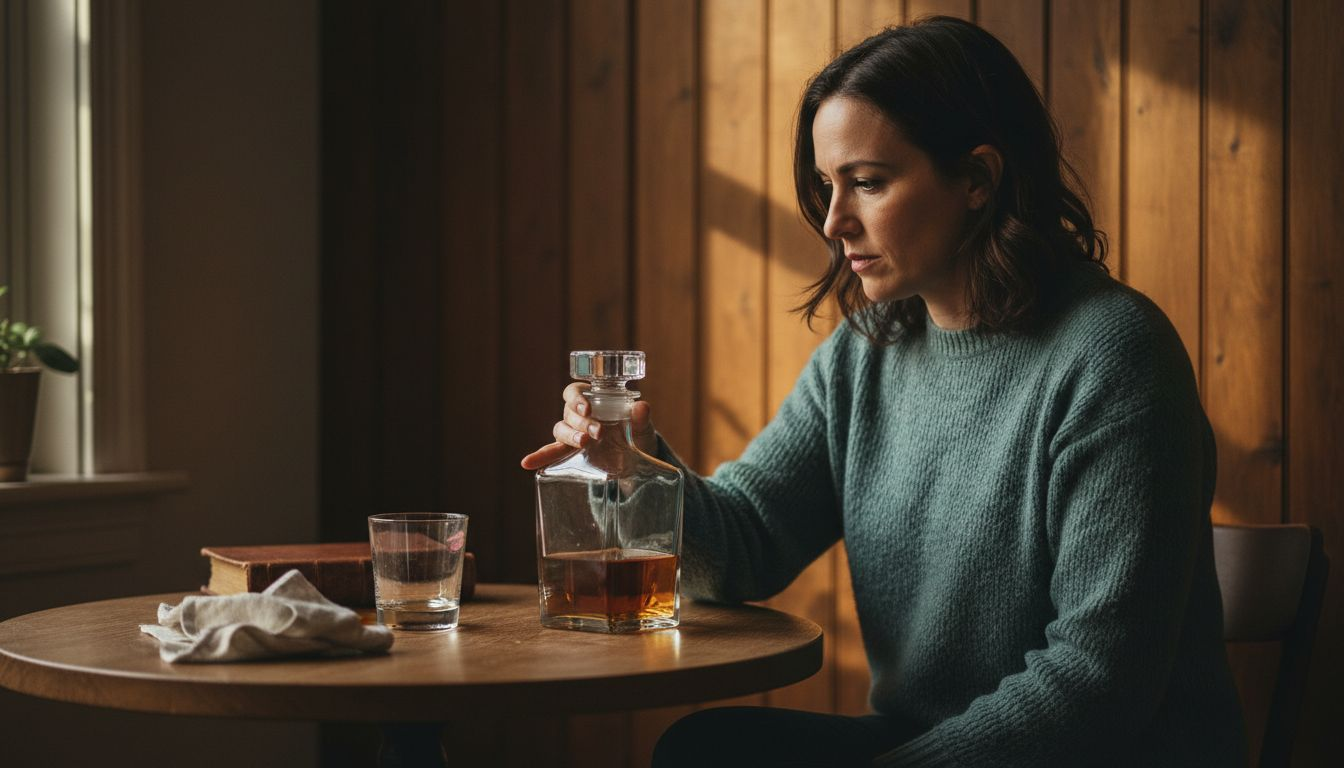
Beyond aesthetics lies a more interesting question about how decanting actually affects what you smell and taste. Decanting whisky can enhance aroma by allowing slight interaction with oxygen, which may soften harsh notes and open up subtle flavours, particularly in older whiskies. A freshly bottled single malt from a young distillery might have sharp alcohol notes that feel aggressive on the palate. After sitting in a decanter for thirty minutes to an hour, those harsh edges begin to round out. The spirit isn’t improving in the way wine does; rather, the initial volatility settles, and your nose adapts to the alcohol vapours, allowing you to detect complexity that was always present but masked. Older whiskies benefit more noticeably from this exposure because decades in oak have created delicate flavour compounds that need space to express themselves. A twenty year old Speyside will reveal notes of orchard fruit, honey, and spice more readily after gentle aeration than it would straight from the bottle.
The presentation factor connects directly to your psychological experience of drinking. When you pour from an elegant decanter rather than the original bottle, your brain registers luxury and intention. This isn’t superficial; it genuinely enhances enjoyment because you’re slowing down and paying attention. You’ll notice flavour notes you might otherwise miss. You’ll consider the nose longer before tasting. You’ll appreciate the texture across your palate with greater awareness. For serious collectors, decanting older and rarer whiskies serves a practical purpose too: it protects those valuable bottles from repeated light exposure and cork degradation that happens with every opening.
Pro tip Decant older whiskies at least thirty minutes before tasting to allow the aroma compounds to fully develop, but avoid leaving them decanted overnight, as extended oxidation will gradually diminish the subtle notes that make aged spirits special.
Tradition, ceremony, and collector value
When you decant whisky, you’re participating in a ritual that stretches back centuries. The practice isn’t accidental or arbitrary. Whisky decanting is deeply embedded in tradition and ceremony, often used to elevate a drinking occasion and honour the spirit itself. In the 18th century, decanters became essential pieces of formal dining, when storing and serving alcohol elegantly during social gatherings signalled wealth, sophistication, and refinement. Those early decanters weren’t just functional; they were statements. A gentleman with a beautiful decanter on his sideboard was announcing something about his status and taste. Fast forward to today, and that same psychology persists. When you pull out a quality decanter for friends, you’re communicating that this moment matters. You’re saying this whisky deserves respect and attention.
For Australian collectors, decanters have evolved beyond mere practicality into objects of genuine value and emotional significance. Decanters serve as symbols of sophistication, often cherished as heirlooms or unique gifts carrying rich stories. A handcrafted crystal decanter with a stopper ground by hand isn’t just a container; it’s a piece of craftsmanship that can outlive the whisky inside it. Collectors pursue rare decanters from specific makers or eras with the same passion they hunt for limited edition bottles. Some Australian whisky enthusiasts inherit decanters from parents or grandparents, and those pieces become repositories of memory. You’re not just using your grandfather’s decanter; you’re continuing his tradition, honouring his appreciation for quality spirits. That connection transforms a glass object into something infinitely more valuable.
The ceremonial aspect of decanting creates an intentional pause in your day. Pour the whisky. Observe the colour. Let it settle. Inhale the aroma. Taste slowly. This ritual slows you down in a world that constantly rushes. It transforms a simple drink into an experience worthy of contemplation. For serious collectors, this ceremony reinforces why they’ve invested in premium bottles in the first place. You’re not just consuming alcohol; you’re engaging in a practice that connects you to centuries of whisky appreciation. The decanter itself becomes a symbol of that commitment. When guests see a beautiful decanter on your shelf, they understand something fundamental about you: you value quality, tradition, and the deliberate enjoyment of life’s finer things.
Pro tip Commission or source a decanter with personal significance, whether that’s a vintage piece from a Scottish glassmaker or a contemporary Australian craftsperson; owning a decanter with a genuine story transforms it from an accessory into a treasured part of your collection.
Risks, mistakes, and alternatives for storage
Decanting whisky introduces real risks that many enthusiasts overlook. The most serious threat is flavour degradation caused by oxidation and evaporation, particularly if you leave whisky in a decanter without proper sealing. Unlike wine, which benefits from oxygen exposure, whisky doesn’t improve through extended contact with air. What happens instead is gradual loss. The alcohol evaporates faster than heavier compounds, which shifts the flavour profile toward something thinner and less complex. You might decant a beautiful 25 year old single malt on Friday evening, intending to enjoy it throughout the weekend, then discover by Monday that the nose has flattened considerably. That’s not imagination; that’s chemistry working against you. The risk compounds if you live in Australia’s warmer climates, where temperature fluctuations accelerate evaporation dramatically. A decanter sitting on your bar in Perth or Brisbane during summer loses liquid far faster than one in cooler conditions.
Common mistakes separate careless collectors from careful ones. The first mistake is decanting large quantities for long-term storage, treating the decanter like a replacement bottle. This fundamentally misunderstands what decanters are designed for. Decanting whisky risks flavour degradation when decanters lack proper sealing or when whisky sits decanted for extended periods. A second mistake is using decorative decanters without airtight closures, then wondering why the whisky tastes different weeks later. A third mistake involves inadequate cleaning before refilling, leaving residue that contaminates new spirit. Many collectors also fail to consider their storage environment. A decanter positioned near a window, above a heater, or in direct sunlight accelerates every degradation process simultaneously.
If you’re serious about long-term storage, the alternative is straightforward: keep whisky in its original bottle. The distillery spent considerable effort designing that packaging specifically to preserve the spirit. The glass composition, the cork or synthetic closure, even the dark colour of many bottles all serve protective purposes. Keeping whisky upright and sealed in a stable environment, away from heat, light, and temperature fluctuations, maintains quality and longevity without risking contamination or evaporation. This approach suits collectors with rare bottles they seldom drink. Reserve decanters for whisky you’ll consume within weeks, not years. Your investment deserves protection.
The practical reality is this: use decanters for the experience they provide, not for storage. Decant when you’re about to drink, or when you want to display a bottle. Keep your serious collection in original bottles in a cool cupboard. Think of decanters as serving vessels and presentation pieces, not preservation tools.
Pro tip If you must decant whisky for any length of time, fill the decanter completely to minimise air space, ensure the stopper seals properly, and store it in a cool, dark location away from temperature swings and direct sunlight.
Elevate Your Whisky Experience with the Perfect Bottle and Presentation
Understanding why whisky is decanted reveals the importance of both ritual and careful preservation to truly appreciate your spirit. If you are seeking to enrich your collection with premium options that deserve to be showcased and savoured, explore our curated range of classic and rare selections. Whether you prefer the rich heritage of The Balvenie or the distinctive profiles of Glenfiddich, every bottle at Uisuki.com.au is chosen to bring sensory depth and character to your whisky moments.

Take your whisky appreciation to the next level today by browsing our expertly selected collections. Find the ideal bottle to decant and display with pride and safeguard your investment by learning more about storing and enjoying fine whisky at Uisuki.com.au. Act now to discover new flavours that transform casual pours into memorable rituals.
Frequently Asked Questions
What is the purpose of decanting whisky?
Decanting whisky primarily serves for presentation and ritual rather than flavour improvement. It enhances the aesthetic appeal and transforms the drinking experience into a more intentional act.
Does decanting whisky improve its flavour?
No, decanting whisky does not chemically alter its flavour significantly. Unlike wine, which benefits from oxidation, whisky is already matured and stable at the time of bottling.
What types of decanters are best for whisky?
The best decanters for whisky are glass or crystal. They should have an airtight seal to minimise oxidation and evaporation, with options including traditional stopper decanters, crystal carafes, and modern sealed decanters.
How does decanting affect the aroma of whisky?
Decanting can enhance the aroma of whisky by allowing slight interaction with oxygen, which helps to soften harsh notes and open up more subtle flavours over time, particularly in older whiskies.