

TL;DR:
- Two bottles with the same label and ABV can taste different due to Australian labelling tolerances that allow a ±0.5% variation in alcohol content. ABV reflects the whisky’s crafting process and influences flavor, mouthfeel, and aromatic intensity, making it a crucial yet flexible evaluation metric for collectors. Australian standards provide more precise and reliable ABV labeling compared to many other markets, aiding buyers in making informed purchasing decisions within a trusted regulatory environment.
Two bottles. Same label. Same distillery. Same stated ABV. Yet they taste noticeably different. For many collectors, this experience sparks genuine confusion, and it is far more common than the industry lets on. Australian labelling law permits a ±0.5% alcohol by volume tolerance on spirits, meaning a bottle marked 46% could legally contain anywhere from 45.5% to 46.5% actual alcohol. That gap is small on paper but meaningful in the glass. This guide walks you through everything ABV means for collectors, how Australian standards shape what you buy, and how to use this knowledge to make sharper purchasing decisions.
Table of Contents
- What does ABV mean in whisky?
- Australian ABV labelling standards explained
- ABV and flavour: How variations impact your tasting experience
- Using ABV for smarter collecting and purchasing decisions
- Hard-won lessons: What most collectors overlook about ABV
- Explore ABV-rich collections at Uisuki
- Frequently asked questions
Key Takeaways
| Point | Details |
|---|---|
| ABV is a quality benchmark | Alcohol by volume signals strength and collecting value for Australian whisky. |
| Australian labels are highly regulated | ABV on whisky bottles must be accurate within ±0.5% under Australian law. |
| Small ABV differences matter | Even minor legal ABV variations can affect flavour and collector ratings. |
| Collectors use ABV for decision-making | Smart buyers check ABV when assessing whisky for purchase or collection. |
| ABV tolerance differs internationally | Australia’s rules are stricter than many other whisky-making regions. |
What does ABV mean in whisky?
ABV stands for alcohol by volume. It is the standardised measurement that tells you what percentage of the liquid in your bottle is pure ethanol. A whisky labelled at 40% ABV contains 40 millilitres of ethanol for every 100 millilitres of liquid. Simple enough. But understanding why ABV matters in whisky goes far deeper than just knowing how strong a pour will be.
Collectors often assume ABV is purely a health or safety metric. In reality, it is one of the most significant indicators of how a whisky was crafted and what it will deliver in the glass.
Strength versus alcohol volume
These two terms get conflated constantly. Strength refers to the perceived intensity of alcohol on the palate, which is influenced by flavour compounds, cask type, and dilution. Alcohol volume is the objective, measurable percentage. A heavily peated 40% Islay Scotch can feel stronger and more aggressive than a smooth 46% Japanese single malt, because the flavour profile shapes perception. Knowing this distinction helps you read ABV labels with nuance rather than assuming higher always means harsher.
How flavour and mouthfeel relate to ABV
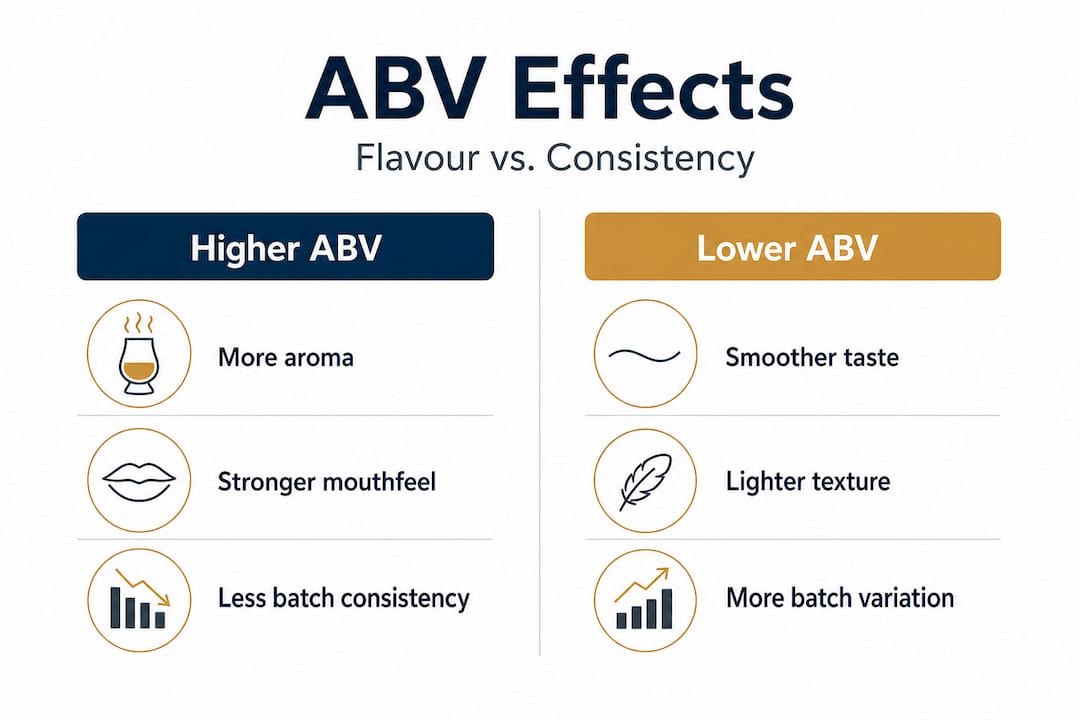
The role of ABV in whisky is particularly fascinating when it comes to texture. Higher ABV tends to carry aromatic compounds more efficiently, which is why cask strength releases often deliver an explosion of fragrance when you first open the bottle. The ethanol acts as a solvent, holding volatile flavour molecules in suspension. At lower ABV levels, some of those molecules dissipate more quickly, resulting in a softer but sometimes less expressive nose.
Mouthfeel is also affected. Whiskies bottled above 46% often feel oilier and more viscous on the tongue. Below 43%, many distilleries chill-filter their spirits to remove fatty acids that would otherwise create a haze when water or ice is added. This filtration strips some of those oils, which is why un-chill-filtered expressions at 46% and above tend to feel rounder in the mouth.
Here is a quick breakdown of what ABV levels typically signal:
- Below 40%: Legally the minimum in most markets; generally lighter body and softer finish
- 40% to 43%: The classic range; widely approachable, often chill-filtered
- 43% to 46%: A sweet spot for many collectors; un-chill-filtered releases common, richer texture
- 46% to 55%: Intense aromatics, bold mouthfeel; excellent for adding a few drops of water
- 55% and above: Cask strength territory; requires dilution to appreciate fully, high collector value
“ABV serves as a strength benchmark but may vary within legal limits, which means the number on the label is a guide, not an absolute.”
Common misconceptions about ABV labels
Many buyers assume the ABV on a label is a precise, independently verified figure. In practice, it is a declared value subject to legal tolerance. Two bottles from the same batch can differ slightly, and bottles from different batches under the same expression name can differ more noticeably. Understanding this sets realistic expectations and makes you a far savvier collector.
Australian ABV labelling standards explained
Australia takes spirits labelling seriously. The regulatory environment here is more structured than many international markets, which is actually good news for collectors. It means the whiskies you purchase through reputable Australian retailers carry a level of declared accuracy that protects your investment.
Under Australian law, spirits ABV must be accurate to within ±0.5% alc/vol of the stated value. This applies to all spirits sold domestically, including imported Scotch, Japanese whisky, American bourbon, and locally produced Australian single malts.
How Australia compares to other markets
The ±0.5% tolerance is tighter than many other jurisdictions. In the European Union, for example, spirits can carry a tolerance of ±0.3% for products below 15% ABV, but the rules for higher-strength spirits are less harmonised across member states. In some markets, tolerances of up to ±1.0% are permitted for spirits. Australia’s stricter standard means the label on your bottle is a more reliable starting point when evaluating authenticity.
This matters especially when you are purchasing rare or authentic whisky from international sources and importing it through Australian channels. A bottle that complies with Australian labelling must meet these standards at point of sale within Australia.
| Market | ABV tolerance for spirits | Chill filtration disclosure required |
|---|---|---|
| Australia | ±0.5% alc/vol | No mandatory requirement |
| European Union | Varies by category | No mandatory requirement |
| United States | ±0.15% on TTB-approved labels | No mandatory requirement |
| United Kingdom | ±0.5% alc/vol | No mandatory requirement |
Implications for collectors
This tolerance means that a bottle of your favourite expression listed at 46% could legally clock in at anywhere from 45.5% to 46.5%. For most casual drinkers, this is irrelevant. For serious collectors evaluating batch consistency or comparing tasting notes across releases, it is crucial context. You can read more about how ABV sits within the broader whisky alcohol content guide for Australian buyers.
When purchasing whisky online in Australia, always confirm that the retailer sources their stock through legitimate Australian distribution channels. Bottles imported through grey-market routes may not meet domestic labelling standards, which can create discrepancies between the stated and actual ABV.
Key things to check on the label:
- Is the ABV clearly stated as a percentage of alc/vol?
- Is the volume of the bottle declared (500ml, 700ml)?
- Does the bottle carry an import declaration if it is an overseas expression?
- Is the label in English and compliant with Australian food standards?
ABV and flavour: How variations impact your tasting experience
Now that we know ABV labels are legally flexible, we need to understand how this affects what you actually taste. The practical difference between 46% and 46.5% is subtle but real, and for collectors who take tasting notes seriously, this nuance matters.
Practical examples of small ABV shifts
Consider two bottles from the same distillery, one batch bottled at 46.1% and the next at 45.6%. The lower ABV bottle may present slightly more approachable alcohol warmth on the finish. The higher ABV version could deliver a marginally denser mouthfeel and a touch more intensity on the nose. Neither is better. They are simply different expressions of the same spirit, shaped in part by the ethanol concentration.
Pro Tip: When comparing two bottles side by side, add the same volume of water to each (three to five drops works well at around 46% ABV) before drawing conclusions. This neutralises some of the ABV variation and lets you assess the underlying flavour profile more objectively.
What collectors should look for in ABV when tasting and rating
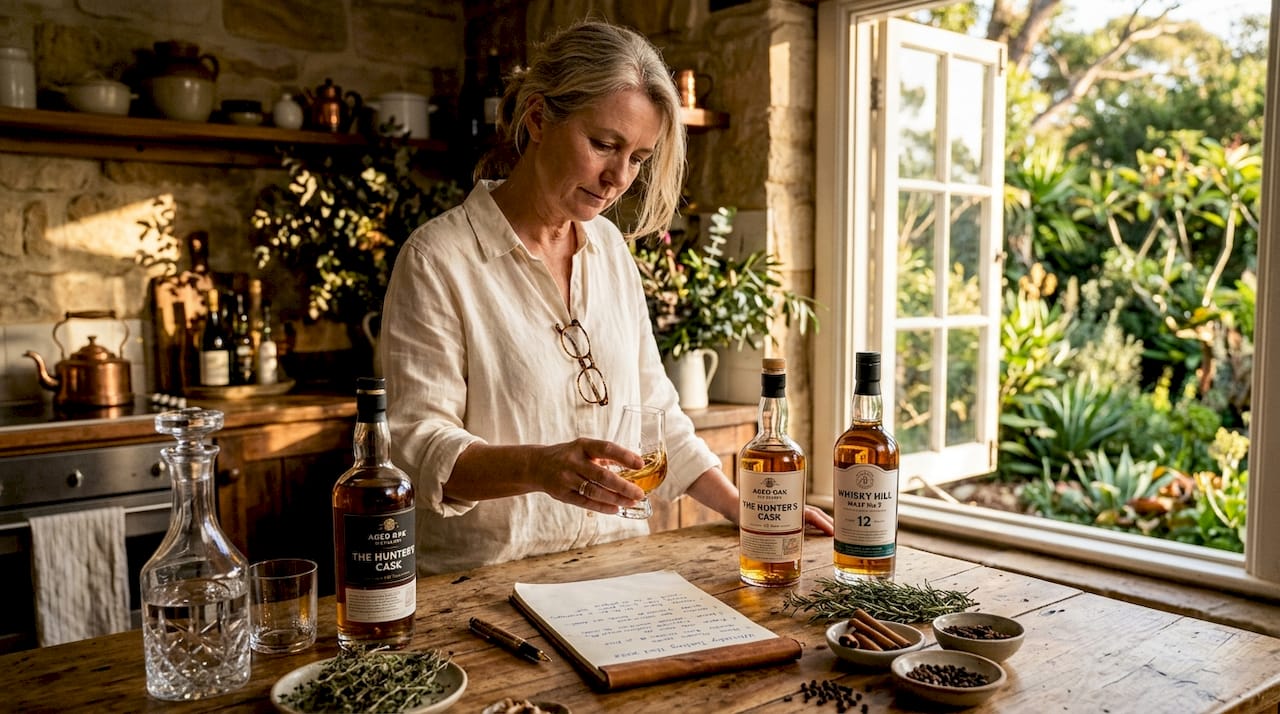
Batch-to-batch consistency concerns are one of the most discussed issues among serious collectors. When rating a whisky for your personal collection or a public forum, always note the specific batch number alongside the ABV as printed on your bottle. This contextualises your tasting notes for others who may have a slightly different expression of the same release.
| ABV range | Expected mouthfeel | Recommended water addition |
|---|---|---|
| 40% to 43% | Light to medium | 2 to 3 drops |
| 43% to 46% | Medium, moderate oils | 3 to 5 drops |
| 46% to 55% | Rich, oily, warming | 5 to 10 drops |
| 55% and above | Intense, spirit-forward | 10 or more drops |
Understanding flavour changes from minor ABV shifts
Here is the practical process many experienced collectors use when evaluating a new bottle:
- Nose the whisky neat for at least 60 seconds before drinking.
- Take a small sip without water and note the alcohol warmth on the finish.
- Add a few drops of water, wait 30 seconds, and nose again to detect newly released aromatic compounds.
- Compare your impressions to any previous batches you have tasted.
- Record the stated ABV from the label alongside your tasting notes.
Legally tolerable ABV deviations mean collectors should use the ABV label as a benchmark, but they should expect and account for small differences when comparing bottles from different production runs.
Using ABV for smarter collecting and purchasing decisions
With flavour implications clear, let us take the next step: using ABV to refine your collecting and purchasing approach. ABV is not just a tasting variable. It is a strategic criterion that can help you evaluate value, predict flavour profiles, and assess the integrity of rare releases.
ABV as a buying criterion for Australian collectors
When browsing new and limited edition releases, pay attention to whether a distillery has shifted ABV between releases. A distillery that drops from 46% to 43% across editions may be reducing costs by requiring dilution and chill filtration, which affects the product’s flavour integrity. Conversely, a distillery that pushes a release to cask strength is signalling confidence in the raw spirit.
For rare whisky selection, the ABV often provides a window into production choices. High ABV single cask releases typically mean minimal intervention, no colouring, and no chill filtration. These are markers of quality whisky craftsmanship that experienced collectors prize.
Pro Tip: For limited releases, cross-reference the stated ABV with the distillery’s historical bottling practices. If they consistently bottle a particular expression at 46% un-chill-filtered and then release a special edition at 40%, that shift may indicate a different production approach and is worth investigating before purchase.
Collecting checklist before purchase:
- Confirm the stated ABV and check whether it matches historical releases
- Identify whether the expression is chill-filtered (usually below 46%) or not
- Check the batch or bottle number against known release data
- Evaluate whether the ABV is consistent with the price point
- Review independent tasting notes that specify the batch ABV
Australian collectors should use the ABV label as a benchmark, while understanding small legal deviations exist. The label is the starting point, not the entire story.
Hard-won lessons: What most collectors overlook about ABV
Here is something the broader whisky community rarely says plainly: ABV obsession can actually distort your collecting instincts. We see this frequently in the Australian market. Collectors dismiss perfectly exceptional whiskies because they sit at 40% or fetishise cask strength releases as inherently superior. Neither position holds up to scrutiny.
The legal ABV tolerance is a fact that rarely makes it into collector conversations, even among experienced buyers. Many people meticulously compare tasting notes across different bottle batches without realising the ABV they are comparing may already differ by up to 0.5% before any other variable is considered. That is not a flaw in the system. It is an invitation to engage more thoughtfully with each bottle rather than treating the label as an objective truth.
We have found that the most satisfying collections are built around flavour coherence and personal enjoyment, not ABV benchmarks. ABV is one data point among many, and its value depends entirely on the context in which you apply it. A beautifully crafted 43% expression from a respected distillery will consistently outperform a clumsy cask strength release from a lesser producer.
The practical wisdom here is this: use ABV to narrow your options and set expectations, but never let it make the final decision. When considering premium Scotch whisky from renowned Scottish distilleries, for example, a well-regarded 43% bottling often outperforms a mediocre 60% release from a lesser-known producer. The number does not confer quality. The craft behind it does.
Explore ABV-rich collections at Uisuki
Having evaluated ABV’s practical value, explore a curated selection of whiskies where ABV plays a defining role in the experience.
At Uisuki, every product listing includes the stated ABV alongside detailed tasting notes, helping you make genuinely informed decisions before you buy. Whether you are drawn to the bold Hobart Whisky at 56.4% ABV, the elegantly balanced Ichiro’s Malt and Grain at 48% ABV, or the approachable sophistication of Ardnamurchan at 46% ABV, our collection spans the full ABV spectrum with purpose. Browse our range to find expressions that match your collecting criteria and flavour preferences, backed by the confidence of Australian-compliant labelling standards.
Frequently asked questions
What does ABV mean on a whisky bottle in Australia?
ABV stands for alcohol by volume, indicating the percentage of ethanol in the bottle. In Australia, spirits ABV must be accurate to within ±0.5% alc/vol of the declared figure.
How accurate are ABV labels on Australian whisky bottles?
Australian law requires that spirits ABV labels are accurate within ±0.5% alc/vol, which is among the stricter tolerances globally and gives collectors a reliable, if not absolute, reading.
Does a higher ABV always mean stronger flavour?
Generally, higher ABV carries more aromatic compounds and intensifies mouthfeel, though ABV serves as a strength benchmark rather than a guaranteed flavour quality indicator. A well-crafted lower ABV expression will frequently outperform a poorly made higher ABV one.
Why do collectors care about ABV differences?
Collectors use ABV to evaluate production choices, batch consistency, and flavour expectations, but they know that legally tolerable deviations mean minor variations between bottles are normal rather than a sign of quality issues.
Are Australian ABV regulations different from other countries?
Yes, Australia applies a strict ±0.5% tolerance to spirits, and compared to other markets this provides collectors with a more tightly regulated and reliable labelling standard when purchasing domestically.