

Serious australian whisky collectors know that selecting the right limited edition bottlings can transform an ordinary shelf into a standout investment. With some rare whiskies appreciating in value by over 200 percent within just a few years, curating your collection becomes both an art and a science. As the global whisky scene grows more competitive, understanding how to set clear goals and navigate boutique releases is essential for those wanting to build a distinguished portfolio of unique spirits.
Table of Contents
- Step 1: Assess Your Collection Goals And Budget
- Step 2: Research Limited Edition Releases Across Regions
- Step 3: Evaluate Rarity, Provenance And Bottling Details
- Step 4: Verify Authenticity Through Trusted Sources
- Step 5: Secure Purchases And Plan For Storage
Quick Summary
| Key Point | Explanation |
|---|---|
| 1. Assess your collection goals | Clearly outline your collection objectives and budget constraints to guide your strategy. |
| 2. Research limited editions | Explore regional differences and trends to identify valuable limited edition whiskies. |
| 3. Evaluate bottling details | Focus on provenance, rarity, and special characteristics for potential acquisitions. |
| 4. Verify authenticity thoroughly | Use meticulous methods and trusted sources to confirm the legitimacy of each bottle. |
| 5. Plan for secure storage | Employ professional storage solutions to protect your collection from damage and loss. |
Step 1: Assess your collection goals and budget
Building a stellar whisky collection starts with understanding exactly what you want to achieve and how much you can invest. Your collection strategy will determine whether you are pursuing rare investment pieces, sampling global flavours, or developing a curated personal museum of exceptional spirits.
Begin by evaluating your financial resources and passion for whisky. Some collectors focus on Scottish single malts, while others explore Japanese or boutique Australian distilleries. Determine your budget range carefully research the price points for different categories. A beginner might allocate $500-$1,500 annually, while serious collectors could invest $5,000 or more per year. Consider factors like storage requirements, potential appreciation value, and personal enjoyment when setting your financial boundaries.
Your collection goals will naturally evolve as you gain expertise. Start modestly and allow your collection to grow organically based on your increasing knowledge and refined tastes. Track each purchase meticulously and remain flexible about expanding or refining your collection strategy as you learn more about the nuanced world of premium whiskies.
Valuable insight: Always keep detailed records of your whisky acquisitions, including purchase price, provenance, and current market value to help track your collection’s growth and potential investment performance.
Step 2: Research limited edition releases across regions
Researching limited edition whiskies requires a strategic approach that explores the unique characteristics of different global whisky producing regions. Your goal is to develop a comprehensive understanding of regional variations that influence rare and collectible releases.
Understand the distinctive regional differences in whisky production across Scotland, Ireland, the United States, Japan, and Australia. Each region offers unique production techniques that create extraordinary limited edition releases. Scottish distilleries might focus on peat and maritime influences, while Japanese producers often emphasise precision and subtle complexity. Australian whisky producers are gaining international recognition for innovative small batch releases that showcase local terroir and experimental maturation techniques.
Develop a systematic research strategy by following specialised whisky publications, joining collector forums, and tracking announcements from renowned distilleries. Subscribe to specialised magazines like Whisky Advocate, follow dedicated online communities, and attend virtual or in-person whisky tasting events to expand your knowledge network. Many limited edition releases are announced through exclusive channels, so building connections within the whisky collecting community can provide early insights into upcoming rare bottlings.
Valuable insight: Create a dedicated digital or physical tracking system to document potential limited edition releases, including release dates, expected quantities, and estimated market values.
The table below compares key characteristics of major whisky-producing regions to guide your selection of limited edition bottlings:
| Region | Signature Styles | Typical Cask Types | Collectibility Trends |
|---|---|---|---|
| Scotland | Peated, maritime malt | Ex-bourbon, sherry | High demand for old distilleries |
| Japan | Precise, subtle complexity | Mizunara, sherry | Strong growth, limited releases |
| Australia | Innovative, terroir-driven | Local, small batch | Rising international interest |
| Ireland | Smooth, triple-distilled | Ex-bourbon, wine | Revival of historic distilleries |
| USA | Rich, corn-based, bold rye | New oak, charred barrels | Small batch bourbons trending |
Step 3: Evaluate rarity, provenance and bottling details
Understanding the nuanced world of limited edition whiskies requires a keen eye for detail and a methodical approach to assessing each potential acquisition. Your mission is to develop a comprehensive evaluation framework that goes beyond surface level attributes.
When examining potential additions to your collection, focus on critical factors that determine a whisky’s true value and collectibility. Rare whisky collectors seek bottles with exceptional provenance that tell a compelling story of origin, production, and historical significance. Investigate the distillery’s reputation, the specific batch or release details, and the total number of bottles produced. Pay close attention to unique characteristics such as unusual cask finishes, commemorative editions, or whiskies produced during significant milestones in a distillery’s history.
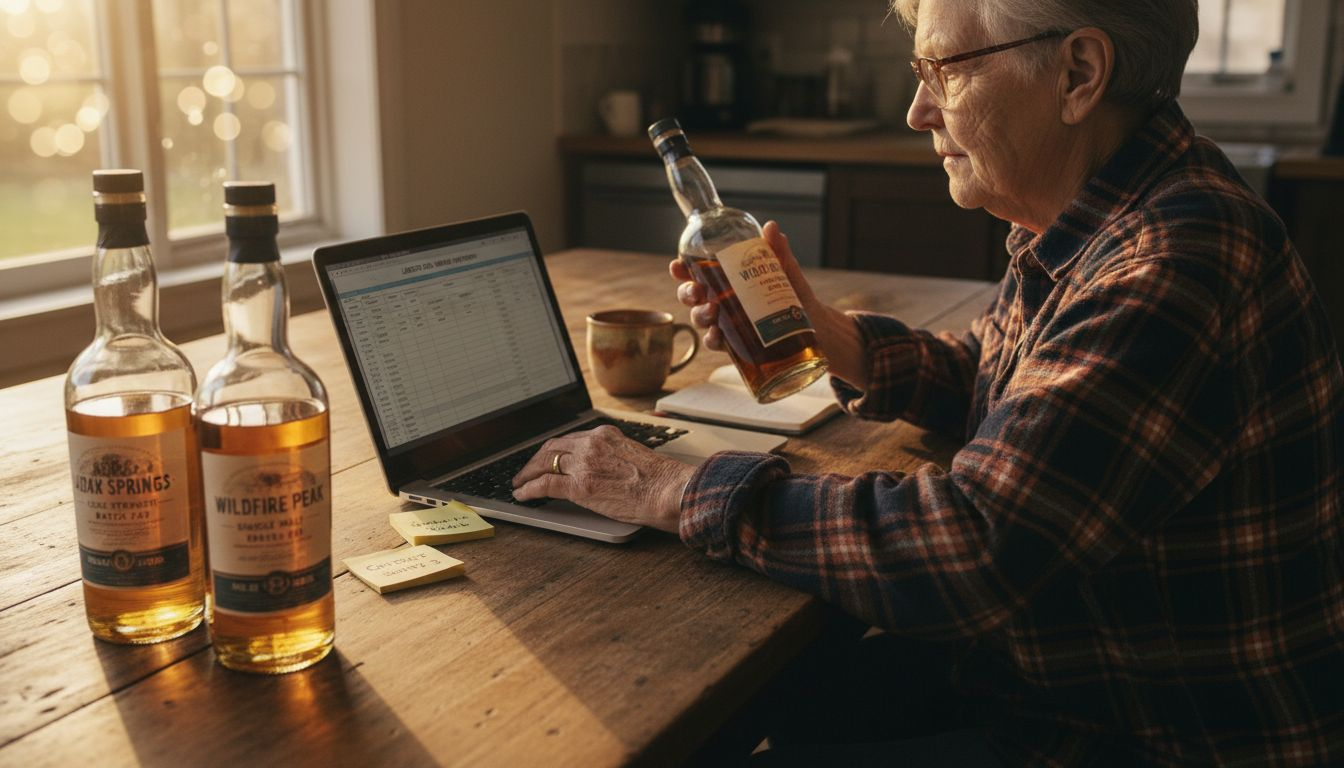
Documenting each bottle’s specifics becomes crucial in building a meaningful collection. Examine the bottle’s physical condition, original packaging, authenticity certificates, and any accompanying documentation. Look for limited production runs, numbered bottles, special commemorative releases, or whiskies from closed or legendary distilleries. Research the bottle’s market performance, tracking price trends and understanding how scarcity and collector interest can influence its potential future value.
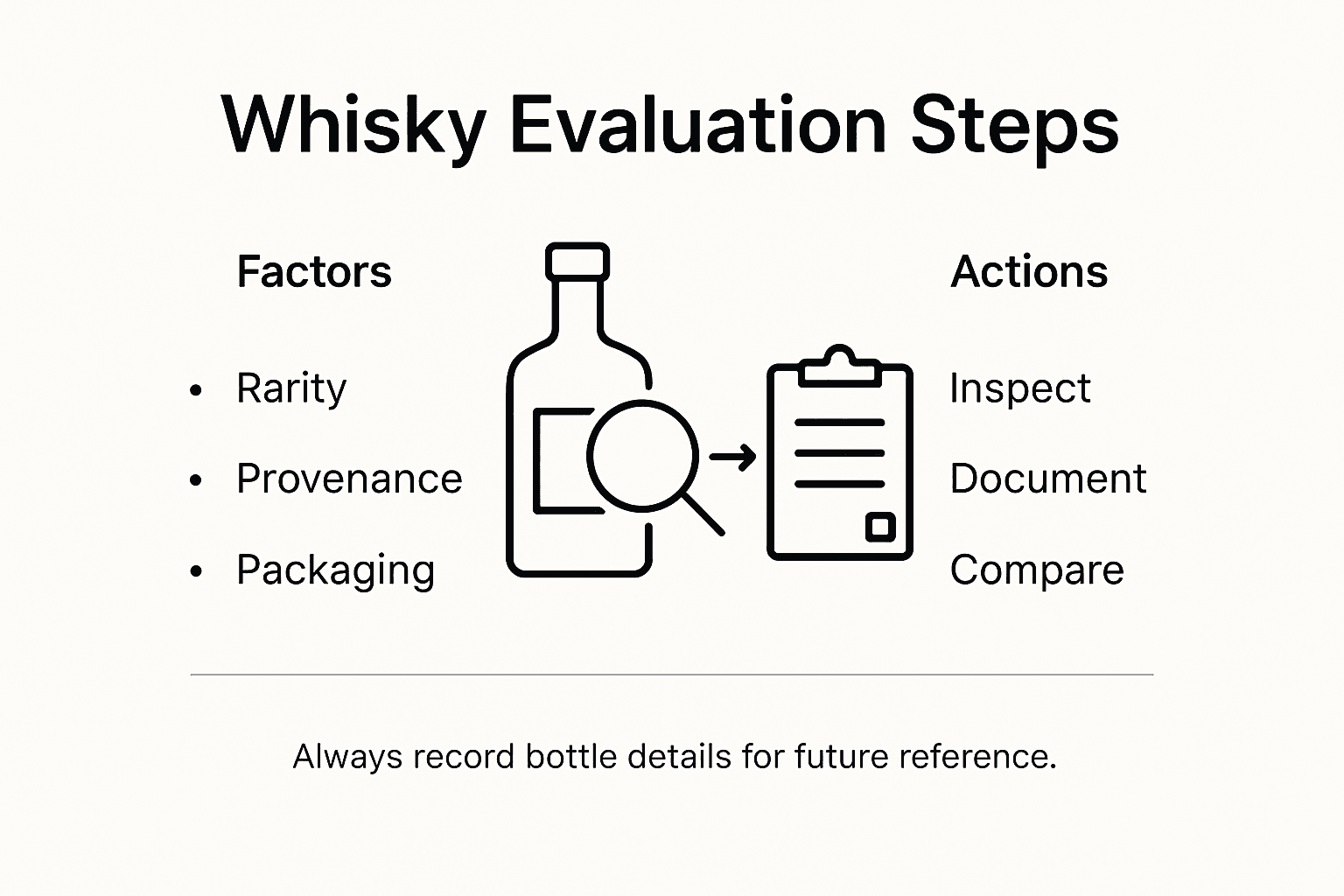
Valuable insight: Photograph and digitally catalogue every bottle in your collection, recording precise details like bottle number, release date, and purchase price to create a comprehensive investment record.
Step 4: Verify authenticity through trusted sources
Authenticity is the cornerstone of any serious whisky collection. Protecting yourself from counterfeit bottles requires a systematic and rigorous approach to verification that goes beyond simple visual inspection.
Comprehensive authentication involves multiple forensic techniques to confirm a bottle’s legitimate origin. Examine physical characteristics meticulously including label quality, batch numbers, holographic security features, seal condition, and accompanying documentation. Pay special attention to subtle details like print resolution, paper texture, and consistency of official distillery markings. Advanced collectors often utilise scientific methods such as spectroscopic analysis or chromatography to validate a whisky’s true provenance.
Develop relationships with reputable whisky dealers, auction houses, and expert authenticators who can provide professional verification. Maintain detailed records of each purchase including original sales receipts, certificates of authenticity, and provenance documentation. Cross reference information with official distillery records and engage with specialist whisky authentication networks that can validate rare and limited edition releases. Understanding the nuanced world of whisky authentication requires patience, expertise, and a commitment to thorough research.
Valuable insight: Create a dedicated digital archive of authentication documents for each bottle in your collection to protect your investment and simplify future verification processes.
Step 5: Secure purchases and plan for storage
Building a valuable whisky collection requires strategic planning beyond simply acquiring bottles. You must develop a comprehensive approach to purchasing and preserving your investment that protects both the liquid and its potential future value.
Professional whisky storage solutions offer critical protection for serious collectors, safeguarding your bottles through climate-controlled environments that maintain precise temperature and humidity levels. Investigate dedicated storage facilities that specialise in wine and spirits preservation, ensuring optimal conditions that prevent cork degradation, minimise evaporation, and protect label integrity. Consider storage options that provide insurance coverage against potential theft, damage, or accidental loss, which can significantly mitigate financial risks associated with your collection.
When purchasing limited edition whiskies, prioritise secure transactions through reputable dealers who can provide comprehensive documentation and provenance verification. Implement a systematic approach to tracking each acquisition by creating digital and physical records that document purchase details, market value, and storage conditions. Consider diversifying your storage strategy by using a combination of professional storage facilities and carefully managed home storage for bottles you intend to display or consume.
Valuable insight: Photograph each bottle upon acquisition and document its condition, creating a detailed visual and written record that can serve both insurance purposes and personal collection management.
The following table outlines safe storage options and their impact on a whisky collection:
| Storage Option | Protection Rating | Insurance Compatibility | Best For |
|---|---|---|---|
| Professional storage vault | Maximum protection | Generally included | Long-term investments |
| Home whisky cellar | Moderate control | Varies by insurer | Bottles for display |
| Standard home cupboard | Minimal protection | Rarely insurable | Everyday consumption |
Elevate Your Limited Edition Whisky Collection with Trusted Selections
Selecting limited edition whiskies requires careful research and verification to ensure authenticity and value. If you want to build a collection that reflects true rarity and provenance while enjoying expert guidance, explore our curated range of World Whiskies featuring exclusive bottles from Scotland, Japan, Australia, and beyond. Each bottle comes with detailed descriptions and provenance notes to help you make confident choices.
Start your collection today with assurance by browsing our selection at Uisuki.com.au. Whether you seek rare older bottlings or the newest limited releases, we offer secure purchasing and reliable storage advice to protect your investment. Don’t miss out on adding exceptional whiskies to your collection now. Visit Older Bottling’s or view All whiskies to find your next prized bottle.
Frequently Asked Questions
How do I determine my whisky collection goals and budget?
To determine your whisky collection goals and budget, assess what you hope to achieve—whether it’s investing in rare bottles or enjoying diverse flavours. Allocate your budget based on research of price points for various categories, starting modestly and allowing for growth in your collection over time.
What should I research when looking for limited edition whiskies?
When seeking limited edition whiskies, research the unique characteristics and production methods of different distilleries. Set up alerts for announcements from distilleries and engage in whisky communities to gather insights on upcoming releases and trends.
What details should I evaluate for each whisky before purchasing?
When evaluating a whisky, consider its rarity, provenance, and packaging details such as the batch number and authenticity documentation. Document the bottle’s specifics meticulously, including its condition and any unique features that might influence its collectibility.
How can I verify the authenticity of limited edition whiskies?
To verify the authenticity of limited edition whiskies, examine physical characteristics like label quality and batch numbers, and maintain records of purchase details. Build relationships with reputable dealers and consult authentication networks to confirm a bottle’s provenance and legitimacy.
What are the best practices for storing my whisky collection?
Best practices for storing your whisky collection include using climate-controlled environments to prevent degradation. Consider professional storage solutions that offer insurance, and create a detailed record of each bottle’s condition to ensure its protection and potential value retention.
What should I document for each bottle in my collection?
Document each bottle’s purchase details, including price, provenance, and its condition at acquisition. Take photographs of each bottle and create a digital catalogue to manage your collection efficiently and track its growth over time.