

TL;DR:
- Scotch whisky is classified into five legal categories, each with distinct production rules and flavor profiles. Understanding these categories helps consumers choose bottles aligned with their preferences and simplifies navigating the whisky shelf.
Scotch whisky is divided into five legal categories, and every bottle on the shelf belongs to one of them. Understanding the types of scotch brands means knowing whether you are looking at a single malt, single grain, blended malt, blended grain, or blended Scotch. Each category has its own production rules, flavour character, and leading names. Glenfiddich defines single malt, Johnnie Walker owns blended Scotch, and Monkey Shoulder sits squarely in blended malt territory. Once you know the categories, the whisky shelf stops being confusing and starts being a genuine guide to what you actually want to drink.
1. what are the types of scotch brands?
Scotch whisky brands fall into five legally defined categories, each with strict production rules. To carry the Scotch label, a whisky must be matured in oak casks in Scotland for a minimum of three years and bottled at no less than 40% ABV. That baseline applies to every category. What separates the five types is the grain source, the distillation method, and whether the whisky comes from one distillery or many. Knowing which category a bottle belongs to tells you a great deal about what to expect in the glass before you even open it.
2. single malt scotch: the category most people know
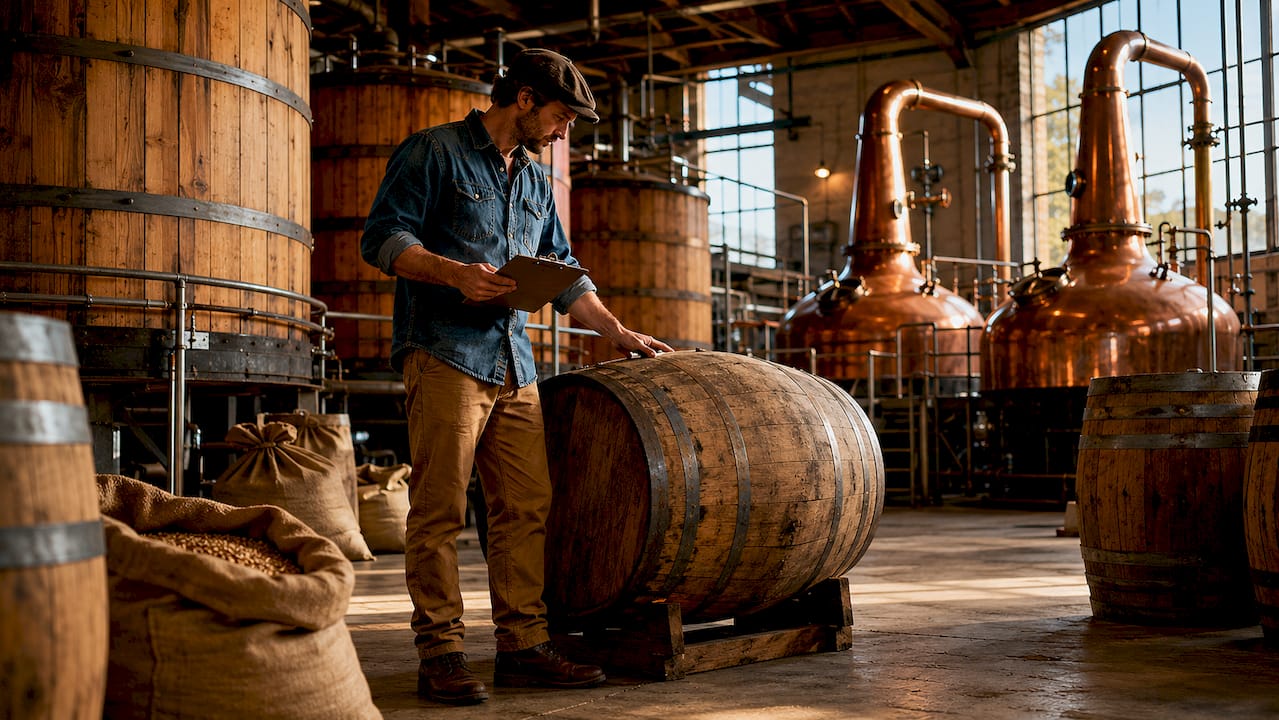
Single malt Scotch is produced at one distillery using 100% malted barley and copper pot stills. The word “single” refers to the distillery, not the barrel or the batch. That single-source production is what gives brands like Glenfiddich, The Macallan, and The Balvenie their distinctive house characters. You can return to the same expression year after year and recognise it immediately.
Flavour profiles vary widely depending on region. Speyside malts like Glenfiddich tend toward orchard fruit and honey. Islay malts like Laphroaig and Ardbeg push hard into peat smoke and brine. The Macallan, also from Speyside, leans into dried fruit and sherry oak richness. That regional variation is what makes exploring single malt types so rewarding.
Single malts are prized because the distillery’s character cannot be hidden behind blending. Every quirk of the water source, the still shape, and the cask selection shows up in the glass. That transparency is exactly why collectors and enthusiasts gravitate toward this category.
Pro Tip: If you are new to single malts, start with a Speyside expression like Glenfiddich 12 Year Old before moving to the more challenging peat-forward Islay styles. The learning curve is much gentler.
3. blended scotch: the world’s most popular category
Blended Scotch whisky combines single malt and single grain whiskies from multiple distilleries into one consistent product. This is the category that built Scotch’s global reputation. Johnnie Walker Red Label, Johnnie Walker Black Label, and Chivas Regal 12 Year Old are the most recognised names in this space.
The goal of blending is consistency. Master blenders create house styles that taste the same regardless of the harvest year. Johnnie Walker Black Label, for example, draws from over 29 malt and grain whiskies to hit its signature smoky, dried-fruit profile every single time. That reliability is the category’s greatest commercial strength.
Blended Scotch tends to be lighter and more approachable than single malt. The grain whisky component softens the overall character, making it a natural entry point for people new to Scotch. It also makes blended Scotch a strong choice for cocktails, where the nuance of a premium single malt would be wasted.
- Johnnie Walker Red Label: Light, slightly smoky, built for mixing.
- Johnnie Walker Black Label: Richer, more complex, excellent neat or on ice.
- Chivas Regal 12 Year Old: Smooth, fruity, and approachable for gifting.
- Dewar’s White Label: Honey-sweet with a clean, easy finish.
Pro Tip: When gifting to someone whose whisky preferences you do not know, a blended Scotch like Chivas Regal 12 is a reliable choice. It offends no one and pleases most palates.
4. blended malt and blended grain: the middle ground
Blended malt Scotch is a blend of two or more single malts from different distilleries, with no grain whisky included. This is a critical distinction. Blended Scotch always contains grain whisky; blended malt never does. Monkey Shoulder is the most widely known blended malt, combining malts from Glenfiddich, Kininvie, and Balvenie distilleries. Johnnie Walker Green Label is another strong example.
Blended malt offers a middle ground between the focused character of a single malt and the lighter style of blended Scotch. You get malt complexity without the intensity of a single distillery expression. For whisky drinkers who find single malts occasionally too assertive, blended malt is worth serious attention.
Blended grain Scotch is the least common category. It blends single grain whiskies from multiple distilleries, using continuous column stills and grains beyond malted barley. The result is typically lighter and sweeter than malt-based expressions. Compass Box Hedonism is the standout name in this niche category.
Here is a quick guide to when each middle-ground category makes sense:
- Choose blended malt when you want malt complexity without committing to a single distillery’s style.
- Choose blended grain when you want something lighter and sweeter than standard blended Scotch.
- Choose Monkey Shoulder when you want an easy-drinking malt that works well in cocktails or as a first step beyond blended Scotch.
- Choose Johnnie Walker Green Label when you want a more serious blended malt with age statements and greater depth.
5. how scotch whisky regions shape brand flavours
Scotch whisky regions including Highland, Speyside, Islay, Lowland, and Campbeltown each produce distinctly different flavour profiles. Region is not just geography. It reflects local water sources, climate, peat availability, and long-standing production traditions. When you understand the regions, you can predict what a brand will taste like before you read the tasting notes.
| Region | Flavour Profile | Notable Brands |
|---|---|---|
| Speyside | Fruity, floral, honeyed | Glenfiddich, The Macallan, The Balvenie |
| Islay | Peaty, smoky, briny | Laphroaig, Ardbeg, Bowmore |
| Highland | Rich, full-bodied, varied | Glenmorangie, Dalmore, Oban |
| Lowland | Light, grassy, gentle | Auchentoshan, Glenkinchie |
| Campbeltown | Briny, oily, complex | Springbank, Glen Scotia |
Islay is the region most likely to divide opinion. Its brands produce some of the most intensely peated whiskies in the world. Ardbeg 10 Year Old and Laphroaig Quarter Cask are not subtle. Lowland expressions like Auchentoshan Three Wood sit at the opposite end of the spectrum, offering a gentle, approachable style that suits beginners well. Knowing the regional map helps you match a bottle to the person receiving it.
6. matching scotch brands to your flavour preferences
Reading a Scotch label is straightforward once you know the code. “Single” means one distillery. “Blended” means multiple. “Malt” means 100% malted barley. “Grain” means other cereals are included. Those four words tell you most of what you need to know before you even look at the tasting notes.
For beginners, using the whisky shelf as a flavour map based on region and category is the most practical approach. If you enjoy fruit-forward wines, start with a Speyside single malt. If you prefer bold, savoury flavours, move toward Islay. If you are buying for someone else and want a safe choice, a blended Scotch or blended malt from a well-known brand removes most of the guesswork.
For gifting specifically, presentation and brand recognition matter as much as flavour. Glenfiddich 18 Year Old, The Macallan Double Cask 12, and Chivas Regal 18 all carry strong visual appeal and broad name recognition. You can find popular single malt options that suit a range of budgets without sacrificing quality.
- For beginners: Glenfiddich 12, Johnnie Walker Black Label, Monkey Shoulder.
- For enthusiasts: Ardbeg 10, The Macallan 18, Springbank 15.
- For gifting: Chivas Regal 18, Glenfiddich 18, Johnnie Walker Blue Label.
- For cocktails: Johnnie Walker Red Label, Monkey Shoulder, Dewar’s White Label.
Pro Tip: If you are unsure about peat, try Bowmore 12 before committing to Ardbeg or Laphroaig. Bowmore sits in the middle of the smoke spectrum and gives you a clear sense of whether peated whisky is for you.
Key takeaways
The five legal categories of Scotch whisky define every brand on the shelf, and matching those categories to flavour preferences is the most direct path to finding a bottle you will genuinely enjoy.
| Point | Details |
|---|---|
| Five legal categories exist | Single malt, single grain, blended malt, blended grain, and blended Scotch cover every Scotch brand. |
| Single malt means one distillery | Brands like Glenfiddich and The Macallan reflect one distillery’s character without blending. |
| Blended Scotch is the most approachable | Johnnie Walker and Chivas Regal offer consistent, crowd-pleasing flavour ideal for gifting. |
| Region predicts flavour | Speyside is fruity, Islay is smoky, and Lowland is light. Use region as your first filter. |
| Label language is your guide | “Single” means one distillery, “blended” means many, “malt” means barley only. |
The whisky shelf is not a test
I have spent years helping people pick their first serious bottle of Scotch, and the same thing trips people up every time. They stand in front of a shelf of 40 bottles, read a few labels, and feel like they are missing something. They are not. The categories are genuinely simple once someone explains them clearly.
What I find most interesting is how quickly people’s preferences shift once they understand the structure. Someone who starts with Johnnie Walker Black Label often ends up at Glenfiddich 15 within a year, then finds themselves at Springbank or Ardbeg not long after. The categories are not a hierarchy. They are a map. You can move in any direction.
My honest advice is to stop treating the smoky Islay malts as the “advanced” option and the blended Scotch as the “beginner” option. Some people simply prefer smoke. Some people prefer the lightness of a Lowland expression their whole lives. Neither preference is wrong. The scotch whisky characteristics that matter are the ones that match your palate, not the ones that impress someone else.
If you are buying as a gift, ask one question: does the recipient prefer bold or gentle flavours in food? That single answer will point you toward the right region and category every time.
— Brendan
Find your next bottle at uisuki
Com at Uisuki stocks a curated range of Scotch whiskies across every major category, from approachable blended expressions to rare single malts. Whether you are building your first collection or searching for a standout gift, the selection covers the full spectrum of flavour.

For something genuinely special, the Hobart Whisky Bourbon Matured Rum Finished single malt delivers layers of vanilla, caramel, and tropical fruit from its dual-cask maturation. If blended complexity is more your style, the Ichiro’s Malt and Grain Limited Edition World Blended Whisky brings together malt and grain whiskies from across the globe in one exceptional bottle. Both ship Australia-wide through Uisuki.
FAQ
What are the five types of scotch whisky?
The five legal categories are single malt, single grain, blended malt, blended grain, and blended Scotch. Every Scotch whisky brand belongs to one of these categories by law.
What is the difference between single malt and blended scotch?
Single malt comes from one distillery using 100% malted barley, while blended Scotch combines malt and grain whiskies from multiple distilleries for a consistent, lighter flavour.
Which scotch brands are best for beginners?
Glenfiddich 12 Year Old, Johnnie Walker Black Label, and Monkey Shoulder are reliable starting points. They offer accessible flavour profiles without the intensity of heavily peated or aged expressions.
Does the region of a scotch whisky affect its flavour?
Yes. Speyside produces fruity and honeyed styles, Islay is known for peat and smoke, and Lowland expressions are light and gentle. Region is one of the most reliable predictors of flavour.
How do i read a scotch whisky label?
“Single” means one distillery, “blended” means multiple sources, “malt” means 100% malted barley, and “grain” means other cereals are included. Those four terms decode most of what you need to know from any Scotch label.