

Yamazaki 12 Year Old, Hibiki Harmony and Nikka From The Barrel top our shortlist for 2026 – one for savouring neat, one for gifting and mixing, and one that punches well above its price for value. Here’s the full ranked ten and where each one fits.
- 1. Yamazaki 12 Year Old – benchmark single malt, best neat, still findable
- 2. Hibiki Harmony – approachable blend, best all‑rounder, widely stocked
- 3. Nikka From The Barrel – cask‑strength value pick, best budget buy
- 4. Hakushu 12 – green, herbal, best for warmer months
- 5. Yoichi Single Malt – smoky and maritime, best for peat fans
Pro Tip: If you only buy one bottle this year, choose Yamazaki 12 or Hibiki Harmony first – both sit at the intersection of quality, availability and resale confidence.
Key Takeaways
The strongest Japanese whisky purchase matches flavour profile and intended use to budget, rather than chasing brand names alone.
| Point | Details |
|---|---|
| Start with flavour, not hype | Match fruity, smoky, herbal or grain profiles to how you’ll actually drink the bottle. |
| Age statements cost more | Hibiki 21 and Ichiro’s Malt carry collector premiums; NAS releases often deliver better everyday value. |
| Check provenance before buying rare bottles | Verify seller reputation and JSLMA compliance, especially on secondary markets. |
| Value picks exist at every tier | Nikka From The Barrel and Nikka Coffey Grain offer strong quality relative to price. |
| Uisuki.com.au sources and ships these bottles | Provenance checks, gift packaging and both local and international shipping support confident purchases. |
Table of Contents
- Ranked Japanese whisky top 10 for 2026 buyers
- How do you choose the right Japanese whisky?
- Detailed tasting notes and buying advice for each pick
- Where to buy these bottles and get expert help sourcing rare releases
- Frequently asked questions
- Sources
Ranked Japanese whisky top 10 for 2026 buyers
Here’s the full ranked list, one line each, before the detailed notes further down.
- Yamazaki 12 Year Old – rich, fruity single malt with mizunara oak spice; best for sipping neat.
- Hibiki Harmony – soft, floral blend built for everyday drinking; best for newcomers and gifting.
- Nikka From The Barrel – bold, high‑proof blend with a punchy finish; best value under $100.
- Hakushu 12 – light, grassy single malt with a herbal edge; best for highballs and warmer weather.
- Yoichi Single Malt – peated, coal‑fired character with a briny finish; best for smoke lovers.
- Nikka Coffey Grain – creamy, vanilla‑forward grain whisky; best for cocktails.
- Miyagikyo Single Malt – fruity, sherry‑leaning single malt; best for those who like Speyside styles.
- Ichiro’s Malt (Double Distilleries) – blended malt with layered fruit and spice; best for collectors chasing limited runs.
- The Chita – single grain, silky and citrus‑led; best for whisky sours and gentle sipping.
- Hibiki 21 Year Old – deep, incense‑laced premium blend; best for splurging or serious collecting.
Yamazaki 12 took out Supreme Champion Spirit at the 2024 International Spirits Challenge, a result that still shapes buyer confidence in the range two years on. Hibiki 21 commonly trades above the US$500 mark depending on the market, which puts it firmly in collector territory rather than a casual weeknight pour. Prices shift by region and retailer, so treat these bands as a starting point rather than a fixed number. Our own top Japanese whiskies guide tracks current stock movement across most of these ten if you want a closer look before buying.
How do you choose the right Japanese whisky?
Pick by flavour family first, then match that to what you’re actually doing with the bottle. A whisky bought to impress a dinner guest and one bought to build a cellar are different purchases, even if the label looks the same.
- Flavour profile – fruity and oak‑driven (Yamazaki), light and herbal (Hakushu), smoky and maritime (Yoichi), or creamy and grain‑led (Chita, Coffey Grain).
- Age statement vs NAS – an age statement guarantees a minimum maturation. NAS releases can still be excellent and often deliver better value per dollar.
- ABV – most sit between 43% and 46%, but cask‑strength bottles like Nikka From The Barrel run past 51%, changing how they behave in a mix.
- Provenance and labelling – look for compliance with Japan Spirits & Liqueurs Makers Association standards, which Suntory applies across its Hibiki range.
- Intended use – neat sipping, a highball, a cocktail base, or a shelf piece for resale value later.
Before you buy, ask: does the ABV and age statement match what’s printed on the retailer’s listing? Is the seller a known, reviewed retailer? What’s the return policy if the bottle arrives damaged or doesn’t match the description?
Pro Tip: Treat an unusually low price on a rare bottle as a warning sign, not a bargain – check seller reviews and demand clear provenance photos before you commit.
If you’re still deciding between an age statement and a NAS release, our non‑age statement whisky guide breaks down when the number on the label actually matters.
Detailed tasting notes and buying advice for each pick
Yamazaki 12 Year Old opens with dried apricot, mizunara spice and a soft vanilla finish. Yamazaki’s mizunara‑cask ageing gives it that distinct incense note collectors chase. Best served neat with a large ice cube. Buy now if you see it near recommended retail; it tends to move fast after award news.
Hibiki Harmony is honeyed, floral, with a whisper of citrus peel. Genuinely the easiest entry point into the range. Great on the rocks or as a gift.
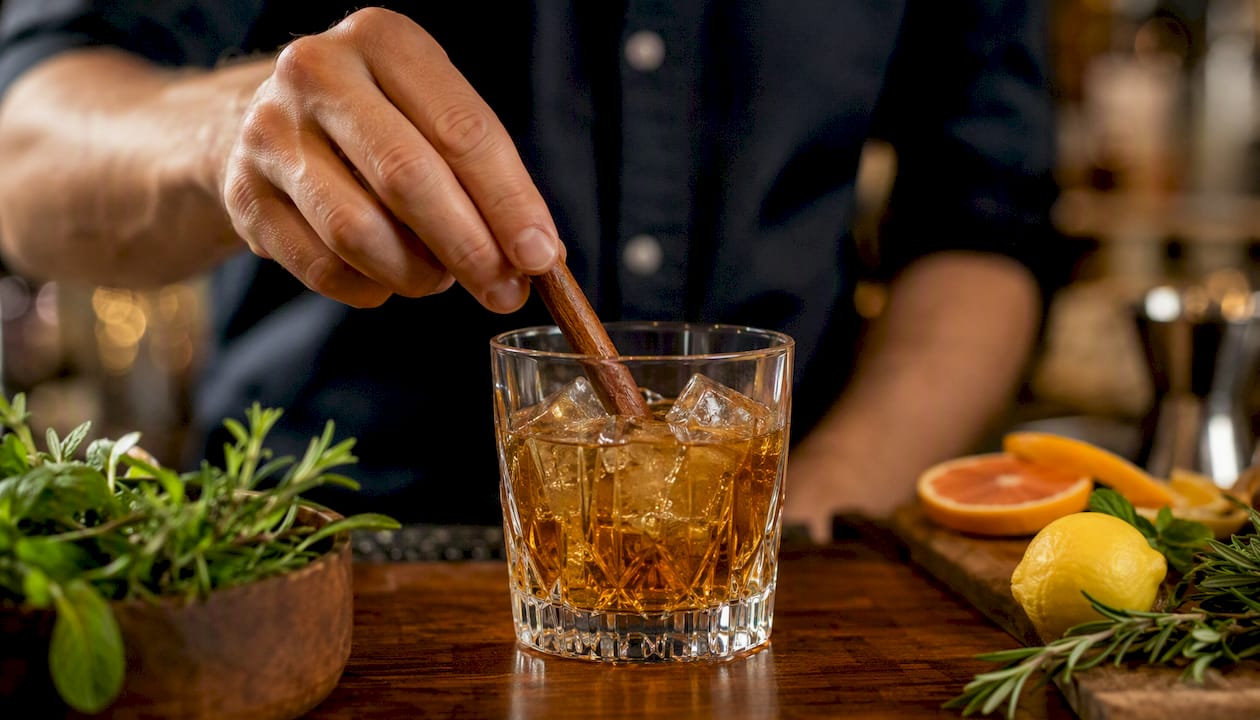
Nikka From The Barrel hits hard: dense dried fruit, cinnamon, a warming finish. One of the strongest value plays in the category right now. Works neat with a drop of water or in a stirred cocktail.
Hakushu 12 brings grassy, minty, faintly smoky notes. Availability is tightening in some markets, so grab it if your retailer has stock.
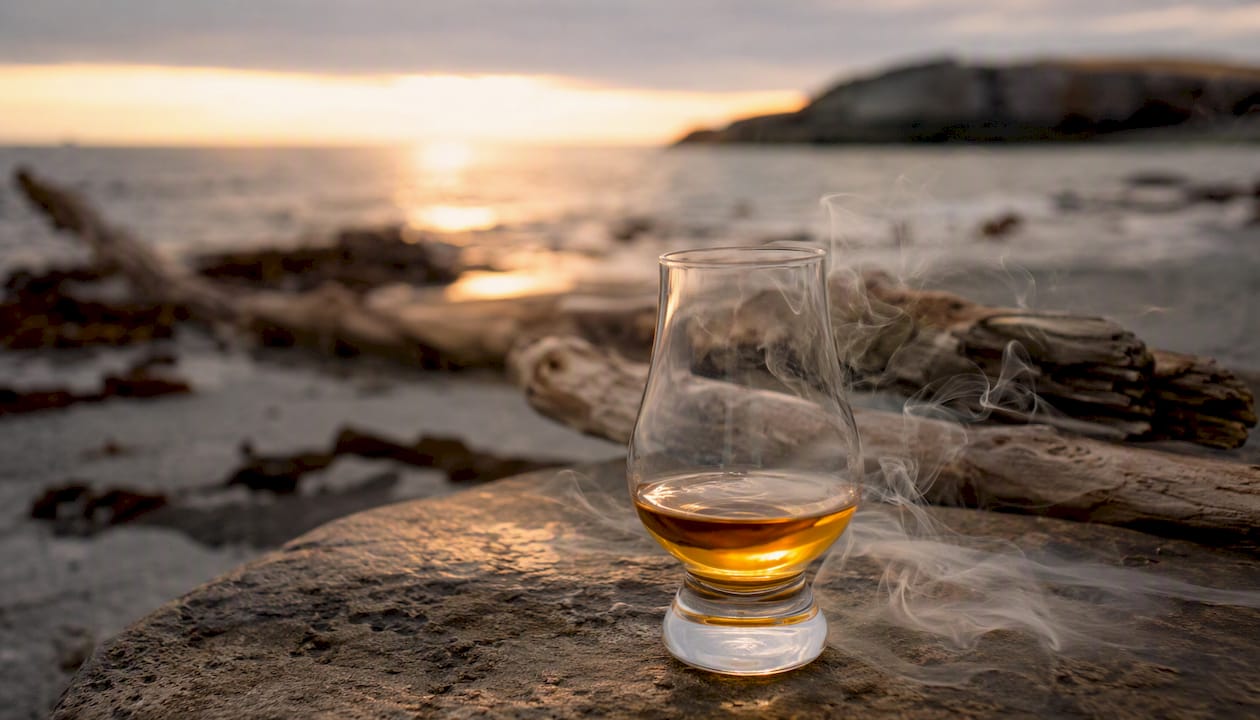
Yoichi Single Malt delivers coal‑fired peat and a briny, maritime edge, a legacy of the distillery’s traditional pot still process. Best neat for smoke fans; limited outside Japan.
Nikka Coffey Grain is soft and sweet: vanilla, coconut, corn syrup. Built for cocktails, particularly a whisky highball.
Miyagikyo Single Malt leans towards dried fruit and light nuttiness, closer to a Speyside profile. Neat or with a splash of water.
Ichiro’s Malt (Double Distilleries) blends malts from multiple sources into a layered, spice‑forward dram.
The Chita is silky, citrus‑led, gently sweet. Ideal base for a whisky sour.
Hibiki 21 Year Old closes the list with incense, dried fig and deep oak. Blended, 21 years, 43% ABV, often $500+ depending on market. For rare and collector bottles like this, always verify provenance and seller reputation before paying a premium.
Collector vs drinker: what the current market is telling buyers
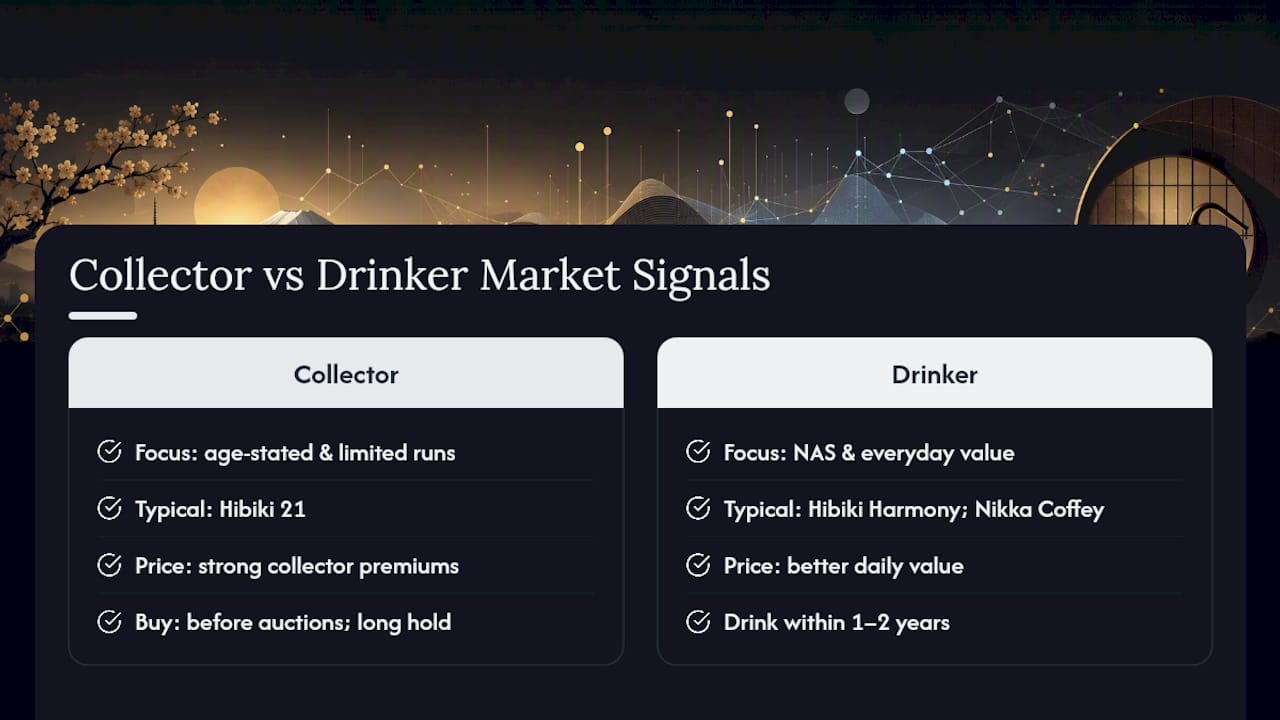
Buy for drinking now if you plan to open the bottle within a year or two; buy for collecting if you’re chasing age statements and limited runs that are unlikely to be reissued. Older expressions like Hibiki 21 carry real collector premiums, while NAS releases such as Hibiki Harmony and Nikka Coffey Grain offer stronger everyday value. Award wins can spike secondary‑market prices within weeks, so buy scarce bottles from a trusted retailer before they hit auction listings, where premiums stack fast.
Pro Tip: If a bottle just won an award, buy from a retailer immediately rather than waiting – auction prices tend to jump within days of the announcement.
Why this shortlist reflects what we actually stock and pour
This list comes from watching which bottles our customers keep asking for, cross‑checked against award results and tasting notes from across the category. “Top” here means a mix of flavour balance, real‑world availability and demonstrated value, not just brand recognition. We hold stock across most of these ten, run a dedicated sourcing service for harder‑to‑find releases, and ship both locally and internationally with provenance checks on every rare bottle we sell.
Where to buy these bottles and get expert help sourcing rare releases
We stock a rotating selection of the bottles above and can source many of the harder‑to‑find ones through custom requests. Rather than hunting across marketplaces and hoping a seller’s photos are honest, you get provenance checks built into every order, careful shipping for glass and labels, and gift packaging when you need it.
If you’re after something rarer than the standard top ten, our Ichiro’s Malt & Grain limited edition shows the kind of small‑batch release we regularly bring in for collectors, and the Hobart Whisky bourbon‑matured single malt is a good example of the boutique stock sitting alongside the bigger Japanese names. Returns are straightforward if a bottle arrives damaged, and shipping covers both local and international orders. Browse the current range at Uisuki or send through a sourcing request if the bottle you want isn’t listed yet.
Frequently asked questions
What is the best Japanese whisky to start with? Hibiki Harmony is the easiest entry point: soft, floral and forgiving on the rocks or with soda.
Is Yamazaki 12 still worth buying after its award win? Yes, though stock has tightened in some markets since its 2024 Supreme Champion Spirit win at the International Spirits Challenge. Buy when you see it near recommended retail pricing.
Should I prioritise age statements when buying Japanese whisky? Not always. Age statements suit collectors chasing rarity, but NAS expressions like Hibiki Harmony and Nikka Coffey Grain often offer better drinking value per dollar.
How can I tell if a Japanese whisky bottle is genuine? Check for Japan Spirits & Liqueurs Makers Association labelling compliance, buy from reputable retailers, and be wary of unusually low prices or missing provenance details on secondary markets.