

Highland Scotch whisky is single malt and blended Scotch distilled anywhere within Scotland’s Highland region, a protected locality covering more territory than any other whisky-producing area in the country. That size is the whole story: instead of one house style, you get waxy northern malts, sherry-heavy eastern drams, fragrant southern bottlings, and salty coastal editions all wearing the same regional label. The name “Highland” is legally protected under UK legislation, so it means something specific on a bottle, not just a marketing flourish.
If you want to start drinking rather than reading, here are five to try:
- Glenmorangie Original — best for beginners, light and floral
- Glendronach 12 Year Old — best for sherry lovers, rich and dried-fruit driven
- anCnoc 12 Year Old — best for sipping neat, gentle and approachable
- Dalmore 12 Year Old — best for a special occasion, orange and chocolate notes
- Tomatin 14 Year Old — best for value, bourbon and port cask balance
The rest of this guide walks through the subregions, the production choices behind those flavours, and how to buy with confidence.
Key Takeaways
Highland Scotch whisky spans the widest flavour range of any Scotch region because its production levers, from still shape to cask finish, vary more than the label alone suggests.
| Point | Details |
|---|---|
| Legal definition matters | “Highland” is a protected locality under UK legislation, not just a marketing term. |
| Style depends on subregion | Northern, eastern, southern, and coastal Highland malts each carry distinct flavour signatures. |
| Production drives flavour | Still shape, peating level, and cask type shape taste more than region alone. |
| Awards signal reliability | WWA 2026 gold medals for Loch Lomond, Aberfeldy, and anCnoc point to consistent, approachable bottles. |
| Buy with a plan | Com curates Highland single malts and sources rare bottles for collectors chasing specific styles. |
Table of Contents
- What is Highland Scotch whisky, exactly?
- What are the Highland subregions and their flavour signatures?
- What production choices shape a Highland whisky’s style?
- Which Highland distilleries and bottles should you know?
- How do you choose and buy a Highland whisky?
- What are Highland whisky’s award highlights right now?
- How should you taste and pair a Highland whisky?
- Where can you buy Highland Scotch whisky online?
- Sources
What is Highland Scotch whisky, exactly?
“Highland” is a defined term in Scotch whisky law, not a loose geographic gesture. SI 2009/2890 lists it as one of Scotland’s protected localities, alongside Speyside, Islay, Campbeltown, and the Lowlands. Anything labelled Highland Scotch must be distilled within that mapped boundary.
The confusing part is scale. The Highlands wrap around most of mainland Scotland north of a line roughly from Dundee to Greenock, and they take in island distilleries scattered around the coast, excluding Islay, which keeps its own separate designation. Speyside sits geographically inside the Highland boundary but has earned its own protected status because of its distillery density and shared style tendencies, so you will often see it discussed as a region in its own right even though it is technically a Highland enclave. Highland single malts as a category therefore spans mainland glens, northern coasts, and outlying islands, all under one legal label.
A few quick orientation points:
- Highland covers the largest land area of any Scotch region
- Speyside is administratively separate but geographically within it
- Islands other than Islay generally fall under the Highland designation
What are the Highland subregions and their flavour signatures?
Where in the Highlands a whisky is made tells you a lot about what to expect in the glass, though never the whole story. Distillers here draw on different water sources, exposure to sea air, and local traditions, and those variables shape the spirit before a single cask finish gets involved.
- Northern Highlands (Dalmore, Glenmorangie): often waxy, orchard-fruited, sometimes with a citrus lift
- Eastern Highlands (Glendronach, Aberfeldy): fuller-bodied, frequently sherry-cask driven, dried fruit and spice
- Southern Highlands: lighter, more fragrant, closer in character to a delicate Lowland dram
- Western/coastal Highlands: saline, sometimes a light peat smoke, shaped by proximity to the sea
- Speyside-adjacent areas: sweeter, fruitier, honeyed, overlapping with classic Speyside character
Treat that list as a rough compass, not a rulebook. By area, the Highlands are Scotland’s largest whisky region, and the flavour range inside it runs from light and floral right through to rich, sherried, or gently peated. A single distillery can straddle several of those camps depending on which expression you pour.
Pro Tip: Read the region on a bottle as a starting hint, not a guarantee. The Highlands are a broad church, and plenty of distilleries deliberately produce more than one style from the same site.
What production choices shape a Highland whisky’s style?
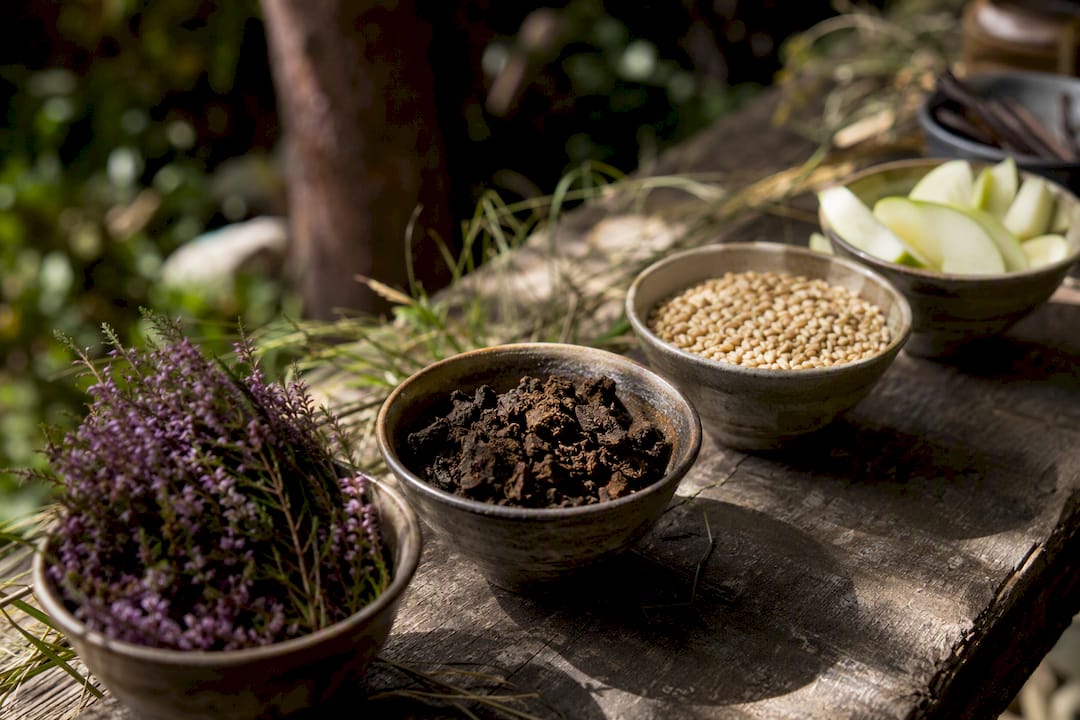
Flavour starts long before the cask. Distillers control several levers that push the same raw barley toward very different results:
- Peating level — from unpeated (most Highland malts) to lightly smoked coastal styles
- Still shape — tall, narrow stills tend toward lighter, more floral spirit; short, fat stills give a heavier character
- Fermentation length — longer ferments build fruitier esters
- Cask type — first-fill bourbon gives vanilla and coconut, sherry casks bring dried fruit and spice, wine finishes add extra layers late in maturation
Loch Lomond is the clearest example of how far these levers can stretch a single site’s output. The distillery runs both traditional swan-neck pot stills and unusual straight-neck stills, varying fermentation times across batches to produce genuinely different spirit styles under one roof.
That operational flexibility, swan-neck and straight-neck stills working side by side, explains why one distillery can turn up on very different tasting lists depending on the release.
Cask finish and bottling strength both shift what you should expect in the glass, so check both before assuming a bottle will taste like the last Highland dram you tried.
Which Highland distilleries and bottles should you know?
Consider this your shopping shortlist. Each of these distilleries represents a distinct corner of the Highland style map, and most of the entries below are widely stocked rather than collector-only.
- Glenmorangie — the Original 10 Year Old is floral and citrusy with a light body; best for beginners; widely available.
- Glenmorangie (deeper cut) — the 18 Year Old adds sherry cask depth for readers who want to trade up from the Original; best for sipping neat; widely available.
- Loch Lomond — the 12 Year Old is fruity with a soft peppery edge, a good showcase of the distillery’s flexible still setup; best for curious drinkers; widely available.
- Aberfeldy — the 12 Year Old brings honeyed sweetness with a heather-like softness; best for beginners moving toward richer drams; widely available.
- Glendronach — the 12 Year Old is a sherry bomb, dense with raisin, toffee, and dark chocolate; best for sherry lovers; widely available.
- Tomatin — the 14 Year Old mixes bourbon and port cask influence for a fruity, approachable profile; best for value seekers; widely available.
- anCnoc (Knockdhu) — the 12 Year Old is gentle, honeyed, and easy-drinking, one of the more underrated Highland names; best for sipping neat; moderately available.
- Dalmore — the 12 Year Old delivers orange marmalade and dark chocolate over a firm, oily body; best for special occasions; widely available.
- Oban — a coastal outlier worth seeking out for its light salt-and-smoke edge; best for readers chasing the maritime style; moderately available.
How do you choose and buy a Highland whisky?
Start with the label, not the price tag. A few cues tell you more than the marketing copy ever will:
- Age statement vs. NAS — an age statement guarantees a minimum maturation time; No Age Statement bottles can still be excellent but give you less certainty
- Cask type or finish — sherry, bourbon, or wine cask finishing listed on the label signals the flavour direction before you open it
- ABV — most sit between 40% and 46%, with cask-strength releases running higher and delivering more intensity
- Limited edition or single cask markers — these usually mean smaller batches, higher prices, and less consistency between bottles
Rough price bands: entry-level Highland single malts (Glenmorangie Original, Aberfeldy 12) generally sit at the lower end and suit newcomers; mid-range bottlings (Glendronach 12, Dalmore 12) reward a bit more spend with cask complexity; premium and limited releases climb further and suit collectors chasing something specific.
Pro Tip: When a bottle carries a recent award, it’s usually a reasonable signal of quality and consistency rather than hype, particularly for entry and mid-range releases where judges reward drinkability over shock value.
What are Highland whisky’s award highlights right now?
The World Whiskies Awards 2026 named Loch Lomond, Aberfeldy, and anCnoc among its Highland gold medallists. Judges appeared to reward distilleries producing a genuine range of styles rather than a single signature expression, which lines up with Loch Lomond’s flexible still setup.
Distilleries capable of running multiple spirit styles from one site tend to perform well across judged categories, rewarding range and consistency over a single flagship pour.
For shoppers, that is a useful shortcut: a recent gold medal on Aberfeldy or anCnoc is a decent sign the bottle will drink well without needing deep expertise to appreciate it.
How should you taste and pair a Highland whisky?
Work through it in four steps:
- Look — check the colour for a rough cask clue (pale gold suggests bourbon cask, deep amber suggests sherry)
- Nose — swirl gently and note the first aromas before adding water
- Palate — take a small sip and let it sit before swallowing
- Finish — note how long the flavour lingers and whether it shifts character
Pair sherry-driven bottles like Glendronach with blue cheese or dried fruit, coastal drams with smoked salmon, and lighter waxy styles like Glenmorangie with dark chocolate. Serve at room temperature in a tulip-shaped glass to concentrate the aroma.
A region to explore, not a flavour to memorise
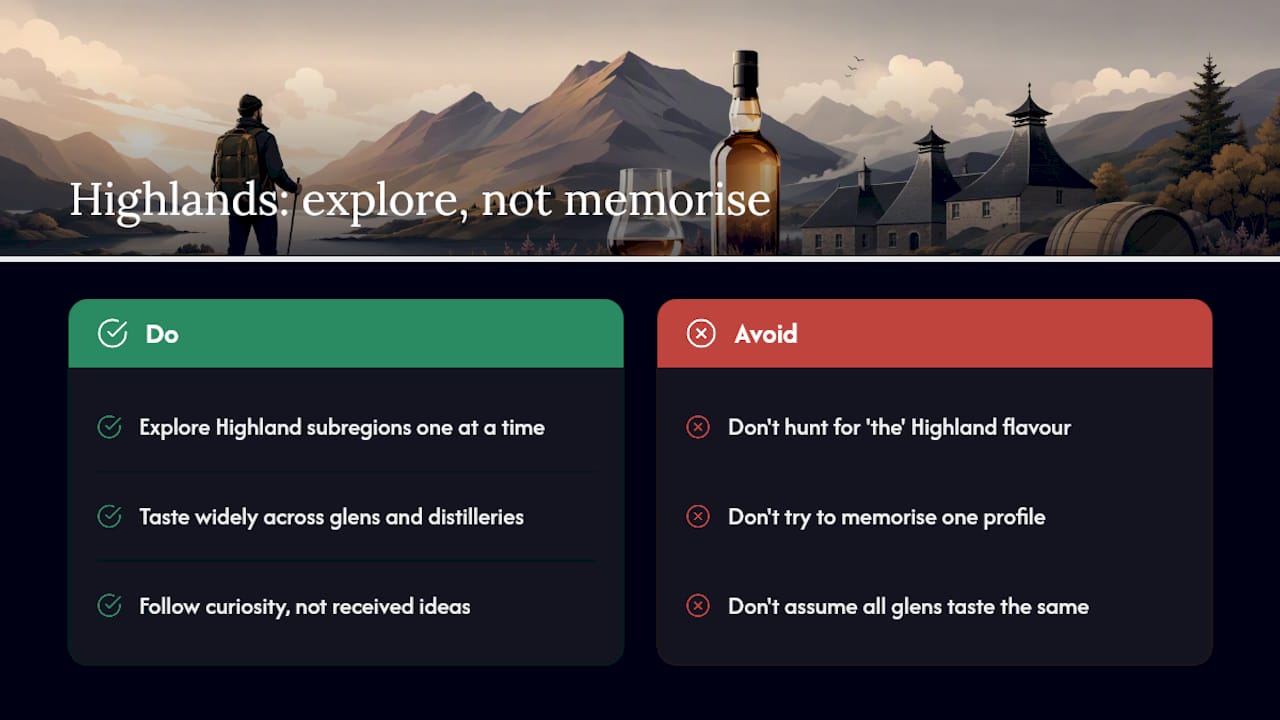
I’ve found the Highlands reward curiosity more than any other Scotch region, because no two glens taste alike. Work through the subregions rather than hunting for “the” Highland flavour, and you will land on favourites faster.
Where can you buy Highland Scotch whisky online?
Sourcing a decent Highland single malt shouldn’t mean settling for whatever your local bottle shop happens to stock. Com curates Highland releases alongside rare and limited bottlings from Scotland, Japan, Australia, and the US, so you can compare styles side by side instead of guessing from a single shelf.
Beyond the well-known names, Com sources hard-to-find bottles on request, which matters if you’re chasing a specific cask finish or a limited Highland release that’s already sold out elsewhere. The Ardnamurchan Macleans Nose Blended Scotch Whisky is a good example of the kind of harder-to-source bottling the store tracks down for collectors. Shipping runs locally and internationally, with clear thresholds for free delivery. If you’ve read this far and want to put it into practice, browse the Hobart Whisky Bourbon Matured Rum Finished Single Malt or send through a custom sourcing request for the specific Highland bottle you’ve had your eye on.
Sources
- Legislation
- Highland single malts — Wikipedia
- Highland Scotch Gold Medals at World Whiskies Awards 2026 — The Whiskey Wash
- Best Highland Whisky — Whisky of the Week