

A Speyside single malt is a whisky distilled and matured entirely within the Speyside region of Scotland, and it’s the benchmark for elegant, fruity, generally unpeated Scotch. Expect pear, apple, honey and vanilla rather than smoke. Start with a 12-year bourbon-matured expression, then step up to a sherry-finished bottle to see how cask choice changes everything.
TL;DR:
- Most Speyside single malts are bourbon-matured and focus on fruity, floral flavors like pear, apple, honey, and vanilla, especially at the 12-year age.
- Cask choice significantly impacts flavor, with sherry casks adding dried fruit and spice, while bourbon casks retain brighter, lighter notes.
- The region’s soft water, filtered through quartzite, contributes to the lighter, more delicate spirit profile typical of Speyside whiskies.
- Distillation equipment, such as still shape and condenser type, along with fermentation, account for individual distillery flavor variations within the region.
- Buying strategies should prioritize cask type and age over brand or region, as Speyside’s styles vary widely based on production choices.
Table of Contents
- What is Speyside and why does it matter to flavour?
- What does a Speyside single malt taste like?
- How does maturation and cask choice shape the flavour?
- Which Speyside styles should you try first?
- Why trust our Speyside picks?
- Which Speyside whiskies have won recent awards?
- How did Speyside become Scotland’s whisky heartland?
- What makes Speyside distillation different?
- Does Speyside’s water really change how the whisky tastes?
- What rules govern the Speyside label?
- Is the “elegant Speyside” reputation overrated?
- Ready to find your Speyside single malt?
- Sources
What is Speyside and why does it matter to flavour?
Speyside sits around the River Spey in the northeast of Scotland, and it’s the most crowded whisky-producing patch on the map. Numerous distilleries operate here, together accounting for a significant portion of all Scotch produced in the country, according to Speyside single malt records. Dufftown alone runs multiple distilleries with a large combined annual capacity, a scale that gives the region significant influence over what “Scotch” tastes like to most drinkers worldwide.
That density isn’t an accident. Barley grows well on the surrounding farmland, and the water draining off the local hills is unusually clean.
- Speyside is technically a sub-region nested inside the larger Highland whisky region, so some bottles carry both labels legally
- The area’s quartzite geology filters the water before it ever reaches a mash tun, stripping out dissolved minerals
- Around 50 distilleries operate within a compact geographic footprint, more than any other Scotch region
That legal overlap with Highland labelling matters if you’re reading export packaging, because a whisky with genuine Speyside provenance can be marketed simply as “Highland” in some markets.
What does a Speyside single malt taste like?
Pour a classic Speyside dram and you’ll usually meet pear, apple, honey, vanilla, sultana and a whisper of baking spice before anything smoky shows up. That’s the house style: light, sweet and orchard driven, built for sipping rather than confronting.
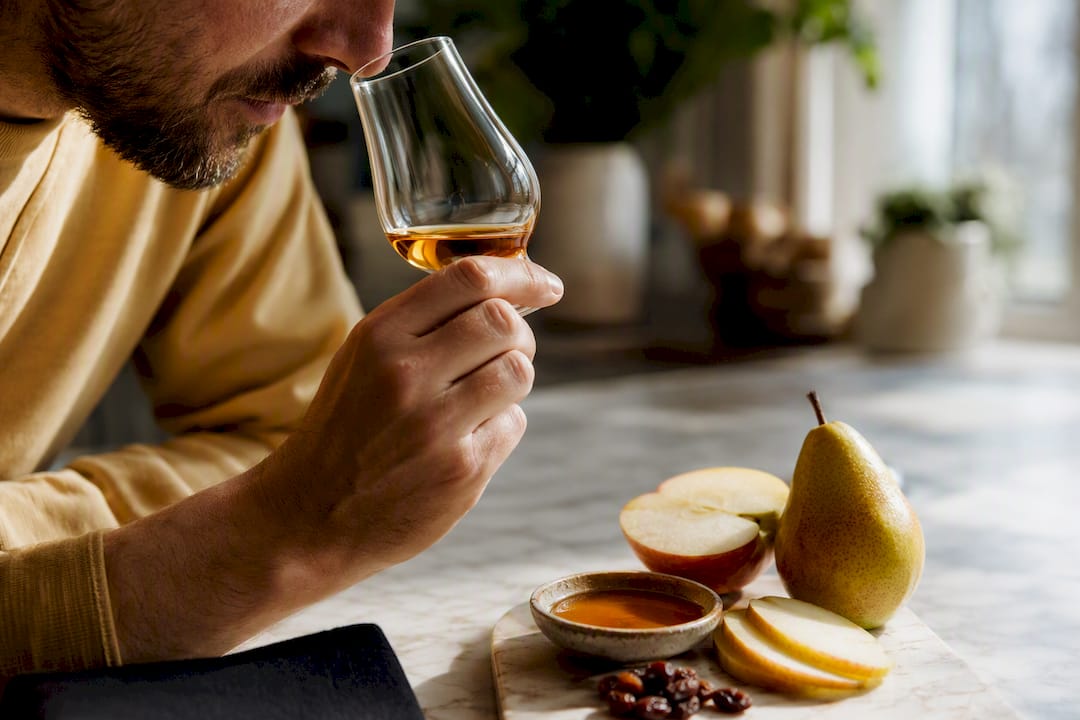
Pro Tip: If you’re new to tasting, nose the glass with your mouth slightly open. It softens the alcohol sting and lets the fruit and honey notes come through clearer.
The word “unpeated” gets thrown around a lot, and it’s worth unpacking. Peat smoke, the character that defines a lot of Islay whisky, comes from drying malted barley over peat fires. Most Speyside distilleries skip that step entirely, drying barley with hot air instead, which is exactly why the region tastes cleaner and fruitier rather than medicinal or bonfire-like.
Common flavour markers you’ll find across Speyside bottles:
- Fresh orchard fruit: pear, green apple, sometimes stewed apricot
- Sweetness: honey, vanilla, toffee, occasionally butterscotch
- Dried fruit and spice in older or sherry-influenced expressions: sultana, fig, cinnamon, clove
- A light, floral finish rather than a long smoky tail
Age and cask do a lot of the heavy lifting here. A young, bourbon-matured Speyside will lean into crisp apple and vanilla. Push the age statement past 15 years, or introduce a sherry cask, and the same distillery’s spirit can turn toward dried fruit, toffee and a noticeably richer, more tannic finish, a shift documented in maturation research from Once Upon a Whisky.
How does maturation and cask choice shape the flavour?
Cask type is arguably the single biggest lever a distillery pulls after distillation, and it’s worth understanding before you spend money on a bottle.
- Bourbon casks (ex American whiskey barrels) tend to preserve vanilla, coconut and lighter fruit character, keeping the spirit bright and approachable.
- Sherry casks (ex-Oloroso or Pedro Ximénez) add dried fruit, spice and a deeper colour, pushing the whisky toward Christmas cake territory.
- New oak or first-fill casks impart stronger wood tannin and vanillin faster, which is why some younger whiskies still taste surprisingly mature.
A 12-year Speyside typically shows fresh fruit and a light oak backbone, still close to its “new make” character. Push to 15 or 18 years and you’re usually tasting a longer conversation between spirit and wood: more spice, more dried fruit, occasionally a leathery or nutty edge.
Pro Tip: Check the back label before you buy. “Sherry cask finish” usually means a shorter secondary maturation in sherry wood after years in bourbon casks, while “sherry matured throughout” means the whole maturation happened in sherry wood, and it tastes noticeably richer.
Four things worth reading on any label: the age statement (or its absence, marked NAS), the cask type, the ABV, and whether it mentions a specific finishing period.
Which Speyside styles should you try first?
You don’t need to memorise fifty distillery names to buy well here. Think in styles, not brands, and the choice gets a lot simpler.
Entry-level, fruit-forward 12-year expressions are the sensible starting point. They’re bourbon-matured, light on the wallet, and built to showcase the pear-and-honey character that defines the region. Beginner guides consistently point newcomers toward 12-year Speyside bottles for exactly this reason, according to Tasting Table’s beginner whisky picks.
Sherry-finished 12 to 15-year bottles step things up. Expect dried fruit, spice and a fuller mouthfeel, still approachable but with more to think about in the glass. This is the style that tends to convert casual drinkers into genuine fans.
Older releases (15 years plus) and limited runs are for collectors and anyone chasing a special-occasion pour. These show the deepest fruit-cake complexity Speyside can produce, and they’re the bottles worth cellaring rather than opening on a Tuesday.
A practical checklist before you commit to a bottle:
- Confirm the age statement (or accept NAS if the price and reviews justify it)
- Note the cask type, since it predicts flavour more reliably than the distillery name alone
- Check the ABV, usually between 40% and 46% for standard releases, higher for cask-strength bottlings
- Look for award mentions or limited-run numbering, which often signal a standout cask
| Style | Typical age | Best for | What to expect |
|---|---|---|---|
| Entry-level bourbon-matured | 12 years | First-time buyers, everyday sipping | Pear, apple, vanilla, light honey |
| Sherry-finished | 12 to 15 years | Gifting, stepping up your palate | Dried fruit, spice, fuller body |
| Older or limited release | 15 years plus | Collecting, special occasions | Deep dried fruit, oak, complexity |
If you want a shortcut through all this, Com’s best Speyside single malts to buy or taste list groups current stock by exactly these style categories.
Why trust our Speyside picks?
Every bottle Com lists carries the detail you actually need to make a decision: ABV, cask type, tasting notes and provenance, not just a price tag and a photo. The Balvenie 15 Single Barrel Sherry Cask product page is a good example of how that’s laid out, spirit strength and cask history sitting right alongside the tasting profile.
That level of detail matters more in Speyside than almost anywhere else in Scotch, because the region’s house style hides real variation between distilleries once you look closely.
- Product pages list ABV, age, cask information and tasting notes together, not scattered across marketing copy
- Curated selections group bottles by style and occasion rather than just alphabetically
- Readers can submit a sourcing request for rare or hard-to-find Speyside bottles not currently listed
- Educational content sits alongside the shop, so buying decisions are backed by context rather than guesswork
If you know roughly what you’re after, whether that’s a gift bottle around $80 or a collector’s cask-strength release, a personalised sourcing request through the site is the fastest way to get a recommendation matched to your budget and taste.
Which Speyside whiskies have won recent awards?
Award results are one of the few genuinely objective signals in a category otherwise dominated by marketing copy, and Speyside continues to punch above its weight. The GlenAllachie 12 Year Old took out Best Scotch Speyside Single Malt at the World Whiskies Awards 2025, a result that reflects sustained, careful cask management rather than a one-off lucky batch.
That win is useful beyond bragging rights. Award categories at competitions like the World Whiskies Awards are judged blind by panels tasting dozens of entries side by side, which means a category win says more about consistency than a single glowing review ever could. For collectors trying to decide between two similarly priced 12-year Speyside bottles, a recent award result is a genuinely useful tiebreaker.
It’s also a reminder that “Speyside” isn’t a single flavour target distilleries are all racing toward. GlenAllachie’s style leans into rich, sherry-driven fruit, distinct from the lighter, orchard-fruit character you’d get from a classic bourbon-matured 12-year from elsewhere in the region. Both can win awards in the same year, in different categories, because the region’s range is wider than the “elegant and fruity” stereotype suggests.
Award recognition changes fairly often year to year as panels rotate and new releases enter the field, so it’s worth treating any specific winner as a snapshot of a particular vintage rather than a permanent ranking of the distillery itself.
How did Speyside become Scotland’s whisky heartland?
Speyside’s dominance isn’t recent. The region became a whisky centre through a combination of geography and, frankly, geography’s usefulness for hiding from tax collectors. The Spey valley’s remote glens made it an ideal spot for illicit stills long before commercial distilling was legal, and the local water and barley supply gave those early distillers a genuine quality advantage once the law caught up with them.
The Excise Act of 1823 changed the economics of Scotch overnight, making licensed distilling commercially viable for the first time. Speyside distilleries were among the first to take advantage, partly because the infrastructure (water, grain, transport routes toward Elgin and the coast) was already there from generations of unlicensed production. Distilleries like Glenlivet built early reputations that still carry weight today, and that first-mover advantage compounded over nearly two centuries.
Railway expansion in the 19th century sealed the deal, connecting Speyside’s glens to markets in Edinburgh, London and eventually the export trade that took Scotch global. The blending boom of the late 1800s and early 1900s leaned heavily on Speyside malts as a base component, prizing exactly the light, fruity character that makes them so flexible in a blend. That historical role, as the reliable, well-behaved component in countless blended whiskies, is part of why the region ended up with roughly 50 working distilleries rather than a handful.
What makes Speyside distillation different?
Distillation itself, stripped back to basics, is the same everywhere in Scotch: ferment, distil twice in copper pot stills, mature in oak. What varies across Speyside, and what actually explains the flavour differences between neighbouring distilleries, comes down to equipment choices most drinkers never think about.
Still shape and size change how much contact the vapour has with copper before condensing, and more copper contact generally means a lighter, cleaner spirit. Most Speyside distilleries run tall, narrow stills for exactly that reason, reinforcing the region’s reputation for elegance over weight.
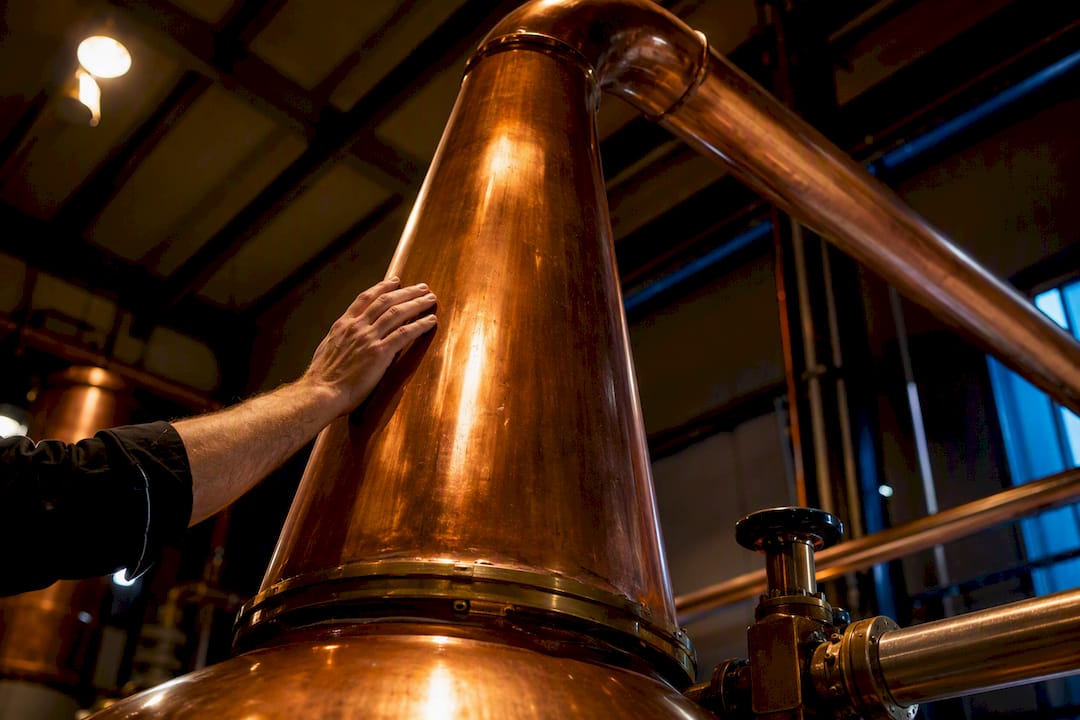
Condenser type is the other big variable, and it’s where Speyside’s supposed uniformity breaks down. Most distilleries use modern shell-and-tube condensers, which favour a cleaner spirit. A handful still run worm tub condensers, an older, less efficient design that reduces copper contact and produces a heavier, meatier spirit. Craigellachie is the standout example, and its whisky is noticeably more robust and sulphurous than the Speyside stereotype would predict, according to a Craigellachie distillery profile from MaltsPedia.
Yeast strain and fermentation length add another layer of house character before distillation even starts, which is part of why two Speyside distilleries using near-identical water and barley can still produce noticeably different new-make spirit.
Does Speyside’s water really change how the whisky tastes?
Water gets credited for a lot in whisky marketing, not all of it earned, but Speyside’s case is genuinely stronger than most. The rivers and streams feeding local distilleries run over quartzite bedrock, a hard, largely insoluble rock that leaves the water low in dissolved minerals by the time it reaches the mash tun.
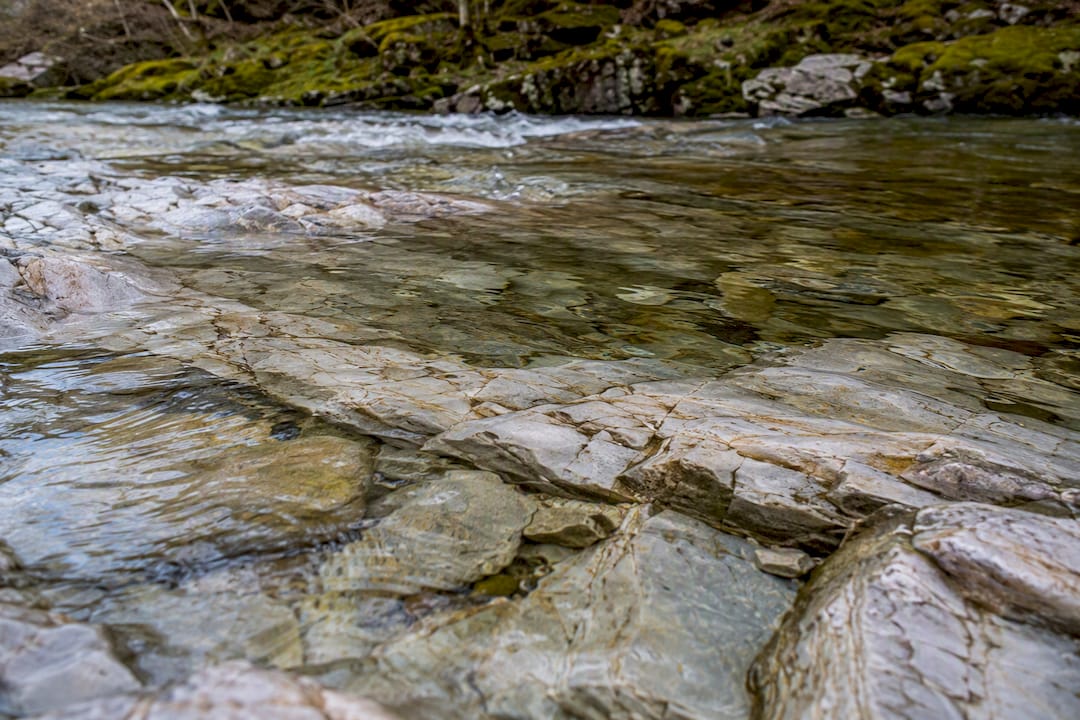
That low mineral content is widely linked to a lighter, cleaner fermentation and, by extension, a lighter spirit character before oak even enters the picture, per the Speyside single malt overview. Harder water, with higher calcium and magnesium content, tends to interact differently with yeast during fermentation and can push flavour in a heavier direction. Speyside’s soft water is one plausible contributor to the region’s fruit-forward, elegant house style, sitting alongside still shape and condenser choice rather than working alone.
None of this means water alone explains why Speyside tastes the way it does. Distilleries drawing from similar watersheds still produce meaningfully different spirit, which is the clearest evidence that equipment and process matter at least as much as geology. But it’s a real, physical input, not just a line on a bottle’s back label, and it helps explain why the region built its reputation on delicacy rather than power.
What rules govern the Speyside label?
“Speyside” isn’t a marketing term anyone can slap on a bottle. It’s one of five protected whisky regions recognised under Scotch Whisky Regulations, alongside Highland, Lowland, Campbeltown and Islay, and a whisky can only carry the Speyside name if it’s both distilled and matured within the defined geographic boundary around the River Spey.
The wrinkle most buyers miss is that Speyside sits geographically inside the broader Highland region. That overlap means a whisky legitimately produced in Speyside can be labelled as either Speyside or Highland, and some distilleries choose Highland on export packaging for reasons that have more to do with brand positioning than geography. If you’re trying to build a genuinely Speyside collection, checking the distillery’s actual location matters more than trusting the regional word on the front label.
Beyond regional labelling, standard Scotch Whisky Regulations apply across the board: single malt status requires the whisky to come from a single distillery, be made entirely from malted barley, distilled in pot stills, and matured in oak casks in Scotland for a minimum of three years. Age statements on the label must reflect the youngest whisky in the bottle, which is why a 12-year-old blend of casks might contain some far older spirit without the label mentioning it. None of this is unique to Speyside, but it’s the framework every bottle in the region has to satisfy before it can legally use the single malt term at all.
Is the “elegant Speyside” reputation overrated?
Most buying guides treat “elegant, fruity, unpeated” as a fixed law rather than a strong tendency, and that’s a genuine disservice to newcomers who then get blindsided by something like Craigellachie’s meatier, sulphurous style and assume they’ve bought a faulty bottle.
The better approach, and the one that actually pays off, is choosing by cask and production style rather than by regional label alone. A sherry-matured Speyside will have more in common with a sherry-matured Highland malt than it does with a bone-dry bourbon-cask Speyside from the same postcode. Region tells you a starting tendency; cask and condenser tell you what’s actually in the glass.
What most buyers should prioritise, in order, is cask type first, age statement second, and distillery name a distant third. That’s backwards from how most retail shelves are organised, and it’s exactly why a style-based approach to choosing a bottle beats brand loyalty every time. Speyside earned its reputation for a reason. Just don’t assume every bottle wearing that label is playing the same tune.
— Brendan
Ready to find your Speyside single malt?
The Speyside range is curated by style rather than listing many similar bottles on one page, allowing shopping by flavour intent, whether a light bourbon-matured sipper or a rich sherry cask release, instead of hunting through distillery names.

Listings generally provide ABV, cask history and tasting notes, and stock ranges from everyday bottles to rarer, limited releases. Customers can search by flavour profile or region, or submit sourcing requests for recommendations. Shipping includes local and international orders, with free shipping thresholds indicated at checkout. Purchases are restricted to buyers of legal drinking age where applicable. Start browsing the Speyside single malt selection and find the bottle that matches the style you’re actually after, not just the one with the loudest label.
Sources
- Speyside single malt — Wikipedia
- World Whiskies Awards — Winner whisky 2025
- How does maturation impact whisky flavour? — Once Upon a Whisky