

Whiskey is the umbrella term for any grain spirit aged in wood; bourbon and rye are American styles defined by mash-bill rules and new charred oak, while Scotch is whisky made and matured in Scotland for at least three years. The differences come down to grain, geography, and barrel law, not just taste.
TL;DR:
- Bourbon must contain at least 51% corn and age in new charred oak barrels, with strict legal limits on proof and minimum aging of four years for straight bourbon.
- Japanese and Scottish whiskies are labeled “whisky,” not “whiskey,” reflecting regional spelling conventions, with Scotch requiring at least three years of aging in Scotland.
- Rye whiskey, made from at least 51% rye in the US, offers a spicier, drier profile, while Canadian rye can be milder with lower rye content.
- Scotch whisky often matures in used barrels, producing softer, dried fruit and nut flavors, whereas bourbon’s new oak barrels push vanilla and caramel notes.
- Starting a collection with one bottle each of bourbon, rye, and Scotch helps develop palate contrast, focusing on grain, flavor profile, and legal origin details.
Table of Contents
- Bourbon vs whiskey vs Scotch vs rye: the spelling and grain basics
- Legal definitions: the rules that make a bourbon, a rye, or a Scotch
- How production choices and ageing shape flavour
- Taste profiles and typical uses: pick for sipping or cocktails
- Quick comparison: bourbon vs whiskey vs Scotch vs rye at a glance
- Building a small tasting collection worth keeping
- Where to find the styles worth trying
- Sources
Bourbon vs whiskey vs Scotch vs rye: the spelling and grain basics
“Whiskey” and “whisky” describe the same thing, spelled differently depending on where the bottle comes from. The United States and Ireland write “whiskey.” Scotland, Canada, and Japan drop the “e” and write “whisky.” It is a naming convention, not a production difference, though whisky purists treat it as a small badge of national identity.
The category itself is broad: any distilled spirit made from fermented cereal grains and aged in wood qualifies. What varies is the grain doing the heavy lifting.
- Corn brings natural sweetness and a fuller, oilier body.
- Barley (especially malted barley) gives a grainy, biscuity backbone and, through fermentation, delicate fruit and floral notes.
- Rye adds spice, pepper, and a drier finish.
- Wheat softens texture and rounds out sharper edges.
Every style covered here, bourbon, rye, Scotch, is a variation built on which of these grains dominates the mash bill and how the law forces producers to treat it.
Legal definitions: the rules that make a bourbon, a rye, or a Scotch
Labels aren’t marketing fluff here. They’re legal declarations, and the rules differ sharply by country.
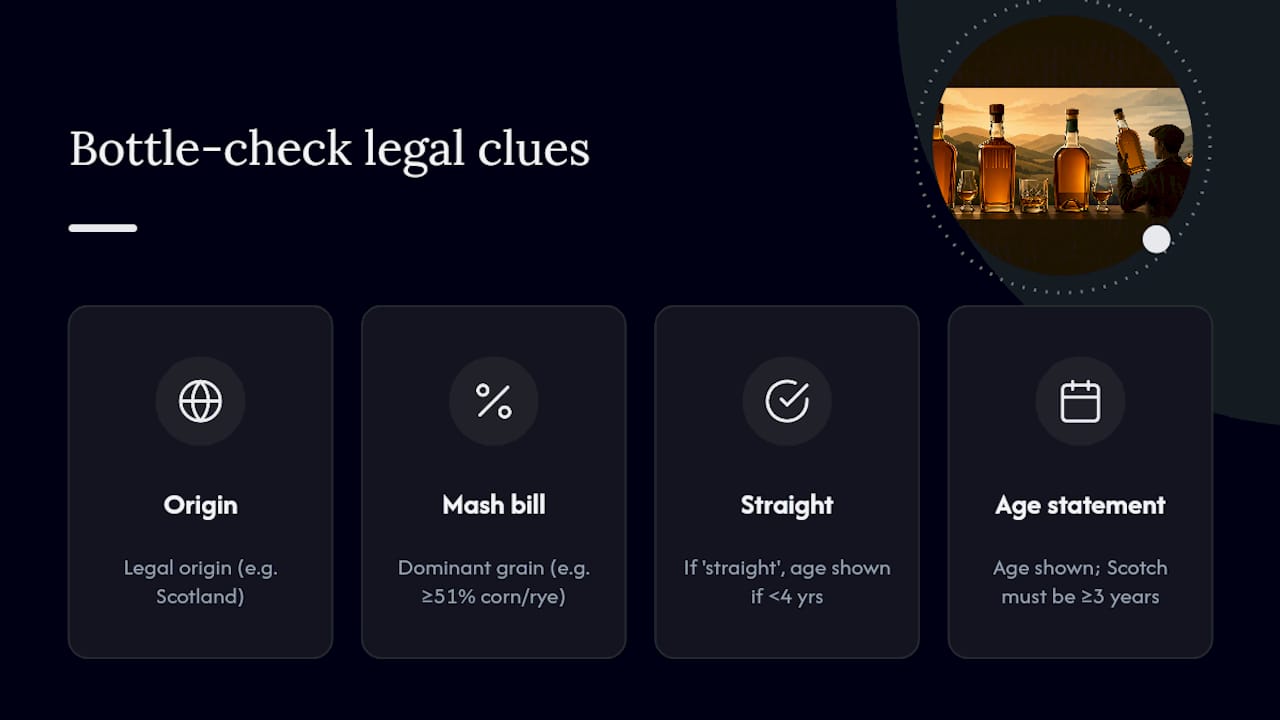
Bourbon, under US regulation, must come from a mash bill of at least 51% corn, and it has to age in new, charred oak barrels. That’s non-negotiable. There’s also a distillation ceiling and a bottling floor that most drinkers never hear about.
Bourbon’s hard limits: distilled to no more than 160 proof (80% ABV) and bottled at no less than 80 proof (40% ABV). A “straight” bourbon must carry an age statement if it’s aged less than four years.
Rye whiskey in the US follows the same structural logic as bourbon but flips the dominant grain: at least 51% rye in the mash bill, aged in new charred oak. Canadian rye is looser. Producers there can label a whisky “rye” even with a smaller rye percentage, which is one reason Canadian rye often drinks smoother and less peppery than its American counterpart.
Scotch answers to a different authority entirely. Under UK regulation, it must be produced, distilled, and matured in Scotland for a minimum of three years, in oak casks no larger than 700 litres, and bottled at a minimum 40% ABV. Geography is the whole point. Distil the same recipe in England and it legally cannot be called Scotch.
When you’re checking a bottle, look for country of origin, any mash-bill notes, the word “straight,” and an age statement. Those four details tell you almost everything the law requires the producer to disclose.
How production choices and ageing shape flavour
Grain sets the starting point, but barrel and process decide where the flavour actually lands.
Corn-heavy mash bills bring sweetness and weight; rye brings spice and a drier bite; malted barley brings a grainy, biscuity character along with fruity esters from fermentation. Layer barrel choice on top and the picture sharpens further. New charred oak, mandatory for bourbon and rye, pushes vanillin, caramel, and coconut-like lactones straight into the spirit because nothing has used that barrel before. Scotch, ageing in previously used bourbon or sherry casks, pulls a gentler set of flavours, dried fruit, nuttiness, softer oak tannin, because much of the sharpest wood character was already stripped out by the first fill.
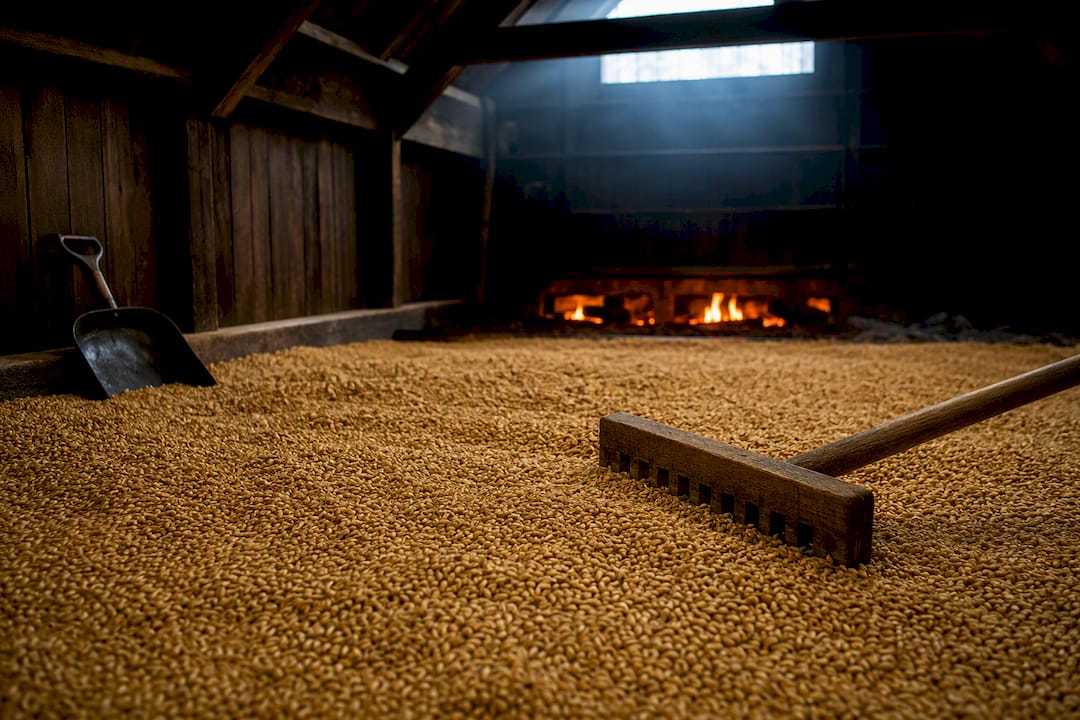
Peat is Scotch’s wildcard. When malted barley dries over a peat fire, phenolic compounds cling to the grain and survive distillation, which is why some Islay Scotches taste like a campfire in a glass while a Speyside can taste like honey and orchard fruit.
Pro Tip: Barrel char works like activated carbon. It strips out harsh congeners while depositing toasted, caramelised oak compounds, so a heavier char (say, Char #4 versus Char #3) tends to smooth a spirit while pushing its flavour further into “toasted” territory. Learn more about the ageing process behind flavour if you want the full mechanics.
Taste profiles and typical uses: pick for sipping or cocktails
Here’s how the three styles actually behave in a glass, and where each one earns its keep.
- Bourbon leans sweet, vanilla, caramel, and full-bodied, largely thanks to its corn base and new-oak ageing. It drinks well neat, but it’s also the backbone of an Old Fashioned, where its sweetness balances bitters and sugar.
- Rye trades sweetness for spice and pepper, with a drier, sharper finish. That bite is exactly what a Manhattan or a Sazerac needs to stay interesting rather than syrupy.
- Scotch covers the widest range of any style here, from light, honeyed, fruit-forward Speysides to powerful, medicinal peat bombs from Islay. Pairing choice with food or occasion matters more with Scotch than with either American style.
Within bourbon itself, mash-bill tweaks create real substyles. High-rye bourbons push rye content up for peppery, cinnamon-forward character that works well in cocktails. Wheated bourbons swap rye for wheat, softening the spirit into something closer to pastry and baked bread. If you’re new to bourbon, a wheated bottle is usually the gentler entry point; if you already like rye, a high-rye bourbon bridges the two styles nicely. For a deeper dive into that specific contrast, see rye vs bourbon.
Quick comparison: bourbon vs whiskey vs Scotch vs rye at a glance
- Grain: Bourbon and rye both need 51%+ of their named grain (corn or rye); Scotch typically uses malted barley, though grain Scotch exists too.
- Legal home: Bourbon and rye are American designations under TTB rules; Scotch must be made and matured in Scotland.
- Barrel: Bourbon and rye require new charred oak; Scotch matures in used casks (often ex-bourbon or ex-sherry) for a minimum of three years.
- Flavour signature: Bourbon skews sweet and vanilla-led, rye skews spicy and dry, Scotch ranges from honeyed and fruity to smoky and peated.
- Best starting point: Bourbon for sweetness and easy sipping, rye for cocktails with backbone, Scotch for exploring regional variety.
If you’re building a first collection, one bottle from each category, paired with the full breakdown of all three styles, gives you a genuinely useful side-by-side.
Building a small tasting collection worth keeping
Start with one solid entry-level bottle from each style, bourbon, rye, and Scotch, and taste them side by side rather than weeks apart. Your palate remembers contrast far better than it remembers isolated impressions.
When buying online, read past the marketing copy. Check the ABV, look for mash-bill or grain details, and treat “cask finish” or an age statement as a sign the producer is being specific rather than vague. If you can’t find that detail, ask before you buy. That’s exactly the kind of sourcing help worth using when a bottle looks interesting but the listing is thin.
— Brendan
Where to find the styles worth trying
Once you know what separates these styles, the next step is tasting them, and that’s where a curated selection saves you from guesswork. A whisky retailer stocks bottles across bourbon, rye, and Scotch from producers in Scotland, Japan, Australia, and the US, often with clear ABV and mash-bill detail on many listings.

If you want to taste how new charred oak and barrel finishing change a spirit’s character, the Hobart Whisky Bourbon Matured Rum Finished Single Malt shows that influence directly, at 56.4% ABV. Prefer something closer to a classic peated or coastal Scotch style? The Ardnamurchan Macleans Nose Blended Scotch is a solid, approachable place to start. Browse the current range and check availability before the smaller batches sell out.