

TL;DR:
- Single malt Scotch must be produced at one Scottish distillery using 100% malted barley.
- Flavor varies widely based on region, water source, climate, and cask type.
- Cask maturation influences up to 70% of the whisky’s final flavor profile.
Single malt Scotch is one of the most misunderstood categories in the spirits world. Many people assume it means any premium Scotch whisky, or that all single malts taste broadly similar. The truth is far more interesting. From the smoky, saline drams of Islay to the delicate, floral expressions of the Lowlands, single malt Scotch spans an extraordinary range of flavours, styles, and experiences. Whether you’re just starting to explore or you’ve been collecting for years, understanding what separates one type from another will transform how you choose, taste, and appreciate every bottle.
Table of Contents
- What defines a single malt Scotch?
- How region shapes single malt character
- The cask’s influence: understanding maturation and flavour
- From age statements to rare releases: navigating single malt selection
- Our view: what most guides miss about single malt diversity
- Discover rare single malts and unique releases online
- Frequently asked questions
Key Takeaways
| Point | Details |
|---|---|
| Single malt definition | A single malt Scotch must be made from 100% malted barley at one distillery, matured at least 3 years in Scotland. |
| Region matters | Scotch whisky regions offer different flavour profiles, but modern distilleries often experiment beyond traditional styles. |
| Cask is key | The type of cask used for maturation greatly shapes single malt flavour, more so than just age. |
| Premium and rare finds | Collectors should look for single cask, special finish, and ultra-aged bottles for rare single malt experiences. |
| Read labels smartly | Check both age and cask information to choose the best single malt for your taste and budget. |
What defines a single malt Scotch?
Before you can truly appreciate the diversity within single malt Scotch, it helps to understand exactly what the term means legally and practically. There’s a lot of loose language on bottle labels and in bar conversations, and it can lead even experienced drinkers astray.
Under the Scotch Whisky Regulations 2009, a single malt Scotch must be produced at a single distillery in Scotland using 100% malted barley, distilled in pot stills to no more than 94.8% ABV, matured in oak casks no larger than 700 litres for at least three years in Scotland, and bottled at a minimum of 40% ABV. Every one of those conditions must be met. Miss one, and it’s simply not a single malt Scotch.
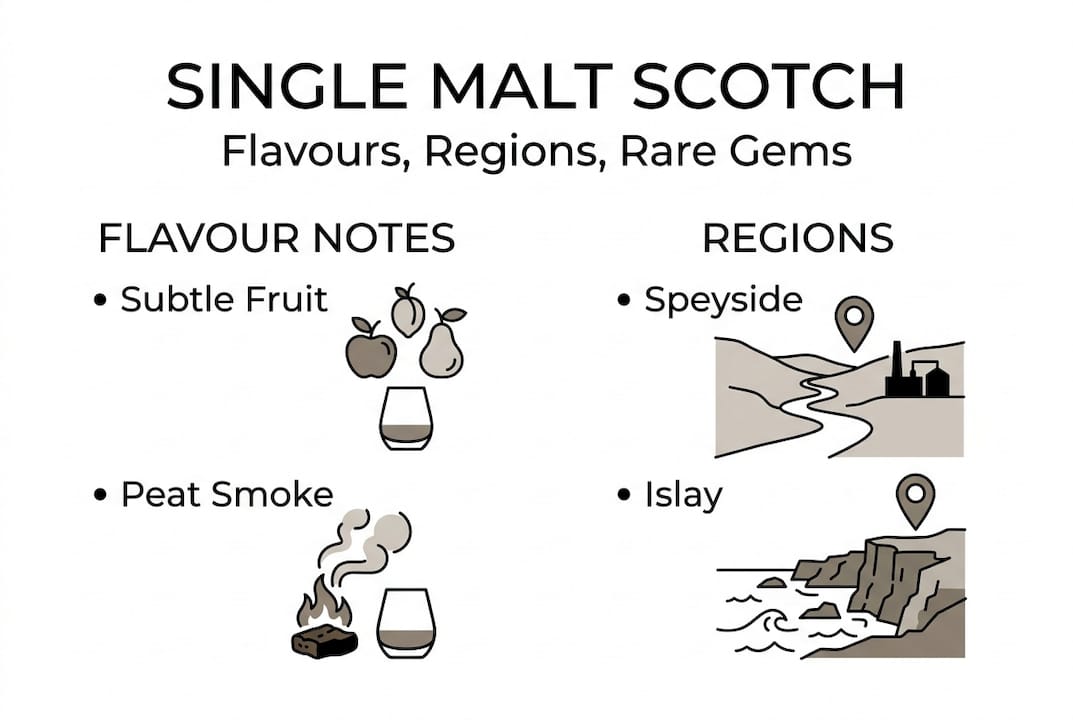
This is where confusion often creeps in. A single cask bottling means the whisky came from one individual barrel, which gives it a unique, unrepeatable character. A blended malt (sometimes called a vatted malt) combines single malts from multiple distilleries. Neither is inferior, but they are different things. Knowing the distinction helps you understand what you’re actually buying.
It’s also worth understanding the role of the Scotch Whisky Association (SWA), which enforces these standards globally. When you see a bottle labelled as single malt Scotch, the SWA’s framework is what gives that claim credibility. For a deeper look at the single malt Scotch whisky guide, it’s worth reading beyond the marketing copy on the label.
| Term | Meaning |
|---|---|
| Single malt | One distillery, 100% malted barley, pot stills |
| Single cask | One specific barrel, often unfiltered and cask strength |
| Blended malt | Single malts from multiple distilleries combined |
| Blended Scotch | Mix of single malts and grain whiskies |
Pro Tip: Always check whether a bottle is described as “single malt” or “blended malt” before purchasing. The distinction affects both flavour and collectability significantly.
How region shapes single malt character
Once you understand what a single malt is, the next question is: why do they taste so different from one another? A large part of the answer lies in geography. Scotland has five official Scotch whisky regions: Speyside, Highlands, Islay, Lowlands, and Campbeltown. Each carries its own loose flavour identity, shaped by local water sources, climate, tradition, and distillery culture.
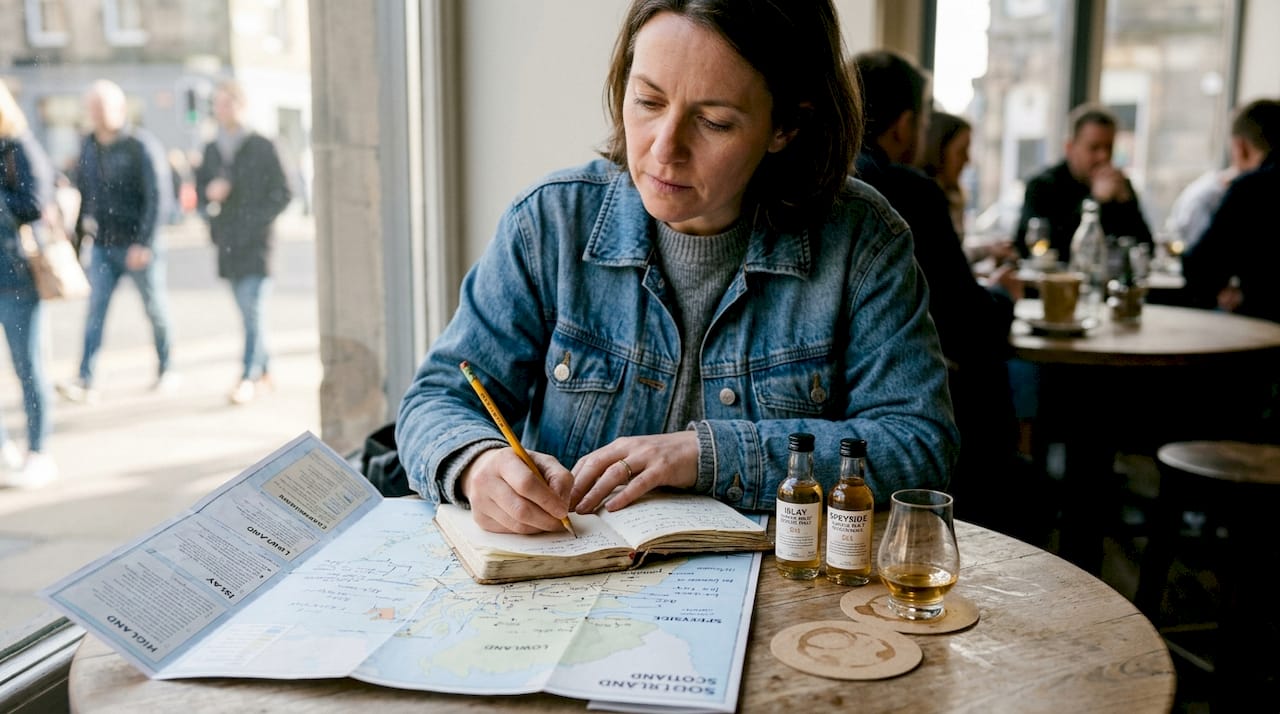
Speyside is the most densely populated whisky region in Scotland, home to distilleries like Glenfiddich, Macallan, and Balvenie. Expect fruity elegance, honeyed sweetness, and gentle spice. These are often the most approachable single malts for newcomers.
Highlands covers the largest geographic area and produces the widest variety of styles. You’ll find everything from light coastal drams to rich, full-bodied expressions. Clynelish, Dalmore, and Glenmorangie all call this region home.
Islay is famous for its intensely peated, smoky whiskies with a distinctive saline, medicinal character. Laphroaig, Ardbeg, and Lagavulin are the big names. However, not every Islay malt is peaty. Bunnahabhain, for example, produces largely unpeated expressions that surprise many first-time visitors to the region.
Lowlands tends towards lighter, more delicate drams, often triple-distilled and ideal as aperitifs. Campbeltown, once the whisky capital of the world, now has only a handful of distilleries, but Springbank remains one of the most celebrated and complex single malts produced anywhere.
Regional labels are useful starting points, not rigid rules. Modern distilleries are constantly experimenting with peat levels, cask types, and fermentation times, meaning the best discoveries often defy expectations.
For a practical breakdown, explore this whisky regions collector’s guide or discover the top whisky regions worth adding to your tasting list.
| Region | Flavour profile | Famous distilleries |
|---|---|---|
| Speyside | Fruity, honeyed, gentle spice | Glenfiddich, Macallan |
| Highlands | Varied: rich, coastal, floral | Dalmore, Glenmorangie |
| Islay | Peaty, smoky, saline | Laphroaig, Ardbeg |
| Lowlands | Light, floral, grassy | Auchentoshan, Glenkinchie |
| Campbeltown | Briny, oily, complex | Springbank, Glen Scotia |
Understanding why regions shape your palate is one of the most rewarding steps in developing your whisky knowledge.
The cask’s influence: understanding maturation and flavour
Region sets the stage, but the cask is where the real transformation happens. This is arguably the most underappreciated aspect of single malt Scotch, and it’s where a lot of label-reading skills pay off.
Cask type accounts for 60 to 70% of final flavour, making it the single biggest variable in what ends up in your glass. Bourbon casks, which are the most common, impart vanilla, caramel, and coconut notes. Sherry casks bring dried fruit, rich spice, and a deep mahogany colour. Beyond those two, distilleries now finish whiskies in port pipes, rum barrels, wine barriques, and even Madeira casks, each adding its own layer of complexity.
Here’s a simplified look at how a single malt goes from distillation to bottle:
- New make spirit leaves the still as a clear, high-proof liquid with raw cereal and fruity character.
- Cask filling sees the spirit placed into oak barrels, where it begins interacting with the wood.
- Maturation occurs over a minimum of three years, during which the whisky draws colour, flavour, and texture from the cask.
- Monitoring by the distillery ensures the spirit is developing as intended, with master distillers sampling regularly.
- Bottling happens once the whisky meets the distillery’s standard, either at cask strength or diluted to a set ABV.
Cask strength bottlings are worth seeking out. They’re bottled without dilution, which means you get the whisky exactly as it came from the barrel. They’re often more intense, but adding a small amount of water can open up flavours you’d otherwise miss.
| Cask type | Flavour contribution |
|---|---|
| Bourbon (American oak) | Vanilla, caramel, coconut |
| Sherry (European oak) | Dried fruit, chocolate, spice |
| Port | Berry sweetness, richness |
| Rum | Tropical fruit, molasses |
For more on reading labels, the guide to age statement in whisky is a useful companion, as is this breakdown of tasting notes explained.
Pro Tip: Don’t assume a 25-year-old whisky is automatically better than a 12-year-old. A poorly managed cask can produce a flat, over-oaked dram, while a well-chosen 12-year-old in an exceptional sherry butt can be extraordinary.
From age statements to rare releases: navigating single malt selection
With a solid grasp of regions and casks, you’re ready to tackle the more nuanced world of age statements, NAS bottlings, and rare releases. This is where single malt Scotch gets genuinely exciting for collectors and enthusiasts alike.
Age statements indicate the youngest whisky in the bottle, with the legal minimum being three years. Most widely available expressions sit at 10, 12, or 15 years. However, NAS (No Age Statement) bottlings have grown significantly in recent years. These aren’t necessarily younger or lower quality. Many distilleries use NAS releases to showcase specific cask combinations or experimental styles that don’t fit neatly into an age bracket.
Single cask bottlings represent the pinnacle of specificity. Each bottle from a single cask release is unique, and once those bottles are gone, that exact whisky is gone forever. Vatted single malts, by contrast, blend multiple casks from the same distillery to achieve a consistent house style.
For those chasing premium and rare bottles, the landscape is genuinely thrilling. Ultra-rare releases like Fettercairn 46 command prices around $15,900, while expressions like Gordon and MacPhail’s Mortlach 1942 50-year-old represent the outer limits of what single malt Scotch can be. More accessible benchmarks include Lagavulin 16, Springbank 15, and Glen Scotia 25.
Here are some practical tips for finding premium single malts online:
- Research the distillery’s release history before buying, not just the bottle
- Look for independent bottlers like Gordon and MacPhail or Signatory for unique cask selections
- Check whether a bottle is a limited release or part of an ongoing core range
- Read the types of single malt Scotch guide to understand what you’re comparing
- Explore the diverse single malt types available beyond the well-known names
- Consider expressions like Spey Trutina for a quality Speyside option that punches above its price point
Our view: what most guides miss about single malt diversity
Most guides to single malt Scotch do a reasonable job of explaining the rules and the regions. What they often miss is how aggressively the industry’s own marketing reinforces stereotypes that limit your exploration.
Islay means peat. Speyside means elegance. These associations are commercially convenient, but they’re increasingly inaccurate. The most interesting discoveries we keep coming across are the ones that break those moulds. An unpeated Islay that’s all beeswax and orchard fruit. A heavily sherried Highland that drinks like a dessert. These bottles exist, and they’re often undervalued precisely because they don’t fit the expected narrative.
The real insight is this: regional identity is a starting point for conversation, not a guarantee of what’s in the glass. The distilleries pushing boundaries are the ones worth watching. Understanding how whisky regions shape palate is valuable, but the next step is learning to question those assumptions with every new pour.
Our advice? Connect with specialist retailers, attend tasting events, and actively seek out the bottles that challenge your expectations. The hidden gems almost always arrive before the hype does.
Discover rare single malts and unique releases online
Now that you’ve got a clearer picture of what makes single malt Scotch so varied and exciting, the natural next step is putting that knowledge to work. There’s no better way to test your understanding than by exploring bottles that sit outside your usual comfort zone.
At Uisuki, we curate a selection of premium, rare, and hard-to-find whiskies for enthusiasts who want more than the standard shelf. Whether you’re curious about a Hobart rum finished single malt that shows how Australian distillers are rewriting the rulebook, or you want to try an Ardnamurchan blended Scotch from one of Scotland’s most exciting newer distilleries, we’ve got you covered. Shop rare single malts online and let your new knowledge guide your next great discovery.
Frequently asked questions
What exactly does ‘single malt’ mean?
A single malt Scotch is whisky made from 100% malted barley at one distillery in Scotland, distilled in pot stills and matured for at least 3 years in oak casks before bottling at a minimum of 40% ABV.
Which Scotch regions are best for beginners?
Speyside and Highlands are ideal starting points because their single malts tend to be smooth, fruity, and approachable. Starting with Speyside or Highlands builds a solid flavour reference before progressing to the peatier Islay expressions.
Is older Scotch always better?
Not necessarily. Casks account for 60 to 70% of final flavour, meaning a well-managed younger whisky can easily outshine a poorly matured older one in terms of complexity and enjoyment.
What is the rarest type of single malt Scotch?
Ultra-rare bottles typically come from single cask releases, long-aged expressions, or closed distilleries. Fettercairn 46 and Mortlach 1942 50-year-old are among the most extraordinary examples in recent memory.
How do I choose a single malt based on taste?
Check the region and cask type on the label for an initial flavour guide, then read the tasting notes for more detail. Cask and regional origin together give you the clearest picture of what to expect before you open the bottle.