

TL;DR:
- The traditional stereotypes of Scotch as smoky and Irish as smooth are oversimplifications that overlook their rich, diverse craft.
- Legal definitions and production techniques, including distillation and cask use, shape the unique flavors and styles of each whisky type.
- By understanding these distinctions and reading labels carefully, enthusiasts can explore a broader world beyond national stereotypes and enhance their appreciation.
The assumption that Scotch means smoke and Irish means smooth is one of the most persistent oversimplifications in whisky culture. Both traditions carry centuries of craft, and both have evolved well beyond their national stereotypes. If you are choosing bottles for your collection, selecting a gift for a fellow enthusiast, or simply trying to sharpen your palate, understanding the actual legal, production, and flavour distinctions between these two styles will transform how you drink and how you choose. This guide cuts through the clichés.
Table of Contents
- Legal definitions: What makes Scotch, Scotch and Irish whiskey, Irish
- Production techniques: Distillation, mash bills, and cask influence
- Tasting and flavour profile differences
- How to choose: Collecting, gifting, and enjoying both styles
- Why the country-based divide is less important than style and label
- Explore a world of whisky with us
- Frequently asked questions
Key Takeaways
| Point | Details |
|---|---|
| Legal requirements vary | Scotch and Irish whiskey must be made in their home countries, each with unique legal standards. |
| Production shapes profile | Distillation style and mash bill drive core differences in texture and taste between Scotch and Irish whiskey. |
| Flavour exceptions exist | Not all Scotch is smoky; not all Irish whiskey is ultra-smooth—check label details for accuracy. |
| Collecting tips | Seek out style information and limited editions to expand your collection with unique bottles. |
| Country is only a starting point | True expertise comes from reading styles and ingredients, not nationality alone. |
Legal definitions: What makes Scotch, Scotch and Irish whiskey, Irish
Before we get into copper stills and barrel sizes, the law matters. Both Scotch and Irish whiskey are legally defined products, meaning the bottle’s country of origin carries strict technical obligations, not just a romantic backstory.
Scotch whisky is legally defined as being produced in Scotland, distilled to less than 94.8% ABV, matured in Scotland in oak casks not exceeding 700 litres for at least three years, and bottled at a minimum of 40% ABV. That 700-litre cask restriction is significant. Smaller casks mean more wood contact, more flavour interaction, and a tighter stylistic range for producers to work within.
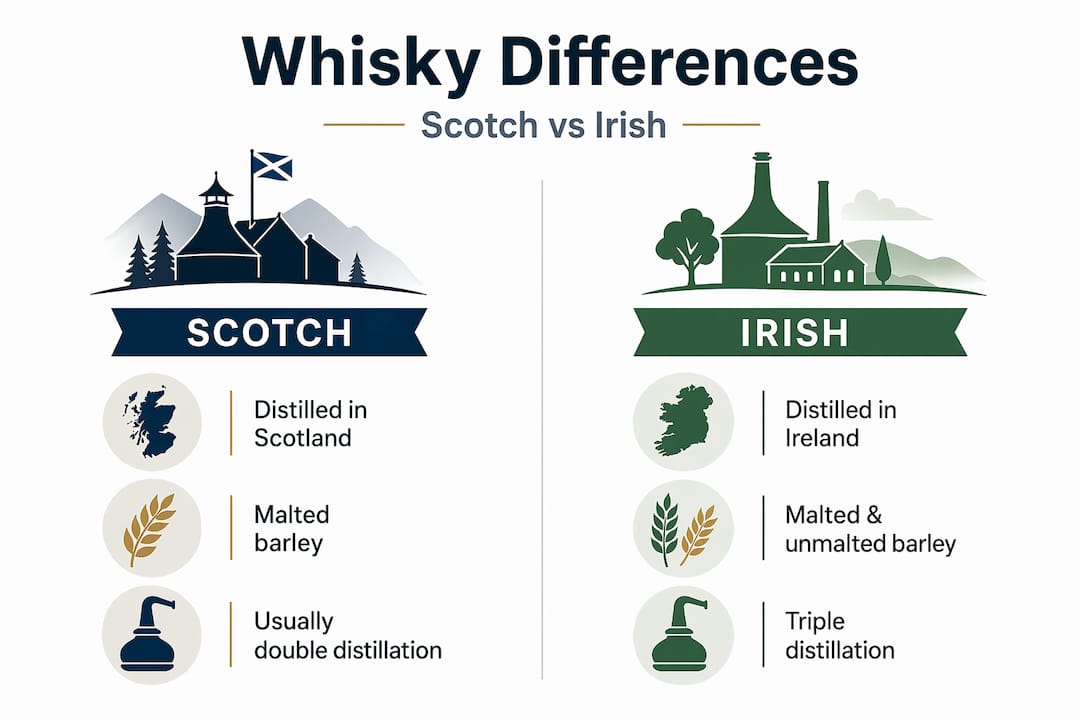
Irish whiskey must be distilled and matured on the island of Ireland, with the same minimum three-year maturation and a 40% ABV bottling floor. But the Irish regulations also recognise the uniquely Irish single pot still style, which uses a mix of malted and unmalted barley and must be distilled in a copper pot still. This category has no real equivalent in Scotch.
Understanding the difference between Scotch and Irish whiskey starts here, at the legal layer, before you even think about nose or palate. That said, country of origin only sets the floor. The ceiling is far more variable.
Here is a quick comparison of the core legal requirements:
| Feature | Scotch whisky | Irish whiskey |
|---|---|---|
| Country of production | Scotland | Island of Ireland |
| Minimum maturation | 3 years | 3 years |
| Cask size maximum | 700 litres | No specified limit |
| Minimum bottling ABV | 40% | 40% |
| Distillation limit | Less than 94.8% ABV | Varies by style |
| Unique style category | Single malt, blended malt | Single pot still |
Key legal categories to know in each tradition:
- Scotch single malt: Made from 100% malted barley at a single distillery
- Scotch blended: A combination of single malt and grain whiskies
- Irish single pot still: Made from a mix of malted and unmalted barley in a pot still
- Irish single malt: Made from 100% malted barley, mirroring the Scotch category
- Irish blended: Typically lighter, often incorporating grain whiskey
Knowing these whisky varieties differences helps you read a label accurately instead of guessing by geography alone.
Production techniques: Distillation, mash bills, and cask influence
Having mapped the core legal definitions, we can now explore how different production methods and materials add variation even before the whisky meets the glass. This is where a lot of the real flavour destiny gets decided.
Irish whiskey tends to be triple-distilled and can use both malted and unmalted barley, especially in the single pot still style, while Scotch whisky is predominantly double-distilled and, for single malt, is 100% malted barley. That extra distillation pass in Irish whiskey results in a lighter, cleaner spirit coming off the still. The heavier congeners, which are flavour-carrying compounds, get stripped back more with each distillation.
But here is where enthusiasts need to stay curious. Exceptions exist on both sides. Auchentoshan is a Scottish distillery that triple-distils its single malt, producing a famously delicate spirit that would surprise anyone expecting a big Scotch character. Conversely, some Irish distilleries produce double-distilled expressions that carry more weight and texture than their peers.
Single pot still Irish whiskey is often described by industry figures as being driven by unmalted barley’s spicy and grassy character and by a “luscious, oily texture” associated with copper contact during triple distillation. That combination of textural richness and herbal spice makes it genuinely distinct from any Scotch category.
When it comes to casks, both traditions are adventurous. Ex-bourbon casks are widely used by both Scotch and Irish producers, lending vanilla, coconut, and light caramel notes. Scotch producers, particularly in Speyside, lean heavily on ex-sherry casks for dried fruit and chocolate characters. Irish producers increasingly use a variety of finishes, including port, Madeira, and rum casks.
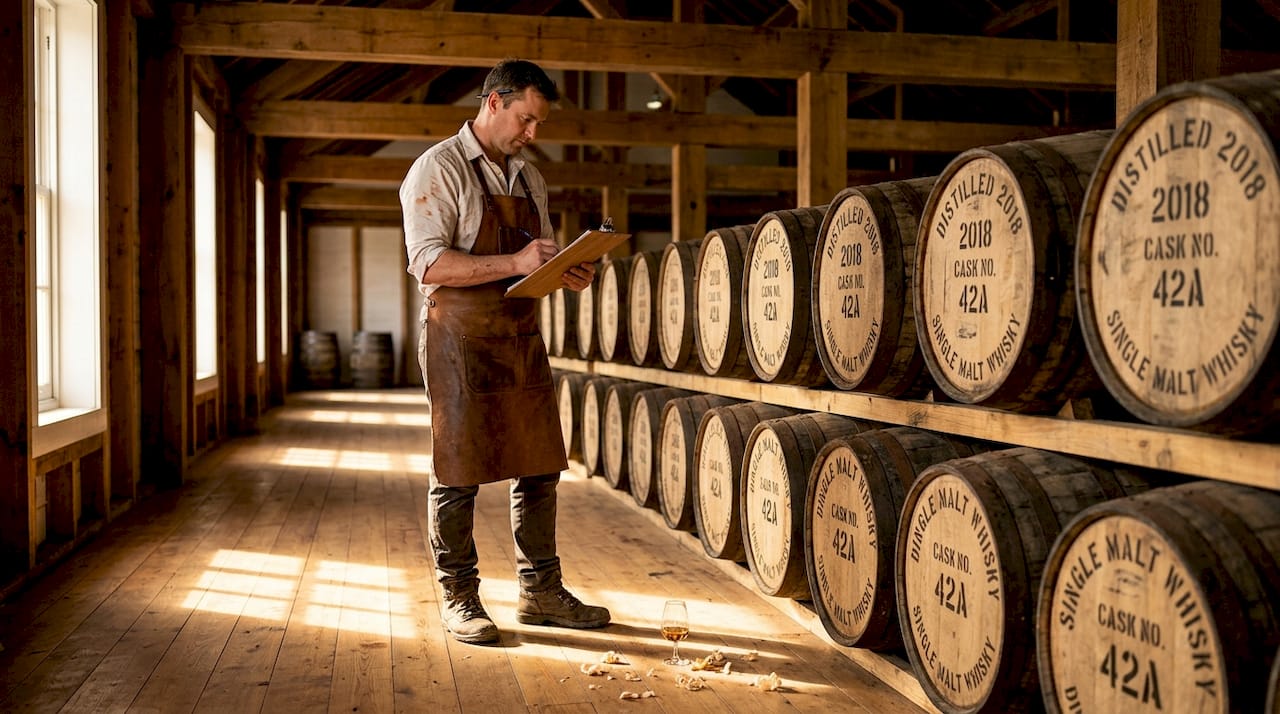
Here is how the main production variables compare across the most common styles:
| Variable | Scotch single malt | Irish single pot still | Irish single malt |
|---|---|---|---|
| Distillation passes | Typically 2 | Typically 3 | Typically 3 |
| Grain bill | 100% malted barley | Mixed malted/unmalted barley | 100% malted barley |
| Still type | Pot still | Copper pot still | Pot still |
| Typical cask | Ex-bourbon or ex-sherry | Ex-bourbon | Ex-bourbon or varied |
| Common character | Full, complex | Oily, spicy, grassy | Light, fruity |
How production shapes the final product, step by step:
- Grain selection: The mash bill sets the foundation. Unmalted barley brings that signature spice and creaminess to Irish single pot still.
- Milling and mashing: Grains are milled and mashed to extract fermentable sugars. Minor variations here influence the overall wash character.
- Fermentation: Longer fermentation produces fruitier, more complex washes. Both traditions use this lever.
- Distillation: Double distillation retains more of the heavier, richer congeners. Triple distillation produces a lighter, more refined spirit.
- Maturation: The cask takes over for at least three years, sometimes decades. Oak compounds like vanillin, tannins, and lactones all migrate into the spirit.
- Finishing: An increasingly popular step where spirit is moved to a secondary cask for additional flavour development.
Pro Tip: When comparing difference between Scotch and whiskey, look for the distillation detail on the label or distillery website. “Triple distilled” on an Irish bottle tells you far more about what is in the glass than the Irish flag alone.
For collectors, collecting limited edition whiskies that focus on experimental cask finishes or unusual mash bills often bridges the gap between both traditions in fascinating ways.
Tasting and flavour profile differences
Having established how Scotch and Irish whiskey are made, it is time to see how these processes play out in the glass, on the nose and palate. This is where the real conversation begins.
Scotch is famously variable. The Scotch Whisky Research Institute has identified more than 300 flavour-active compounds in Scotch, with perception clustering into roughly a dozen dominant families. These include fruity and estery, floral, spicy, and the famous smoky or peaty group. Speyside expressions tend toward honeyed fruit and gentle spice. Islay whiskies can be intensely medicinal, briny, and smoky. Highland malts often sit somewhere between earthy and fruity. This is a massive spectrum, and “it tastes like Scotch” tells you almost nothing.
“Scotch often emphasises fuller and heavier complexity, while Irish whiskey often emphasises smoothness and lighter orchard-fruit and spice impressions.” This expert positioning is a useful starting point, but never the whole story.
Irish whiskey generally sits on the lighter end of the spectrum. Classic expressions deliver green apple, pear, soft vanilla, and light honey. The grain component in blended Irish whiskeys can push this even further toward delicate and approachable. But single pot still expressions break the mould entirely. Here you get white pepper, fresh cut grass, baked apple, and a creamy texture that feels almost like oat cream on the palate. This style is genuinely unlike anything in the Scotch catalogue.
Typical flavour associations for each tradition:
- Scotch single malt (unpeated): Honey, dried fruit, malt biscuit, vanilla, citrus peel
- Scotch single malt (peated): Smoke, iodine, brine, tar, dark chocolate
- Irish single pot still: White pepper, green apple, oily texture, fresh grass, clove
- Irish single malt: Light orchard fruit, vanilla, fresh grain, subtle floral notes
- Irish blended: Soft vanilla, toffee, light fruit, very approachable finish
Understanding whisky flavour profiles at this level helps you move from passive tasting to active evaluation. And mastering whisky tasting notes is a skill you can build with every glass.
Pro Tip: To genuinely taste the difference between double and triple distillation, try an unpeated Scotch single malt next to an Irish single malt of similar age and cask type. The Scotch will feel heavier and more textured. The Irish will feel lighter and cleaner. That difference is the distillation cut, not the country. For a deeper dive on complexity, the Scotch 300+ flavour compounds article is worth your time.
Key tasting takeaway: Never let national origin be your only filter. A heavily peated Irish expression like those from Connemara will out-smoke many Scotch expressions from lowland distilleries.
How to choose: Collecting, gifting, and enjoying both styles
With an appreciation of flavour distinctions, the next step for enthusiasts and collectors is making confident, well-informed choices. Here is how to approach both categories strategically.
The most reliable guide to what is actually in a bottle is not the flag on the label. The most sensory-accurate predictions come from checking the bottle’s style label, specifically whether it says single malt, pot still, grain, peated, unpeated, or what cask type was used, rather than only looking at the country of origin. A “single pot still” label tells you infinitely more than “Made in Ireland” alone.
Here is a practical approach for different use cases:
- For bold evening sipping: Seek a cask strength Scotch single malt from Islay or the Highlands. Look for ABV above 55% and ex-sherry maturation for dried fruit and smoke.
- For whisky cocktails: Irish blended or single malt works beautifully. The lighter profile does not compete with mixers and lets the cocktail balance properly.
- For someone new to whisky: An approachable Irish blended or a Speyside Scotch like a lightly sherried expression is far less challenging than a peated Islay malt.
- For gifting a collector: Seek uncommon finishes, independent bottlings, or limited edition releases. A single cask Irish pot still or a small-batch Scotch from a lesser-known region will stand out.
- For investment and long-term collecting: Focus on distillery reputation, age statement, cask quality, and production rarity rather than national category. Best Scotch whiskies for gifts often overlap with those worth holding for the long term.
When building a broader collection, alternating between Scotch and Irish expressions reveals the contrast in a very direct way. Pairing a Redbreast single pot still beside a Glenfarclas single malt, for example, will show you the oily spice of Irish pot still versus the dried fruit depth of Scotch sherry maturation side by side.
Pro Tip: Look for independently bottled expressions from both traditions. These are often single cask releases from smaller brokers and reveal a wider range of both categories than standard distillery bottlings. Limited edition whiskies insights and guidance on finding limited edition whisky can sharpen your sourcing strategy considerably.
Why the country-based divide is less important than style and label
Here is a viewpoint that even dedicated collectors tend to resist at first: national identity in whisky is a marketing frame as much as a flavour guarantee. The “Scotch equals peated smoke, Irish equals silky smooth” shorthand has sold a lot of bottles, but it has also created drinkers who dismiss entire categories before tasting them.
We have seen collectors walk past extraordinary Irish single pot still expressions because they assumed the Irish category would not challenge them. We have also seen newcomers avoid Scotch entirely because they expected smoke and brine in every glass. Both assumptions cost them genuinely memorable experiences.
The reality in 2026 is that whisky production globally has never been more experimental. Scottish distilleries are trialling new grain varieties, unusual cask finishes, and longer fermentation regimes that push their output well beyond traditional profiles. Irish distillers are reviving historical single pot still recipes, ageing in exotic woods, and producing heavily peated expressions that would confuse a blindfolded expert guessing by national style alone.
The collectors who build the most interesting and rewarding shelves are the ones who treat the difference between Scotch and Irish whiskey as a starting point for exploration, not a definitive verdict on what they will enjoy. Read the label carefully. Check the style category, the cask type, and the distillation method. Then let curiosity do the rest.
The most important skill you can develop as a whisky enthusiast is not knowing which country makes the “best” whisky. It is knowing how to read a label and anticipate what is actually in the glass before you pour it.
Explore a world of whisky with us
Broader perspectives open up broader possibilities, and the best way to test your growing knowledge is to explore expressions that genuinely challenge your expectations.

At Uisuki, we curate selections that go well beyond the expected. Whether you are exploring Australian single malt like the Hobart Whisky bourbon matured rum finished single malt, discovering the elegance of the Ardnamurchan MacLean’s Nose blended Scotch, or seeking something truly rare in the form of Ichiro’s Malt and Grain limited edition world blended whisky, our range is built for enthusiasts who want to taste beyond the obvious. We ship across Australia and support personalised sourcing requests for hard-to-find bottles. Your next discovery is here.
Frequently asked questions
Is Scotch always peated and smoky?
No. Scotch spans numerous flavour families including fruity, floral, and spicy expressions, with peated and smoky styles representing just one regional tradition, primarily from Islay and some parts of the Highlands.
Is Irish whiskey smoother than Scotch?
Generally yes, but with notable exceptions. Irish whiskey typically emphasises smoothness and lighter fruit impressions, while Scotch can be fuller and heavier, though heavily peated Irish expressions and delicate Lowland Scotch can reverse this expectation entirely.
Can Scotch and Irish whiskey use the same grains?
Both can use barley, but the rules differ by style. Single pot still mash requirements specify at least 30% malted barley and 30% unmalted barley in Irish single pot still, while Scotch single malt uses only 100% malted barley with no unmalted grain permitted.
Which style is better for collecting and investment?
Both traditions offer strong collectible potential. Limited edition releases, single cask bottlings, and independently bottled expressions in either category tend to hold or appreciate in value more reliably than standard releases, regardless of national origin.
Does distillation technique affect whisky strength?
Not directly. Double versus triple distillation primarily affects texture, congener profile, and character rather than final ABV, which is governed by bottling regulations that apply equally to both traditions at a minimum of 40% ABV.