

Australian collectors have more access to limited edition whisky than ever, but the best bottles rarely wait. The most reliable routes are: specialist Australian retailers with authenticated stock (Uisuki.com.au being the standout local option), direct distillery drops and member ballots, and verified auction houses for secondary market finds. If you want to secure rare releases at retail price, the single most effective step is joining distillery clubs and building a relationship with a specialist retailer before a release drops.
Quick-start checklist for Australian buyers:
- Join distillery “Friends” or club programmes (Laphroaig, Bunnahabhain, and others run ballot-first access).
- Register with a specialist Australian retailer and set stock alerts.
- Follow distillery social channels and announcement pages for drop dates.
- For secondary market buys, use only verified auction platforms with provenance guarantees.
For drinkers who want to open the bottle: prioritise mid-tier limited runs from specialist retailers where provenance is clear and price is fair. For collectors building a shelf: focus on numbered releases with certificates and compelling distillery stories. For investors: only ultra-rare, extremely low-outturn bottles with strong brand narratives tend to appreciate, and even then, outcomes are not guaranteed.
Pro Tip: Set Google Alerts for the distillery names and release titles you are tracking. Announcements often drop with little warning, and ballot windows close fast.
Key takeaways
Specialist Australian retailers with authenticated stock, distillery ballots, and verified auctions are the three most reliable routes to limited edition whisky, with provenance documentation being the non-negotiable filter at every price point.
| Point | Details |
|---|---|
| Best buying routes | Specialist retailers, distillery ballots, and verified auctions cover most collector needs in Australia. |
| Provenance is non-negotiable | Numbered bottle, matching certificate, and original invoice are the minimum for any serious purchase. |
| Ultra-rare outturns drive value | Bottles like The Balvenie Fifty (125 per edition) and Glen Scotia Elements (100 decanters) show why production size matters most. |
| Join clubs early | Distillery Friends programmes and retailer accounts are the only reliable way to buy at retail price before secondary market premiums apply. |
| Uisuki for Australian collectors | Uisuki.com.au stocks curated limited editions with provenance documentation, sourcing requests, and insured shipping across Australia. |
Table of Contents
- Where can you buy limited edition whisky in Australia?
- How do you verify a limited edition whisky is authentic?
- How are limited releases actually issued?
- Is limited edition whisky a good investment?
- What do limited edition whiskies actually cost in Australia?
- Buying, shipping and storing limited editions in Australia
- A retailer’s perspective on sourcing and authentication
- Uisuki: curated, authenticated limited edition whisky for Australian collectors
- Sources
Where can you buy limited edition whisky in Australia?
The buying landscape splits into four channels, each with different trade-offs on price, provenance certainty, and speed.
Specialist Australian retailers are the most practical starting point. Retailers like Uisuki.com.au curate authenticated stock, provide provenance documentation, and handle import logistics on your behalf. You pay a fair retail margin, but you get certainty. This is the channel that suits most collectors, particularly for mid-tier and trophy releases that would otherwise require navigating international shipping and customs yourself.
Distillery direct and member ballots are where the best prices live, but access is competitive. Distilleries use ballot systems and club memberships to reward loyal customers and manage demand for high-profile drops. The Laphroaig Willem Dafoe limited edition went to Friends members first, then filtered to selected retailers. Joining these programmes costs nothing and is the single best way to buy at retail.
Auction houses and secondary markets (Whisky Auctioneer, Scotch Whisky Auctions, and local Australian platforms) give access to sold-out releases, but prices reflect scarcity. Never bid on a bottle without requesting the original purchase invoice and high-resolution photos of the capsule, fill level, and label.
International retailers and importers can source bottles unavailable locally, but Australian buyers must account for import duty, GST, and delivery timelines. Bottles shipped from the UK or Japan typically take two to four weeks and may require customs clearance through a licensed importer for very high-value consignments.
| Buying channel | Price risk | Provenance certainty | Speed to delivery | Availability |
|---|---|---|---|---|
| Specialist Australian retailer | Low to medium | High | 2–4 business days | Curated, limited stock |
| Distillery direct / ballot | Lowest (retail) | Highest | 2–4 weeks (international) | Ballot-dependent |
| Auction / secondary market | High (volatile) | Buyer’s responsibility | 1–3 weeks | Wide but unpredictable |
| International retailer / importer | Medium | Medium | 2–4 weeks + customs | Broad but logistics complex |
For a deeper breakdown of sourcing options, the collector’s guide to where to buy rare whisky covers Australian-specific marketplace options in detail.
How do you verify a limited edition whisky is authentic?
Counterfeits are rare in the premium whisky market, but dubious provenance is common, particularly on secondary markets. A bottle with a murky ownership history is a problem whether or not the liquid is genuine.
Authentication checklist:
- Numbered bottle and certificate of authenticity. Every serious limited release carries an individual bottle number. The number on the bottle, the box, and the certificate must match exactly. The Glen Scotia Elements of Campbeltown Release No.1 Air was limited to 100 individually numbered decanters — any bottle without a matching serial is immediately suspect.
- Original purchase invoice. A receipt from the distillery, an authorised retailer, or a licensed importer is the strongest single provenance document. No invoice, no deal.
- Import documentation. For bottles sourced from overseas, ask for the original import paperwork. Reputable Australian retailers hold this on file.
- Matching packaging. Check that embossing, foil, label printing, and any holographic elements match the distillery’s official release photography. Cross-reference against the distillery’s own product page.
- Cask and release details. For releases like the Bunnahabhain Ceithir Ginealaich (52.8% ABV, Canasta, Oloroso, Port and Virgin Oak cask marriage), the ABV and cask types are publicly listed. Any discrepancy between what is on the label and what the distillery states is a red flag.
Cross-referencing against official distillery announcements and trusted catalogues is non-negotiable for any bottle above a few hundred dollars.
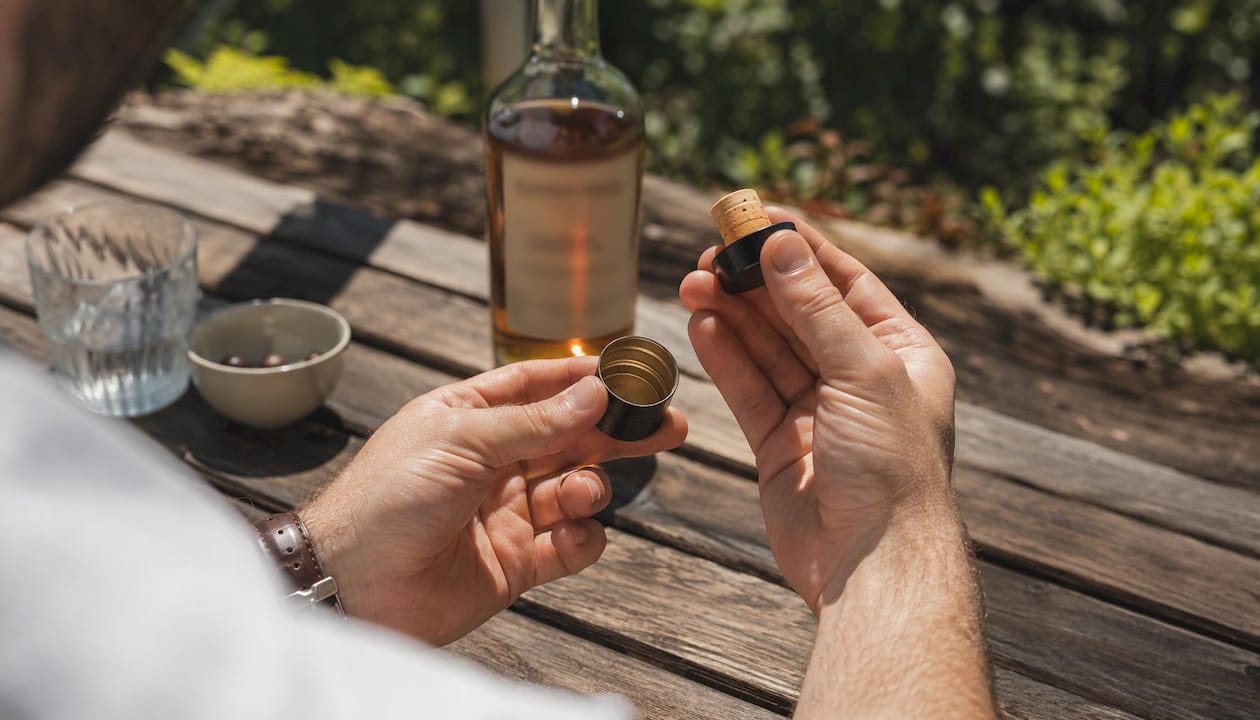
Pro Tip: When vetting a second-hand listing, ask the seller for high-resolution photos of the cork, the fill level (liquid should sit well into the neck), and the underside of the capsule. A disturbed capsule or low fill level on an “unopened” bottle warrants serious scrutiny.
How are limited releases actually issued?
Understanding the mechanics saves you from missing bottles and overpaying on the secondary market. There are four main release types, and they follow a fairly predictable sequence.
The four release mechanics:
- Ballot / club access. Members register, a ballot is drawn, and winners purchase at retail. The Laphroaig Friends programme is a textbook example: Willem Dafoe edition holders got first access before any retailer received stock.
- Distillery exclusive. Bottles sold only at the distillery or through its direct online store. The Bunnahabhain Ceithir Ginealaich was a Fèis Ìle 2026 distillery exclusive, meaning Australian buyers needed to order direct or find a retailer with an import allocation.
- Retailer allocation. After any distillery-exclusive or ballot window closes, remaining stock is divided among authorised retailers. Specialist retailers with strong distillery relationships receive larger allocations.
- Public drop / general release. Some limited editions go to general retail simultaneously. These sell out fastest because there is no member-first filter.
Typical timeline for a high-demand release:
- Distillery announces release (often 2–6 weeks before drop).
- Ballot or Friends window opens (usually 1–2 weeks).
- Member purchase window.
- Retailer allocations dispatched.
- Secondary market listings appear, often at a significant premium.
For Australian buyers, missing the retailer allocation window usually means the secondary market. The step-by-step guide to getting limited release whisky covers ballot tactics in detail.
To improve your chances:
- Join every distillery club relevant to your collecting focus.
- Build an account history with specialist retailers before a release drops.
- Use local specialists who hold import allocations — they often receive stock before it appears on international sites.
- Watch for tiered release patterns: Garrison Brothers’ 2026 Laguna Madre release was capped at 3,000 bottles with staged allocation, a model now common across premium distilleries.
Is limited edition whisky a good investment?
The short answer: it can be, but treat it as portfolio diversification rather than a reliable return. Whisky is illiquid, storage costs are real, and the secondary market is volatile.
What actually drives long-term value:
- Production volume. Scarcity is the foundation. The Balvenie Fifty exists in only 125 bottles for one edition. That kind of outturn creates genuine secondary market tension.
- Brand prestige and narrative. A bottle with a compelling story — a 50-year age statement, a commissioned artist, a distillery milestone — holds value better than a generic limited run. Glen Scotia’s Elements of Campbeltown pairs a 50-year expression with commissioned artwork across just 100 decanters worldwide.
- Cask provenance. Collectors increasingly prize releases built from documented, named casks. The Bunnahabhain Ceithir Ginealaich’s multi-decade cask marriage across Canasta, Oloroso, Port and Virgin Oak is the kind of provenance story that resonates at auction.
- Condition and packaging. Fill level, capsule integrity, and original packaging all affect resale value. A damaged box on a trophy bottle can reduce its auction estimate materially.
- Secondary market demand. Releases tied to cultural moments (artist collaborations, anniversary editions) tend to attract broader interest beyond core whisky collectors.
Common pitfalls for investors:
- Liquidity is low. Selling a bottle takes time and auction fees eat into returns.
- Storage costs for a serious collection add up quickly.
- Speculative resale bubbles form around hyped releases and can deflate fast.
- Import duties and GST affect the landed cost for Australian buyers, compressing margins on resale.
- Counterfeits and tampered bottles exist on unverified secondary markets.
For a broader view of value drivers and price trends, the collector-focused analysis on Uisuki’s blog is worth reading before committing serious money.
What do limited edition whiskies actually cost in Australia?
Price bands vary enormously, from accessible limited runs under A$200 to trophy bottles that command five figures. The table below covers representative examples available to Australian buyers.
A few things worth noting. Entry-tier limited runs like the Ichiro’s Malt & Grain and Hobart Whisky releases are genuinely accessible and offer real collector interest without requiring a trophy-bottle budget. At the other end, bottles like The Balvenie Fifty and Glen Scotia Elements are priced for serious collectors and investors, with secondary market prices that can move significantly depending on condition and demand.
That premium reflects both scarcity and the cost of provenance uncertainty.
Buying, shipping and storing limited editions in Australia
Buying checklist for Australian collectors:
- Confirm the retailer or importer holds a valid Australian liquor licence.
- Age verification is mandatory for all online purchases; have ID ready.
- For imported bottles, GST (10%) applies on the customs value plus freight. Import duty on spirits is also payable — factor this into your landed cost calculation.
- Delivery timelines from international retailers range from two to four weeks, with customs clearance adding one to five business days for high-value consignments.
- Insure high-value bottles in transit. Standard courier insurance rarely covers the full replacement value of a trophy bottle.
Reputable sellers reference responsible purchasing guidelines; Responsibility provides the industry framework that guides how licensed retailers approach age verification and responsible sales.
Storage for collectors:
- Store bottles upright to prevent the cork from prolonged spirit contact, which can cause deterioration over time.
- Maintain a stable temperature between 15°C and 20°C, away from direct sunlight and heat sources.
- Humidity around 60–70% prevents cork shrinkage without encouraging mould on labels.
- Inspect fill levels and capsule integrity every six to twelve months.
Pro Tip: For bottles worth A$1,000 or more, use a specialist spirits courier or bonded importer rather than a standard freight service. They understand fragile-goods handling, can arrange bonded storage, and carry appropriate insurance cover.
A retailer’s perspective on sourcing and authentication
Sourcing authenticated limited editions for Australian collectors is genuinely harder than it looks from the outside. The bottles that matter most — the ones with 100 or 125 in existence globally — rarely appear through normal wholesale channels. Getting access requires direct distillery relationships, advance knowledge of release calendars, and a willingness to move quickly when allocation windows open.
What I look for before listing any limited release at Uisuki is straightforward: numbered bottle, matching certificate, original import documentation, and a clear chain of custody from distillery to our warehouse. For releases like the Bunnahabhain Ceithir Ginealaich or the Glen Scotia Elements series, the distillery’s own product page is the reference point. If the ABV, cask types, or bottle count on a listing don’t match what the distillery published, that bottle doesn’t come in.
Collectors who contact us with sourcing requests get the same rigour applied to their specific targets. We hold provenance paperwork on file and can provide it on request. For high-value bottles, we also offer a return policy for authenticated releases that don’t match their described condition on arrival. That’s the standard Australian collectors should expect from any specialist retailer they work with.
Uisuki: curated, authenticated limited edition whisky for Australian collectors
Finding a trustworthy source for rare whisky releases in Australia is half the battle. Uisuki.com.au stocks a curated range of limited and small-batch whiskies from Scotland, Japan, Australia, and the USA, with provenance documentation held on file for every bottle.
The inventory includes accessible limited runs like the Ichiro’s Malt & Grain Limited Edition and local craft releases such as the Hobart Whisky Bourbon Matured Rum Finished expression, alongside sourcing requests for harder-to-find trophy bottles. Shipping is available Australia-wide, with insured freight options for high-value orders. Stock alerts, customer reviews, and a clear return policy for authenticated bottles are all part of the service. Browse the current range or submit a sourcing request at Uisuki.
Sources
- The Balvenie Fifty - Whisky Aged 50 Years - The Balvenie
- Some Things Are Worth Waiting For - Garrison Brothers Distillery
- 14 Year Old Willem Dafoe Edition Scotch Whisky | Laphroaig
- Responsibility