

Many people use ‘whisky’ and ‘whiskey’ interchangeably, believing they describe the same spirit. These terms actually signal distinct origins, production methods, and legal frameworks that shape flavour and quality. Understanding these differences elevates your appreciation as a collector, helping you recognise what makes Scotch whisky unique compared to Irish and American whiskeys, and how regulations, regional character, and maturation techniques influence what you pour into your glass.
Table of Contents
- Legal Definition And Geographical Origins
- Production Methods And Maturation Differences
- Sensory Profiles And Regional Characteristics
- Classification And Labelling Regulations
- Explore Curated Whisky Selections
Key takeaways
| Point | Details |
|---|---|
| Legal framework | Scotch whisky must be produced in Scotland following strict regulations through the Scotch Whisky Regulations 2009. |
| Spelling convention | ‘Whisky’ usually refers to Scotland, Japan, and Canada, while ‘whiskey’ often denotes Irish and American origin. |
| Production impact | Mash bill, distillation method, and maturation shape flavour profiles that distinguish Scotch from Irish and American styles. |
| Regional character | Scotch has legally defined categories and protected regions like Islay and Speyside, influencing character and labelling. |
| Flavour differences | Irish and American whiskeys differ in grain use and distillation, often yielding distinct sensory experiences compared to Scotch. |
Legal definition and geographical origins
Scotch whisky must be produced in Scotland adhering to specific regulations outlined in the Scotch Whisky Regulations 2009. This legal framework isn’t just bureaucracy. It protects authenticity and ensures every bottle labelled ‘Scotch’ meets rigorous standards that have evolved over centuries.
The official Scotch Whisky Regulations 2009 define geographical origin, ingredients and production methods for Scotch. Key requirements include:
- Distillation must occur entirely in Scotland using malted barley or approved grains
- Spirit cannot exceed 94.8% ABV during distillation, preserving character
- Maturation in oak casks for at least three years is mandatory
- Bottling must be at minimum 40% ABV
These rules create a legal definition of Scotch whisky that’s far more stringent than most whiskey categories worldwide. The Scotch Whisky Regulations 2009 define five legally protected geographical indications for Scotch whisky: Highland, Lowland, Speyside, Campbeltown, and Islay. Each region brings distinct environmental conditions and traditional methods that shape flavour.
Whiskey spelled with an ‘e’ typically relates to Ireland and the USA, where regulations vary widely. Irish whiskey has some standards, but American bourbon and rye operate under different federal requirements. Neither matches the unified, comprehensive framework governing Scotch.
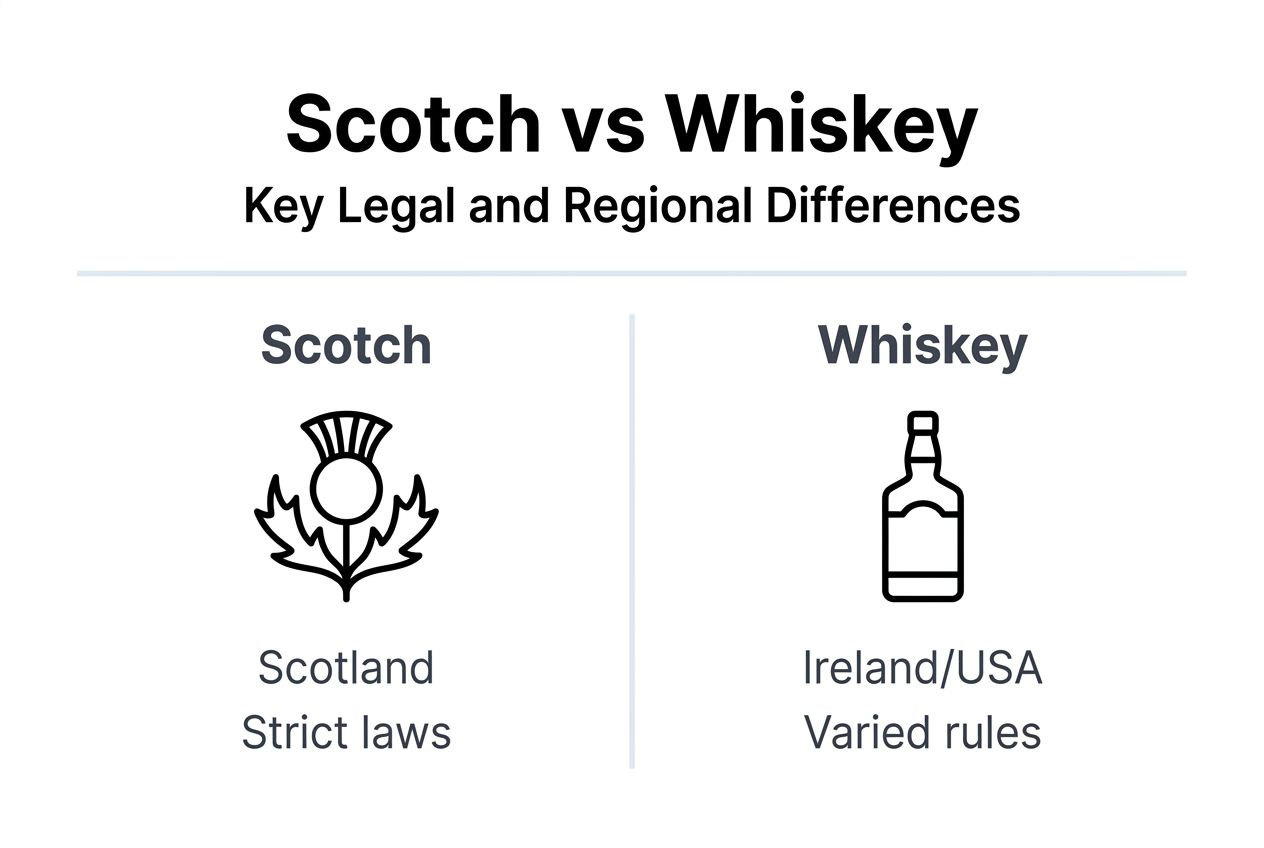
Understanding these legal boundaries helps you distinguish Scotch from other whiskies by origin and quality control. When you see ‘Scotch whisky’ on a label, you know it passed through Scotland’s protected production system, not just any distillery calling itself Scottish.
Production methods and maturation differences
Production choices create the flavour and character differences between Scotch and other whiskeys. Scotch typically uses malted barley with careful pot still or column still distillation, while Irish whiskey often mixes malted and unmalted barley and employs triple distillation for smoothness. This extra distillation round yields lighter, more delicate spirits compared to Scotch’s typically richer profile.
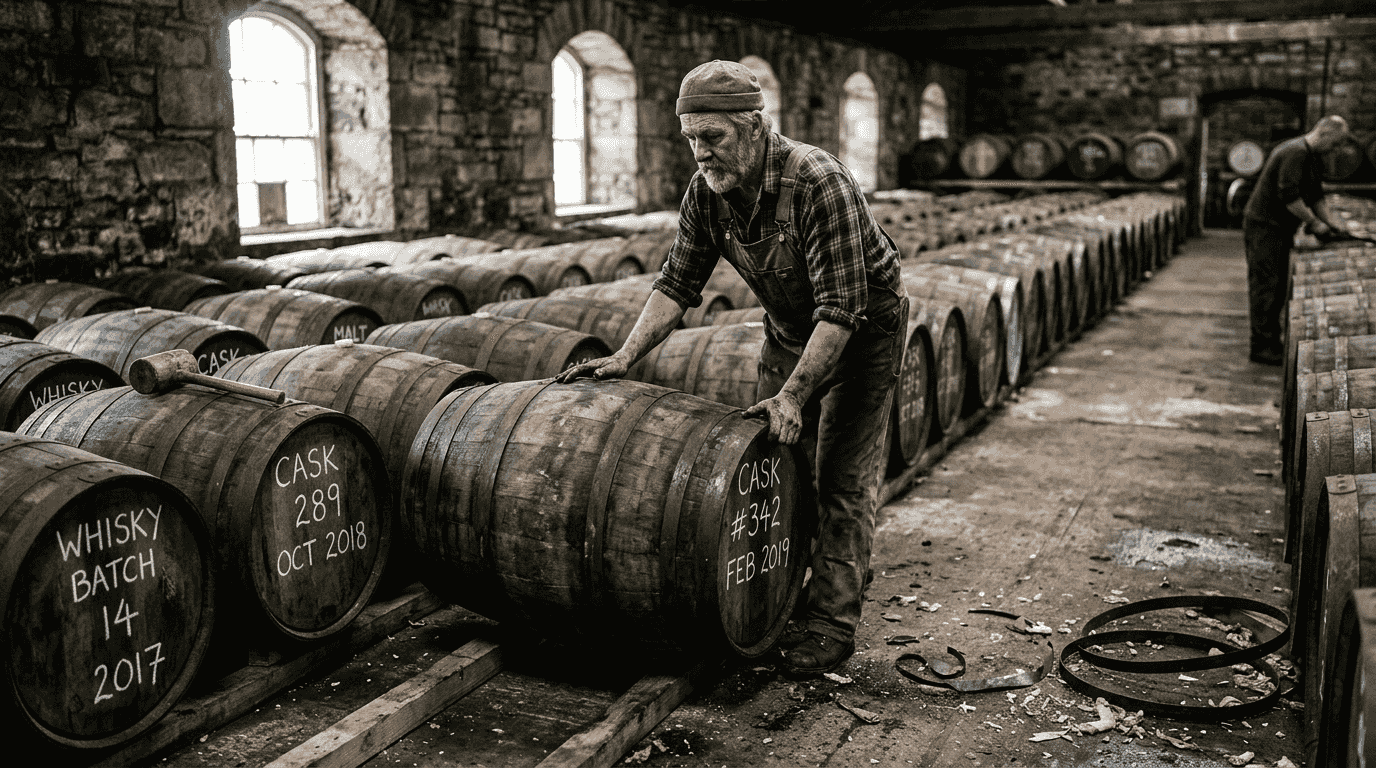
Maturation in oak casks imparts up to 80% of the final flavour and colour. That three year minimum for Scotch isn’t arbitrary. It allows the spirit to extract tannins, vanillin, and other compounds from the wood while harsh alcohol notes mellow. The choice of cask and finishes significantly impact the final character of a whiskey.
Cask type matters enormously. Ex-bourbon barrels add vanilla and caramel sweetness, while sherry casks contribute dried fruit and nutty complexity. Some distillers use wine casks, port pipes, or even rum barrels for finishing, layering additional flavour dimensions. Scotch regulations permit these variations as long as maturation occurs in Scotland.
Distillation strength, methods, and grain mash bills differ between Scotch and other whiskeys, creating distinct profiles:
- Scotch: Malted barley dominant, pot still or column still, typically double distilled
- Irish whiskey: Mixed grains, often triple distilled for lighter character
- Bourbon: Minimum 51% corn mash, new charred oak casks, sweeter profile
- Rye whiskey: Minimum 51% rye grain, spicier and drier notes
Explore a single malt whisky guide to see how these production choices manifest in finished bottles. The interplay between grain selection, distillation, and maturation creates the signature you taste.
Pro Tip: Exploring cask finishes can reveal nuanced flavour layers rarely noticed on casual tasting. Try comparing a standard Scotch with a sherry cask finished version from the same distillery to understand wood’s transformative power.
Sensory profiles and regional characteristics
These production methods manifest in the sensory profiles collectors encounter. Scotch whisky ranges from smoky and iodine rich to mellow fruit flavours depending on region and method. Islay is renowned for smoky, peaty notes with maritime salinity. Speyside offers fruity sweetness with apple, pear, and honey characteristics. Highlands often deliver balanced profiles, sometimes floral, sometimes rich and spicy.
Irish whiskey is often characterised by white fruit, honey and cream notes. That triple distillation creates smoothness and approachability, making Irish whiskey an easy introduction for newcomers. American whiskey styles feature rye spiciness or bourbon’s vanilla and caramel from new oak maturation, which imparts colour and sweetness faster than used casks.
Regional context enhances appreciation of complexity and tradition behind each style. When you taste an Islay Scotch, you’re experiencing peat cut from local bogs, coastal air that permeates warehouses, and centuries of island distilling culture. Speyside’s River Spey provides soft water that shapes delicate character.
| Style | Typical grains | Distillation | Flavour profile |
|---|---|---|---|
| Islay Scotch | Malted barley | Double, pot still | Smoky, peaty, maritime, iodine |
| Speyside Scotch | Malted barley | Double, pot still | Fruity, sweet, honey, apple |
| Irish whiskey | Mixed malt/grain | Triple, pot still | Smooth, honey, cream, white fruit |
| Bourbon | 51%+ corn | Column still | Vanilla, caramel, sweet, oak |
| Rye whiskey | 51%+ rye | Column still | Spicy, dry, pepper, herbs |
These flavour profiles aren’t absolute. Individual distilleries experiment within regulatory boundaries, creating unique expressions. Understanding regional tendencies helps you navigate the market and discover why Scotch whisky is prized among collectors worldwide.
Pro Tip: Tasting whisky with regional context enhances appreciation. Before opening a bottle, research its home region and production story to prime your palate for what you’re about to experience.
Classification and labelling regulations
Legal classification and labelling rules govern Scotch whisky and distinguish it from other types. The Scotch Whisky Regulations 2009 define five categories of Scotch Whisky: Single Malt, Single Grain, Blended Malt, Blended Grain, and Blended Scotch. Each category has specific production requirements that affect what appears on labels.
Single Malt Scotch must come from one distillery using only malted barley in pot stills. Single Grain uses other grains or continuous stills at a single distillery. Blended Malt combines single malts from multiple distilleries. Blended Grain mixes single grains from different sources. Blended Scotch combines malt and grain whiskies, representing most Scotch sold globally.
Regulations include labelling, packaging and advertising requirements, including bottling Single Malt Scotch in Scotland. Since 2012, all Single Malt Scotch Whisky must be bottled in Scotland, ensuring authenticity and quality control throughout the production chain. This prevents bulk export and maintains provenance.
Labelling must clearly state age statements, region, and category adhering to strict rules for consumer transparency. If a bottle shows an age, it reflects the youngest whisky in the blend. Region must be one of the five protected geographical indications. Category must match production method.
Understanding Scotch whisky classification:
- Identify the category (Single Malt, Blended, etc.) on the label
- Check for age statement, remembering it indicates the youngest component
- Note the region if stated, signalling flavour tendencies
- Verify bottling occurred in Scotland for Single Malt expressions
- Look for additional information like cask type or distillery details
These steps help collectors assess authenticity and provenance of their bottles. Understanding whisky label details for collectors becomes crucial when investing in rare or expensive expressions.
| Category | Production requirement | Typical label features |
|---|---|---|
| Single Malt Scotch | One distillery, malted barley, pot still | Distillery name, age, region |
| Blended Scotch | Mix of malt and grain whiskies | Brand name, age (if stated) |
| Irish whiskey | Made in Ireland, various grains | Distillery/brand, often smooth/triple distilled |
| Bourbon | 51%+ corn, new oak, USA | Straight/bottled in bond, proof |
General whiskey labelling outside Scotland varies considerably. American regulations focus on mash bills and barrel requirements. Irish standards exist but differ from Scotch’s comprehensive framework. This regulatory clarity makes Scotch particularly reliable for collectors seeking guaranteed quality and origin.
Explore curated whisky selections
Now that you understand what distinguishes Scotch from other whiskeys, explore quality selections that embody these principles. Uisuki offers curated premium Scotch and blended whiskies chosen for authenticity, character, and collector appeal.

Discover expressions like the limited edition world blended whisky that showcases masterful blending across regions, or the premium whisky gift set perfect for exploring different profiles. The Ardnamurchan blended Scotch whisky demonstrates how Scottish tradition meets contemporary craftsmanship.
Each bottle in the collection reflects the regional characteristics, production standards, and maturation techniques discussed throughout this article. Browse to deepen your engagement and acquire distinctive, quality whiskies that match the insights you’ve gained about what makes Scotch whisky unique.
FAQ
What is the key difference between scotch and whiskey?
Scotch is whisky made only in Scotland under strict laws defined by the Scotch Whisky Regulations 2009. Whiskey with an ‘e’ often refers to spirits from Ireland and the USA, produced under different regional standards. The spelling difference reflects tradition and geography rather than quality judgements.
How do scotch whisky regulations influence quality?
Regulations ensure consistent quality and character, distinguishing Scotch from other whiskies through defined production, maturity requirements, approved ingredients, and geographic origin. This legal framework protects the integrity and traditional profile collectors expect. Without these standards, ‘Scotch’ would lose its meaning and reliability.
Can the flavour of scotch whisky vary by region?
Yes, Scotch whisky can range from smoky and iodine rich to mellow fruit flavours, depending on region and production methods. Islay produces intensely peaty, maritime whiskies while Speyside tends toward fruity sweetness. Understanding these regional tendencies aids in appreciating Scotch whisky’s remarkable diversity.
Why is the spelling of whisky vs whiskey important?
The use of whisky versus whiskey is primarily a matter of geography and tradition, not necessarily quality. ‘Whisky’ usually refers to Scottish, Canadian, and Japanese spirits, while ‘whiskey’ with an ‘e’ is common in Ireland and the USA. The difference highlights historical preferences and regional identity, helping consumers identify origin at a glance.