

If you want dessert in a glass, these are the bottles to reach for: Glenmorangie Quinta Ruban, The Dalmore 12, Balvenie 14 Caribbean Cask, Glenfiddich Orchard Experimental Series, Aberlour 12, Glenfarclas 15, Angel’s Envy, Legent, Nikka Coffey Grain, and Redbreast 12. Most whiskies carry an underlying natural sweetness](https://www.theglenlivet.com/en/our-community/articles/whisky-tasting-guide/) of honey, fruit, or caramel, but these bottles push that quality to the front of the glass.
- Glenmorangie Quinta Ruban (46% ABV): dark chocolate, orange peel, and mint over a rich toffee base. Port pipe finish. Specialist import; around A$90–110.
- The Dalmore 12 (40% ABV): marmalade, dried fruit, and milk chocolate. Sherry cask finish. Widely available; around A$80–100.
- Balvenie 14 Caribbean Cask (43% ABV): vanilla cream, toffee, and fresh tropical fruit. Rum cask finish. Common in Australian retail; around A$110–130.
- Glenfiddich Orchard Experimental Series (43% ABV): pear drops, apple blossom, and honey. Wine cask influence. Limited; around A$90–120.
- Aberlour 12 (40% ABV): stewed plum, raisin, and butterscotch. Double cask (sherry and bourbon). Common; around A$70–90.
- Glenfarclas 15 (46% ABV): Christmas cake, dried fig, and dark toffee. 100% oloroso sherry casks. Specialist import; around A$110–140.
- Angel’s Envy (43.3% ABV): vanilla, caramel, and a hint of port-soaked cherry. Port wine barrel finish. Common; around A$90–120.
- Legent (47% ABV): honey, stone fruit, and baking spice. Blended bourbon finished in sherry and wine casks. Common; around A$70–90.
- Nikka Coffey Grain (45% ABV): coconut, vanilla, and white chocolate. Continuous still grain whisky. Specialist import; around A$100–130.
- Redbreast 12 (40% ABV): pot still Irish, with dried apricot, toasted oak, and a long honeyed finish. Common; around A$80–100.
Key takeaways
The sweetest tasting whiskies in Australia are defined by cask type above all else: sherry, port, rum, and wine finishes are what separate a dessert-like dram from an everyday pour.
| Point | Details |
|---|---|
| Cask finish drives sweetness | Sherry, port, rum, and wine casks produce the most pronounced sweet notes in any whisky. |
| Best value sweet picks | Aberlour 12 and Legent both deliver strong sweetness under A$90 at most Australian retailers. |
| Start with bourbon or rum-cask | Beginners should try Angel’s Envy or Balvenie 14 before moving to heavily sherried Scotch. |
| Serve neat for full sweetness | A small drop of water opens sweet notes; cocktails suit rum-cask and bourbon styles best. |
| Uisuki for specialist sourcing | Uisuki curates and sources sweet whiskies including specialist imports with typical two to four week lead times. |
Table of Contents
- How do the sweetest whiskies compare at a glance?
- Why does whisky taste sweet in the first place?
- What sweet whisky styles should you know about?
- How do you choose the sweetest whisky for your taste?
- Where can you buy sweet whiskies in Australia?
- Uisuki’s curated picks for the sweetest drams
- How rare are some of these expressions, and how long will you wait?
- A curator’s note on choosing sweet whiskies
- Find these bottles through Uisuki
- Sources
How do the sweetest whiskies compare at a glance?
| Whisky | Primary sweet notes | Cask / finish | Region / style | ABV | Best served | Price (AUD) | Availability |
|---|---|---|---|---|---|---|---|
| Glenmorangie Quinta Ruban | Dark chocolate, orange, toffee | Port pipe | Scotch single malt | 46% | Neat or small water | A$90–110 | Specialist import |
| The Dalmore 12 | Marmalade, milk chocolate, dried fruit | Sherry | Scotch single malt | 40% | Neat | A$80–100 | Common |
| Balvenie 14 Caribbean Cask | Vanilla, toffee, tropical fruit | Rum cask | Scotch single malt | 43% | Neat or cocktail | A$110–130 | Common |
| Glenfiddich Orchard Experimental | Pear, apple, honey | Wine cask | Scotch single malt | 43% | Neat | A$90–120 | Limited |
| Aberlour 12 | Stewed plum, raisin, butterscotch | Sherry and bourbon | Scotch single malt | 40% | Neat | A$70–90 | Common |
| Glenfarclas 15 | Christmas cake, dried fig, dark toffee | Oloroso sherry | Scotch single malt | 46% | Neat | A$110–140 | Specialist import |
| Angel’s Envy | Vanilla, caramel, port cherry | Port wine barrel | Bourbon | 43.3% | Neat or on ice | A$90–120 | Common |
| Legent | Honey, stone fruit, baking spice | Sherry and wine cask | Bourbon blend | 47% | Neat or cocktail | A$70–90 | Common |
| Nikka Coffey Grain | Coconut, vanilla, white chocolate | Continuous still | Japanese grain | 45% | Neat or with water | A$100–130 | Specialist import |
| Redbreast 12 | Dried apricot, toasted oak, honey | Pot still / sherry | Irish single pot still | 40% | Neat | A$80–100 | Common |
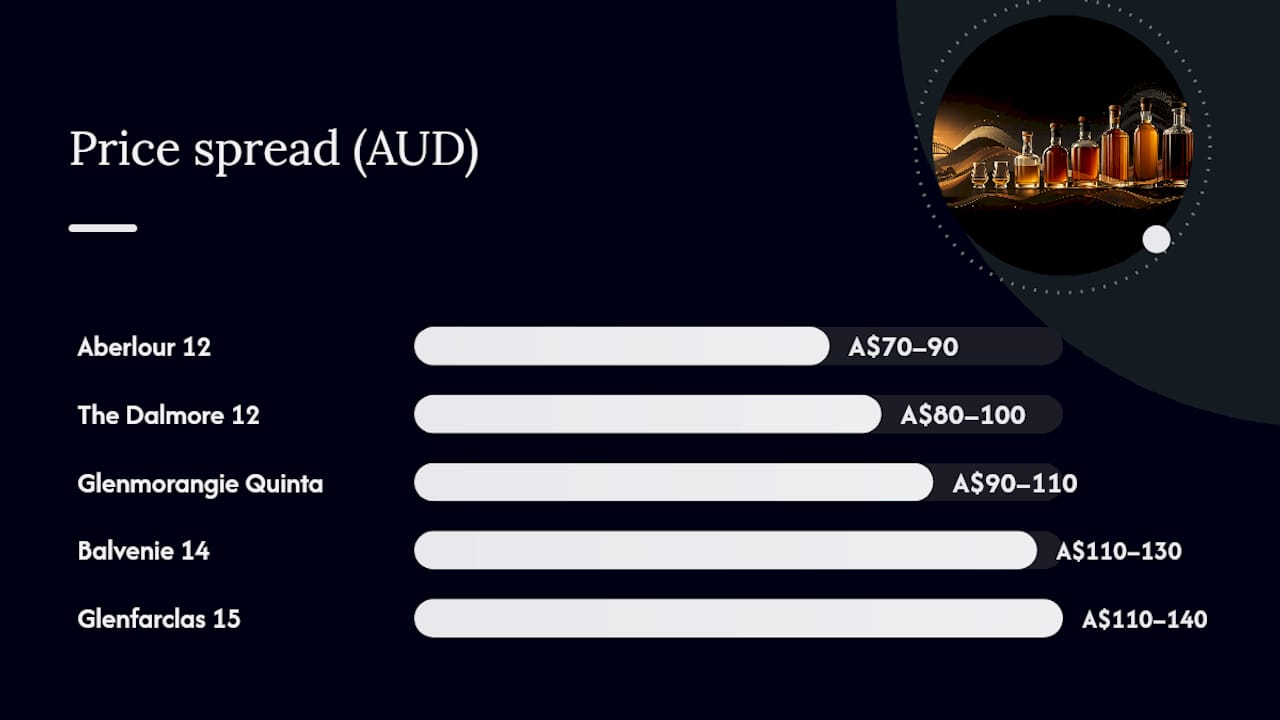
Value standouts: Aberlour 12 and Legent both sit under A$90 and punch well above their price on sweetness. Rarity flags: Glenfarclas 15 and Nikka Coffey Grain are the hardest to find in standard Australian retail; expect to source them through a specialist.
Why does whisky taste sweet in the first place?
Sweetness in whisky is mostly perception, driven by three things: the sugars released from oak during maturation, congeners produced during fermentation, and the grain mix (mashbill) used in production. No sugar is added to Scotch whisky by law, so every sweet note you taste is either extracted from wood or built during fermentation and distillation.
New charred American oak is the biggest single driver of vanilla, caramel, and toffee in bourbon-style expressions. The charring process caramelises the wood’s natural sugars, and the spirit draws those compounds out over years of contact. Vanilla, caramel, and toffee are the classic markers of this style, and they sit at the core of why bourbons and rum-cask-finished Scotches taste so approachable.
Sherry and PX casks work differently. Sherry cask influence delivers dried fruit, raisin, and Christmas cake notes that register as a denser, richer sweetness on the palate. Oloroso adds dark fruit and chocolate; PX (Pedro Ximénez) pushes further into fig jam and molasses. That is why Glenfarclas 15 and Aberlour 12 taste like dessert without tasting like candy.
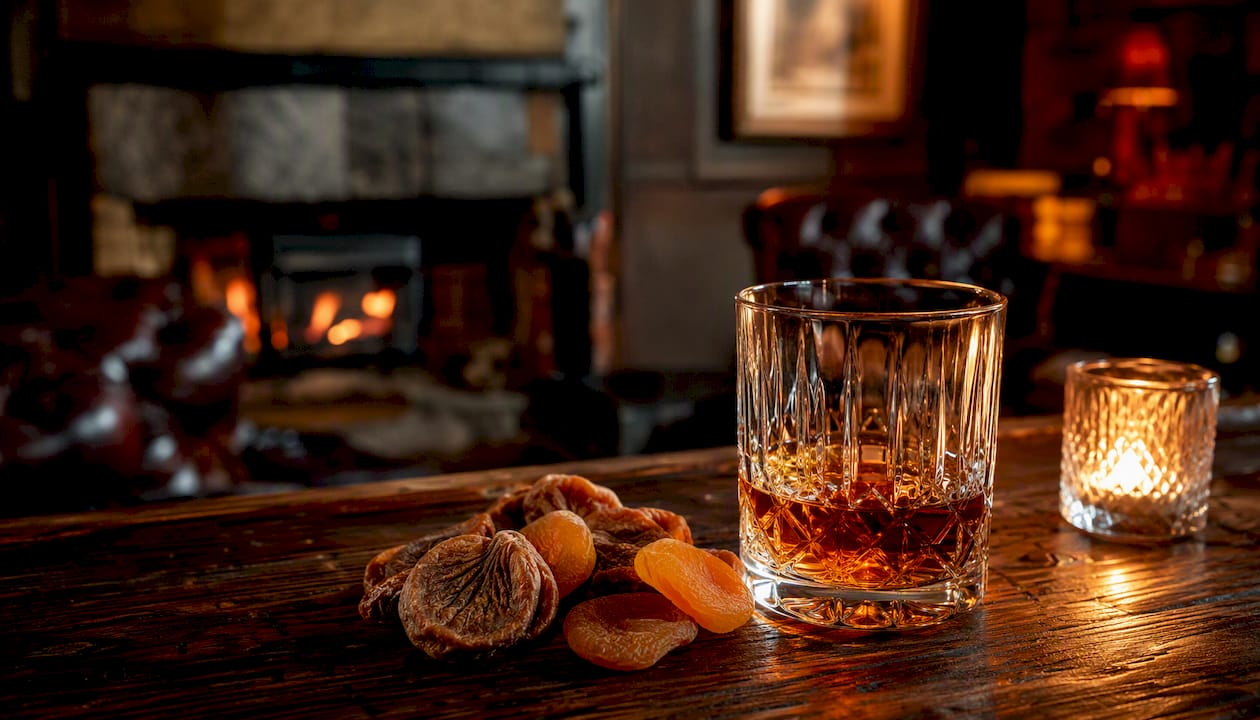
Port and rum finishes sit between the two. Port pipes add jammy red fruit and a silky texture; rum casks bring coconut and tropical fruit alongside the vanilla already in the spirit. Balvenie 14 Caribbean Cask is the clearest example of rum-cask sweetness done well.
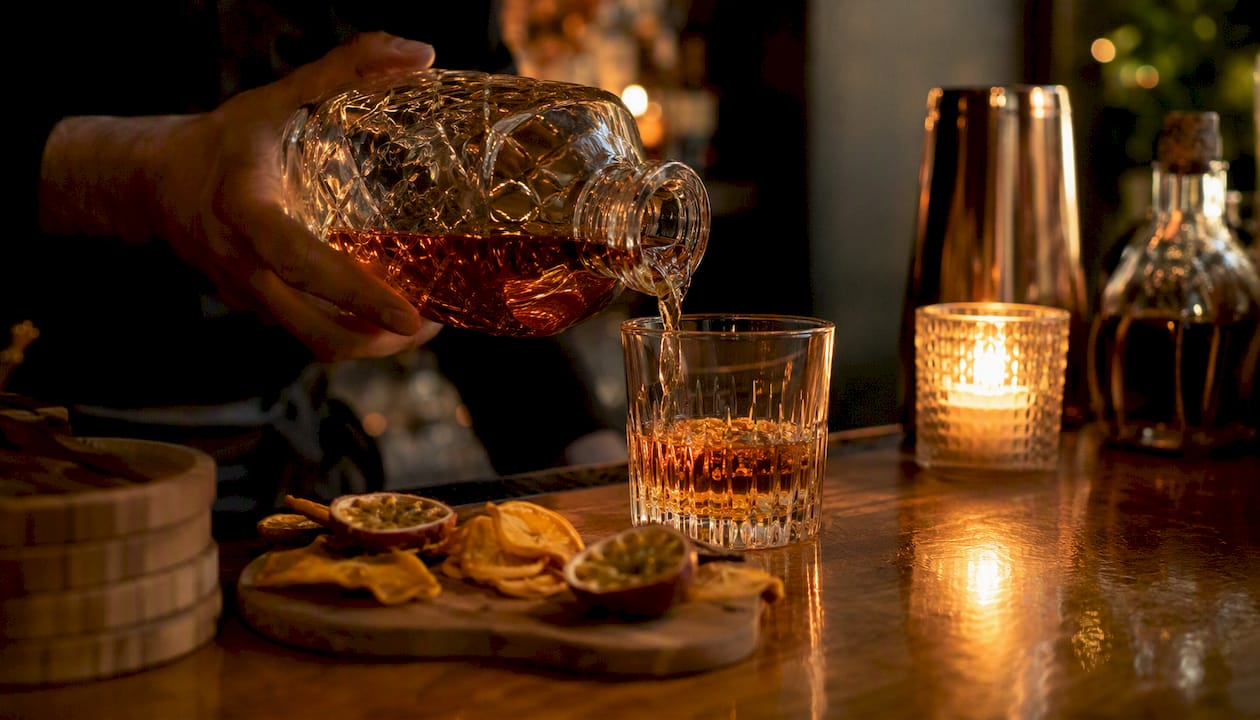
Fermentation esters also matter. Long fermentation times produce fruity esters (pear, apple, banana) that read as sweetness before the cask even enters the picture. Glenfiddich’s Orchard Experimental Series leans on this.
ABV and chill-filtering both affect how sweet a whisky feels. Higher ABV, non-chill-filtered bottlings tend to feel oilier and carry more coating, sweet flavours.
Pro Tip: Add two or three drops of still water to your dram, wait 90 seconds, then nose again. Nosing a second time after dilution often reveals fruitier, sweeter layers that were masked by alcohol on the first pass. Try it with any bottle on this list.
What sweet whisky styles should you know about?
Understanding the style helps you predict what you are buying before you open the bottle. The whisky flavour profiles that produce sweetness fall into a few clear buckets.
- Heavily sherried Scotch (oloroso, PX): expect dried fruit, raisin, dark chocolate, and Christmas cake. Texture is coating and syrupy. Best neat, possibly with a single ice cube. Speyside and Highland distilleries dominate here. Glenfarclas and Aberlour are the benchmark examples.
- Port-finished Scotch: jammy red fruit, dark cherry, and a silky mouthfeel. Slightly lighter than full sherry maturation. Neat is best; a splash of water opens the fruit. Glenmorangie Quinta Ruban is the textbook case.
- Bourbon and new American oak: vanilla, caramel, maple, and toffee. The bourbon flavour wheel places these in a dedicated sweet category, linked directly to corn mashbill and charred oak. Drinks well neat, on ice, or in cocktails. Angel’s Envy and Legent both sit here.
- Caribbean rum cask finished: coconut, tropical fruit, and vanilla layered over the base spirit’s character. Lighter and more playful than sherry. Works well neat or in a simple long drink. Balvenie 14 is the most widely available example in Australia.
- Wine cask finishes (Sauternes, Moscatel, Tokaji): pastry, white chocolate, honeycomb, and syrupy dessert notes. Wine-cask finishes intensify a whisky’s dessert-like character in a way that feels lighter and more floral than sherry. Serve neat to appreciate the delicacy.
- Japanese grain whisky (continuous still): coconut, vanilla, and white chocolate from the grain and long maturation. Nikka Coffey Grain is the clearest example available in Australia. Neat or with a small splash of water.
How do you choose the sweetest whisky for your taste?
Start by deciding which kind of sweetness you actually want: caramel and vanilla (bourbon and rum-cask), dried fruit and Christmas cake (sherried Scotch), or jammy and floral (port and wine finishes). Those three categories taste very different even though they all qualify as sweet.
A practical checklist before you buy:
- Sweetness type: caramel/vanilla, dried fruit, or jammy/floral?
- ABV: 40% for lighter, more approachable sweetness; 43–46% for more texture and intensity.
- Cask finish: look for it on the label. “Double cask,” “sherry matured,” “port pipe,” or “rum cask” are the phrases that matter.
- Age statement: older expressions in sherry casks (12 years and above) tend to show deeper, more integrated sweetness.
- Price band: under A$90 for everyday sweet drams; A$90–140 for richer, more complex finishes; above A$140 for rare or limited expressions.
- Intended serve: if you plan to use it in cocktails, a bourbon or rum-cask finish holds up better than a delicate wine finish.
- Availability: check whether it is common retail or a specialist import before you commit to a specific bottle.
Red flags to watch for: vague tasting notes with no cask information, prices well below market for a supposedly rare finish, and bottles without a clear age statement or distillery name. For grey-market or online purchases in Australia, look for the importer’s details on the label and buy from retailers with a physical presence or a clear returns policy.
Beginners: start with bourbon (Angel’s Envy, Legent) or a rum-cask Scotch (Balvenie 14). These are the most immediately approachable sweet profiles. Move to heavily sherried Scotch once you have a reference point for what sweet means to you. The beginner’s guide to whisky at Uisuki covers this progression in more detail.
Where can you buy sweet whiskies in Australia?
Many dessert-style Scotches and finished bourbons are widely stocked, but certain finishes and limited editions require a specialist. Knowing where to look saves time and often money.
Typical Australian price bands:
- Mainstream sweet bottles (Aberlour 12, Redbreast 12, Legent): A$70–100 at most bottle shops and national retailers.
- Mid-tier sherried and finished releases (Balvenie 14, Glenmorangie Quinta Ruban, Angel’s Envy): A$90–130 at independent specialists and online.
- Rarer limited expressions (Glenfarclas 15, Nikka Coffey Grain, Glenfiddich Orchard Experimental): A$110–160 and above, often specialist import only.
Where to buy:
- National retailers (Dan Murphy’s, BWS): good for common releases. Stock rotates and rare expressions sell quickly.
- Independent bottle shops: better range of mid-tier and some specialist imports. Staff knowledge is usually stronger.
- Online retailers: broader range, price comparison is easy, but check shipping costs and whether the retailer is Australian-based. For an overview of what is available locally, the Australian whisky brands guide at Uisuki is a useful starting point.
- Uisuki: curated selection with specialist sourcing for bottles that are not in standard retail. Sourcing requests for hard-to-find expressions are accepted directly.
Pro Tip: If you are buying from an overseas seller and importing into Australia personally, check the Australian Border Force duty-free threshold before ordering. Bottles shipped directly to an Australian address from overseas are subject to import duties and GST once they exceed the relevant threshold. Buy from an Australian-based retailer to avoid the paperwork.
Uisuki’s curated picks for the sweetest drams
Uisuki selected these bottles based on three criteria: clear dessert-like flavour signatures, practical retail availability in Australia, and genuine price-to-flavour value. Every bottle on this list has been chosen because it delivers on sweetness without requiring you to spend collector prices.
- Glenmorangie Quinta Ruban: dark chocolate, orange peel, toffee. Port pipe finish at 46% ABV. Made the cut because the port finish adds jammy depth without overwhelming the base spirit’s elegance. Sourced as a specialist import; Uisuki can assist with availability.
- The Dalmore 12: marmalade, milk chocolate, dried fruit. Sherry finish at 40% ABV. One of the most consistently available sweet Scotches in Australia. Good entry point for sherry-style sweetness.
- Balvenie 14 Caribbean Cask: vanilla, toffee, tropical fruit. Rum cask at 43% ABV. The most approachable sweet Scotch on this list for newcomers. Widely stocked.
- Aberlour 12: stewed plum, raisin, butterscotch. Double cask at 40% ABV. Exceptional value under A$90. The double-cask approach means you get both bourbon vanilla and sherry fruit in one glass.
- Glenfarclas 15: Christmas cake, dried fig, dark toffee. 100% oloroso sherry casks at 46% ABV. The most intensely sherried bottle on this list. Uisuki can source it; lead times for specialist imports are typically two to four weeks.
- Angel’s Envy: vanilla, caramel, port-soaked cherry. Port wine barrel finish at 43.3% ABV. The best sweet bourbon available in Australia at this price. Widely stocked.
- Legent: honey, stone fruit, baking spice. Sherry and wine cask finish at 47% ABV. Excellent everyday sweet bourbon at under A$90.
- Nikka Coffey Grain: coconut, vanilla, white chocolate. Continuous still at 45% ABV. A specialist import with a flavour profile unlike anything else on this list. Worth the effort to source.
- Redbreast 12: dried apricot, toasted oak, honey. Pot still Irish at 40% ABV. The only Irish whiskey on the list and a strong argument for the style. Common in Australian retail.
- Glenfiddich Orchard Experimental Series: pear, apple blossom, honey. Wine cask influence at 43% ABV. A lighter, more floral sweetness. Limited availability; check Uisuki for current stock.
For specialist imports, Uisuki accepts sourcing requests and provides estimated lead times at the point of enquiry.
How rare are some of these expressions, and how long will you wait?
Availability in Australia splits cleanly into three tiers. Common releases (Aberlour 12, Redbreast 12, Legent, Angel’s Envy, Balvenie 14, The Dalmore 12) sit on shelves at major retailers year-round. You can walk in and buy them today.
The middle tier (Glenmorangie Quinta Ruban, Glenfiddich Orchard Experimental) moves in and out of stock at independent specialists. These are not rare in a global sense, but Australian allocation is limited enough that specific expressions can disappear for months at a time. Checking stock online before making a trip is worth the two minutes.
Glenfarclas 15 and Nikka Coffey Grain sit in the specialist-import category. Neither is a limited release in the collector sense, but Australian importers do not always hold deep stock. Lead times through a specialist sourcing service like Uisuki run roughly two to four weeks for in-stock overseas inventory, longer if the expression needs to be located. If you want one of these, placing a sourcing request early is the practical move rather than waiting for it to appear on a shelf.
Truly limited expressions (single cask bottlings, distillery exclusives, travel retail releases) are a different matter. These sell out at release and rarely reappear at retail price. If a bottle is being offered well above its original retail price, that is usually a reliable signal it was limited. Buying through a specialist with transparent sourcing is the safest way to avoid inflated grey-market pricing.
A curator’s note on choosing sweet whiskies
Dessert-style drams are worth exploring precisely because they are the most honest test of a distillery’s cask management. Anyone can add a sherry finish to a mediocre spirit and call it sweet. The Balvenie 14 works because the rum cask finish is long enough to actually change the spirit, not just tint it.
For Australian buyers, the practical reality is that the best sweet whiskies at the best prices are not always the ones sitting on the shelf at the nearest bottle shop. Specialist imports like Glenfarclas 15 and Nikka Coffey Grain reward the small extra effort of sourcing them properly. The flavour difference between a well-sourced sherried Scotch and a generic supermarket blend is not subtle. It is the difference between a dessert and a biscuit.
Find these bottles through Uisuki
Uisuki stocks a curated selection of the sweetest whiskies available in Australia, from everyday sweet pours like Aberlour 12 and Legent through to specialist imports like Glenfarclas 15 and Nikka Coffey Grain. If a bottle you want is not currently in stock, the sourcing team accepts requests directly and provides lead time estimates upfront.
Shipping is available across Australia, with free shipping thresholds applying to qualifying orders. Availability and pricing on specialist imports can shift with allocation, so checking current stock before committing is always the right move. Browse the current selection or submit a sourcing request at Uisuki. Please enjoy whisky responsibly; for guidance on standard drink sizes and safe consumption, visit Responsibility.
Sources
- Your Whiskey Tasting Notes Template – Blind Barrels
- How to Taste Whisky: A Practical Guide to Nose, Palate, and Finish — Whisky Centurion
- Bourbon Tasting Wheel — The Council of Whiskey Masters: Scotch and Bourbon Certification & Education Program, Home of the Whiskey Sommelier
- Glenmorangie The Nectar 16 Years Old | Single Malt Whisky