

TL;DR:
- Scottish, American bourbon, and rye whiskies are legally defined by strict standards regarding origin, grains, aging, and barrel types. Each style offers distinct flavor profiles driven by their unique ingredients and maturation processes, shaping their ideal pairings and occasions. Understanding these regulations enhances appreciation and enables informed choices among diverse whisky options.
Scotch, bourbon, and rye are three distinct whisky styles defined by geography, grain composition, and strict production law. Scotch is made exclusively in Scotland from malted barley, bourbon is an American whisky built on a mash of at least 51% corn, and rye is a spicier American counterpart that swaps corn for a majority rye grain. Understanding the difference between scotch and bourbon, or what separates rye from both, is not just trivia. It shapes what you order, how you drink it, and which bottle earns a place on your shelf.
What legal regulations define scotch, bourbon, and rye?
The clearest way to understand scotch vs bourbon vs rye is through the laws that govern each one. These are not suggestions. They are binding production standards that determine what can legally carry each name.
Scotch whisky regulations
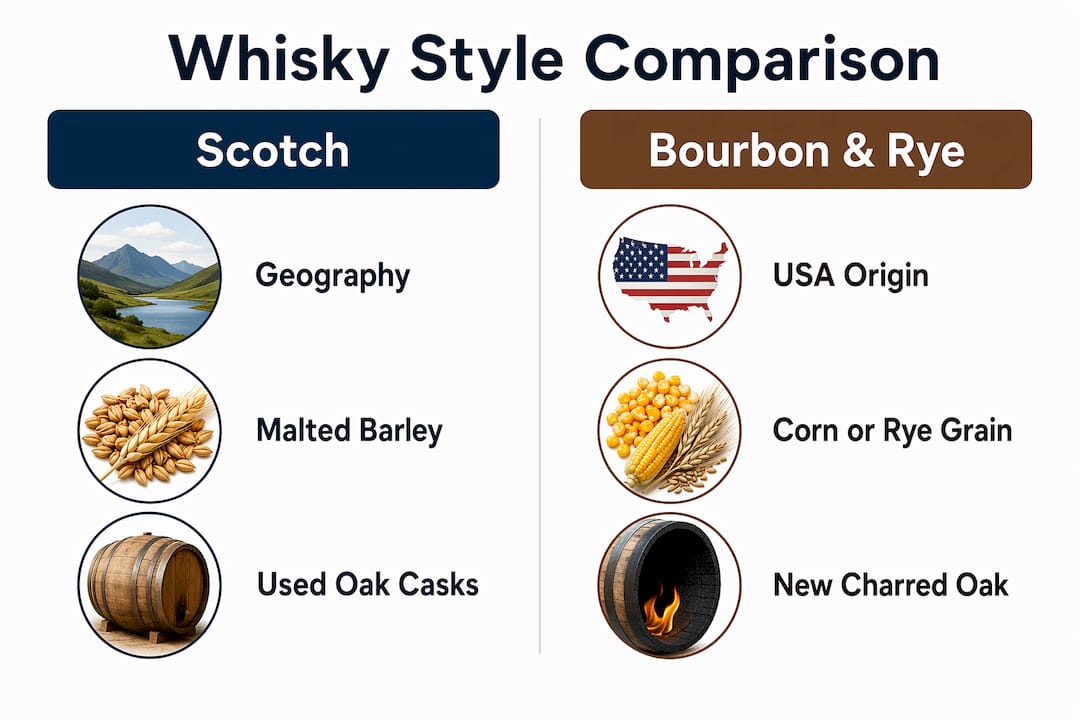
Scotch must be produced entirely in Scotland, matured in oak casks no larger than 700 litres for a minimum of three years, distilled below 94.8% ABV, and bottled at no less than 40% ABV. The only permitted additive is plain caramel colouring. These rules come from the Scotch Whisky Regulations 2009, which also define five legal categories: Single Malt, Single Grain, Blended Malt, Blended Grain, and Blended Scotch. Over 90% of Scotch sold globally is blended Scotch whisky, meaning most bottles you encounter combine malt and grain whiskies from multiple distilleries.
Single Malt Scotch does not mean a single cask or a single year of production. It means whisky distilled at one distillery using 100% malted barley. Blending different ages within that distillery is standard practice, which is why age statements on Single Malts reflect the youngest whisky in the bottle.
Bourbon and rye standards
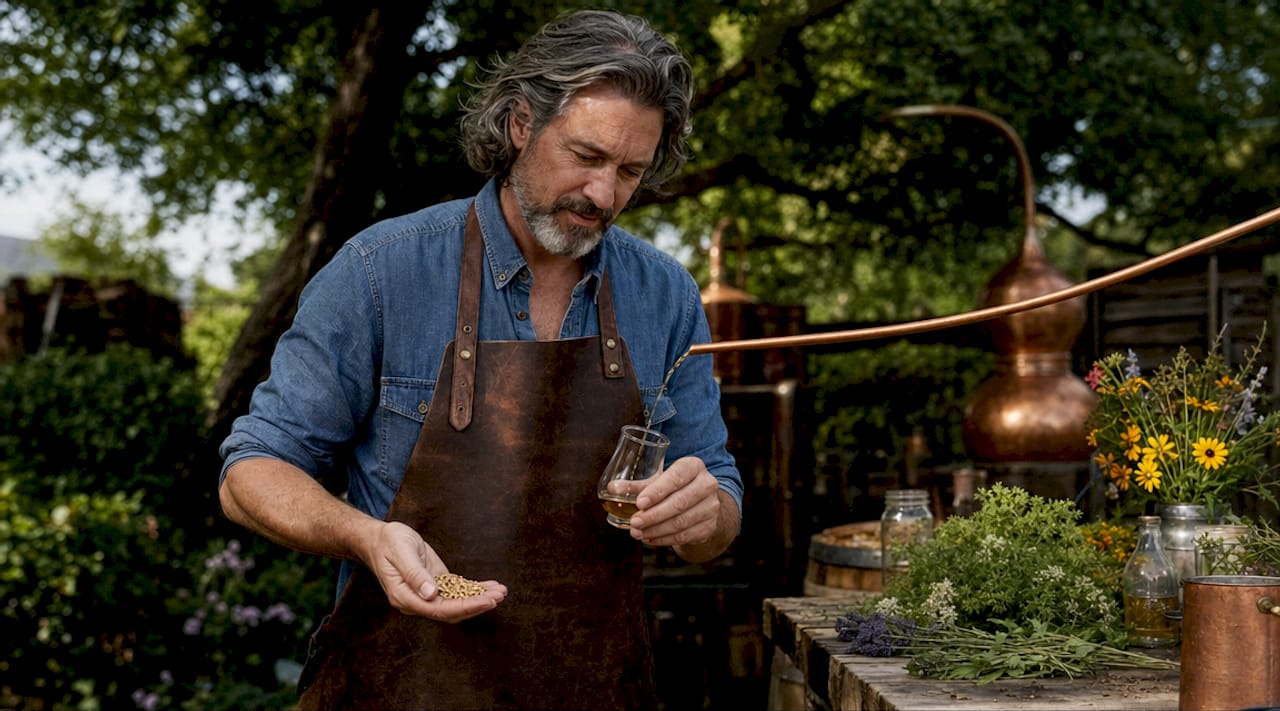
Bourbon must be made in the US from a mash bill of at least 51% corn, distilled below 80% ABV, aged in new charred oak barrels, and bottled at no less than 40% ABV. There is no minimum age requirement for standard bourbon, but straight bourbon requires at least two years of maturation in those charred new oak barrels.
Straight rye whiskey follows the same framework as bourbon but substitutes rye grain as the majority ingredient, requiring at least 51% rye in the mash bill. The same new charred oak barrel requirement applies, and straight rye must age a minimum of two years. The “straight” label is a consumer signal worth paying attention to. It guarantees aging minimums and production integrity that unlabelled bottles do not.
Pro Tip: When browsing bottles, look for “straight” on American whisky labels. It confirms at least two years in new charred oak and gives you a reliable baseline for flavour maturity.
| Category | Grain requirement | Barrel type | Minimum age |
|---|---|---|---|
| Scotch | Malted barley (Single Malt) or mixed grains | Used oak casks, max 700L | 3 years |
| Bourbon | At least 51% corn | New charred oak | None (2 years for “straight”) |
| Rye | At least 51% rye grain | New charred oak | None (2 years for “straight”) |
| Tennessee whiskey | At least 51% corn | New charred oak + charcoal filtering | Same as bourbon |
Tennessee whiskey is worth a brief mention here. It complies with bourbon federal laws but adds the Lincoln County Process, a charcoal filtering step before barrel entry that distinguishes it from straight bourbon in both law and flavour.
How do production methods shape flavour profiles?
Grain choice and barrel type are the two biggest levers in whisky flavour. The difference between rye and scotch, or between bourbon and either of them, comes down to what goes into the still and what the spirit rests in afterwards.
Scotch: peat, barley, and time
Scotch’s flavour spectrum is the widest of the three styles. Unpeated Scotch from Speyside distilleries like Glenfiddich or The Macallan tends toward fruit, honey, and gentle oak. Heavily peated Islay whiskies from producers like Ardbeg or Laphroaig deliver smoke, iodine, and medicinal intensity. The difference comes from how the malted barley is dried. Peat burned during barley kiln drying deposits phenols into the grain, and those phenols carry through distillation into the final spirit. Peat intensity is not uniform even within peat-forward regions. Variables like peat-burning time and barley moisture critically affect the phenol level and therefore the smokiness in the glass.
Scotch also matures in previously used casks, most commonly ex-bourbon barrels from American producers or ex-sherry casks from Spain. Because the wood has already given up its most aggressive flavours to a prior spirit, Scotch picks up subtler notes of dried fruit, vanilla, and spice over years of contact.
Bourbon: corn, char, and sweetness
Bourbon’s character is driven by two things: the corn-heavy mash bill and the new charred oak barrel. Corn contributes natural sweetness, and the char on fresh American white oak acts like a filter and flavour source simultaneously. The result is the caramel, vanilla, and toasted wood profile that makes bourbon immediately recognisable. Producers like Buffalo Trace, Maker’s Mark, and Wild Turkey each manipulate their corn-to-rye-to-barley ratios within the legal framework to create distinct house styles, but the sweet, full-bodied baseline remains consistent.
Rye: spice, pepper, and structure
Rye grain produces a leaner, drier spirit with pronounced spice. Rye whiskey characteristics include peppery heat, herbal notes, and a dry finish that contrasts sharply with bourbon’s sweetness. Brands like Rittenhouse, WhistlePig, and Sazerac Rye each demonstrate this profile clearly, though mash bill percentages above the 51% minimum push the spice further. A high-rye bourbon like Four Roses sits somewhere between the two styles, which is why understanding the mash bill matters when you are comparing bottles side by side.
Pro Tip: If you enjoy bourbon but want more complexity and less sweetness, try a high-rye bourbon like Four Roses Single Barrel before moving to a straight rye. It bridges the gap without the shock of a full style change.
What are the best food and cocktail pairings for each whisky?
Pairing whisky with food or cocktails is not complicated once you understand the base flavour profile. The sweetness, spice, or smokiness of each style points directly toward what it complements.
-
Bourbon with desserts and rich dishes. Bourbon’s caramel and vanilla character makes it a natural match for pecan pie, dark chocolate, and slow-cooked barbecue. The sweetness in the spirit mirrors and amplifies richness in food without competing with it. Neat bourbon alongside a slice of pecan pie is one of the more underrated pairings in whisky drinking.
-
Rye in classic cocktails. The Manhattan and the Old Fashioned were both originally built on rye whisky, not bourbon. Rye offers a spicier, drier character in cocktails that balances the sweetness of vermouth or sugar syrup far better than bourbon does. If you have only ever had a Manhattan made with bourbon, try it with Rittenhouse Rye and you will understand why bartenders consider rye the more precise tool.
-
Rye with savoury food. The peppery, herbal notes in rye whisky pair well with charcuterie, aged hard cheeses, and smoked meats. The spice cuts through fat and salt in a way that bourbon’s sweetness cannot.
-
Peated Scotch with robust food. Heavily smoked Islay Scotch from distilleries like Ardbeg pairs with smoked salmon, oysters, and strong blue cheese. The smoke in the whisky mirrors the intensity of the food rather than clashing with it.
-
Speyside Scotch with fruit and lighter dishes. Unpeated Speyside expressions from distilleries like Glenfarclas work well with poached pear, mild cheddar, and honey-glazed salmon. The lighter fruit and floral notes in these whiskies do not overwhelm delicate flavours.
How to choose between scotch, bourbon, and rye
Choosing between these three styles comes down to your flavour preferences, the occasion, and what you plan to do with the whisky.
If you prefer sweetness and approachability, bourbon is the starting point. It is the most consistent in flavour across producers and the most forgiving for new drinkers. If you want more complexity and a drier finish, rye is the logical next step. The difference between rye and scotch is more pronounced: rye is spicier and more structured, while Scotch offers a broader range from delicate and fruity to intensely smoky.
For special occasions and sipping neat, Scotch age-statement bottles reward patience. A 12-year Speyside Single Malt like Glenfiddich 12 or a 15-year Dalmore offers layers that reveal themselves slowly. For cocktails, rye is the most versatile base for spirit-forward drinks, while bourbon suits sweeter, longer cocktails.
Label literacy helps enormously here. Terms like “straight,” “bottled-in-bond,” and regional designations such as “Kentucky Straight Bourbon” or “Islay Single Malt” are not marketing language. They carry legal weight and tell you something concrete about how the whisky was made and aged.
| Style | Flavour profile | Best for |
|---|---|---|
| Scotch (peated) | Smoky, medicinal, earthy | Sipping neat, robust food pairings |
| Scotch (unpeated) | Fruity, floral, honeyed | Sipping neat, light food pairings |
| Bourbon | Sweet, caramel, vanilla | Cocktails, desserts, casual sipping |
| Rye | Spicy, peppery, dry | Classic cocktails, savoury food |
Common misconceptions are worth addressing directly. Many drinkers assume older always means better. Age adds complexity but not always quality. A well-made four-year straight rye from a skilled distiller will outperform a mediocre twelve-year Scotch. The legal definition and production standards matter more than the number on the label.
Key takeaways
Scotch, bourbon, and rye each deliver a distinct experience because their grain compositions, barrel requirements, and geographic origins are legally and fundamentally different.
| Point | Details |
|---|---|
| Origin defines the style | Scotch is Scotland-only; bourbon and rye are American, with grain as the key variable. |
| Barrel type drives flavour | New charred oak gives bourbon and rye their sweetness and spice; used casks give Scotch subtlety. |
| “Straight” signals quality | The straight designation guarantees at least two years of ageing and proper barrel use. |
| Peat is a choice, not a rule | Not all Scotch is smoky; peated styles like Ardbeg differ sharply from unpeated Speyside expressions. |
| Match style to occasion | Use rye for cocktails, bourbon for sweetness, and Scotch for sipping and nuanced food pairings. |
Why I stopped defaulting to one style
For a long time, I defaulted to Scotch. It felt like the serious choice, the one that signalled you knew what you were doing. Then I started paying attention to what I was actually tasting rather than what I thought I should be tasting, and everything shifted.
The moment that changed my perspective was making a Manhattan with Rittenhouse Rye instead of the bourbon I had been using. The cocktail was sharper, more defined, and genuinely more interesting. That one swap taught me more about rye whisky characteristics than any tasting note I had read. The spice in the rye pushed back against the sweet vermouth in a way that created balance rather than just sweetness on sweetness.
What I have come to appreciate is that the regulations are not bureaucratic noise. They are flavour blueprints. When you understand that bourbon must use new charred oak and Scotch cannot, you understand why they taste the way they do. That knowledge makes every glass more interesting, not less. You stop asking “which is better” and start asking “which is right for this moment.”
My honest recommendation: do not settle into one style too early. The Scotch whisky characteristics that seem intimidating at first, particularly the peated styles, become genuinely exciting once you have enough reference points from bourbon and rye to contextualise them. Explore broadly before you commit to a favourite.
— Brendan
Explore scotch, bourbon, and rye at Uisuki

Uisuki carries a curated range of whiskies from Scotland, the USA, Japan, and Australia, selected for quality and character across every style covered in this guide. If you want to taste the contrast between bourbon maturation and something more unusual, the Hobart Whisky Bourbon Matured Rum Finished Single Malt is a striking example of how bourbon barrel influence translates into an Australian single malt. For those drawn to classic Scotch profiles, the Ardnamurchan Macleans Nose Blended Scotch at 46% ABV offers an approachable entry into Highland character. Browse the full range at Uisuki and use the product descriptions to match each bottle to your palate.
FAQ
What is the main difference between scotch and bourbon?
Scotch is made in Scotland from malted barley and aged in used oak casks for a minimum of three years. Bourbon is an American whisky made from at least 51% corn and aged in new charred oak barrels, which gives it a sweeter, more vanilla-forward profile.
What is the difference between bourbon and rye whiskey?
Both are American whiskies with the same barrel requirements, but bourbon uses at least 51% corn while rye uses at least 51% rye grain. The result is that bourbon tastes sweeter and fuller, while rye is drier, spicier, and more peppery.
Is rye whisky better for cocktails than bourbon?
Rye is generally preferred for spirit-forward cocktails like the Manhattan and Old Fashioned because its spice balances sweet ingredients more precisely. Bourbon works well in sweeter, longer cocktails where its vanilla and caramel notes are an asset rather than a complication.
What does “straight” mean on a whisky label?
“Straight” on an American whisky label means the spirit has been aged for at least two years in new charred oak barrels and meets all standard production requirements. It is a legal guarantee of minimum ageing and production integrity, not just a marketing term.
Can Scotch whisky be made outside Scotland?
No. Under the Scotch Whisky Regulations 2009, Scotch must be produced and matured entirely in Scotland. Whiskies made in the same style elsewhere cannot legally use the name Scotch, regardless of their production method or grain composition.