

TL;DR:
- Legally, bourbon must contain at least 51% corn, while rye whiskey requires at least 51% rye grain, defining their distinct categories. These legal standards ensure that bourbon is sweet with caramel notes, and rye whiskey is drier and spicier, influencing their flavor profiles and cocktail applications. Despite similar production processes, the primary grain choice significantly shapes each spirit’s character, making tasting the key to identifying personal preference.
If you’ve ever stood in a bottle shop staring at two similar-looking American whiskeys and wondered what is the difference between rye and bourbon whiskey, you’re not alone. Most people assume it’s just a matter of taste preference, like choosing a light roast over a dark roast coffee. The reality is more specific than that. These are legally defined, distinct categories with different grain requirements, production constraints, and flavour outcomes. Understanding the difference between whiskeys like these two changes how you shop, mix, and drink.
Table of Contents
- Key takeaways
- The legal definitions that separate them
- How grain shapes the production process
- Flavour profiles: what to expect in the glass
- Rye and bourbon in cocktails
- Ageing, regional variations, and edge cases
- My honest take on choosing between them
- Explore rye and bourbon at Uisuki
- FAQ
Key takeaways
| Point | Details |
|---|---|
| Legal definitions matter | Bourbon requires 51% corn; rye requires 51% rye grain. These aren’t just style choices. |
| Flavour profiles diverge sharply | Bourbon skews sweet with caramel and vanilla; rye is drier, spicier, and more herbaceous. |
| Cocktail choice follows flavour | Rye suits drier, spirit-forward cocktails; bourbon works better in sweeter, richer drinks. |
| Ageing affects each differently | Prolonged barrel time adds complexity to bourbon but can mute rye’s signature spice. |
| High-rye bourbons blur the line | Some bourbons use more rye in the mash bill, producing a hybrid character worth knowing about. |
The legal definitions that separate them
The rye vs bourbon comparison begins before the first drop hits a barrel. Legal requirements define both spirits at the federal level in the United States, and those definitions are non-negotiable.
For bourbon, the key rules are:
- The mash bill must contain at least 51% corn
- The spirit must be distilled to no more than 160 proof (80% ABV)
- It must be aged in new, charred oak barrels
- It must enter the barrel at no more than 125 proof (62.5% ABV)
- It must be bottled at a minimum of 80 proof (40% ABV)
For rye whiskey, the requirements mirror bourbon almost exactly, with one critical substitution. The mash bill must contain at least 51% rye grain instead of corn. Every other production standard, new charred oak barrels, the same distillation and bottling proof limits, applies equally to both.
This is where the distinction becomes genuinely interesting. The difference between whiskeys in this category is not a branding exercise. It’s written into legislation. A producer cannot call their spirit bourbon if it uses predominantly rye, and vice versa. These legal boundaries exist to protect the integrity of each category and to give consumers a reliable indication of what they’re buying. The label tells you more than just the name.
Pro Tip: When you see “straight” on the label of either a bourbon or a rye, it means the whiskey has been aged for a minimum of two years with no added colouring or flavouring. That’s a useful quality signal when browsing.
How grain shapes the production process
Once you move past the legal requirements, the two spirits share a broadly similar production pathway. Both go through mashing, fermentation, pot or column distillation, and barrel ageing. The major difference in production comes down to the grain itself and how it behaves during fermentation.
Rye grain is notoriously difficult to work with. Its high beta-glucan content causes excessive foaming and can clog distillation equipment if not managed carefully. Corn, by contrast, converts to fermentable sugars more readily and produces a cleaner, more predictable fermentation. Distillers working with rye-heavy mash bills need to slow things down, monitor temperatures more closely, and sometimes adjust their equipment to handle the physical challenges the grain creates.
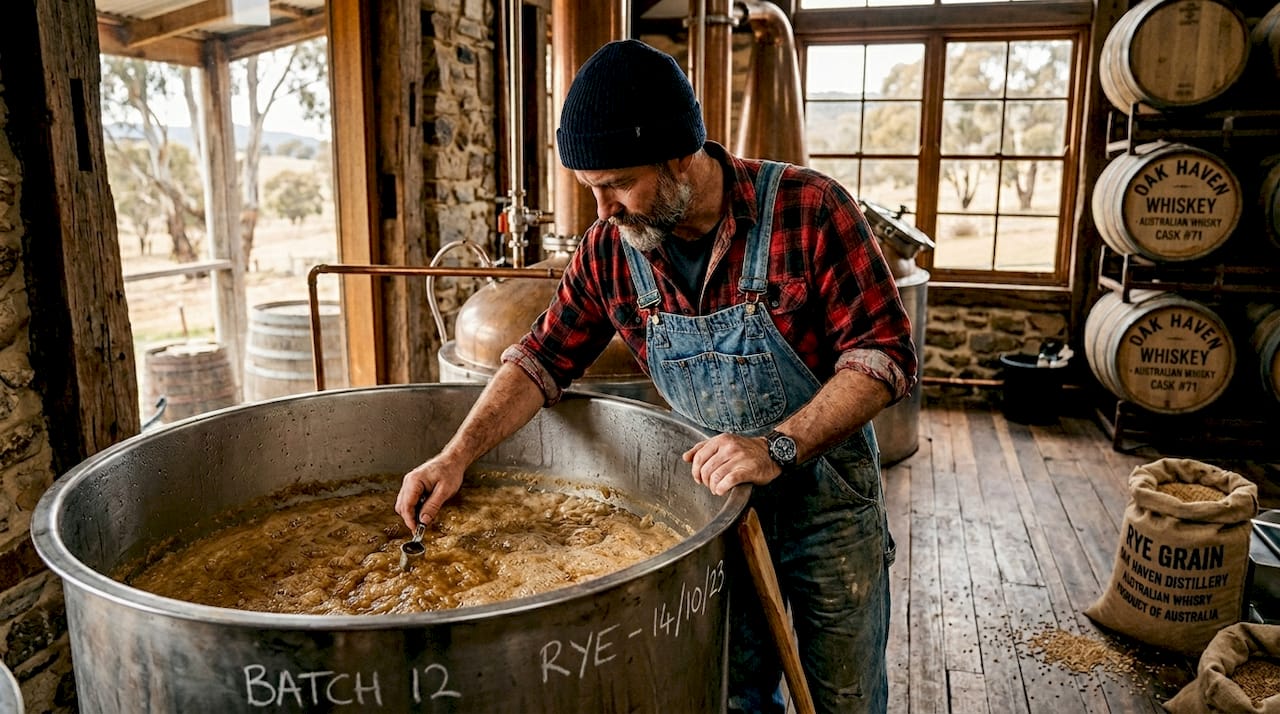
This extra effort in the distillery is one reason why rye whiskey was historically less common in the market than bourbon. It’s not that the process is dramatically different. It’s that fermentation and distillation require more careful handling at each stage. Experienced distillers describe it as working with a grain that resists you slightly at every step. The reward, when it works, is a spirit with a distinctive character that corn simply cannot replicate.
The primary grain also shapes the spirit’s character in ways that barrel ageing refines but doesn’t entirely transform. Corn’s natural sugars carry through into the finished bourbon. Rye’s spicy, assertive compounds survive distillation and make themselves known from the first sip. Understanding rye’s distilling challenges helps explain why the two spirits taste so fundamentally different despite sharing nearly identical production rules.
Flavour profiles: what to expect in the glass
This is where the rye vs bourbon comparison gets genuinely practical. The choice of primary grain fundamentally shapes each spirit’s personality, and once you’ve tasted both side by side, the distinction becomes impossible to miss.
Industry experts sometimes describe rye as a “bold, spicy rebel” and bourbon as a “smooth talker.” That’s a fair shorthand. Here’s what that means in actual tasting terms.
Bourbon’s flavour characteristics:
- Rich caramel and vanilla from the corn sugars and charred oak interaction
- Notes of dried fruit, toffee, and baking spice
- Full-bodied mouthfeel with a round, warming finish
- Lower perceived bitterness; sweetness lingers on the palate
Rye’s flavour characteristics:
- Prominent black pepper and dried herb notes
- Sometimes earthy or grassy, with a sharper, more angular mouthfeel
- Drier finish with less residual sweetness
- Bitter edge that develops in longer-aged expressions
The contrast is well documented. Bourbon is sweeter and smoother with caramel and vanilla at the forefront, while rye delivers black pepper, herbal, and grassy notes with a noticeably drier finish. These aren’t subtle differences you need years of tasting experience to detect. Most people pick them up on the first comparative pour.
| Feature | Bourbon | Rye whiskey |
|---|---|---|
| Primary grain | Corn (51%+) | Rye (51%+) |
| Sweetness | High | Low to moderate |
| Key flavour notes | Caramel, vanilla, oak | Black pepper, herbs, earth |
| Mouthfeel | Round, full-bodied | Lean, sharp |
| Finish | Warm, sweet | Dry, slightly bitter |
| Ageing sweet spot | Longer ageing adds complexity | Shorter ageing preserves spice |
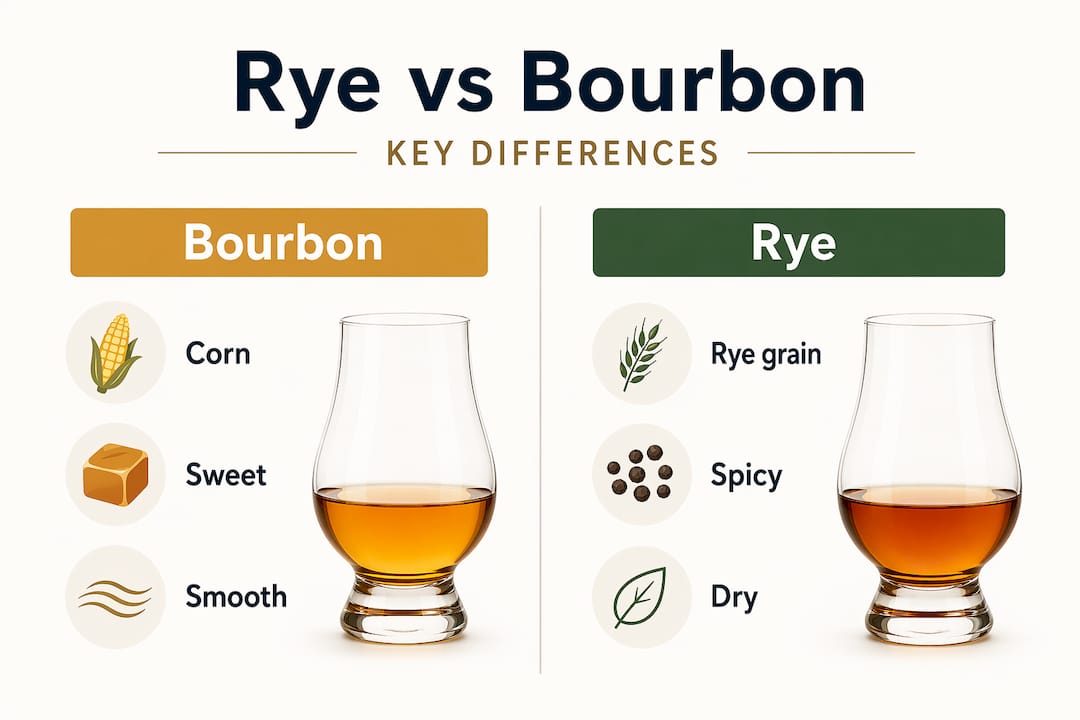
Explore the rye whisky flavour and history in more depth if you’re finding yourself drawn toward that spicier, more assertive style.
Rye and bourbon in cocktails
Understanding the rye whiskey flavour profile becomes especially useful when you’re building drinks. Cocktail decisions are not just about personal preference. They’re about chemistry and balance.
Here’s how to think about choosing between the two when mixing:
-
The Manhattan. Bartenders consistently prefer rye for Manhattans because the spice holds up against the sweetness of the vermouth. Bourbon’s additional sweetness can push the drink out of balance, making it feel flat or cloying.
-
The Old Fashioned. This one works well with both, but the results differ. A bourbon Old Fashioned is rich and dessert-like. A rye Old Fashioned is drier and more assertive. Neither is wrong. They’re just different cocktails wearing the same name.
-
The Mint Julep. Bourbon’s sweet, rounded profile is the traditional choice here. The sweetness complements the fresh mint rather than competing with it. Using rye instead produces a sharper, more surprising drink that some enthusiasts actually prefer.
-
The Whiskey Sour. Both work, but rye’s spice cuts through the citrus and sugar more distinctly, delivering a livelier, more complex result. Bourbon produces a softer, creamier version.
Rye’s spice holds up better to dilution in stirred or shaken cocktails, which is why it became the spirit of choice for the classic American cocktail canon before bourbon took cultural dominance. When you substitute one for the other in any cocktail, you’re not making a mistake. You’re making a different drink. Knowing that distinction makes you a more deliberate drinker.
Pro Tip: If you’re new to both spirits and want a quick comparison, order a straight pour of each at a bar before committing to a bottle. The difference in flavour will guide your preference far more reliably than reading descriptions alone.
Ageing, regional variations, and edge cases
The rye vs bourbon comparison gets a little more textured once you move past the basics. A few nuances are worth knowing before you consider yourself fluent in the difference between whiskeys.
-
High-rye bourbons are a legitimate category. Some producers use a mash bill with corn just over the 51% minimum and push rye content as high as 35 to 40%. The result is a bourbon that leans spicier and drier than typical expressions, borrowing some of rye’s character without crossing the legal line. These are excellent for drinkers who find regular bourbon too sweet but find straight rye too intense.
-
Ageing timelines differ significantly. Rye whiskies are often bottled younger than bourbons because extended barrel time can overwhelm the grain’s spice with wood sugars. Bourbon, by contrast, commonly matures for five years or longer and develops greater complexity without losing its core identity.
-
Canadian rye whisky follows different rules. In Canada, “rye whisky” on a label does not require a 51% rye mash bill. Some Canadian expressions contain very little rye grain at all. This is worth knowing because a Canadian rye and an American rye are not the same product, legally or in the glass.
-
Tennessee whiskey is technically bourbon made with a charcoal filtering step (the Lincoln County Process), not a separate legal category. Mentioning it here because it often creates confusion when people are already trying to untangle what is the difference between rye and bourbon whiskey.
My honest take on choosing between them
I’ve spent a lot of time with both of these spirits, and what I’ve come to believe is that most people form a strong opinion about rye versus bourbon within the first two or three serious tastings. The flavour divide is real and immediate.
What I’ve learned is that the legal definitions aren’t just bureaucratic details. They’re actually a gift to the consumer. Because the standards are so tightly defined, when you pick up a bottle of American straight rye or a Kentucky straight bourbon, you know broadly what you’re getting before you open it. That predictability is rare in the spirits world.
My honest advice to anyone starting out: don’t treat this as a competition. Try a mid-shelf rye and a mid-shelf bourbon side by side, neat, without ice. The difference will be obvious. From there, follow your palate rather than the labels. A high-rye bourbon might be exactly what you want. A younger, lighter rye might convert someone who swore they’d never leave bourbon.
The mistake most beginners make is defaulting to bourbon because it’s more familiar and then dismissing rye based on one dram of something too intense or too old. Give both categories the same fair shot. The legal categories are there to guide you, not constrain you.
— Brendan
Explore rye and bourbon at Uisuki

Now that you understand the real differences between these two American whiskey styles, the most satisfying next step is tasting them. At Uisuki, we stock a curated selection of both rye and bourbon expressions, chosen specifically for quality, character, and value. Whether you’re looking for a classic Kentucky bourbon to compare against a bold American rye, or you want to explore something more unusual like a bourbon-matured single malt from Hobart Whisky, we have bottles with detailed tasting notes to help you make an informed choice. Browse our collector-focused comparison guide to see how different expressions line up before you buy.
FAQ
What is the main difference between rye and bourbon?
The core difference lies in the grain. Bourbon must be made from at least 51% corn, while rye whiskey requires at least 51% rye grain. Both are aged in new charred oak barrels under U.S. federal law, but the primary grain drives a completely different flavour outcome.
Does rye whiskey taste different from bourbon?
Yes, noticeably so. Bourbon is sweeter with caramel, vanilla, and oak notes, while rye delivers a drier, spicier profile with black pepper, herbal, and sometimes grassy characteristics.
Which is better for cocktails: rye or bourbon?
It depends on the drink. Rye is preferred for Manhattans and other spirit-forward cocktails because its spice holds up to dilution and balances sweet vermouth. Bourbon works better in sweeter drinks like the Mint Julep or a dessert-style Old Fashioned.
Can you substitute rye for bourbon in a recipe?
You can, but the result will taste different. Replacing bourbon with rye makes a cocktail drier and spicier. Replacing rye with bourbon softens and sweetens the profile. Neither substitution ruins a drink; it just creates a different version of it.
Is Canadian rye the same as American rye whiskey?
No. Canadian rye whisky does not legally require a 51% rye mash bill, unlike American rye. Some Canadian expressions contain minimal rye grain. If you’re specifically looking for that bold, spicy rye character, stick to bottles labelled as American straight rye whiskey.