

Selecting the right bottle can feel daunting when so many factors influence each whisky’s evolution. For Australian collectors and connoisseurs, understanding how whisky truly matures goes far beyond the age statement on a label. From the influence of barrel selection to the impact of climate and wood type, every detail helps shape the character and value of a whisky. This guide reveals how time, environment, and careful craftsmanship come together to create distinct, sought-after expressions.
Table of Contents
- Defining Whisky Aging And Common Myths
- How Barrels And Environment Shape Flavour
- Types Of Maturation: Traditional And Modern
- Age Statements, Value, And The Collector’s View
- Risks, Pitfalls, And What To Avoid
Key Takeaways
| Point | Details |
|---|---|
| Whisky Ageing Complexity | Whisky ageing is influenced by multiple factors beyond time, including barrel type and environmental conditions. |
| Barrel Impact | The choice of barrel and its previous contents critically shape the whisky’s flavour profile. |
| Traditional vs Modern Techniques | Both traditional barrel ageing and modern technologies have unique merits, but traditional methods remain the gold standard for flavour complexity. |
| Collector’s Perspective | Whisky value is determined by factors like rarity and production techniques, not just the age statement. |
Defining Whisky Aging And Common Myths
Whisky aging represents a sophisticated transformation process where new make spirit evolves from harsh, raw alcohol into a complex, refined beverage through strategic maturation. This intricate journey begins immediately after distillation, involving crucial chemical interactions between the spirit and wooden barrels that fundamentally reshape its character and flavour profile.
The core mechanics of whisky aging involve several critical mechanisms:
- Chemical extraction of flavour compounds from wooden barrel walls
- Gradual oxidation through microscopic barrel pores
- Natural filtration of harsh elements through charred wood surfaces
- Temperature and humidity-driven molecular interactions
Many enthusiasts misunderstand aging as simply a matter of time, but whisky maturation science reveals a far more nuanced process. The barrel’s history, wood type, previous contents, and environmental conditions all play pivotal roles in developing unique flavour characteristics.
Barrel Selection emerges as perhaps the most critical factor in whisky aging. Oak remains the predominant wood choice, with American and European oak offering distinctly different flavour profiles. American oak typically introduces sweeter vanilla and caramel notes, while European oak contributes more robust, spicier characteristics.
Common myths about whisky aging persist among casual drinkers. Contrary to popular belief, older doesn’t always mean better. The quality of maturation depends on numerous factors beyond simple chronological age. A perfectly aged 10-year whisky can easily outperform a mediocre 18-year expression.
Pro tip: When exploring whisky, focus on the specific barrel characteristics and maturation conditions rather than fixating solely on the age statement.
How Barrels And Environment Shape Flavour
While whisky aging might seem straightforward, the process of developing complex flavours involves intricate interactions between the spirit, wooden barrel, and surrounding environment. Wood type and grain characteristics fundamentally determine the final flavour profile, with each barrel acting like a miniature flavour laboratory.
Key factors influencing whisky maturation include:
- Specific oak variety (American vs European)
- Barrel’s previous contents and usage history
- Charring and toasting levels inside the barrel
- Regional temperature and humidity variations
- Warehouse storage conditions
- Barrel size and wood thickness
Oak remains the cornerstone of whisky maturation, with different wood types contributing unique characteristics. American oak typically introduces sweeter, vanilla-like notes, while European oak delivers more robust, spicier undertones. The internal surface of the barrel plays a crucial role, with charring transforming wood sugars and creating complex flavour compounds.
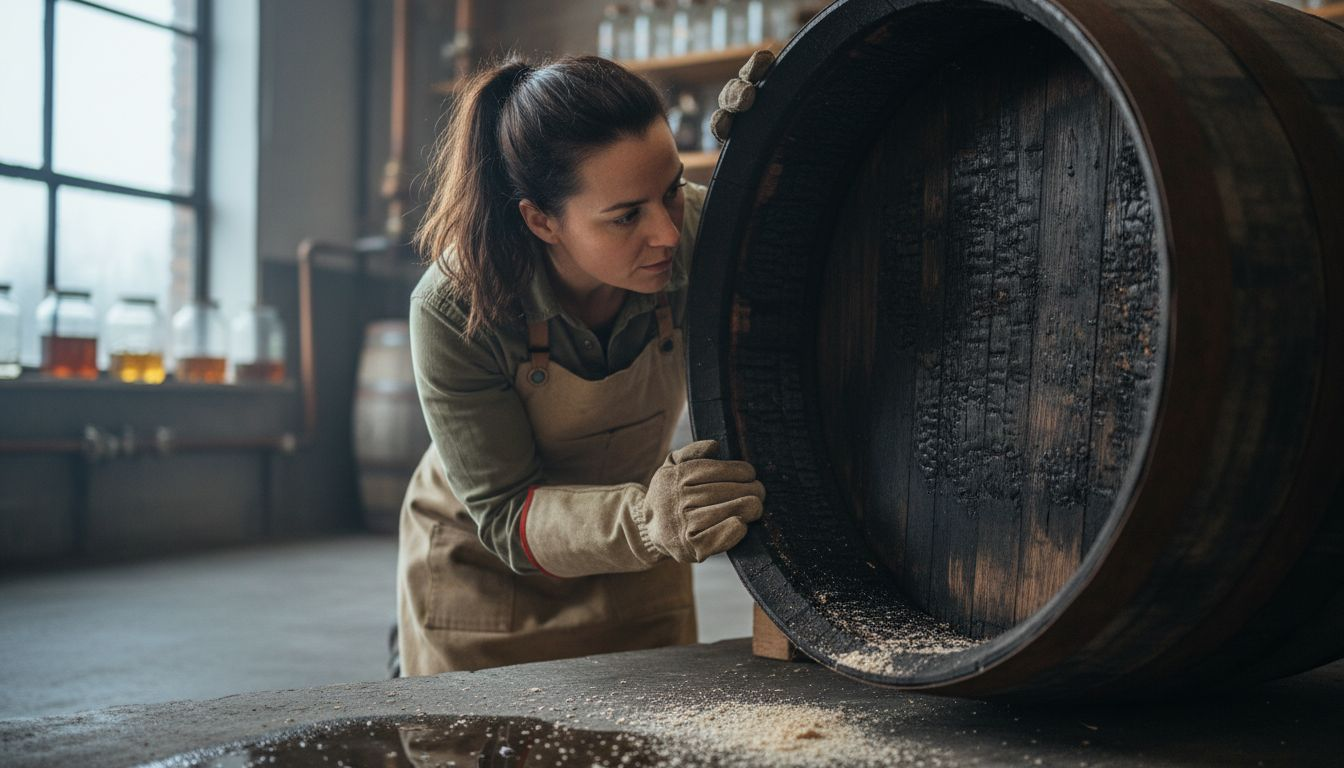
Environmental Conditions dramatically impact the aging process. Warmer climates accelerate molecular interactions, potentially reducing required maturation time, whereas cooler regions produce slower, more nuanced transformations. Temperature fluctuations cause the wooden barrel to expand and contract, facilitating deeper spirit penetration and more complex chemical exchanges.
Barrel selection represents a sophisticated art form for distilleries. Each barrel brings its own historical narrative, with previous contents like sherry or bourbon dramatically influencing the resulting whisky’s character. Coopers and master blenders carefully select and prepare barrels to create distinctive flavor profiles that reflect both tradition and innovation.
Below is a summary of how various environmental factors influence whisky’s flavour profile:
| Environmental Factor | Flavour Impact | Example Regions |
|---|---|---|
| High temperature | Faster, bolder notes | Queensland, Texas |
| High humidity | Milder, balanced | Scotland, Tasmania |
| Large temperature swings | Greater complexity | Kentucky, Japan |
Pro tip: When exploring whiskies, pay attention to the barrel’s origin and previous usage to understand the depth of its flavour complexity.
Types Of Maturation: Traditional And Modern
Whisky maturation represents a delicate balance between time-honoured traditions and cutting-edge technological innovations. Modern aging technologies are challenging conventional approaches, offering intriguing alternatives to traditional barrel aging while attempting to replicate its complex flavour development processes.
Traditional maturation techniques involve several key characteristics:
- Wooden barrel aging in temperature-controlled warehouses
- Slow chemical migration from wood to spirit
- Natural oxidation processes
- Gradual flavour development over years
- Minimal technological intervention
Barrel Aging remains the gold standard in whisky production, with distilleries worldwide adhering to centuries-old techniques. The process relies on wood’s inherent properties to transform raw spirit into a complex, nuanced beverage through patient molecular interactions and subtle environmental influences.
Modern maturation technologies are emerging as fascinating alternatives, including innovative techniques like:
- Wood fragment acceleration
- Ultrasonic treatment
- Pulsed electric field exposure
- High-pressure processing
- Microwave irradiation techniques
These contemporary methods aim to compress aging timelines, potentially reducing the traditional decade-long maturation process. While promising, they cannot entirely replace the subtle complexity achieved through traditional barrel aging, which continues to be the preferred method among master distillers.
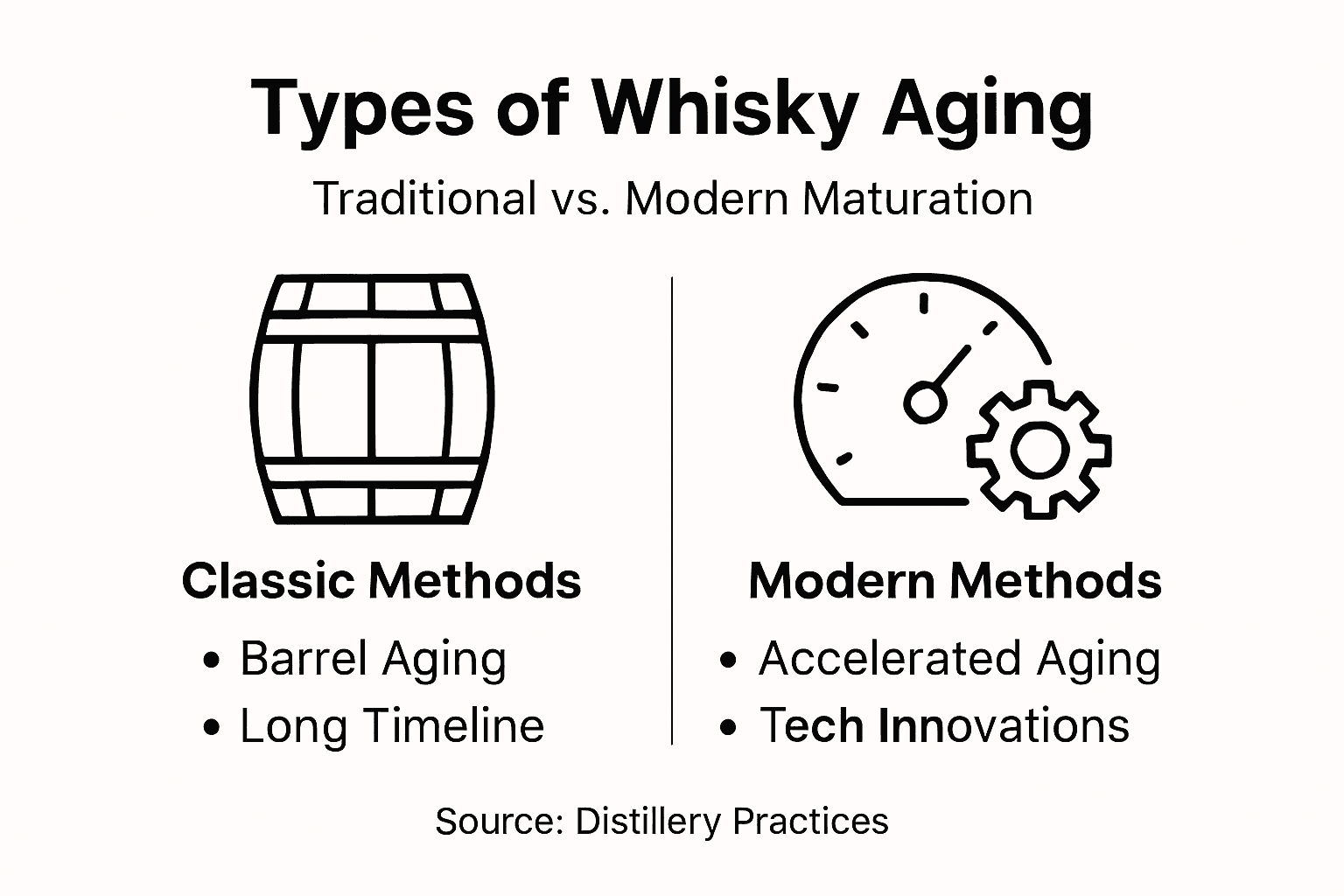
Here’s a comparison of traditional versus modern whisky maturation techniques to help clarify their key differences:
| Maturation Type | Time Required | Flavour Complexity | Common Technologies |
|---|---|---|---|
| Traditional Barrel | 8–20+ years | Nuanced, layered | Oak barrels, warehouse aging |
| Modern Innovation | Months to a few years | Accelerated, less layered | Ultrasound, microwaves, wood fragments |
Pro tip: Appreciate both traditional and modern approaches, understanding that innovation complements rather than replaces time-honoured whisky-making traditions.
Age Statements, Value, And The Collector’s View
Whisky collectors navigate a complex landscape where age statements represent more than just chronological time. Whisky value depends on nuanced factors beyond simple numerical age, challenging the simplistic assumption that older automatically means superior.
Key considerations for whisky collectors include:
- Rarity of the specific expression
- Distillery reputation
- Unique production techniques
- Limited edition status
- Provenance and storage conditions
- Balance of flavour complexity
Age Statements provide crucial information about minimum maturation periods, offering collectors a baseline for understanding a whisky’s potential. However, experienced enthusiasts recognise that an exceptional 10-year-old whisky can outperform a mediocre 18-year expression, demonstrating that quality trumps numerical age.
The collector’s market values complexity and storytelling as much as chronological aging. Rare releases from closed distilleries, special cask finishes, and expressions with unique production methods often command premium prices. These whiskies represent more than just a beverage - they’re liquid historical artifacts that capture a moment in distilling craftsmanship.
Modern collectors increasingly prioritise individual character over blanket age assumptions. They understand that maturation is a delicate dance between time, wood interaction, and environmental conditions. Some distilleries are even experimenting with innovative aging techniques that challenge traditional linear thinking about whisky development.
Pro tip: Evaluate whiskies holistically by tasting, not just reading the age statement.
Risks, Pitfalls, And What To Avoid
Whisky aging involves a delicate dance of complexity, where subtle missteps can dramatically compromise the final product. Whisky maturation challenges require meticulous attention to prevent catastrophic flavour degradation and preserve the spirit’s inherent quality.
Primary risks in whisky aging include:
- Over-oaking that overwhelms the spirit’s character
- Inconsistent temperature fluctuations
- Barrel contamination and quality issues
- Excessive wood tannin extraction
- Environmental humidity variations
- Uncontrolled oxidation processes
Barrel Selection emerges as a critical factor in mitigating potential aging risks. Distillers must carefully evaluate wood quality, previous barrel contents, and potential chemical interactions that could compromise the whisky’s integrity. A substandard barrel can introduce unwanted flavours or create imbalanced chemical reactions that fundamentally alter the spirit’s intended profile.
Environmental conditions play an equally crucial role in successful whisky maturation. Temperature and humidity fluctuations can cause uneven aging, potentially creating inconsistent flavour development across a single batch. Extreme conditions might accelerate wood interactions, risking over-extraction of tannins or premature flavour degradation.
Collectors and enthusiasts should be particularly wary of whiskies that demonstrate signs of poor aging management. Indicators like excessive woodiness, imbalanced flavour profiles, or unusual colour variations can signal potential maturation problems that compromise the spirit’s quality.
Pro tip: Always examine the barrel’s provenance and the distillery’s aging conditions before investing in a rare whisky expression.
Discover the Art of Whisky Aging with Premium Selections
Understanding the complex process behind whisky aging unlocks a deeper appreciation for each bottle’s unique flavour journey. Whether you are intrigued by the nuanced influences of barrel type or curious about how environmental conditions shape each sip, Uisuki.com.au offers a carefully curated range of whiskies that showcase these very principles. Explore exceptional expressions where the mastery of maturation shines through from renowned distilleries such as Glenfiddich and Glendronach.

Elevate your whisky collection today by choosing from our exclusive Glenfiddich and Glendronach selections. Embark on a flavour adventure that respects tradition while embracing innovation. Visit Uisuki.com.au now for expert guidance and rare finds. Act now to secure your place in the vibrant world of whisky connoisseurs where every bottle tells a story shaped by time and craftsmanship.
Frequently Asked Questions
What is whisky aging?
Whisky aging is the process where new make spirit transforms from raw alcohol into a complex beverage through maturation in wooden barrels. This involves chemical interactions between the spirit and the barrel that shape the flavour profile.
How do barrels influence whisky flavour?
Barrels, particularly those made of oak, play a crucial role in imparting flavour to whisky. The type of wood, previous contents of the barrel, level of charring, and storage conditions all contribute to the final taste and aroma of the whisky.
Does older whisky always taste better?
No, older whisky doesn’t always mean better quality. The maturation process depends on various factors such as barrel selection and environmental conditions. A well-crafted 10-year whisky can outperform a mediocre 18-year expression.
What risks are involved in whisky aging?
Several risks can compromise whisky aging, including over-oaking, inconsistent temperature fluctuations, barrel contamination, and excessive tannin extraction. These factors can lead to imbalanced flavour profiles or degraded quality of the final product.