

TL;DR:
- Whisky regions provide context but are not guarantees of specific flavor profiles.
- Systematic tasting and label analysis help identify regional characteristics and exceptions.
- Trust your palate and curiosity more than regional labels for building a unique whisky collection.
Many whisky enthusiasts have stood in a bottle shop or scrolled through an online store, spotted a regional name on a label, and still felt completely lost. Speyside, Islay, Campbeltown — these words carry weight, but without the right context, they’re just geography. The good news is that learning to read regional cues is a learnable skill, not a born talent. Once you understand what each region typically delivers and how to taste for those markers, you’ll buy with far more confidence, build a more interesting collection, and get genuine satisfaction from every pour.
Table of Contents
- Understanding whisky regions: What and why
- What you need before you taste: Preparation and selection
- Step-by-step: How to systematically taste and compare regions
- Common pitfalls and tricky exceptions in regional discernment
- Why your palate — not just the region — should guide your next bottle
- Ready to explore regional whisky for yourself?
- Frequently asked questions
Key Takeaways
| Point | Details |
|---|---|
| Know the official regions | Each Scotch whisky region offers distinct geographical identity but only general taste guidance. |
| Preparation matters | A proper tasting setup and sample selection boost your ability to truly detect regional qualities. |
| Tasting reveals the truth | Side-by-side, systematic tasting is the best method to distinguish whisky regions in practice. |
| Exceptions are common | Innovative distilleries and rule-breakers mean you must read labels and trust your palate. |
Understanding whisky regions: What and why
Before you can discern a region, you need to understand what a region actually means in whisky terms. It’s not just a postcode on a bottle. Scotch whisky has five official regions defined by the Scotch Whisky Regulations 2009: Speyside, Highlands, Lowlands, Islay, and Campbeltown. Each carries legal standing, meaning a distillery must operate within the geographical boundary to use that regional name.
Beyond Scotland, regions matter for Japanese, American, and Australian whisky too, though the regulatory frameworks differ. Understanding how regions shape whisky palate comes down to a combination of climate, water source, local grain, and distilling tradition. These factors accumulate over generations and produce genuinely distinct flavour tendencies.
Speyside alone hosts over 50 distilleries, making it the most densely populated whisky region on earth. That density reflects both the ideal conditions of the River Spey valley and the commercial success of the region’s approachable, fruit-forward style.
Here are the key regional cues worth knowing before you even open a bottle:
- Speyside: Stone fruit, honey, floral notes, gentle spice
- Highlands: Diverse and broad, ranging from heathery and dry to rich and peaty
- Lowlands: Light, grassy, delicate, often triple-distilled
- Islay: Heavily peated, smoky, medicinal, coastal brine
- Campbeltown: Oily, briny, slightly peated, robust
The table below gives you a fast-reference overview of each region:
| Region | Approx. distilleries | Broad characteristics |
|---|---|---|
| Speyside | 50+ | Fruity, honeyed, floral |
| Highlands | 30+ | Varied, heathery, rich |
| Lowlands | 15+ | Light, grassy, delicate |
| Islay | 10+ | Peated, smoky, maritime |
| Campbeltown | 3 | Oily, briny, complex |
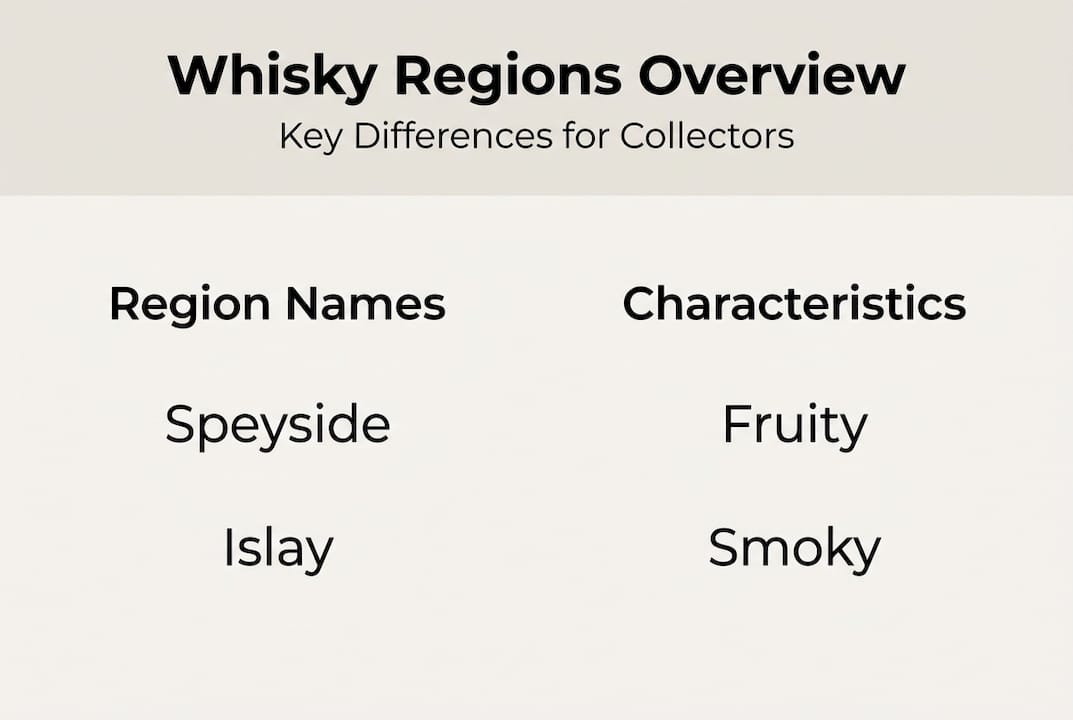
Regions are helpful guides, not absolute rules. Understanding why whisky varies by region means accepting that geography sets tendencies, not guarantees. Two distilleries sitting side by side in Speyside can produce dramatically different drams depending on still shape, cask choice, and production philosophy.
What you need before you taste: Preparation and selection
Understanding regions is one thing — let’s make sure you set yourself up for tasting success. A proper tasting session doesn’t require a professional setup, but a few deliberate choices will sharpen your ability to detect regional differences.
The systematic tasting approach of comparing 3 to 5 regional representatives — looking, nosing, tasting, assessing the finish, and adding a few drops of water — is the most effective primary method for building regional discernment. Start with lighter regions like Lowlands and work toward heavier ones like Islay, so earlier drams don’t overwhelm your palate.
Here’s a practical checklist to set up your session:
- Select one representative bottle from at least three distinct regions
- Use tulip-shaped Glencairn glasses to concentrate aromas
- Pour 25–30ml per sample and let each glass rest for 2 minutes before nosing
- Have still water and plain crackers or bread on hand to reset your palate between samples
- Taste in order from lightest to heaviest profile
- Record your impressions immediately — memory fades fast
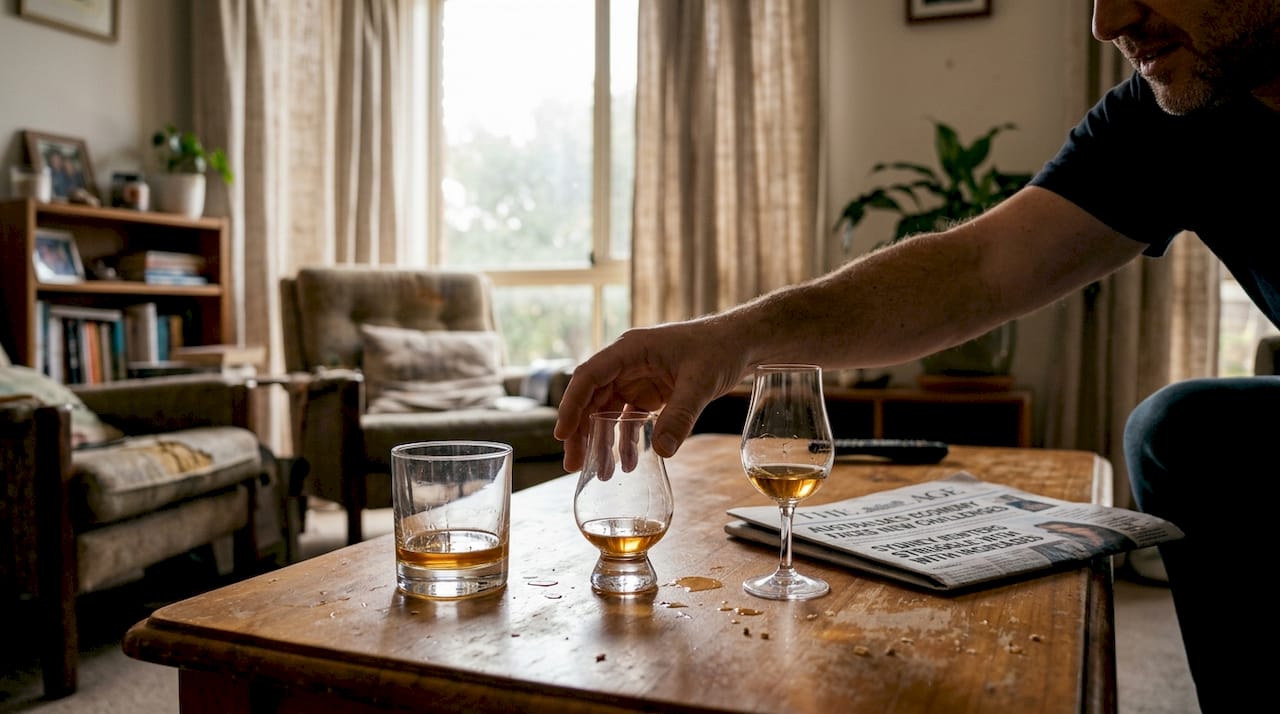
Glassware matters more than most people realise. A wide-mouthed tumbler disperses volatile compounds, flattening the nose. A Glencairn or similar tulip glass channels those aromas upward, making subtle regional markers far easier to detect. Temperature also plays a role — room temperature whisky (around 20°C) expresses more aroma than a cold pour.
For a regional starter set, consider these sample whiskies and their core characteristics:
| Region | Suggested style | Core characteristics |
|---|---|---|
| Speyside | Single malt, 10–12yr | Apple, pear, vanilla, honey |
| Islay | Single malt, peated | Smoke, iodine, sea salt |
| Lowlands | Single malt, unpeated | Grass, citrus, cream |
| Highlands | Single malt, varied | Dried fruit, heather, spice |
| Campbeltown | Single malt | Brine, toffee, light smoke |
Pro Tip: Taste in natural light if possible. Artificial lighting, especially warm-toned bulbs, can subtly distort your perception of a whisky’s colour, which is your first regional cue. Colour tells you about cask type and age, both of which correlate loosely with regional style. Check out our guide to best whiskies for beginners if you’re building your first regional tasting set.
Step-by-step: How to systematically taste and compare regions
With your setup complete, it’s time to dive into tasting and analysing whiskies from different regions. The process is straightforward once you know what to look for at each stage.
- Look: Hold the glass to light. Pale straw suggests ex-bourbon casks common in Speyside and Lowlands. Deep amber or mahogany points to sherry cask influence, more common in Highlands and some Speyside expressions.
- Nose: Bring the glass to your nose without inhaling sharply. Let the aromas drift to you. Speyside typically offers fruit and florals; Islay hits you with smoke and phenols ranging from 25 to 55+ ppm; Campbeltown delivers that distinctive brine and oil combination.
- Taste: Take a small sip and let it coat your tongue. Note where the flavour sits — sweetness at the front, spice at the back, or salt across the mid-palate.
- Finish: How long does the flavour last? Islay peated expressions leave a long, warming, smoky finish. Lowlands tend toward a short, clean exit.
- Water test: Add 2 to 3 drops of still water. This opens up congeners (flavour compounds) and can reveal hidden floral or fruity notes that weren’t apparent neat.
Pro Tip: Keep a dedicated tasting notebook. Write down your impressions before checking published tasting notes. Comparing your raw observations with expert profiles builds your palate faster than any other method.
For those exploring whisky category nuances, it’s worth noting that some of the most interesting bottles sit at the edges of regional expectation.
Worth noting: Some of the most celebrated Islay distilleries produce unpeated expressions, and several Speyside producers have released heavily peated limited editions. If a whisky surprises you, that’s not a failure of your palate — it’s a sign of a producer pushing boundaries.
Common pitfalls and tricky exceptions in regional discernment
Even with a sharp palate, whisky regions throw curveballs — here’s what to watch out for. The biggest mistake collectors make is treating regional labels as a guarantee of what’s in the glass.
Common assumptions that get enthusiasts into trouble:
- Assuming all Islay whisky is heavily peated (Bunnahabhain is famously unpeated)
- Expecting all Speyside to be sweet and light (some producers release peated expressions)
- Treating Highlands as a single flavour profile (it’s the most geographically diverse region)
- Overlooking the Islands, which sit under the Highland designation but often carry maritime and light peat character
- Dismissing Campbeltown as obscure when it produces some of Scotland’s most distinctive drams
The table below shows where regional expectations most commonly diverge from reality:
| Region | Classic profile | Major exceptions |
|---|---|---|
| Islay | Heavy peat, smoke | Bunnahabhain (unpeated), Bruichladdich (varied) |
| Speyside | Fruity, honeyed | BenRiach peated, Benromach |
| Highlands | Varied, heathery | Ardnamurchan (maritime), Dalmore (rich sherry) |
| Lowlands | Light, grassy | Ailsa Bay (peated expression) |
| Campbeltown | Briny, oily | Springbank (wide range of styles) |
Not all Islay is peated and Speyside peated experiments are increasingly common, which means flavour overlap between regions is a real and growing phenomenon. This isn’t a problem — it’s actually what makes whisky collecting so endlessly interesting.
When reading a label, look for:
- PPM (phenol parts per million): A direct measure of peat intensity. Under 5 ppm is unpeated; over 30 ppm is heavily peated.
- Cask type: Sherry casks add dried fruit and richness regardless of region; ex-bourbon adds vanilla and coconut.
- Age statement: Younger whiskies often express more raw regional character; older expressions can see regional traits softened by cask influence.
Pro Tip: Sampling and label analysis beats relying solely on reputation. Regions are best used as a starting point — your palate and the label details will always tell you more than a regional name alone. Use the confident collector’s guide and learn to understand whisky label details before your next purchase.
Why your palate — not just the region — should guide your next bottle
Stepping back, let’s reconsider how rigidly we should rely on region when curating or tasting whisky. At Uisuki, we’ve seen collectors spend years chasing regional categories, only to discover their most treasured bottles came from distilleries that broke every regional rule.
Regions provide genuinely useful context. They narrow your search, set expectations, and give you a shared language when discussing whisky with other enthusiasts. But treating them as gospel limits your collection and, frankly, your enjoyment.
The most rewarding finds tend to come from producers who understand their regional heritage deeply enough to know exactly when to deviate from it. A Speyside distillery releasing a heavily peated expression isn’t confused — it’s confident. An Islay producer making an unpeated single malt isn’t betraying tradition — it’s expanding it.
Trust your own impressions. If a whisky surprises you, follow that curiosity. The collectors who build the most interesting cellars are the ones who let whisky flavour profiles guide them as much as geography does. Regions are a map, not the destination.
Ready to explore regional whisky for yourself?
Now that you’ve got a practical framework for regional discernment, the best next step is to put it into practice with quality bottles in hand.

At Uisuki, we stock a curated range of whiskies from every major region, including rare and hard-to-find expressions that reward the kind of informed tasting you’ve just read about. If you’re looking for a brilliant example of Highland coastal character, the Ardnamurchan Macleans Nose Scotch is a standout worth exploring. We ship Australia-wide, and our team is always happy to help you source specific regional expressions for your next tasting session or collection addition.
Frequently asked questions
What are the main whisky regions and what makes them unique?
The main Scotch whisky regions are Speyside, Highlands, Lowlands, Islay, and Campbeltown, each defined by geography and broad taste trends. These five official regions carry legal standing under the Scotch Whisky Regulations 2009, though flavour profiles are tendencies rather than guarantees.
How can I tell if a whisky is peated or not just by its region?
While most Islay whiskies carry heavy peat character of 25 to 55+ ppm phenols, many exceptions exist. Always check label details or ppm content, since not all Islay is peated and some Speyside producers now release peated expressions.
What is the best way to taste and compare regional differences?
Set up a side-by-side tasting of 3 to 5 regional whisky samples, systematically comparing appearance, aroma, taste, and finish. Adding a few drops of water to each sample can reveal additional regional markers that aren’t obvious neat.
Are regional labels a guarantee of flavour profile?
No — regions signal likely style, but innovation and exceptions are common. Flavour overlap is frequent due to producer experimentation, so trust your palate and label details over regional reputation. Regions are a starting point, not a rule.