

Yeast transforms whisky from simple grain wash into a spirit brimming with complexity. This microscopic organism does far more than convert sugars into alcohol, it synthesises over 100 flavour compounds that define a whisky’s character. From fruity esters to spicy phenols, yeast craftsmanship shapes everything you taste. This article explores yeast biology, strain selection, fermentation parameters, and common myths to deepen your appreciation of whisky artistry.
Table of Contents
- Introduction To Yeast In Whisky Fermentation
- Yeast Biology And Fermentation Dynamics
- Yeast Strain Influence On Whisky Flavour
- Fermentation Time And Temperature Effects
- Wild Vs Cultured Yeast: Balancing Flavour And Consistency
- Common Misconceptions About Yeast In Whisky Production
- Practical Yeast Management And Innovations In Whisky Fermentation
- Conclusion: Enhancing Whisky Appreciation Through Yeast Knowledge
- Discover Exceptional Whiskies Shaped By Expert Fermentation
Key takeaways
| Point | Details |
|---|---|
| Yeast converts sugars into alcohol and over 100 flavour compounds | Fermentation creates fruity, floral, spicy, and smoky notes that define whisky character. |
| Different yeast strains create distinct whisky flavour profiles | Strain choice determines alcohol tolerance, ester production, and signature distillery styles. |
| Fermentation time and temperature strongly influence flavour complexity | Extended fermentation (48-96+ hours) at 20-25 °C maximises ester formation and flavour depth. |
| Wild yeast offers flavour uniqueness but less consistency than cultured strains | Wild ferments deliver regional complexity but risk off-flavours and stuck fermentations. |
| Understanding yeast helps enthusiasts appreciate whisky craftsmanship | Knowledge of yeast reveals the biological artistry behind every dram you enjoy. |
Introduction to yeast in whisky fermentation
Yeast is the biological engine that powers whisky creation. These single-celled fungi metabolise sugars from malted barley whisky production to generate ethanol and carbon dioxide. Saccharomyces cerevisiae is the primary species deployed across distilleries worldwide due to its robust alcohol tolerance and flavour-forming capabilities. Fermentation duration varies by distillery philosophy, typically spanning 48 to 96 hours depending on desired flavour outcomes.
Yeast activity determines both alcohol yield and sensory complexity. During fermentation, yeast cells multiply rapidly, consuming available sugars whilst releasing metabolic by-products that shape whisky’s aromatic profile. The choice of yeast strain, fermentation vessel, and environmental conditions all influence final spirit character. Understanding these fundamentals allows enthusiasts to recognise the biological craftsmanship embedded in every bottle.
Key aspects of yeast in whisky fermentation include:
- Conversion of maltose and glucose into ethanol and CO2
- Production of flavour-active esters, phenols, and higher alcohols
- Temperature-sensitive metabolism requiring careful thermal management
- Strain-specific characteristics that define distillery signatures
- Fermentation kinetics that balance efficiency with flavour development
Yeast biology and fermentation dynamics
Fermentation progresses through three distinct biological phases. The lag phase sees yeast cells acclimatising to the wort environment, preparing for reproduction. Next, the logarithmic phase drives explosive cell growth and sugar consumption. Finally, the stationary phase occurs when nutrients deplete and alcohol concentrations inhibit further yeast activity.
During active fermentation, yeast converts fermentable sugars into ethanol, CO2, and numerous metabolites that become flavour precursors in the final spirit. This process is highly exothermic, releasing considerable heat that can stress yeast cells if unmanaged. Optimal yeast growth temperature peaks near 38 °C, but distillers intentionally ferment cooler to moderate flavour profiles and preserve delicate aromatics.
Temperature control remains critical throughout fermentation. Elevated temperatures accelerate yeast metabolism but risk producing fusel alcohols and other off-flavours. Most distilleries maintain fermentation between 20-25 °C, balancing speed with flavour quality. Cooling systems or ambient temperature management help prevent thermal spikes that compromise yeast health.
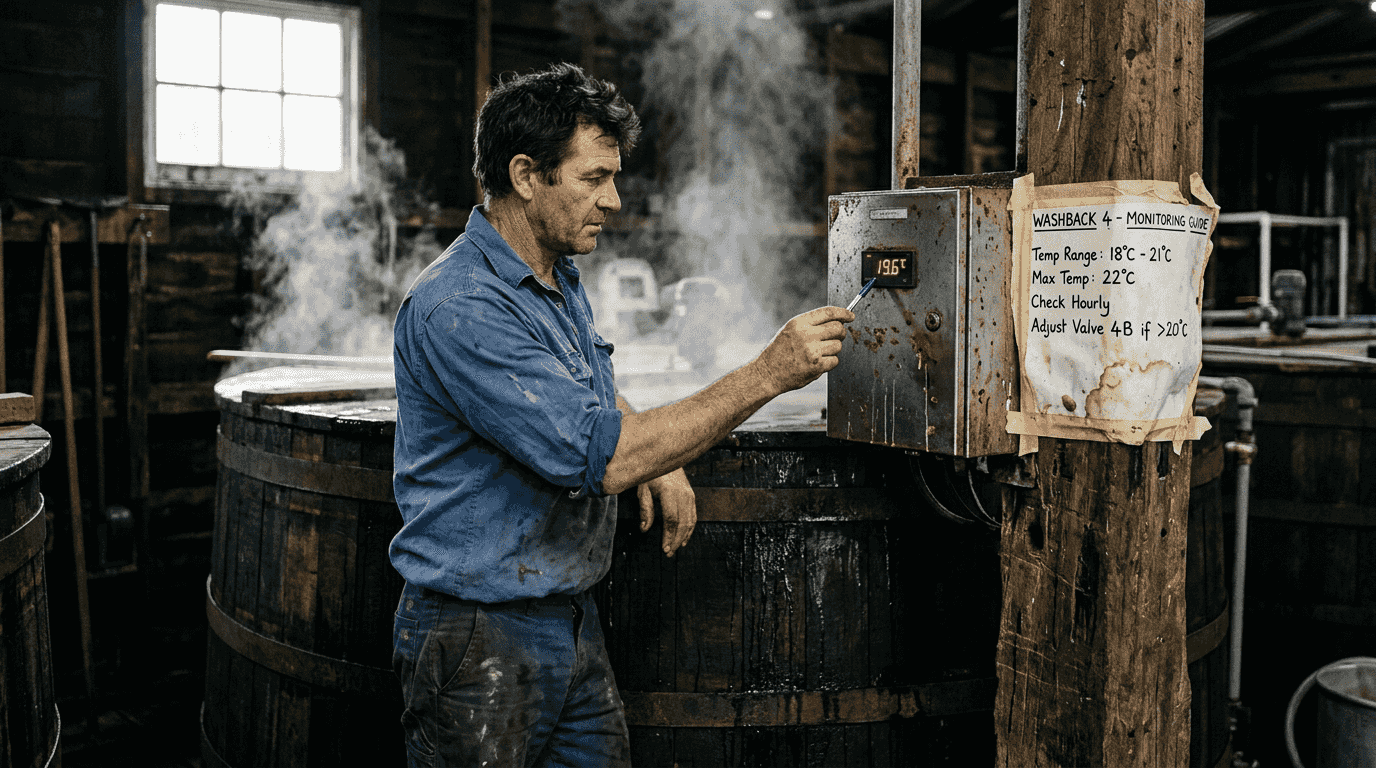
Pro Tip: Monitor washback temperatures closely during peak fermentation activity. A sudden temperature rise signals vigorous yeast metabolism and potential flavour deviation if left unchecked.
Fermentation dynamics influence:
- Rate of sugar conversion and alcohol accumulation
- Ester and congener formation contributing to aroma complexity
- Yeast cell viability affecting fermentation completion
- Heat generation requiring active temperature management
- Final wash composition entering the distillation process
Yeast strain influence on whisky flavour
Strain selection shapes whisky’s aromatic identity more profoundly than many enthusiasts realise. Different Saccharomyces cerevisiae strains exhibit varied tolerances to alcohol, temperature stress, and nutrient availability. These physiological differences translate directly into flavour compound production. Yeast produces esters (fruity), phenols (smoky/spicy), and higher alcohols that contribute floral, spicy, and complex aromatic notes.
Esters deliver the fruity and floral characteristics prized in many whisky flavour profiles explained. Ethyl acetate provides pear and solvent notes, whilst isoamyl acetate contributes banana aromas. Phenolic compounds add spice, smoke, and medicinal qualities depending on strain metabolism. Higher alcohols like isobutanol and isoamyl alcohol create warming, complex sensations that enhance mouthfeel.
Distilleries often guard proprietary yeast strains as closely as mash bills or still designs. These house strains define signature styles, contributing to brand recognition and consistency. Selecting a strain involves balancing alcohol tolerance, flocculation characteristics, and flavour output to match production goals.
| Yeast Strain Type | Alcohol Tolerance | Flavour Profile | Fermentation Speed | Consistency |
|---|---|---|---|---|
| Distiller’s Ale | High (12-14%) | Clean, neutral | Fast | Excellent |
| Brewer’s Ale | Moderate (8-10%) | Fruity, estery | Moderate | Good |
| Whisky-Specific | High (14-16%) | Complex, balanced | Moderate to fast | Excellent |
| Wild/Indigenous | Variable | Unique, unpredictable | Slow to moderate | Poor to fair |
Strain characteristics affecting flavour:
- Ester synthesis capacity determines fruity and floral intensity
- Phenol production influences spicy and smoky notes
- Higher alcohol generation impacts warmth and complexity
- Flocculation timing affects flavour extraction before settling
- Stress tolerance ensures complete fermentation without off-flavours
Understanding how whisky grain types flavour value interact with yeast metabolism reveals the layered complexity behind spirit creation.
Fermentation time and temperature effects
Extended fermentation durations dramatically increase flavour complexity. Longer fermentations (up to 96+ hours) produce more esters and congeners, enhancing fruity and floral characteristics. Short fermentations prioritise alcohol yield but sacrifice aromatic depth. Many craft distilleries deliberately extend fermentation to maximise flavour extraction, accepting slightly lower efficiency.
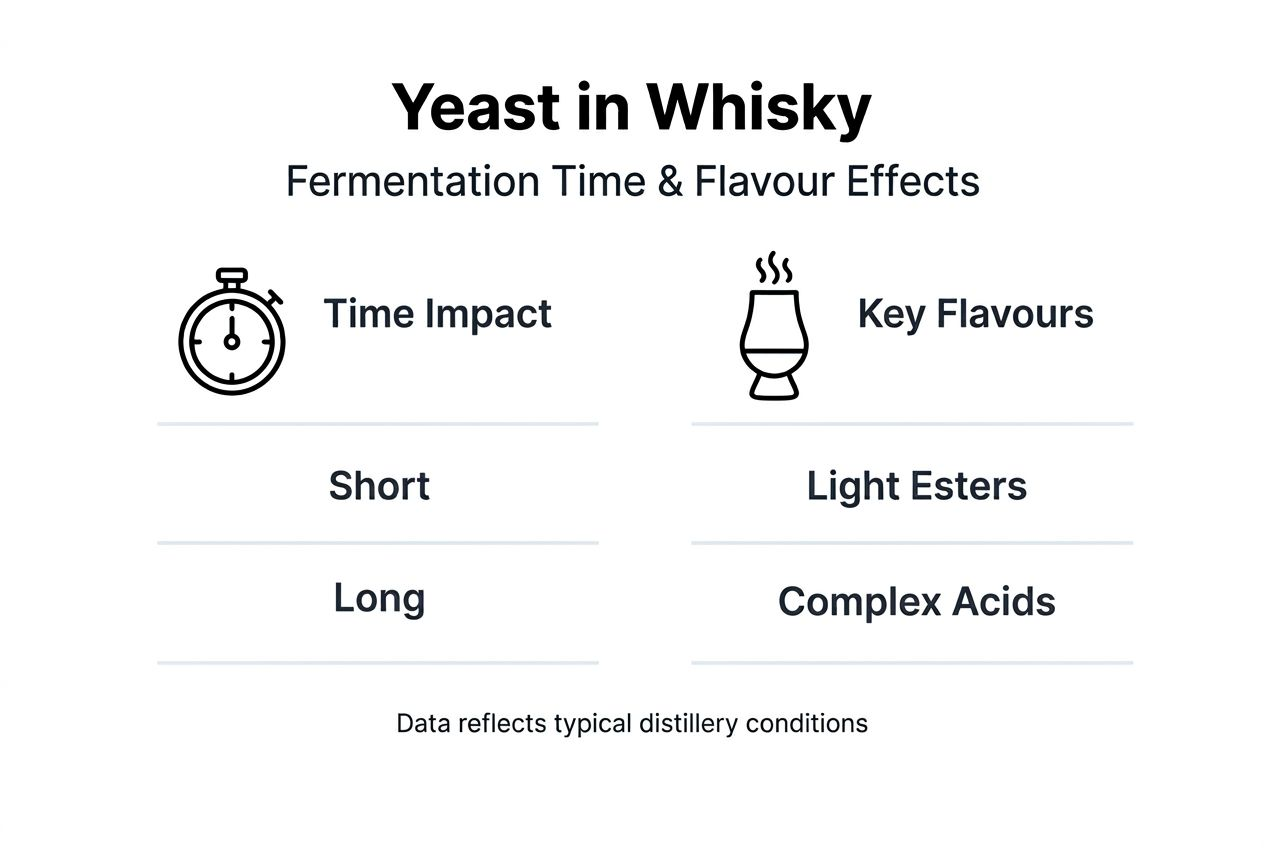
Temperature management during fermentation fine-tunes yeast metabolism and flavour outcomes. Maintaining the optimal 20-25 °C range stabilises ester formation whilst preventing fusel alcohol production. Temperatures above this range stress yeast cells, generating undesirable compounds that survive distillation. Conversely, excessively cool fermentations slow yeast activity and reduce flavour compound synthesis.
Large washbacks present unique thermal challenges. Fermentation heat accumulates in the wash centre, creating temperature gradients that affect yeast performance. Cooling coils or jackets help maintain uniform temperatures, ensuring consistent flavour development throughout the vessel.
Pro Tip: Install temperature monitoring at multiple depths in washbacks. Surface readings alone miss thermal stratification that impacts fermentation quality.
Factors impacting fermentation outcomes:
- Fermentation duration (48-96+ hours) controls ester concentration
- Temperature range (20-25 °C optimal) balances yeast health and flavour
- Yeast vitality and pitching rate affect fermentation kinetics
- Washback design influences heat dissipation and temperature control
- Nutrient availability determines fermentation completion and consistency
Wild vs cultured yeast: Balancing flavour and consistency
Wild yeast fermentations capture regional microbial character, delivering unique flavour signatures tied to specific locations. Ambient yeasts and bacteria colonising distillery environments contribute complex, unpredictable aromatics. This approach appeals to distilleries seeking terroir expression and distinctive profiles. Wild yeast introduces flavour variability and microbial diversity that cultured strains cannot replicate.
However, wild fermentations carry substantial risks. Uncontrolled microbial populations may include spoilage organisms producing acetic acid, butyric acid, or other off-flavours. Stuck fermentations occur more frequently when wild yeast populations lack sufficient Saccharomyces dominance. Batch-to-batch variation challenges brand consistency, limiting wild fermentation to experimental or small-batch releases.
Commercial cultured strains deliver predictability and quality control. Laboratory-propagated yeasts undergo rigorous selection for alcohol tolerance, flavour profile, and fermentation reliability. Distilleries achieve consistent results across batches, meeting consumer expectations for signature styles. Cultured strains also enable precise flavour engineering through strain blending or targeted selection.
| Yeast Source | Flavour Uniqueness | Fermentation Reliability | Consistency | Off-Flavour Risk | Best Application |
|---|---|---|---|---|---|
| Wild/Ambient | Very high | Low | Poor | High | Experimental, terroir-focused |
| Cultured Commercial | Moderate | Very high | Excellent | Low | Mainstream production |
| Proprietary House | High | High | Excellent | Low | Signature styles |
| Mixed Culture | High | Moderate | Moderate | Moderate | Limited editions, innovation |
This comparison informs strategic decisions based on production philosophy, risk tolerance, and market positioning.
Common misconceptions about yeast in whisky production
Many enthusiasts underestimate yeast’s creative role in whisky making. The widespread belief that yeast merely produces alcohol and CO2 ignores the hundreds of flavour compounds yeast synthesises. These metabolites include esters, phenols, aldehydes, and higher alcohols that survive distillation, shaping the final spirit’s sensory profile. Yeast is a flavour factory, not just an alcohol generator.
Another misconception claims all yeast strains deliver identical fermentation performance and flavour. In reality, strain diversity drives dramatic differences in whisky character. One strain might emphasise fruity esters whilst another produces more phenolic spice. Alcohol tolerance, flocculation behaviour, and nutrient requirements vary significantly between strains, affecting both process efficiency and sensory outcomes.
The romanticised notion that wild yeast is inherently superior due to natural origins overlooks practical realities. Whilst wild fermentations offer unique complexity, they introduce inconsistency and quality risks that most commercial distilleries cannot accept. Cultured strains represent decades of selection and refinement, delivering reliable flavour profiles that wild populations rarely match.
Common myths debunked:
- Myth: Yeast only makes alcohol and CO2. Fact: Yeast creates over 100 flavour-active compounds defining whisky character.
- Myth: All yeast strains produce identical results. Fact: Strain selection profoundly influences flavour, aroma, and fermentation kinetics.
- Myth: Wild yeast is always better. Fact: Wild ferments risk off-flavours and inconsistency despite potential complexity.
- Myth: Fermentation is a passive process. Fact: Active management of temperature, nutrients, and timing shapes flavour outcomes.
- Myth: Yeast doesn’t matter after distillation. Fact: Yeast-derived congeners survive distillation, influencing new make spirit character.
Practical yeast management and innovations in whisky fermentation
Distilleries preserve valuable yeast strains through cryogenic storage, maintaining genetic stability across generations. These legacy strains represent decades of selection and adaptation, embodying brand identity. Propagation from frozen stocks ensures consistency whilst preventing genetic drift that occurs with repeated re-pitching.
Yeast dosing practices balance cell viability with fermentation performance. Underpitching extends lag phase and risks incomplete fermentation, whilst overpitching can suppress ester formation. Most distilleries pitch 10-20 million viable cells per millilitre, adjusted for wort gravity and fermentation conditions.
Co-fermentation techniques using multiple yeast strains simultaneously unlock enhanced flavour complexity and fermentation efficiency. Blending complementary strains allows distillers to combine desirable traits like high alcohol tolerance with prolific ester production. This innovation expands creative possibilities beyond single-strain limitations.
Pro Tip: Partner with specialised yeast laboratories to develop custom strains tailored to your desired flavour profile and fermentation conditions.
Yeast management best practices:
- Maintain strict aseptic technique during yeast propagation and pitching
- Monitor yeast viability and cell counts before fermentation
- Optimise wort nutrient composition supporting healthy fermentation
- Implement cooling systems preventing temperature-induced yeast stress
- Document fermentation parameters enabling process refinement and troubleshooting
Modern innovations include genetically characterised strains with enhanced flavour compound production, improved stress tolerance, and faster fermentation kinetics. These advances help craft distilleries achieve consistent quality whilst exploring novel flavour territories.
Conclusion: Enhancing whisky appreciation through yeast knowledge
Yeast stands at the heart of whisky flavour creation, transforming simple sugars into a symphony of aromatic compounds. Understanding strain selection, fermentation dynamics, and environmental controls reveals the biological artistry behind every exceptional dram. This knowledge elevates tasting experiences, allowing you to recognise the deliberate choices distillers make in pursuit of distinctive character. Each whisky reflects countless fermentation decisions, from strain selection to temperature management, that shape its unique profile. Armed with this insight, you can appreciate the living craftsmanship that defines great whisky.
Discover exceptional whiskies shaped by expert fermentation
Now that you understand yeast’s vital role in whisky creation, explore bottles that showcase masterful fermentation craftsmanship. Uisuki offers carefully curated selections where expert yeast management and fermentation techniques shine through in every sip.

Experience the Hobart Whisky Bourbon Matured Rum Finished Single Malt, where precise fermentation control delivers complex fruit and spice notes. The Ichiro’s Malt and Grain Limited Edition demonstrates how yeast diversity across multiple distilleries creates harmonious blended complexity. For a taste of Scottish fermentation tradition, the Ardnamurchan MacLean’s Nose Blended Scotch reveals how strain selection and extended fermentation build rich, layered flavours. Your deeper understanding of yeast biology enhances every tasting, revealing the hidden craftsmanship in your glass.
FAQ
What types of yeast are commonly used in whisky fermentation?
Saccharomyces cerevisiae strains dominate whisky fermentation due to excellent alcohol tolerance (up to 16%) and proven flavour contributions. Distilleries select specific strains based on desired aromatic profiles, fermentation speed, and reliability. Many distilleries maintain proprietary house strains cultivated over decades.
How does fermentation temperature affect whisky flavour?
Fermentation temperature directly influences yeast metabolism and flavour compound synthesis. The optimal range of 20-25 °C balances ester formation (fruity notes) with yeast health, preventing fusel alcohol production. Higher temperatures accelerate fermentation but risk off-flavours, whilst cooler temperatures slow activity and reduce aromatic complexity.
Why do some distilleries use wild yeast instead of cultured strains?
Wild yeast fermentations capture unique regional microbial characteristics, delivering distinctive flavour signatures tied to specific locations. This approach expresses terroir and creates unreplicable complexity. However, wild ferments carry risks of inconsistent results, off-flavours, and stuck fermentations, limiting their use to experimental or small-batch releases.
Can yeast strain selection influence the final whisky taste?
Absolutely. Yeast strain metabolism produces the diverse flavour compounds that define whisky character beyond grain and barrel influences. Different strains generate varying levels of fruity esters, spicy phenols, and complex higher alcohols. Distillers carefully select strains to achieve signature taste profiles and maintain brand consistency across batches.