

Peated whisky stands out as a bold choice for collectors who crave distinctive, smoky flavour profiles and authentic Scottish tradition. For Australian whisky enthusiasts, understanding how burning peat transforms malted barley into a complex, aromatic spirit is key to expanding your collection with truly remarkable bottles. This guide unpacks the rich world of peated whisky, debunks common myths, and highlights what makes each region’s smoky expressions so sought after for serious connoisseurs.
Table of Contents
- What Is Peated Whisky and Common Myths
- How Peat Shapes Whisky Flavour Profiles
- Regional Peat Styles Across the World
- Collecting and Enjoying Peated Whisky
- Comparing Peated and Unpeated Whiskies
Key Takeaways
| Point | Details |
|---|---|
| Peated Whisky Characteristics | Peated whisky is renowned for its smoky flavour, resulting from malted barley dried over burning peat, affecting taste complexity. |
| Myths about Peated Whisky | Common misconceptions include that all peated whiskies taste the same and that peat flavour indicates low quality. |
| Importance of Region | The geographical origin of peat significantly influences whisky profiles, with each region contributing unique flavours. |
| Comparative Experience | Sampling both peated and unpeated whiskies enhances understanding of their distinct characteristics and flavour profiles. |
What Is Peated Whisky and Common Myths
Peated whisky represents a distinctive style of whisky characterised by its unique smoky flavour profile, originating from an ancient Scottish distillation technique. Unlike conventional whiskies, peated varieties undergo a transformative process where malted barley is dried over burning peat, creating an extraordinary sensory experience.
The peat-smoking process involves using decomposed organic plant material from wet bogs, which imparts complex, earthy flavours to the whisky. Historically, this method emerged from geographic limitations in Scotland, where traditional wood fuel was scarce. The intensity of smokiness varies dramatically, ranging from subtle hints to robust, medicinal undertones that characterise legendary Islay whiskies.
Common myths about peated whisky often misunderstand its nuanced production:
- Myth 1: All peated whiskies taste exactly the same
- Myth 2: Peat flavour means the whisky is low-quality
- Myth 3: Only Islay regions produce peated whisky
- Myth 4: Peat smoke overwhelms all other flavour notes
In reality, peat smoke creates a complex flavour landscape that can include surprising elements like vanilla, honey, and ripe fruit notes alongside the characteristic smokiness. Modern distilleries carefully control peat exposure to craft sophisticated, balanced expressions.
Pro tip: When exploring peated whiskies, start with lighter expressions and gradually work towards more intense smoky profiles to develop your palate.
How Peat Shapes Whisky Flavour Profiles
Peat’s transformative influence on whisky extends far beyond simple smokiness, creating a complex sensory experience rooted in traditional Scottish distillation techniques. Whisky tasting experts categorise peat flavours through sophisticated flavor wheels that map the intricate aromatic landscape produced by phenolic compounds and unique chemical interactions.
The peat-smoking process introduces a remarkable range of flavour characteristics that can be dramatically different depending on the origin and composition of the peat. Typical flavor profiles include:
- Medicinal notes: Iodine and antiseptic-like undertones
- Smoky elements: Bonfire, tar, and intense woody sensations
- Maritime influences: Seaweed, sea salt, and oceanic hints
- Earthy undertones: Mossy, organic, and deeply complex flavour layers
Phenolic compounds play a critical role in developing these distinctive taste experiences. Whisky flavor wheels demonstrate how these compounds interact with other whisky elements, creating nuanced expressions that range from subtly smoky to intensely medicinal. Modern distilleries carefully manipulate peat exposure to craft sophisticated flavor profiles that balance smokiness with underlying fruit, floral, and woody notes.
The geographical origin of peat significantly impacts the final whisky character, with regions like Islay producing particularly renowned peated expressions characterised by robust, complex flavor profiles. Each peat source brings its own unique chemical signature, transforming the whisky into a liquid representation of its landscape.
Pro tip: When sampling peated whiskies, start with lighter expressions and gradually progress to more intensely peated variants to develop your palate and appreciate the subtle flavour nuances.
Regional Peat Styles Across the World
Global peatland diversity reveals a remarkable range of peat types that profoundly influence whisky’s regional flavour profiles. From the windswept Scottish highlands to the tropical landscapes of Southeast Asia, each peatland ecosystem contributes unique characteristics to the whisky-making process, creating a global tapestry of smoky, complex spirits.
Different peatland regions produce distinctive flavour profiles based on their unique environmental conditions:
- Scottish Peatlands: Sphagnum moss-rich bogs yielding intense, medicinal smoke
- Scandinavian Peatlands: Cooler climate peat with subtle, earthy undertones
- Tropical Peat Swamps: Warmer, more humid environments creating unique aromatic compounds
- North American Peatlands: Varied compositions reflecting diverse ecological zones
Peat composition varies dramatically across climatic zones, with northern hemisphere peatlands typically producing more intense, smoky flavours. European peatland types demonstrate particularly interesting variations, from acidic blanket bogs to nutrient-poor fen landscapes, each imparting its own distinctive character to the whisky.
The chemical complexity of peat goes beyond simple smokiness, with each regional variation telling a unique story of landscape and tradition. Islay’s peatlands, for instance, create whiskies with distinctive maritime notes, while Highland peat sources produce more nuanced, earthy expressions that reflect the rugged Scottish terrain.
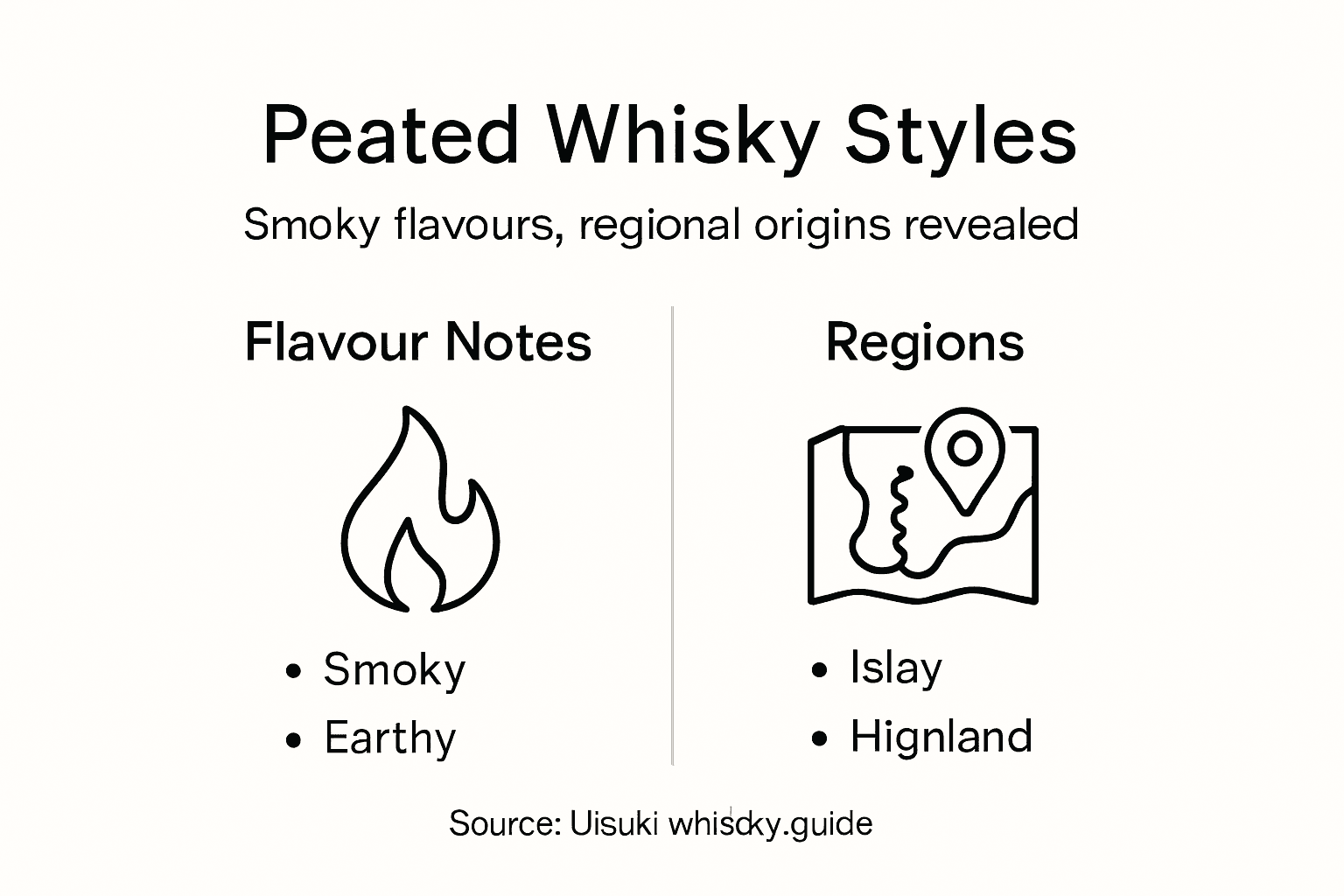
Here’s how peat from different regions influences whisky characteristics:
| Peat Origin | Typical Whisky Flavour | Notable Region |
|---|---|---|
| Scottish Highlands | Earthy, subtle smoke | Scotland (Highlands) |
| Islay | Maritime, medicinal | Scotland (Islay) |
| Scandinavia | Delicate, mossy earth | Sweden, Norway |
| North America | Mild, varied smoke | Canada, USA |
| Southeast Asia | Spicy, aromatic smoke | Indonesia, Malaysia |
Pro tip: Explore whisky tastings that showcase different regional peat styles to develop a sophisticated understanding of how geographical origins impact flavour profiles.
Collecting and Enjoying Peated Whisky
Passionate collectors understand that peated whisky represents more than a beverage - it’s an exploration of complex sensory experiences. The world of peated whisky collecting combines historical appreciation, flavour complexity, and the thrill of discovering rare expressions that capture unique regional characteristics.
Key considerations for peated whisky enthusiasts include:
- Rarity Factors: Limited edition releases
- Distillery Reputation: Renowned Islay producers like Ardbeg and Laphroaig
- Peat Intensity: Variations from subtle to intense smoke profiles
- Age Statements: Older expressions with deeper complexity
- Cask Finishing: Unique maturation techniques
Whisky tasting requires a nuanced approach, with barrel aging creating distinctive flavour profiles. Experienced collectors recommend exploring different peating levels, understanding regional variations, and developing a sophisticated palate that appreciates the intricate balance between smoky peat and complementary flavour notes.

Collecting peated whisky is an ongoing journey of discovery. Each bottle tells a story of landscape, tradition, and craftsmanship, with maritime Islay expressions offering dramatically different experiences from more subtle Highland or Speyside peated variations. The true joy lies in understanding the subtle nuances that make each whisky unique.
Below is a comparison of collector considerations for peated whisky:
| Factor | Why It Matters | Example Impact |
|---|---|---|
| Rarity | Drives collectability | Limited editions increase demand |
| Peat Intensity | Shapes flavour experience | Subtle vs. smoky choices |
| Distillery Name | Indicates quality | Renowned brands add value |
| Cask Finish | Adds complexity | Sherry casks create depth |
Pro tip: Start your collection by sampling small quantities from different regions, focusing on understanding peat’s diverse flavour expressions before investing in full bottles.
Comparing Peated and Unpeated Whiskies
Single malt Scotch variations reveal fascinating differences between peated and unpeated whiskies, representing two distinct sensory universes within the whisky landscape. The fundamental distinction lies in the malting process, where peated whiskies absorb distinctive smoky characteristics during barley drying, while unpeated expressions emphasise pure malt and oak influences.
Key differences between peated and unpeated whiskies include:
- Flavour Profile: Peated - smoky, medicinal, complex; Unpeated - lighter, sweeter
- Aroma: Peated - bonfire, iodine, seaweed; Unpeated - fruity, floral
- Malt Treatment: Peated - dried over peat smoke; Unpeated - dried with hot air
- Regional Variations: Peated - strong Islay character; Unpeated - broader regional styles
- Palate Complexity: Peated - intense and challenging; Unpeated - smooth and approachable
Whisky production techniques dramatically influence the final product, with phenolic compounds creating distinctive flavour experiences. Peated whiskies deliver bold, smoky expressions that challenge and intrigue, while unpeated whiskies offer a more delicate exploration of malt and wood interactions.
Neither style represents superior quality; instead, they cater to different taste preferences and drinking occasions. The true appreciation lies in understanding the nuanced craftsmanship behind each expression, recognising how subtle variations in production can transform a simple grain into a complex, memorable spirit.
Pro tip: Sample both peated and unpeated whiskies side by side to develop a sophisticated understanding of their unique characteristics and appreciate the diverse whisky spectrum.
Discover the Rich World of Peated Whisky with Uisuki
If you are captivating your palate with the complex flavours and unique origins of peated whisky this is the perfect time to explore exceptional selections that bring these smoky profiles to life. Whether you are drawn to Islay’s maritime intensity or the subtle earthiness of Highland peat, Uisuki offers a curated range that caters to all levels of appreciation. Explore the bold expressions from Ardbeg or dive into nuanced peated releases from Glenglassaugh to start your flavour journey.

Don’t miss the chance to enhance your collection with rare and expert-selected peated whiskies. Visit Uisuki.com.au now to browse premium bottles, benefit from detailed product information and enjoy seamless delivery across Australia. Ignite your senses and deepen your whisky knowledge with every pour today.
Frequently Asked Questions
What is peated whisky?
Peated whisky is a type of whisky that obtains its distinctive smoky flavour from the drying process of malted barley, which is exposed to peat smoke during production.
How does peat influence the flavour of whisky?
Peat imparts a range of flavours to whisky, including smoky, medicinal, maritime, and earthy notes, depending on the composition of the peat and the distillation techniques used.
What are common myths about peated whisky?
Common myths include the belief that all peated whiskies taste the same, that peat flavour indicates low-quality whisky, and that only specific regions produce quality peated whiskies.
How can I start enjoying peated whisky?
Begin by sampling lighter peated expressions and gradually move to more intense varieties to develop your palate and appreciate the complexities of smoky flavours.