

Choosing the right addition for your whisky collection starts with understanding the unique personalities of Scotland’s legendary whisky regions. Each area, from the smoky shores of Islay to the elegant Lowlands, brings its own story and flavour, shaped by generations of tradition and local environment. For Australian collectors, unlocking these regional secrets means discovering rare treasures, deepening tasting experiences, and building a collection that truly stands out. Start exploring the world of distinctive regional characteristics to elevate every pour.
Table of Contents
- Whisky Regions Explained: Definition and Origins
- Major Whisky Regions and Their Unique Traits
- How Geography and Climate Shape Flavour
- Legal Protections and Labelling Standards
- Why Regions Matter for Collectors in Australia
Key Takeaways
| Point | Details |
|---|---|
| Importance of Whisky Regions | Whisky regions shape flavour profiles and collectability, with each area offering unique characteristics influenced by local traditions and environment. |
| Collector Insights | Understanding the specific traits of each Scotch whisky region enhances collection strategies and investment decisions. |
| Environmental Impact | Factors such as soil, climate, and geography significantly influence the flavour profiles of whisky, making regional knowledge essential for tastings and sales. |
| Legal Protections | Legal frameworks ensure the authenticity of Scotch Whisky, essential for consumers and collectors alike to maintain value and protect against counterfeits. |
Whisky Regions Explained: Definition and Origins
Whisky regions represent geographic areas with distinctive production traditions that profoundly shape the character and collectability of spirits. Five traditional Scotch whisky regions have emerged through centuries of cultural and environmental influence, each offering unique flavour profiles that fascinate collectors and enthusiasts.
These regions aren’t arbitrary boundaries but deeply rooted geographical zones with specific characteristics. The primary Scotch whisky regions include:
- Highlands: Largest region with diverse landscapes and flavour variations
- Lowlands: Known for lighter, more delicate whisky styles
- Speyside: Concentrated area with the highest number of distilleries
- Campbeltown: Historically significant but now with fewer active producers
- Islay: Famous for intensely peated and maritime-influenced whiskies
Each region’s distinctive characteristics emerge from complex interactions between local environment, water sources, climate, and generational production techniques. Distinctive flavour profiles result from these intricate geographical and cultural influences, making regional understanding crucial for serious collectors.
The concept of whisky regions extends beyond mere geographical demarcation. They represent living historical narratives, embodying generations of craftsmanship, local traditions, and environmental adaptations. Distilleries within each region share subtle production philosophies passed down through families, creating nuanced differences that make collecting a rich and engaging pursuit.
Pro tip: When building a whisky collection, focus on understanding the unique characteristics of each region to develop a more sophisticated and targeted acquisition strategy.
Major Whisky Regions and Their Unique Traits
Each whisky region in Scotland offers a remarkable journey of flavour, heritage, and craftsmanship. Scottish whisky regions represent more than just geographical boundaries—they are living narratives of tradition and environmental influence that deeply impact a whisky’s character and collectible value.
The primary Scottish whisky regions showcase distinctive flavour profiles:
- Speyside: Known for sweet, smooth whiskies with complex fruity notes
- Highlands: Diverse range of styles from light and floral to rich and robust
- Islay: Famous for intensely smoky, peated whiskies with maritime characteristics
- Lowlands: Produce lighter, more delicate spirits often called “breakfast whiskies”
- Campbeltown: Small region producing complex, briny whiskies with unique depth
These regional variations emerge from intricate interactions between local terroir, water sources, production techniques, and generational knowledge. Collectors and enthusiasts value these nuanced differences, understanding that each region’s unique environmental and cultural context contributes to a whisky’s complexity and potential investment value.
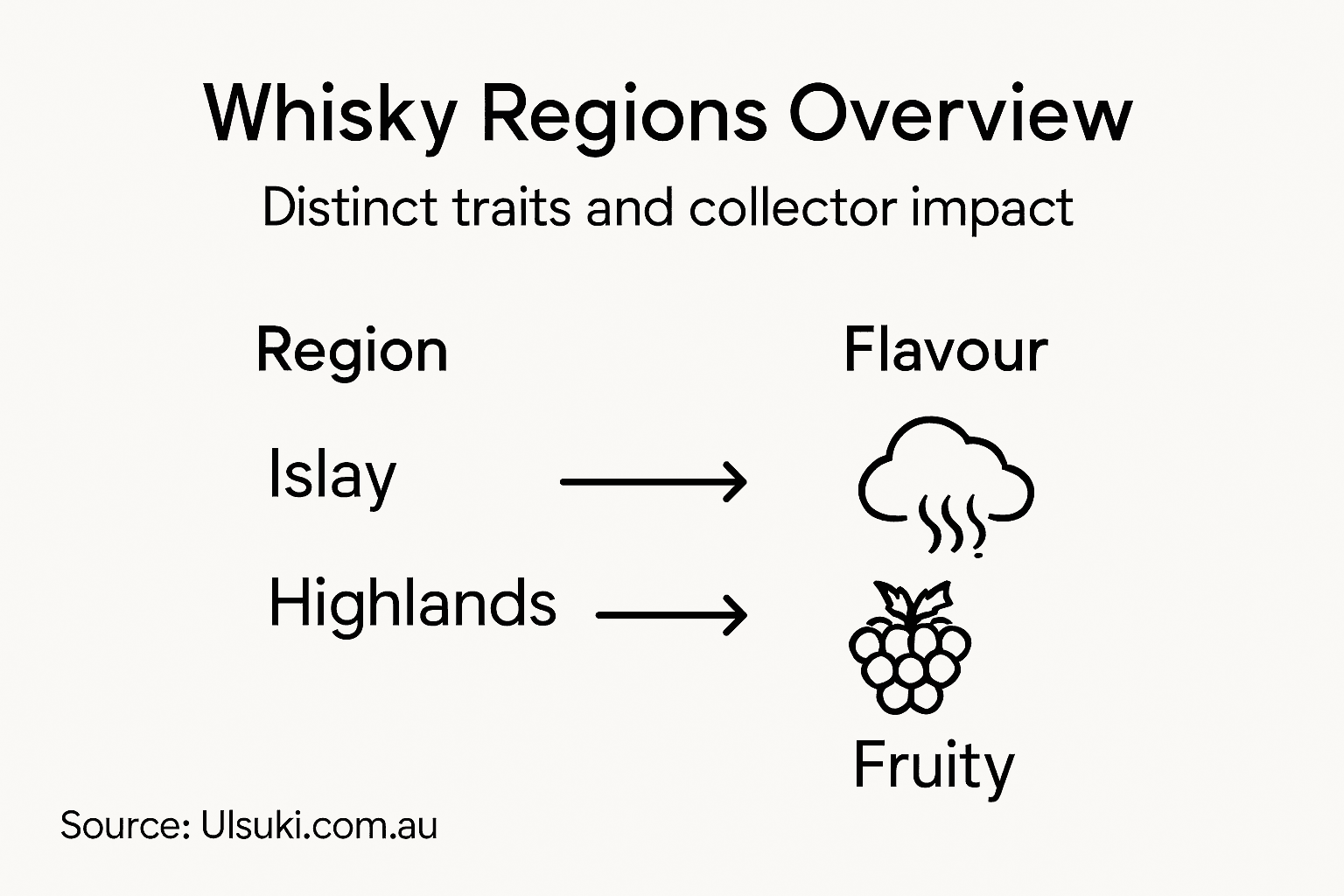
Here’s a quick comparison of the five main Scotch whisky regions and what makes each unique for collectors:
| Region | Signature Flavour | Notable Distillery Focus | Collector Appeal |
|---|---|---|---|
| Highlands | Fruity, spiced | Variety across region | Diversity and big names |
| Lowlands | Light, grassy | Gentle malts | Elegant, easy-drinking styles |
| Speyside | Rich, sweet | Complex sherry finishes | Highest distillery density |
| Islay | Smoky, maritime | Heavy peat, sea influence | Distinct, bold specialities |
| Campbeltown | Briny, oily | Salty, savoury notes | Rarity, historical legacy |
Beyond technical specifications, whisky regions represent living cultural landscapes. Each distillery carries forward generations of knowledge, embodying subtle production philosophies that transform simple ingredients into liquid art. The distinctive regional characteristics create a rich tapestry of flavour that makes whisky collecting an endlessly fascinating pursuit.
Pro tip: When building a whisky collection, prioritise understanding regional distinctions and seek out expressions that authentically represent their geographical origin.
How Geography and Climate Shape Flavour
Whisky production is an intricate dance between nature and human craftsmanship, where environmental conditions profoundly impact flavour development. The landscape of Scotland creates a remarkable canvas for whisky production, with each region offering unique environmental characteristics that dramatically influence the final spirit.
Key environmental factors that shape whisky flavour include:
- Soil Composition: Influences mineral content and barley growth quality
- Rainfall Patterns: Determines water source characteristics
- Temperature Variations: Affects fermentation and maturation processes
- Coastal Proximity: Introduces maritime influences in flavour profile
- Altitude and Terrain: Impacts barley cultivation and local microclimate
The interplay between these environmental elements creates distinctive flavour nuances. Coastal regions like Islay introduce briny, maritime notes, while Highland areas offer more diverse and complex flavour profiles reflecting their varied landscape. Distilleries carefully leverage these natural advantages, transforming local environmental conditions into unique taste experiences.

Climate change presents both challenges and opportunities for whisky production. Shifting weather patterns are pushing distilleries to adapt their traditional techniques, potentially introducing new flavour dimensions while preserving the essence of regional character. This ongoing environmental dialogue ensures that each bottle tells a story of its specific geographical origin.
Below is a summary of how key environmental factors influence whisky flavour across different regions:
| Factor | Typical Impact on Flavour | Region Most Affected |
|---|---|---|
| Coastal proximity | Adds briny/salty notes | Islay, Campbeltown |
| Altitude & terrain | Modifies aroma complexity | Highlands, Tasmania |
| Rainfall patterns | Affects water character | Speyside, New South Wales |
| Soil composition | Alters barley minerality | Lowlands, Western Australia |
| Temperature swings | Changes maturation speed | Highlands, Tasmania |
Pro tip: When tasting whiskies, pay attention to regional characteristics and how local environmental factors contribute to the spirit’s unique flavour profile.
Legal Protections and Labelling Standards
The world of Scotch Whisky is protected by a robust legal framework that safeguards its global reputation and authenticity. Scotch Whisky Regulations represent a comprehensive system designed to preserve the integrity of this iconic spirit, ensuring that only genuine products meet the strictest international standards.
Key legal protections for Scotch Whisky include:
- Geographic Indication: Legally restricts “Scotch Whisky” to spirits produced in Scotland
- Maturation Requirements: Mandatory minimum three-year aging in oak casks
- Ingredient Specifications: Strict rules about permitted ingredients and production methods
- Labelling Restrictions: Detailed guidelines preventing misleading marketing claims
- International Treaty Protection: Recognised in multiple global trade agreements
The legal framework goes beyond simple production rules. International legal enforcement mechanisms actively protect the brand, with the Scotch Whisky Association monitoring and challenging counterfeit or misleading products worldwide. These protections ensure consumers receive authentic, high-quality spirits while maintaining the prestigious reputation of Scottish whisky.
For collectors and enthusiasts, understanding these legal standards becomes crucial. The regulations not only protect the product’s authenticity but also help maintain its value, preventing market dilution and protecting the investment potential of rare and collectible whiskies.
Pro tip: Always verify the official geographic indication and production details when purchasing premium or collectible whiskies to ensure authenticity and investment potential.
Why Regions Matter for Collectors in Australia
Australian whisky collectors are increasingly recognising the profound significance of regional characteristics in building a valuable and diverse collection. Australian whisky’s unique regional identity has transformed from a niche interest to a sophisticated pursuit of provenance and craftsmanship.
Key reasons regions matter for Australian collectors include:
- Terroir Representation: Each region reflects unique environmental conditions
- Flavour Diversity: Local climates produce distinctively different whisky profiles
- Limited Production: Regional scarcity increases potential investment value
- Cultural Storytelling: Regions embody local production history and traditions
- Emerging Market Potential: Growing international recognition of Australian regional styles
The Australian whisky landscape offers remarkable diversity, with regions like Tasmania, New South Wales, and Western Australia developing distinct production identities. Climate variations, local grain qualities, and innovative distillation techniques contribute to creating whiskies that are not just beverages, but complex expressions of their geographical origins.
Collectors are increasingly viewing regional variations as critical factors in whisky valuation. Understanding the subtle differences between regional expressions allows enthusiasts to make more informed purchasing decisions, identifying potential future collectibles and appreciating the nuanced craftsmanship behind each bottle.
Pro tip: Focus on collecting whiskies from emerging regional producers that demonstrate consistent quality and unique flavour profiles to build a forward-looking collection.
Discover Whisky Regions with Uisuki - Elevate Your Collection
Understanding whisky regions unlocks the secret flavours and rich histories behind every bottle. Whether you are captivated by the smoky intensity of Islay or the smooth sweetness of Speyside, recognising these regional nuances is vital for building a collection that stands out and appreciates in value. At Uisuki, we offer an expertly curated selection that brings these iconic regions directly to Australian whisky lovers.

Explore prized Scotch whiskies from distinguished regions with our Scotch Whisky (all) - Glenglassaugh – Uisuki.com.au range or dive deeper into classic expressions such as Glenfiddich – Uisuki.com.au and Glendronach – Uisuki.com.au. Don’t wait to strengthen your collection with authentic regional expressions available now. Visit Uisuki.com.au to secure these unique whiskies and experience the full story behind every dram.
Frequently Asked Questions
What are the main factors that influence whisky flavour in different regions?
Environmental factors such as soil composition, rainfall patterns, temperature variations, coastal proximity, and altitude play crucial roles in shaping the flavour profiles of whiskies. These elements interact to create unique taste experiences specific to each whisky region.
How do whisky regions affect the collectability and value of bottles?
Whisky regions contribute to distinct flavour characteristics, production traditions, and heritage, which can significantly enhance a bottle’s collectability and investment potential. Understanding these characteristics helps collectors make informed purchasing decisions.
Why is it essential to consider regional characteristics when building a whisky collection?
Regional characteristics reflect the local environment, production techniques, and cultural storytelling associated with each whisky. Collectors who understand these elements can identify rare or unique expressions, increasing the diversity and value of their collection.
What legal protections exist for whisky production, and why are they important?
Legal protections include geographic indications and maturation requirements that ensure the authenticity and quality of the whisky. These regulations help maintain the product’s reputation and value in the market, safeguarding consumers and collectors from counterfeit products.