

Investing in rare whisky is not just about passion for the dram. It is a sophisticated game of scarcity, heritage, and savvy market timing, where each bottle tells a story of craftsmanship and rising value. For Australian collectors aiming to grow their portfolios with truly exceptional bottles, recognising the key factors behind appreciation—such as rarity, age, and brand prestige—can turn curiosity into lasting wealth. This overview reveals the drivers that set top-tier collectible whiskies apart, so you can navigate the market with confidence.
Table of Contents
- What Makes Whisky Bottles Valuable Assets
- Key Types of Investment-Grade Whiskies
- How Whisky Investments Appreciate Over Time
- Risks, Pitfalls, And Common Misconceptions
- Best Practices for Australian Collectors
Key Takeaways
| Point | Details |
|---|---|
| Investment Factors | The age, rarity, provenance, and distillery reputation greatly influence whisky value, making these key considerations for collectors. |
| Market Demand | Global demand for premium whiskies continues to grow, creating appreciation for rare bottles over time. |
| Counterfeit Risks | Investors must prioritize purchasing from reputable dealers to avoid the risk of counterfeit bottles and ensure authenticity. |
| Diversification Strategy | A well-structured collection across multiple regions and distilleries mitigates risks and enhances potential returns on investment. |
What Makes Whisky Bottles Valuable Assets
Whisky bottles command premium prices in investment markets because they possess a rare combination of tangible scarcity, provenance, and market demand. Unlike many alternative investments, the value of a bottle isn’t purely speculative—it’s grounded in the physical product’s inherent qualities and the story behind it. For Australian collectors seeking to build a portfolio that appreciates over time, understanding these value drivers separates informed investment decisions from costly mistakes.
The age of whisky itself stands as the strongest determinant of value. Whisky age in cask significantly outweighs bottle age when calculating what collectors will pay. A 25-year-old single malt commands vastly different pricing than a 12-year-old from the same distillery, regardless of how long the bottle sat in a warehouse after bottling. Distillery reputation amplifies this effect dramatically. Legacy brands like Macallan, Bowmore, and Highland Park have spent generations building heritage that translates directly into price premiums. This heritage reflects their consistency, craftsmanship standards, and the collector community’s unwavering demand for their releases. Independent bottlings, whilst offering value in niche markets, generally moderate these premium effects because they lack the original distillery’s prestige backing.
Rarity and scarcity create the engine driving appreciation. Bottles from closed distilleries, limited production runs, or discontinued age statements become increasingly difficult to source as years pass. Collectors compete fiercely for these bottles, pushing prices higher with each passing season. Market factors beyond product quality also shape value trajectories. Award recognition from prestigious competitions influences collector sentiment and purchasing behaviour. Bottling strength (cask proof versus standard bottlings) appeals to serious collectors who perceive higher ABV expressions as more authentic and valuable. Rarity, scarcity, and branding collectively influence whisky value in ways that extend far beyond the liquid itself. Collectors recognise these premium bottles as blue-chip assets comparable to fine art or classic automobiles, with secondary market demand remaining strong even during broader economic downturns.
One critical reality separates successful whisky investors from casual buyers: condition and provenance matter intensely. A bottle with a low fill level, damaged label, or uncertain storage history sells for a fraction of what a pristine example commands. Collectors in Australia’s affluent circles understand that purchasing from reputable sources protects against fraud risks and ensures authenticity, particularly as counterfeit bottles have become increasingly sophisticated. The bottles earning the strongest returns are those stored properly, purchased from documented collections, and backed by transparent provenance records.
Pro tip: When evaluating bottles for your collection, prioritise distillery heritage and verified age statements over novelty releases, as legacy brands with consistent demand profiles deliver more reliable appreciation over five to ten-year investment horizons.
Key Types of Investment-Grade Whiskies
Not all whiskies deserve shelf space in a serious investor’s collection. Investment-grade whiskies represent a distinct category defined by rarity, provenance, and consistent demand from collectors willing to pay premium prices. Understanding which categories deliver reliable appreciation helps you allocate your capital strategically across regions, distilleries, and bottling types. The difference between a bottle worth $200 today and one worth $2000 in five years often comes down to whether you’re investing in the right category from the start.
Scottish single malts remain the cornerstone of whisky investment portfolios, with distinct regional characteristics driving value. Speyside distilleries like Macallan, Glenmorangie, and Balvenie command premium prices due to their consistent quality and heritage. Islay whiskies from Lagavulin and Ardbeg attract serious collectors who appreciate peaty, intense flavour profiles and limited production runs. The Highlands region offers diverse styles, whilst closed distilleries represent some of the rarest opportunities available. Investment-grade whiskies include rare single malts from Scotland’s distinct regions alongside limited releases that have become increasingly scarce as decades pass. Scottish single malts benefit from deep historical provenance, established secondary markets, and a global collector base that actively trades at auction houses and specialist retailers.
Japanese whiskies have emerged as a significant growth category over the past decade, reshaping investment portfolios for savvy collectors. Yamazaki, Hibiki, and Hakushu from Suntory, along with Karuizawa releases, have experienced extraordinary appreciation as Japanese whisky gained international recognition. Karuizawa particularly stands out because production ceased in 2011, creating artificial scarcity that drives fierce competition amongst collectors. Japanese whiskies appeal to investors seeking geographic diversification beyond Scottish offerings, with bottles from the 1970s and 1980s delivering particularly strong returns. The combination of meticulous craftsmanship, limited international distribution during their production years, and growing demand from Asian collectors creates compelling investment dynamics.
American whiskies, particularly rare Bourbons and Ryes, offer another avenue for diversification. Limited releases from established Kentucky distilleries, prohibition-era bottlings, and American single malts command attention from collectors building balanced portfolios. Whilst American whisky hasn’t historically matched Scottish single malt appreciation rates, select releases and closed distillery stocks show genuine potential. Bottle condition, cask strength expressions, and historical significance separate investment-worthy American whiskies from everyday releases. Investment-grade whisky is characterised by rarity, age, brand prestige, and bottle condition, with high age statements and cask strength bottlings attracting the most serious investors.
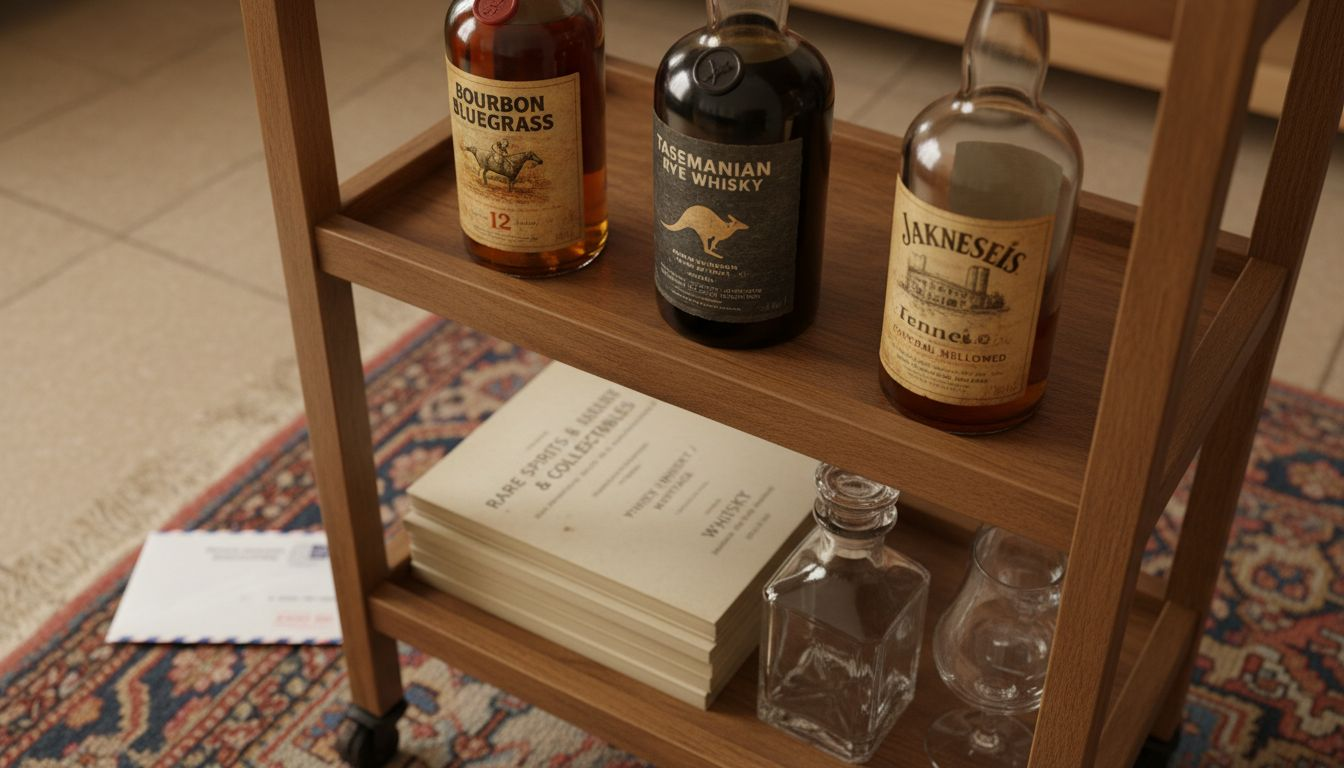
The characteristics separating investment-grade whiskies from standard releases extend beyond region and distillery. Limited bottling runs create natural scarcity that fuels appreciation. Independent bottlings, whilst occasionally offering value, typically lack the prestige backing of original distillery releases. Vintage variation matters enormously—a 1960s release from a legendary distillery will outperform a 2010s bottling by the same producer. Bottling proof also signals investment potential, with cask strength and limited edition releases commanding premiums over standard strength offerings. Investors who focus exclusively on age statements without considering these other factors often miss stronger appreciation opportunities.
Here’s a summary of investment-grade whisky categories and what sets each apart:
| Category | Key Examples | Unique Value Driver | Collector Focus |
|---|---|---|---|
| Scottish Single Malts | Macallan, Glenmorangie | Deep heritage and market depth | Age, region, closed distilleries |
| Japanese Whiskies | Yamazaki, Karuizawa | Limited releases with global demand | Scarcity, vintage years |
| American Whiskies | Rare Bourbon, Rye | Historic bottlings, distinct styles | Prohibition era, cask strength |
| Australian Whiskies | Sullivans Cove, Starward | Emerging award-winning reputation | Local market, global recognition |
Pro tip: Build your collection across at least two regions (such as Speyside and Islay) whilst including one Japanese whisky bottle, as geographic diversification protects against single-market sentiment shifts and provides multiple appreciation vectors.
How Whisky Investments Appreciate Over Time
Whisky appreciation follows a fundamentally different trajectory than most alternative investments because the asset physically transforms over time. A bottle purchased today doesn’t sit static like a painting or coin collection waiting for market sentiment to shift. Instead, the whisky inside matures, develops complexity, and becomes increasingly rare with each passing year. For Australian collectors with capital to deploy, understanding the mechanics of this appreciation separates patient wealth builders from those chasing short-term speculation.
The primary engine driving appreciation is structural scarcity. Once a distillery ceases production of a particular expression, that bottling will never be made again. No manufacturer can suddenly increase supply to meet demand. Value appreciation arises from structural scarcity, limited production capacity, and global demand growth, creating natural pressure on prices as collectors worldwide compete for finite stock. A 1980 Macallan release exists in a fixed quantity. Collectors in London, Tokyo, Sydney, and New York all want bottles. Auction houses report that these bottles are actively traded, with prices increasing as available inventory depletes. Closed distilleries amplify this effect dramatically. Karuizawa stopped production in 2011. Every bottle from that distillery represents an irreplaceable asset that cannot be replicated. The mathematics are simple: declining inventory combined with stable or rising demand equals price appreciation.
Age and cask maturation compound this scarcity effect. Whisky loses volume through evaporation during barrel aging, a process called the angel’s share. A cask that held 300 litres when filled might contain only 250 litres after twenty years in a warehouse. This physical depletion means fewer bottles reach collectors’ hands. Additionally, a 25-year-old whisky commands vastly higher prices than a 15-year-old because collectors perceive age as quality and rarity. The natural aging process cannot be accelerated. You cannot manufacture a 1970 vintage in 2024 no matter how much capital you deploy. This temporal scarcity creates appreciation that compounds annually as bottles age further and become increasingly difficult to source intact. Long-established distilleries with historical importance and cask aging lead to significant price appreciation because collectors view aged stock as genuinely irreplaceable assets.
Global demand growth amplifies both scarcity and aging effects. Whisky collecting has transitioned from a niche hobby to a mainstream investment category. Wealthy individuals in China, India, and Russia now compete with traditional collectors in Scotland and North America. This expanded collector base means demand for premium bottles has grown exponentially whilst supply remains fixed. A bottle worth £500 in 2010 might trade for £3000 today not because the whisky inside changed, but because far more collectors now pursue limited stock. Strategic portfolio construction enhances this appreciation. Collectors who diversify across multiple regions, distilleries, and vintage years benefit from multiple appreciation vectors. A portfolio holding Speyside, Islay, and Japanese whiskies from different decades spreads risk whilst capturing gains across multiple market segments. Those who concentrate exclusively on one distillery or region face greater volatility if that particular segment experiences temporary sentiment shifts.
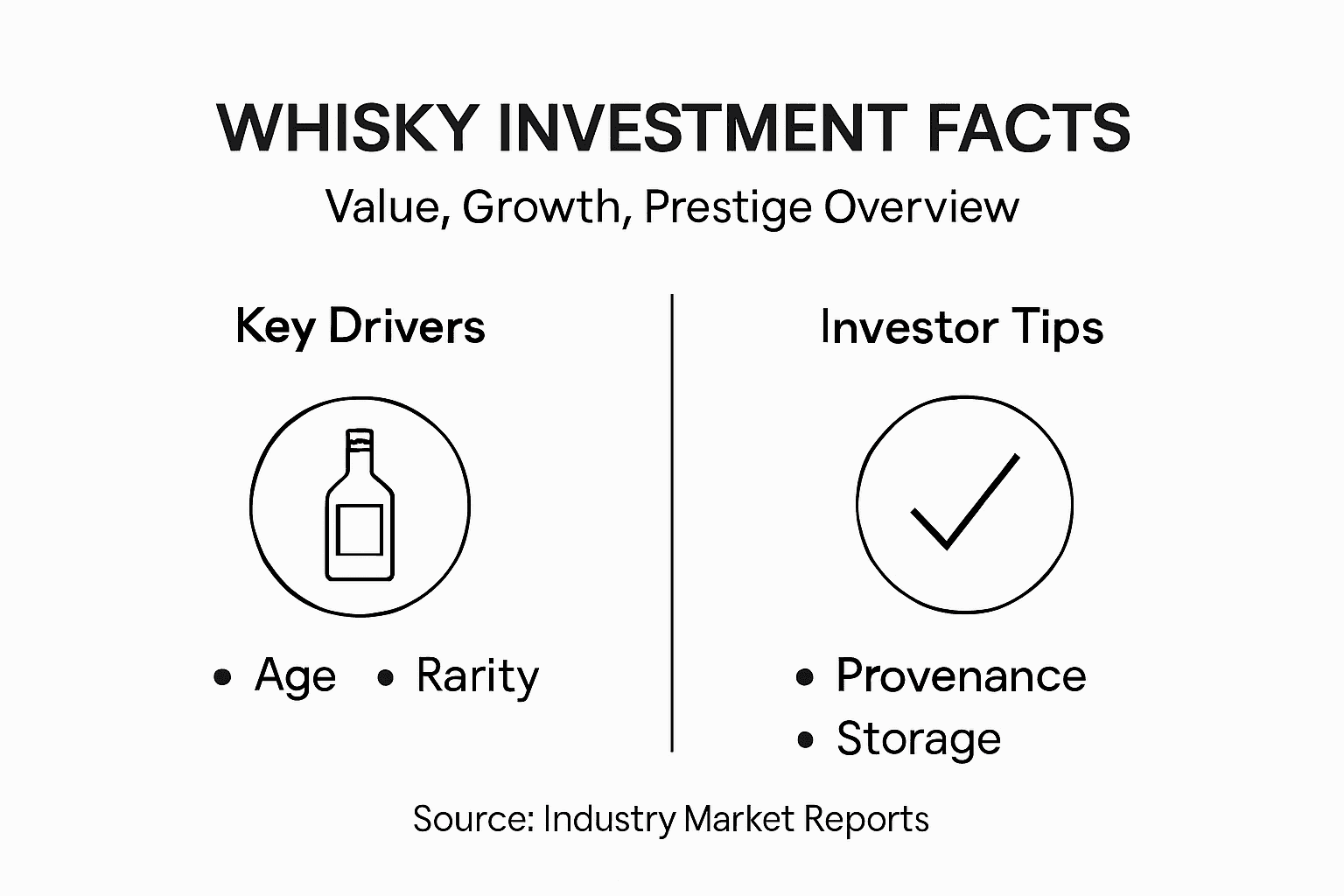
The timeline matters enormously. Whisky appreciation typically accelerates over five to ten-year horizons as a bottle ages further and supply diminishes. Short-term trading (buying and selling within one or two years) rarely generates meaningful returns after accounting for transaction costs and taxes. Patient investors who acquire investment-grade bottles and hold them for a decade or more realise the strongest gains. This aligns whisky investing with wealth preservation rather than speculation. Your collection becomes more valuable each year through a combination of natural aging, declining supply, and growing global demand. Unlike stock market investments subject to company earnings cycles or economic recessions, whisky appreciation operates on physical scarcity principles that remain consistent across market conditions.
Pro tip: Acquire bottles with five to ten-year holding horizons in mind rather than expecting immediate returns, as the strongest appreciation trajectories reward patient collectors who allow both age and scarcity to compound their investment value.
Risks, Pitfalls, And Common Misconceptions
Whisky investment presents genuine wealth-building potential, but the path is littered with costly mistakes that separate successful collectors from those who lose money. The whisky market operates in a fundamentally different regulatory environment than equity or property markets. There is no stock exchange, no mandatory disclosure, and no government body policing every transaction. This freedom creates opportunity but also exposes uninformed investors to risks that could evaporate significant capital. Understanding what can go wrong is just as important as understanding what goes right.
Fraud represents the most immediate threat to your capital. Counterfeit bottles have become increasingly sophisticated, with forgers replicating labels, bottles, and even packaging to deceive collectors. A counterfeit Macallan 1926 might cost £500 to produce but sell for £50,000, creating enormous financial incentives for criminals. Whisky investments face risks including market volatility, fraud in an unregulated market, storage and insurance costs, and liquidity challenges because the sector lacks centralised oversight. You cannot simply assume a bottle is genuine because it looks authentic. Purchasing from reputable dealers with transparent provenance records is not optional—it is fundamental risk management. Auction houses like Christie’s and Sotheby’s employ specialist authenticators who examine every bottle before sale. Buying from unknown sellers, online marketplaces, or dealers operating outside established networks exposes you to catastrophic fraud losses. Additionally, some brokers operate with minimal transparency regarding ownership documentation. You might believe you own a cask of whisky maturing in a warehouse, only to discover the legal title remains ambiguous or the cask doesn’t exist.
Storage and insurance costs erode returns in ways many first-time investors underestimate. A bottle requiring professional climate-controlled storage at £50 annually costs £500 over a decade. Insurance on a high-value collection adds another 1 to 2 percent of the collection’s value annually. Over twenty years, these costs compound significantly. A bottle appreciating at 8 percent annually whilst incurring 3 percent in storage and insurance costs delivers only 5 percent net returns. Compare this to property ownership, where you live in your appreciating asset and the mortgage payments provide a leveraged return. The whisky cask investment market is largely unregulated, leading to ownership ambiguities and fraud risks requiring clear ownership proofs that many brokers fail to document adequately. Liquidity also presents genuine challenges. A £500 bottle sells easily at auction, but a £50,000 bottle requires finding a buyer willing to deploy that capital. During market downturns, liquidity evaporates as collectors become cautious. You might hold a bottle worth £30,000 during ordinary times but struggle to sell it quickly if cash needs arise unexpectedly.
Common misconceptions cost investors time and money. One pervasive myth assumes all brokers operate with equal integrity and transparency. They do not. Some brokers maintain proper warehouse documentation, insurance coverage, and regular stock audits. Others operate with minimal oversight. A second misconception treats whisky investment like stock trading, with expectations of quick gains through frequent buying and selling. Whisky appreciation operates on five to ten-year cycles driven by aging and scarcity, not short-term sentiment. Traders who flip bottles within one or two years rarely generate positive returns after transaction costs and taxes. A third misconception ignores the importance of bottle condition. A bottle with low fill level, damaged label, or uncertain storage history sells for substantially less than a pristine example, even from the same distillery and vintage. Collectors who purchase bottles without inspecting condition thoroughly often discover their collections appreciate far slower than expected. Finally, many investors underestimate the importance of diversification. Concentrated positions in single distilleries or regions expose you to local supply shocks or sentiment shifts. A well-constructed portfolio holds bottles across multiple Scottish regions, includes Japanese and potentially American whiskies, and spans different decades.
Compare common risks for whisky investors and how to manage them:
| Risk Type | Potential Impact | Risk Management Strategy |
|---|---|---|
| Counterfeit Bottles | Major capital loss | Buy only from reputable sources |
| Storage Costs | Reduced net investment returns | Use professional facilities |
| Liquidity Issues | Slow or difficult sale | Diversify and plan holding period |
| Documentation Gaps | Legal disputes or loss of ownership | Require full provenance records |
Pro tip: Always request verified ownership documentation, conduct purchases exclusively through established dealers or auction houses with authentication services, and budget 1.5 to 2 percent annually for storage and insurance costs when calculating expected returns on your investment bottles.
Best Practices for Australian Collectors
Building a valuable whisky collection from Australia requires a deliberate approach that balances international proven strategies with opportunities specific to the local market. As an Australian collector, you operate at a unique advantage. You have access to emerging Australian distilleries producing world-class expressions whilst maintaining relationships with established international dealers shipping to your doorstep. Success means knowing which bottles to prioritise, how to authenticate your purchases, and how to structure your collection for long-term appreciation. These practices separate collectors who compound wealth over decades from those who accumulate bottles without strategic intent.
Start by developing genuine expertise about what you’re buying. This doesn’t mean becoming a master taster, though that helps. It means understanding the flavour profiles, production methods, and market positioning of bottles you’re considering. Australian whisky collectors benefit by focusing on the growing reputation of local distilleries producing award-winning expressions whilst maintaining deep knowledge of flavour profiles and provenance. Read tasting notes from established reviewers. Visit distillery websites. Join collector forums where serious investors discuss market trends. When considering a Scottish Speyside bottle, understand whether it’s an entry-level expression or a rare vintage release. Know the difference between standard bottling strength and cask strength releases. Understand why independent bottlings from certain cooperages command premiums whilst others don’t. This knowledge protects you from overpaying for bottles with limited appreciation potential and helps you identify undervalued gems that others miss.
Authentication and provenance documentation must become non-negotiable practices. Before deploying capital, inspect bottles physically whenever possible. Look for consistent label printing, proper closure seals, and fill levels that match expectations for the bottle’s age and storage conditions. Request complete provenance documentation tracing previous ownership. Reputable dealers like established Australian retailers and international auction houses provide detailed authentication reports. Unknown sellers offering exceptional prices should raise immediate red flags. Building relationships with trusted dealers offers substantial advantages. They alert you to upcoming releases before public announcement. They provide expert guidance on emerging opportunities. They handle authentication and storage logistics, reducing your administrative burden. These relationships also provide protection against counterfeit bottles because dealers’ reputations depend on authenticity.
Storage and insurance infrastructure must be established before acquiring your collection. Professional climate-controlled storage maintains consistent temperature and humidity that prevent cork deterioration and liquid oxidation. Australia’s varied climate zones mean some regions offer superior storage conditions than others. Sydney’s temperate coastal climate differs significantly from Perth’s continental interior. Research local professional storage facilities that specialise in fine spirits and maintain proper insurance coverage. Budget for insurance premiums starting immediately when you acquire bottles, as uninsured collections face catastrophic losses if storage facilities experience damage or theft. Create detailed inventory records photographing each bottle with visible labels, fill levels, and any distinguishing characteristics. Store these records separately from your physical collection, ideally in digital format accessible from multiple locations.
Diversification across geographies, distilleries, and vintages reduces concentration risk substantially. Allocate roughly 40 percent of your collection budget to proven Scottish heritage distilleries that consistently appreciate. Allocate 30 percent to Japanese whiskies offering geographic diversification and strong recent appreciation trajectories. Allocate 20 percent to emerging opportunities, which might include quality Australian distilleries demonstrating award-winning credentials or select American bourbons with strong provenance. Reserve 10 percent as opportunistic capital for exceptional bottles that appear at auctions when market sentiment shifts. This structure ensures no single region represents overwhelming exposure whilst maintaining exposure to diversified appreciation vectors.
Patience compounds returns more powerfully than timing. Collectors who purchase quality bottles and hold them for five to ten-year periods realise substantially stronger returns than those trading frequently. Set acquisition targets based on genuine long-term holding intentions rather than expectations of quick appreciation. Plan your collection around a ten-year horizon minimum. This timeframe allows natural bottle aging to compound value, allows market scarcity to intensify as bottles gradually disappear into private collections, and allows you to time exits at optimal moments rather than forced sales due to liquidity pressures.
Pro tip: Establish relationships with at least two reputable Australian dealers offering authentication services and storage solutions, then restrict purchases exclusively to these channels for your first 12 months whilst you develop expertise about market dynamics and your personal collecting preferences.
Start Building Your Investment-Worthy Whisky Collection Today
Navigating the complex world of whisky investment requires access to premium, authentic bottles that appreciate in value over time. If you are ready to focus on rare bottlings, proven distillery heritage, and verified age statements to protect your investment and maximise growth then explore our expertly curated selection of Scotch whiskies including older releases that offer real scarcity and collector appeal.

Discover your next prized bottle with Scotch Whisky (all) - Glenglassaugh – Uisuki.com.au or add to your portfolio with Older Bottling’s – Uisuki.com.au. For those seeking consistent quality and distinctive provenance consider the timeless offerings from Glenfiddich – Uisuki.com.au. Act now to secure your investment-grade whisky as ageing and scarcity fuel value over the coming years. Visit Uisuki.com.au to start building a collection that stands the test of time.
Frequently Asked Questions
What factors determine the value of a whisky bottle?
The value of a whisky bottle is influenced by several factors, including the age of the whisky, the reputation of the distillery, rarity, condition of the bottle, and provenance, which refers to the history of ownership and authenticity.
How does whisky appreciation differ from other investments?
Whisky appreciation is unique because the whisky inside the bottle matures over time, becoming rarer and often more valuable as it ages. Unlike stocks or real estate, which may fluctuate due to market conditions, whisky value is driven by structural scarcity and demand from collectors.
What are some common misconceptions about investing in whisky?
Common misconceptions include the belief that all brokers operate with equal integrity, that whisky investment can generate quick profits like stock trading, and that bottle condition is not critical to value. Investors often underestimate the importance of provenance and the need for diversification across different types of whisky.
What practices should collectors follow to ensure successful whisky investments?
Collectors should develop expertise in whisky, prioritize authentication and provenance documentation, establish proper storage and insurance solutions, and diversify their collections across various distilleries and types of whisky to reduce risk and enhance long-term appreciation.