

Australian whisky collectors are driving unprecedented demand, with some rare bottles appreciating by over 500 percent in global resale markets. Understanding what shapes whisky value is essential for collectors aged 30 to 50 who want to make savvy investment choices. This guide breaks down the key elements—from distillery reputation to global economic shifts—giving australian and international collectors practical insight to navigate the evolving whisky scene with confidence.
Table of Contents
- What Influences Whisky Value Over Time
- Distillery Reputation And Rarity Factors
- Market Demand, Collecting And Investor Trends
- Local And Global Economic Impacts On Pricing
- Common Risks When Investing In Whisky
Key Takeaways
| Point | Details |
|---|---|
| Age and Rarity | Older whiskies from prestigious distilleries tend to have higher market values due to rarity and collector interest. |
| Market Dynamics | Global economic factors, such as trade regulations and input costs, significantly influence whisky pricing and investment viability. |
| Investing Risks | Investors should be aware of authentication challenges, market volatility, and fraud risks when considering whisky as an investment. |
| Provenance Importance | Documenting provenance and maintaining quality storage conditions are essential for preserving whisky’s investment value. |
What Influences Whisky Value Over Time
Whisky value isn’t just about liquid in a bottle - it’s a complex interplay of factors that transform a simple spirit into a potentially valuable asset. Academic research on whisky economics reveals several critical determinants that influence price appreciation over time.
The primary drivers of whisky value include age, distillery reputation, and production characteristics. Older whiskies generally command higher prices, with cask age and bottle age both positively impacting market value. Distilleries with strong historical reputations and limited production runs create scarcity, which further drives collector interest. Time-varying market analyses also demonstrate how external economic factors like input costs and global events can subtly influence whisky pricing.
Certain specific elements consistently emerge as value multipliers. Rare releases, special editions, and whiskies from discontinued or legendary distilleries often appreciate dramatically. Collectors prioritise unique attributes such as:
Here’s a structured comparison of how different whisky attributes contribute to future value:
| Attribute | Impact on Value | Explanation |
|---|---|---|
| Age (Cask & Bottle) | Higher with increased age | Older whiskies are rarer, thus pricier |
| Distillery Reputation | Strong positive impact | Prestigious brands command higher prices |
| Unique Production Methods | Moderate to high | Distinctive techniques increase demand |
| Provenance Verification | Essential for collectors | Authenticity ensures investment quality |
- Cask strength variations
- Limited annual production
- Historical significance
- Unique maturation techniques
- Provenance and authenticity documentation
Economic volatility introduces additional complexity to whisky valuation. Global events like geopolitical tensions, trade regulations, and agricultural shifts can dramatically impact production costs and market dynamics. Barley prices, for instance, directly influence production expenses and ultimately contribute to pricing strategies.
Top Tip: Before investing in whisky, always research the specific distillery’s reputation and verify the bottle’s authenticity through professional certification.
Distillery Reputation And Rarity Factors
Distillery reputation emerges as a critical factor in determining whisky’s long-term value, transforming certain bottles from mere spirits into coveted collectible assets. Hedonic pricing research reveals that premium brands command significantly higher prices through carefully cultivated brand narratives of heritage and craftsmanship.

The most prestigious distilleries create value through strategic scarcity and storytelling. Iconic brands like Macallan and Glenfiddich have masterfully developed reputations that transcend typical market dynamics. Global asset analysis demonstrates how these distilleries leverage their historical significance to position whiskies as blue-chip investment proxies, attracting serious collectors and investors.
Rarity factors that enhance whisky value include:
- Limited annual production volumes
- Unique cask selections
- Historical significance of specific batches
- Distinctive aging techniques
- Commemorative or milestone releases
Understanding these reputation drivers requires nuanced appreciation of each distillery’s unique narrative. Collectors don’t just purchase liquid - they invest in carefully curated stories, production philosophies, and generational craftsmanship that transform whisky from a beverage into a valuable asset.
Pro Tip: Research a distillery’s production history and track record before making significant whisky investments, focusing on consistent quality and strategic brand positioning.
Market Demand, Collecting And Investor Trends
Whisky investment has emerged as a sophisticated alternative asset class, attracting serious collectors and investors seeking diversification beyond traditional financial instruments. Comprehensive auction analysis reveals that collectible whisky returns have demonstrated attractive performance, albeit with significant market volatility.
The global whisky market is experiencing remarkable transformation, driven by evolving investor sentiment and regional demand shifts. Market research highlights indicate substantial growth potential, particularly in Asian markets where affluent collectors are increasingly viewing premium whiskies as both investment vehicles and cultural artifacts.
Key trends shaping whisky collecting and investment include:
- Increasing institutional investor interest
- Growing Asian collector markets
- Rising demand for rare and limited edition bottles
- Emergence of whisky as a portfolio diversification tool
- Sophisticated secondary market trading platforms
Successful whisky investment requires nuanced understanding of market dynamics. Collectors must navigate complex landscapes of rarity, provenance, and shifting consumer preferences. The most successful investors blend passionate knowledge with strategic financial thinking, treating each bottle as both a potential artwork and a potential financial asset.
Pro Tip: Develop a systematic approach to whisky collecting by documenting each acquisition’s provenance, tracking market trends, and maintaining optimal storage conditions to preserve potential investment value.
Local And Global Economic Impacts On Pricing
Whisky pricing represents a complex ecosystem where local production dynamics intersect with global economic forces. Comprehensive industry analysis reveals that economic shocks like international tariffs, pandemic disruptions, and inflationary pressures dramatically influence whisky market valuations.
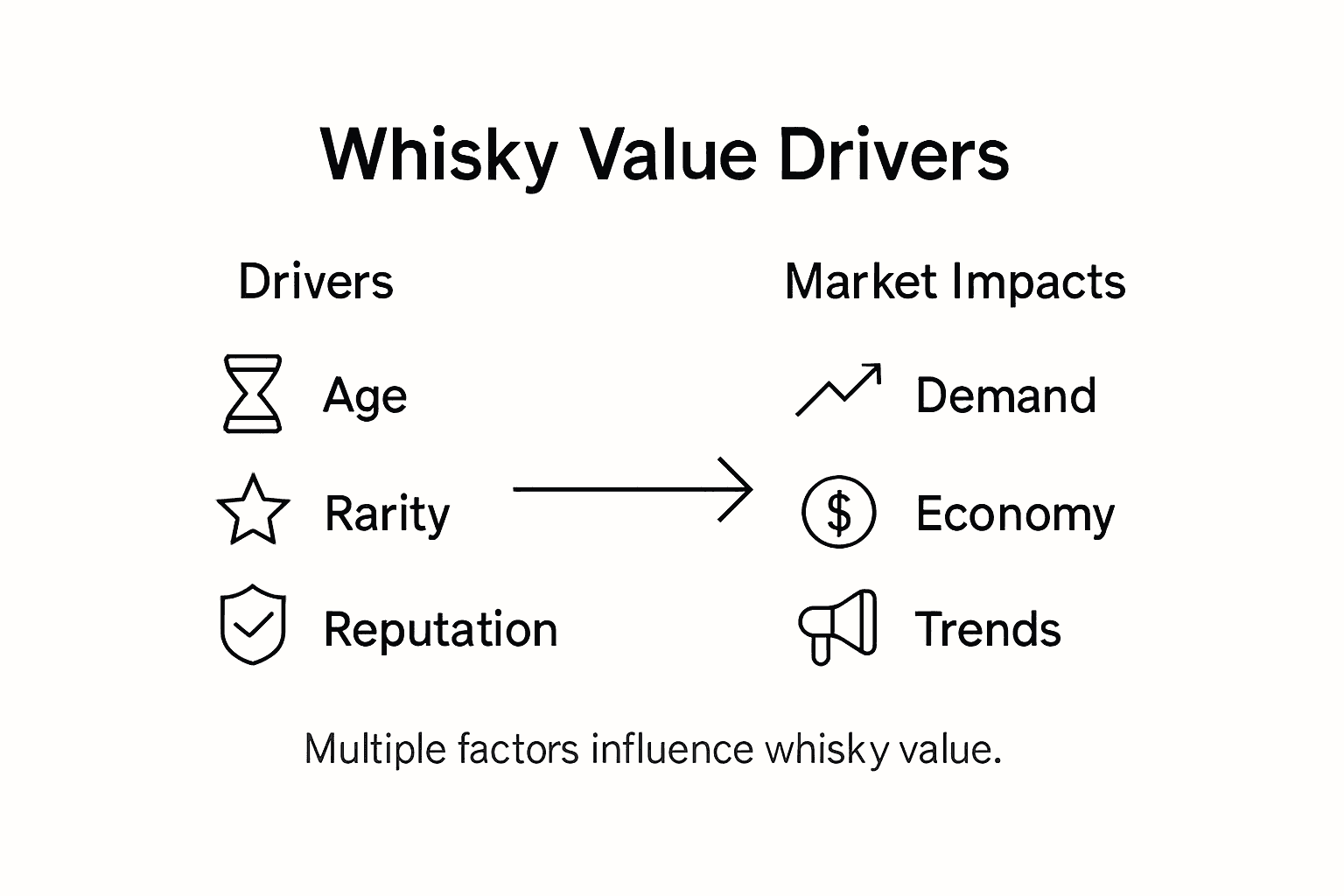
The intricate relationship between regional economic conditions and whisky pricing extends far beyond simple production costs. Distilleries must navigate challenging terrains of international trade regulations, currency fluctuations, agricultural input prices, and geopolitical tensions. These multifaceted economic interactions create nuanced pricing strategies that reflect both local manufacturing realities and global market demands.
Key economic factors impacting whisky pricing include:
- Exchange rate volatilities
- Agricultural commodity price fluctuations
- International trade policy changes
- Regional taxation structures
- Supply chain disruption risks
- Labour market dynamics in production regions
Understanding these economic drivers requires sophisticated analysis of interconnected global systems. Whisky represents more than a beverage - it’s an economic indicator reflecting broader market trends, cultural preferences, and international trade dynamics. Successful investors and collectors must develop comprehensive perspectives that integrate economic insights with deep appreciation of whisky’s cultural significance.
Pro Tip: Monitor global economic indicators and trade policy shifts to anticipate potential impacts on whisky market valuations and investment strategies.
Common Risks When Investing In Whisky
Whisky investment presents a complex landscape of potential rewards and significant risks that demand careful navigation. Comprehensive investment analysis reveals multiple layers of complexity, from authentication challenges to market volatility that can dramatically impact potential returns.
The unregulated nature of the whisky investment market introduces substantial risks for unsuspecting investors. Financial investigations highlight prevalent challenges including potential fraud, misrepresentation, and opaque investment structures that can compromise capital preservation.
Key risks investors must carefully evaluate include:
- Authentication of bottle or cask provenance
- Storage and preservation conditions
- Market value fluctuations
- Potential fraudulent investment schemes
- Liquidity constraints
- Complex valuation methodologies
- Geopolitical and economic uncertainties
Successful whisky investment requires more than financial acumen - it demands a holistic understanding of the market’s intricate dynamics. Investors must develop robust due diligence processes, partner with reputable brokers, and maintain a sophisticated understanding of both the cultural and economic dimensions of whisky as an alternative asset class.
The following table summarises common whisky investment risks and strategies for mitigation:
| Risk Type | Description | Risk Mitigation Strategy |
|---|---|---|
| Fraudulent Bottles | Fake or misrepresented products | Use professional authentication services |
| Storage Conditions | Damage from improper care | Invest in specialist bonded warehouses |
| Liquidity Constraints | Difficulty selling rare whisky | Build relationships with reputable brokers |
| Market Volatility | Fluctuating bottle/cask values | Diversify holdings by producer and region |
Pro Tip: Always verify the authenticity of your whisky investment through independent experts, maintain detailed documentation, and diversify your portfolio to mitigate potential risks.
Discover Premium Whiskies Backed by Proven Value Drivers
Understanding why whisky value fluctuates can be challenging due to factors like distillery reputation, rarity, and market trends. If you want to navigate this complex landscape confidently, explore our curated collection of exceptional Scotch whiskies, including renowned brands like Glenfiddich that embody the heritage and craftsmanship crucial to long-term value.

Start building your collection today with bottles that meet the criteria savvy collectors trust. Visit Glenfiddich – Uisuki.com.au or browse diverse selections at World Whiskies – Uisuki.com.au. Take advantage of expert guidance and secure access to rare and hard-to-find whiskies only at Uisuki.com.au. Elevate your whisky experience with informed purchases that could last a lifetime.
Frequently Asked Questions
What are the primary factors that influence whisky value?
The primary factors influencing whisky value include age, distillery reputation, and production characteristics. Older whiskies often command higher prices, while limited production and strong distillery reputations create scarcity that boosts collector interest.
How does the reputation of a distillery affect whisky pricing?
A distillery’s reputation plays a crucial role in whisky pricing. Prestigious brands with a strong heritage and craftsmanship narrative usually command higher prices, as collectors view these whiskies as premium investments due to their established status.
What role do economic factors play in whisky valuation?
Economic factors like input costs, global events, and exchange rate fluctuations significantly impact whisky valuations. Changes in agricultural commodity prices and trade policies can affect production expenses, thereby influencing market prices.
What are some common risks when investing in whisky?
Common risks include authentication challenges, market value fluctuations, and liquidity constraints. Investors should ensure proper bottle provenance, use reliable storage solutions, and diversify their portfolios to mitigate these risks.