

A single Australian whisky bottle has soared in value by over 500 percent within a decade, catching the attention of savvy investors looking beyond the usual stock or property markets. As growing numbers of Australian collectors pursue rare spirits, understanding what truly sets whisky apart as an asset becomes crucial. This guide breaks down the distinct financial advantages of whisky investments and gives clear tips for identifying high-value bottles, making it easier for Australian investors to confidently enter this dynamic market.
Table of Contents
- What Sets Whisky Investment Apart
- Types Of Investable Whiskies Explained
- How The Whisky Market Creates Value
- Financial Returns, Costs, And Liquidity Factors
- Risks, Scams, And What To Avoid
Key Takeaways
| Point | Details |
|---|---|
| Whisky as an Investment | Whisky offers a unique investment opportunity, characterised by low correlation with traditional markets and tangible value preservation. |
| Types of Investable Whiskies | Familiarise yourself with whisky categories such as single malt, single cask, and blended, each presenting unique investment potential. |
| Financial Considerations | Assess transaction costs and liquidity challenges before investing; whisky requires a strategic, long-term approach. |
| Mitigating Risks | Authenticate bottles rigorously to avoid counterfeits and be cautious of market volatility to protect investment returns. |
What Sets Whisky Investment Apart
Whisky investment represents a unique alternative asset class that offers exceptional diversification potential beyond traditional financial markets. Academic research from Lund University reveals that whisky demonstrates remarkable investment characteristics, including negative correlation with standard market indices and inherent value preservation mechanisms.
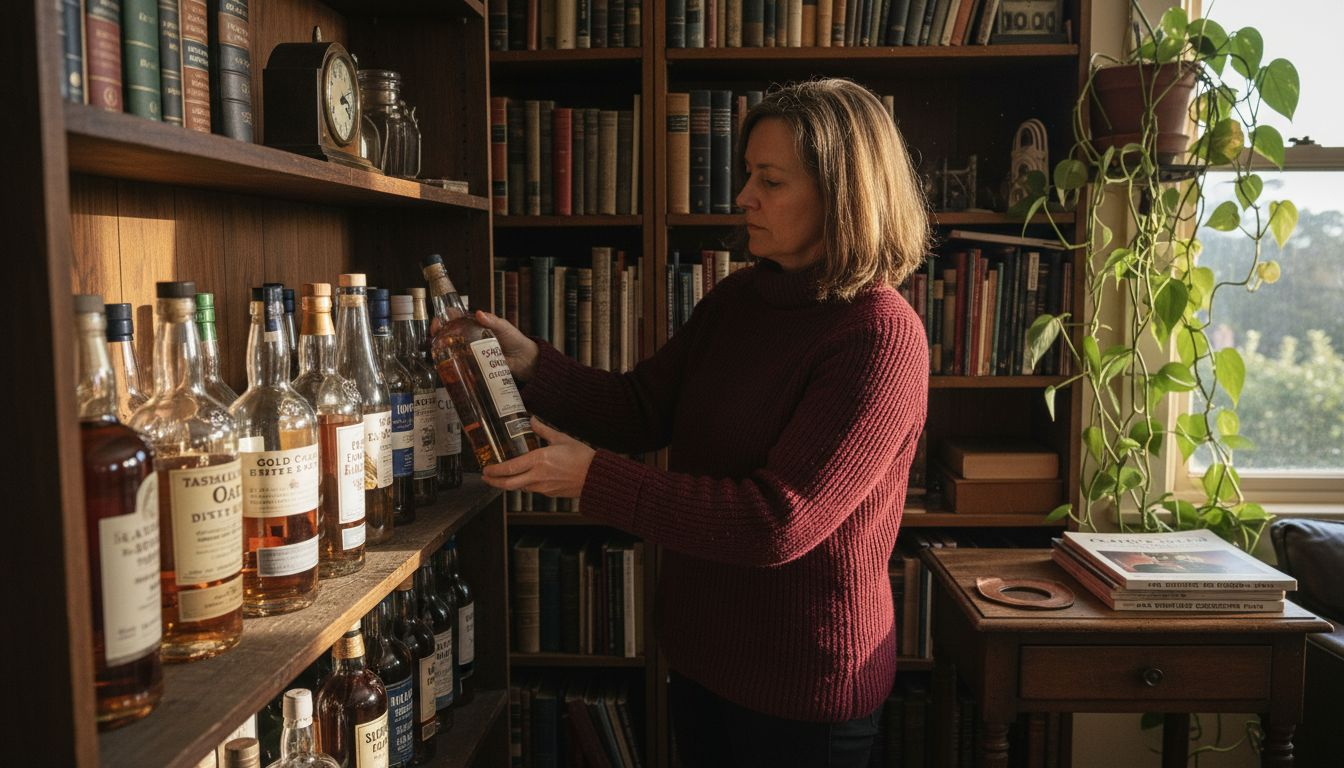
Unlike stocks or bonds, whisky as an investment delivers tangible value through its physical nature and heritage. Rare bottles appreciate based on multiple complex factors including distillery reputation, production volume, age statement, and historical significance. Collectors and investors recognise that premium whiskies are not merely beverages but carefully crafted assets with intrinsic cultural and economic worth.
The investment landscape for whisky is particularly compelling due to its scarcity dynamics. Limited production runs, discontinued expressions, and increasingly sophisticated global collector markets drive sustained value appreciation. Serious investors understand that certain bottles can appreciate exponentially, with some rare releases increasing in value by hundreds of percentage points over relatively short timeframes.
Pro tip: When exploring whisky investments, prioritise bottles from renowned distilleries with consistent historical value performance and focus on limited edition releases.
Types Of Investable Whiskies Explained
The world of whisky investment encompasses several distinct categories, each offering unique potential for collectors and investors. Comprehensive market research reveals that three primary types of whiskies dominate the investment landscape: single malt, single cask, and blended whiskies, each with specific characteristics that influence their investment value.
Single Malt Whiskies represent the pinnacle of collectible spirits, typically produced by a single distillery using malted barley. These whiskies are renowned for their complexity, strict production standards, and potential for significant appreciation. Scotch single malts, in particular, command premium prices due to their stringent aging requirements and regional authenticity. Investors often seek limited edition releases, vintage bottlings, and expressions from renowned Scottish distilleries known for consistent quality and historical significance.
Cask whisky investments offer another fascinating avenue for sophisticated collectors. Detailed market guides highlight the nuanced world of purchasing entire whisky casks, which can appreciate significantly before bottling. These investments require deeper understanding of maturation processes, storage conditions, and potential future market demand. Blended whiskies, while typically less valuable than single malts, can still present interesting investment opportunities, particularly for rare or historically significant bottlings.
Pro tip: Focus on provenance, limited production runs, and bottles from established distilleries with proven track records of value appreciation.
Here’s a comparison of the main types of investable whiskies and what makes each unique:
| Whisky Type | Key Characteristics | Typical Investment Appeal |
|---|---|---|
| Single Malt | Distilled from malted barley, single site | High appreciation, collector prestige |
| Single Cask | Unblended, bottled from one cask | Unique profile, strong scarcity factor |
| Blended | Mix of different whiskies, various origins | Lower entry cost, some rare blends valued |
How The Whisky Market Creates Value
The 2023 Whisky Intelligence Report highlights the complex mechanisms that drive whisky market value, revealing a sophisticated ecosystem where multiple factors converge to create investment potential. The market’s unique value proposition stems from intricate interactions between scarcity, collector demand, cultural significance, and investment sophistication.
Auction dynamics play a critical role in whisky market valuation. Premium bottles become increasingly valuable through secondary market transactions, where limited production runs and discontinued expressions create intense competition among collectors. Rare whisky investments are not merely about the liquid itself, but the narrative, provenance, and historical significance attached to each bottle. Distilleries with strong brand heritage and consistent quality tend to generate more sustained value, with certain expressions becoming genuine financial assets.
The investment landscape is further complicated by global collector trends, regional preferences, and emerging markets. Sophisticated investors understand that whisky value is not static but dynamically influenced by factors like age statement, production method, distillery reputation, and broader economic conditions. Some rare bottles have demonstrated remarkable appreciation, with certain vintage expressions increasing in value by exponential margins over relatively short periods.
Pro tip: Track auction results and market trends closely, focusing on bottles from distilleries with established reputational consistency and limited production runs.
Financial Returns, Costs, And Liquidity Factors
Academic research examining whisky investment strategies reveals a compelling financial profile that sets whisky apart from traditional investment assets. Unlike stocks or bonds, whisky investments offer unique returns characterised by low correlation with broader market movements, presenting a sophisticated alternative for discerning investors seeking portfolio diversification.
The financial mechanics of whisky investment involve complex considerations beyond simple price appreciation. Transaction costs can be significant, including storage, insurance, authentication, and potential auction fees. Investors must carefully evaluate these expenses against potential returns, recognising that while premium bottles can appreciate dramatically, not every acquisition will generate substantial profits. Sophisticated collectors understand that strategic selection is crucial, focusing on limited edition releases, bottles from renowned distilleries, and expressions with demonstrable historical value.
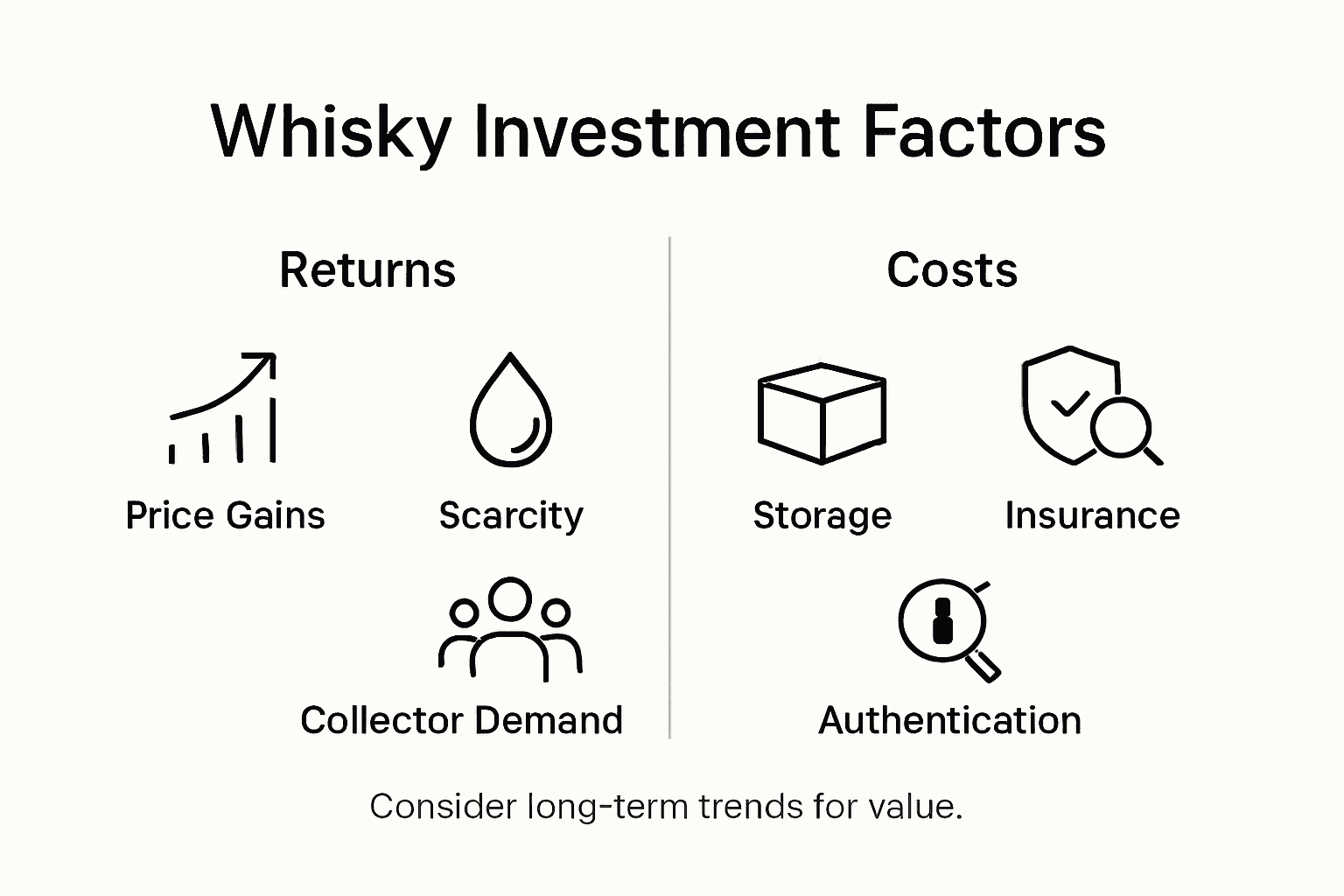
Liquidity presents both challenges and opportunities in the whisky investment landscape. Unlike traditional financial instruments, whisky cannot be instantly converted to cash, requiring patience and strategic timing for optimal sales. The secondary market for rare whiskies operates through specialised auctions, collector networks, and increasingly sophisticated online platforms. This nuanced marketplace rewards investors who develop deep understanding of market trends, provenance verification, and collector preferences.
Pro tip: Develop a long-term investment strategy that accounts for storage costs, authentication expenses, and potential market fluctuations, treating whisky as a patient, strategic asset.
Below is a summary of key financial factors and liquidity considerations in whisky investment:
| Financial Factor | Details | Impact on Investors |
|---|---|---|
| Returns | Low market correlation, variable yield | Enhances diversification |
| Transaction Costs | Includes storage, insurance, authentication | Can reduce net returns |
| Liquidity | Sold via auctions, not instantly tradable | Requires patience |
Risks, Scams, And What To Avoid
Professional market analysis highlights critical risks facing whisky investors, revealing a landscape fraught with potential pitfalls that demand strategic awareness and meticulous due diligence. The whisky investment market, while lucrative, contains sophisticated risks that can quickly erode potential returns for unsuspecting collectors.
Counterfeit bottles represent one of the most significant threats in the whisky investment ecosystem. Sophisticated scammers have developed increasingly complex methods of producing fake rare whiskies, including high-quality replicas of labels, packaging, and even bottle aging techniques. Serious investors must develop robust authentication strategies, which include engaging expert appraisers, verifying provenance through documented history, and purchasing only from reputable, established dealers with transparent sourcing mechanisms.
Beyond authenticity concerns, market volatility presents another substantial risk. Whisky investments are susceptible to dramatic price fluctuations driven by collector trends, global economic conditions, and changing consumer preferences. Speculative investments in unproven distilleries or limited editions without substantial historical performance can result in significant financial losses. Prudent investors carefully research historical price trends, understand market dynamics, and avoid making impulsive purchasing decisions based on temporary market excitement.
Pro tip: Always authenticate bottles through multiple independent experts, maintain comprehensive documentation of purchase history, and never invest more than you can afford to potentially lose in this specialised market.
Discover Real Value in Whisky Investment with Uisuki
Investing in whisky demands a trusted source offering rare and proven bottles that hold intrinsic cultural and economic worth. If you are exploring how scarcity, provenance, and distillery heritage influence value growth, our curated selection of premium whiskies at World Whiskies – Uisuki.com.au provides an excellent starting point. Gain confidence in your investment by choosing from limited edition releases and celebrated distilleries backed by consistent historical appreciation.

Take the next step in securing a whisky asset that suits your long-term strategy by exploring our exclusive collections for discerning collectors. Visit https://uisuki.com.au today and experience expert guidance, detailed descriptions, and rare finds including Glenfiddich – Uisuki.com.au and Scotch Whisky (all) - Glenglassaugh – Uisuki.com.au. Begin your investment journey with reliability and authenticity now.
Frequently Asked Questions
What makes whisky a good investment compared to traditional assets?
Whisky offers low correlation with traditional financial markets, providing exceptional diversification. Its tangible nature and historical significance create intrinsic value, making it a compelling alternative investment.
How do different types of whisky, like single malt and single cask, impact investment potential?
Single malt whiskies typically offer high appreciation potential due to their complexity and production standards, while single cask whiskies provide unique profiles with strong scarcity. Blended whiskies may have lower entry costs but can still present interesting investment opportunities, especially rare blends.
What are the main risks involved in investing in whisky?
Key risks include counterfeit bottles, market volatility, and the speculative nature of certain whisky investments. It’s essential to authenticate bottles, research historical price trends, and avoid impulsive purchases to mitigate these risks.
How can investors assess the value of whisky when considering it for their portfolio?
Investors should focus on provenance, limited production runs, distillery reputation, and historical significance. Monitoring auction results and market trends can also provide insights into potential value appreciation.