

TL;DR:
- Whiskey is a distilled grain spirit aged in oak barrels, with flavor shaped primarily by grain choice and production methods. Spelling differs by region, with “whiskey” used in Ireland and the USA and “whisky” elsewhere, but both refer to the same spirit. Tasting involves analyzing appearance, aroma, palate, and finish, starting best with neat serving and optional water to enhance flavors.
Whiskey is one of those spirits that rewards curiosity. Whether you spotted an unfamiliar bottle at a bar or received one as a gift and had no idea where to start, understanding what is whiskey at a foundational level changes everything about how you experience it. It is a distilled spirit made from fermented grain mash, aged in oak barrels, and produced under specific legal standards that vary by country. And yes, the spelling debate is real. Ireland and the USA use “whiskey” while Scotland and most of the world write “whisky.” Both are correct. Both refer to the same remarkable category of spirit.
Table of Contents
- Key takeaways
- What is whiskey made from?
- Types of whiskey from around the world
- A beginner’s whiskey tasting guide
- Choosing your first whiskey: practical tips
- My honest take on getting started with whiskey
- Explore whiskey at Uisuki
- FAQ
Key takeaways
| Point | Details |
|---|---|
| Whiskey definition | Whiskey is a distilled grain spirit aged in oak, with legal standards varying by country and region. |
| Spelling matters by origin | “Whiskey” is used in Ireland and the USA; “whisky” is the standard spelling elsewhere, including Scotland and Australia. |
| Grain drives flavour | The choice of grain, whether barley, corn, rye, or wheat, shapes the flavour profile more than almost anything else. |
| Age is not everything | Legal ageing minimums set a quality baseline, but grain type and barrel treatment often define what ends up in your glass. |
| Tasting has a method | Assessing appearance, aroma, palate, and finish gives you a reliable framework to understand any whiskey you try. |
What is whiskey made from?
The answer starts with grain. Whiskey is made from grains including barley, corn, rye, and wheat, and the choice of grain is the single biggest driver of flavour before the barrel even gets involved. Water and yeast are the other two non-negotiable ingredients. Water influences the character of the mash and the distillate, while yeast drives fermentation, converting sugars into alcohol.
From grain to glass: the production process
Once the grains are mashed and fermented into a liquid called “wash” or “beer,” the real transformation begins. Distillation concentrates the alcohol and strips away unwanted compounds. Here is where a critical rule applies: higher distillation proofs strip more grain character from the spirit, resulting in something closer to a neutral alcohol. Lower distillation proofs preserve those distinctive grain flavours that make each whiskey style unique.
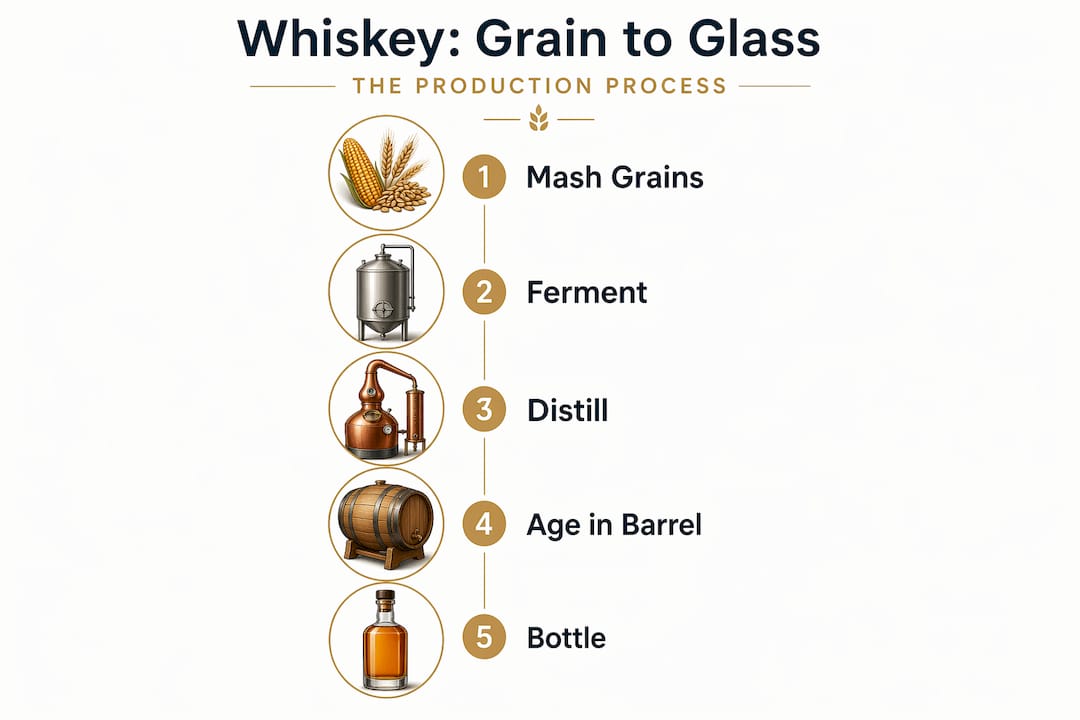
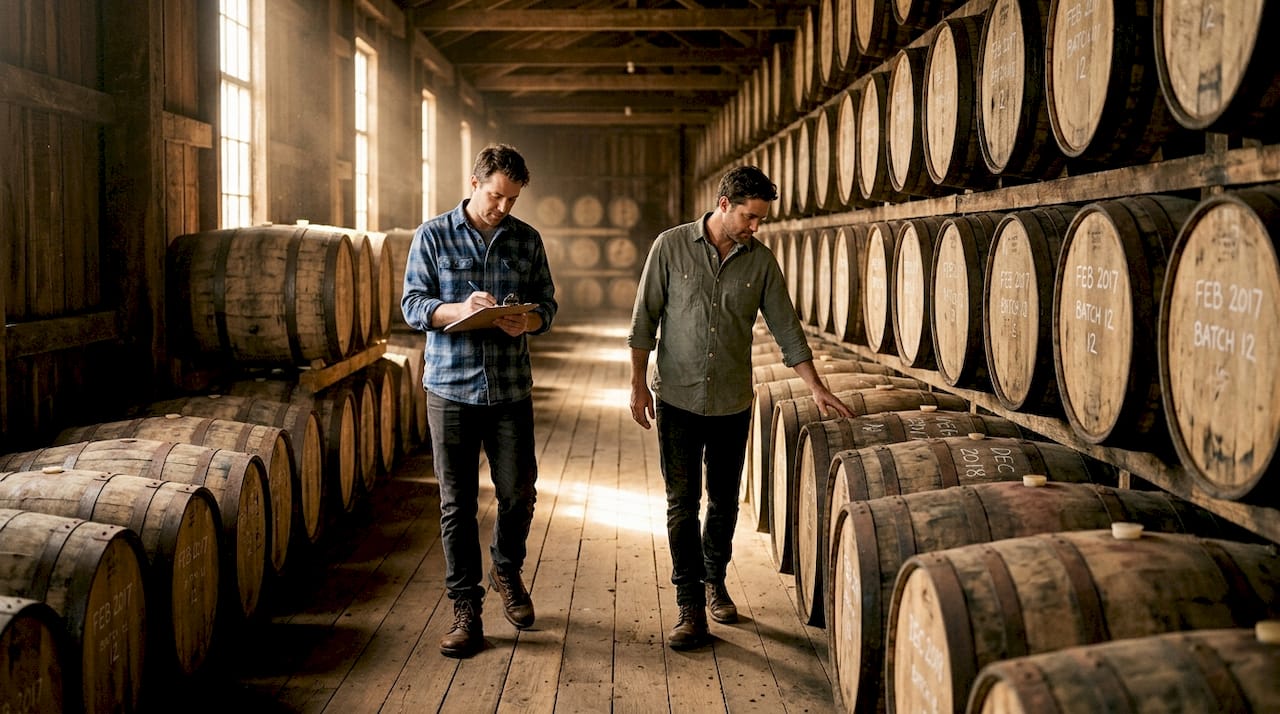
After distillation, the spirit goes into oak barrels for ageing. This is where colour develops, raw spirit softens, and flavour deepens. Ageing in charred oak triggers oxidation and extracts wood sugars, which contribute vanilla, caramel, and spice notes. A whiskey pulled from an ex-sherry cask will taste noticeably different from one aged in a fresh American oak barrel, even if both started from the same distillate.
Pro Tip: Pay attention to the cask type on the label. Terms like “sherry matured,” “port finished,” or “bourbon cask” are practical clues about what flavours to expect before you even open the bottle.
Legally, production standards matter. Straight American whiskey must be distilled to no more than 80% ABV and aged for a minimum of two years in new charred oak barrels, with the spirit entering the barrel at no more than 62.5% ABV. These rules exist to protect flavour integrity, not just marketing. Understanding them helps you read a label with confidence rather than guesswork.
Whiskey must also meet minimum bottling strength requirements: at least 40% ABV in most markets. Australia is a notable exception, where the minimum sits at 37% ABV, making local and imported whiskies slightly different in their legal baseline. Knowing this matters when comparing bottles across regions.
Types of whiskey from around the world
Not all whiskeys taste alike, and that is entirely by design. The grain, the geography, and the regulations all combine to create distinctly different styles. Here is a quick comparison to help you get your bearings.
| Type | Key grain | Origin | Flavour profile |
|---|---|---|---|
| Scotch | Malted barley | Scotland | Smoky, peaty, fruity, or floral depending on region |
| Bourbon | Corn (min 51%) | USA | Sweet, vanilla, caramel, oak |
| Rye | Rye (min 51%) | USA or Canada | Spicy, dry, peppery |
| Irish | Mixed grains | Ireland | Light, smooth, approachable |
| Japanese | Malted barley | Japan | Delicate, floral, refined |
| Australian single malt | Malted barley | Australia | Varies widely; often fruity or bold |
| American single malt | Malted barley | USA | New 2025 federal rules define this as 100% malted barley from one distillery |
The grain types used in production do more than just change the flavour. They shape the entire character of the whiskey, from texture to finish length. A high-corn bourbon carries a natural sweetness that a rye-forward whiskey simply will not. A heavily peated Scotch single malt has a smoky depth that is worlds apart from a light Irish blend.
Pro Tip: If you are new to whiskey, Irish and Japanese styles tend to be the most approachable entry points because of their lighter, smoother profiles. Once comfortable there, branch into bourbon for sweetness or Scotch for complexity.
The 7 essential types of whisky worth knowing go even deeper than this table covers, including blended expressions, grain whiskies, and the emerging category of finished whiskeys that spend time in a secondary cask to absorb additional flavour layers.
A beginner’s whiskey tasting guide
Tasting whiskey well is a skill, but it is not complicated. You do not need years of experience to get real value from the process. A structured approach helps you identify what you enjoy and builds your palate faster than just drinking without thinking.
Here is a straightforward tasting framework:
- Appearance: Pour a small measure into a clean glass and hold it to the light. Colour ranges from pale gold to deep amber. Darker shades often indicate longer ageing or the use of sherry or port casks, though added colour is also permitted in some regions.
- Aroma: Swirl gently, then nose the glass with your mouth slightly open. This reduces the sting of alcohol and lets grain, fruit, floral, and oak notes come forward. Take two or three short sniffs rather than one deep breath.
- Palate: Take a small sip and let it coat your entire mouth before swallowing. Notice sweetness, spice, bitterness, or fruit notes. Compare what you taste to what you smelled.
- Finish: The finish is what lingers after you swallow. A long, warming finish often signals quality ageing. A short, sharp finish is not necessarily bad; it just tells a different story about the spirit.
Whiskey served neat is the best way to start your tasting journey. No ice, no mixer, just the whiskey at room temperature. Adding water (a few drops only) is genuinely useful because it opens up aromatic compounds and softens alcohol perception, especially at higher ABV expressions above 50%.
Understanding whisky proof and ABV is worth your time too. A cask-strength whiskey at 60% ABV requires different handling than a standard 43% bottling, and knowing this avoids the mistake of nosing a glass of high-proof spirit too aggressively.
Choosing your first whiskey: practical tips
Buying your first bottle should not be overwhelming. A few clear criteria will point you in the right direction without requiring a degree in distillation.
- Start with your flavour preferences. If you enjoy sweet foods, start with bourbon. If you prefer something lighter, go Irish or Japanese. If you like smoky, bold flavours, a lightly peated Scotch is a strong starting point.
- Read the label carefully. Look for legal terms like “straight,” “single malt,” or “blended.” These tell you about grain type, ageing, and production method in a few words. A bourbon’s legal definitions are tightly regulated, so what appears on the label is backed by law, not just marketing.
- Do not fixate on age statements. An age statement tells you the minimum number of years the youngest whiskey in the bottle spent in the barrel. It does not guarantee better flavour. Legal ageing minimums set a quality baseline, but personal flavour preference often depends more on grain choice and barrel treatment than on how many years the spirit sat in wood.
- Set a realistic budget. Excellent whiskeys exist at every price point. You do not need to spend a fortune to find something genuinely enjoyable. Budget bottles from established distilleries often outperform expensive bottles from unfamiliar producers.
- Use beginner-friendly guides. A well-curated list of whiskies for beginners helps you filter the noise and focus on bottles that match your taste starting point, rather than guessing from shelf placement alone.
My honest take on getting started with whiskey
I have tasted a lot of whiskeys, and the most common mistake I see beginners make is treating age as a proxy for quality. It is not. I have had ten-year-old expressions that left me reaching for a second glass immediately, and twenty-year-old bottles that felt flat and over-oaked. The number on the label tells you something about production, but it does not tell you whether you will enjoy it.
What I have found to be far more predictive of enjoyment is grain choice. When someone tells me they did not enjoy their first whiskey, I almost always ask what it was. More often than not, they started with a heavily peated Scotch or a high-rye bourbon when their actual palate preferences ran toward something smooth and lighter. Starting with the right grain category changes everything.
I also think the cultural pressure to drink whiskey neat from the start is doing beginners a disservice. Adding a few drops of water is not cheating. Master distillers do it when evaluating new-make spirit. It is a legitimate tasting tool, and it makes cask-strength expressions far more accessible.
My final word on the subject: ignore the pretension that sometimes surrounds whiskey culture. The goal is to find what you genuinely enjoy, not to impress someone at a bar. Start curious, taste widely, and let your palate lead the way.
— Brendan
Explore whiskey at Uisuki
Ready to move from theory to tasting? Uisuki stocks a curated range of whiskies that make the perfect starting point or next step in your exploration.

For something that showcases what thoughtful maturation actually does to a spirit, the Hobart Whisky Bourbon Matured Rum Finished Single Malt is a genuine standout. It starts with bourbon barrel ageing and finishes in rum casks, producing layers of caramel, tropical fruit, and warm spice that demonstrate exactly why cask selection matters. For those drawn to Japanese whisky, the Ichiro’s Malt and Grain Limited Edition blended expression offers a complex but approachable profile at 48% ABV. Both bottles illustrate the diversity of flavour that grain selection and cask treatment produce, turning the theory you have just read into something you can actually taste.
FAQ
What is whiskey, exactly?
Whiskey is a distilled spirit made from fermented grain mash, typically aged in oak barrels and bottled at a minimum of 40% ABV in most countries. The grain used, the distillation method, and the ageing process all shape its flavour and character.
What is the difference between whiskey and whisky?
The spelling difference is geographic. Ireland and the USA use “whiskey,” while Scotland, Japan, Australia, and most other producing countries use “whisky.” Both spellings refer to the same category of distilled grain spirit.
What grains are used in whiskey production?
Whiskey is produced from grains including barley, corn, rye, and wheat. The dominant grain in the mash bill determines the style: corn delivers sweetness in bourbon, rye produces spicy dryness, and malted barley creates the base for Scotch and Irish expressions.
How do I taste whiskey properly?
Assess appearance, aroma, palate, and finish in that order. Try whiskey served neat first, at room temperature, and add a few drops of water to open up aromas in higher ABV expressions. Short, focused sniffs give you more detail than one deep breath.
Does a higher age statement mean better whiskey?
Not necessarily. Age statements indicate the minimum time the youngest whiskey in the bottle spent in oak, but quality depends more on grain type and barrel treatment than on years of ageing alone. Many non-age-statement releases outperform older, more expensive bottles.