

Many whisky enthusiasts find themselves puzzled when confronted with terms like whiskey, Scotch, and bourbon. These spirits share fundamental similarities as grain-based, oak-aged distillates, yet each possesses distinct production methods, geographic origins, and flavour profiles that set them apart. Understanding these differences transforms casual appreciation into informed selection, whether you’re building a collection or simply choosing your next dram. This guide demystifies the definitions, production techniques, and taste characteristics that make each spirit unique, empowering you to navigate the whisky world with confidence.
Table of Contents
- Understanding Whiskey: The Broad Category
- What Makes Scotch Whisky Unique?
- Exploring Bourbon’s Distinct Identity
- Key Differences Highlighted: A Comparative Overview
- Applying Your Knowledge: Selecting Whisky With Confidence
- Discover Premium Whisky Selections At Uisuki
- Frequently Asked Questions
Key takeaways
| Point | Details |
|---|---|
| Whiskey is the umbrella term | All Scotch and bourbon are whiskey, but not all whiskey qualifies as Scotch or bourbon. |
| Geographic origin matters legally | Scotch must originate in Scotland, bourbon is typically American, with strict regulatory definitions. |
| Grain composition differs significantly | Scotch relies on malted barley, bourbon requires minimum 51% corn in its mash bill. |
| Barrel ageing creates distinct flavours | Scotch uses reused oak casks, bourbon demands new charred oak barrels exclusively. |
| Flavour profiles span a spectrum | Bourbon tends toward sweet vanilla notes, Scotch ranges from peaty smoke to fruity elegance. |
Understanding whiskey: the broad category
Whiskey encompasses distilled spirits from fermented grain mash, aged in oak barrels, representing a global category with regional variations. The spelling itself signals geographic origin: whisky appears in Scotland, Canada, and Japan, whilst whiskey denotes Irish and American production. Both spellings describe the same fundamental spirit, though production philosophies vary dramatically.
The grains used in whiskey production determine much of its character. Barley, corn, rye, and wheat each contribute unique flavour compounds during fermentation and distillation. Barley offers malty sweetness, corn provides body and natural sugar, rye adds spicy complexity, and wheat delivers soft texture. Distillers blend these grains in specific proportions called mash bills, creating signature profiles.
Legal standards govern whiskey production worldwide, though regulations differ by jurisdiction. Most require distillation from grain, ageing in oak containers, and minimum alcohol thresholds for bottling. These broad parameters allow tremendous stylistic diversity, from light Canadian whiskies to robust American ryes. Scotch and bourbon operate within this wider framework but impose additional geographic and production constraints that create their distinctive identities.
Exploring the difference between Scotch and whiskey reveals how subcategories emerge from regional traditions and legal protections. Understanding whiskey as the parent category helps contextualise why Scotch and bourbon command such specific definitions and devoted followings among collectors.
Key characteristics defining whiskey broadly:
- Distilled from fermented grain mash using various cereal combinations
- Aged in wooden barrels, typically oak, for varying durations
- Bottled at regulated minimum alcohol strengths depending on jurisdiction
- Subject to geographic labelling laws protecting regional designations
What makes Scotch whisky unique?
Scotch whisky’s identity stems from its Scottish origin and distinctive production methods. Single malt Scotch uses 100% malted barley, whilst blended varieties incorporate grain whiskies for balance. The malting process involves soaking barley until germination begins, then drying it to halt growth, developing enzymes that convert starches to fermentable sugars. This traditional technique remains central to Scotch character.
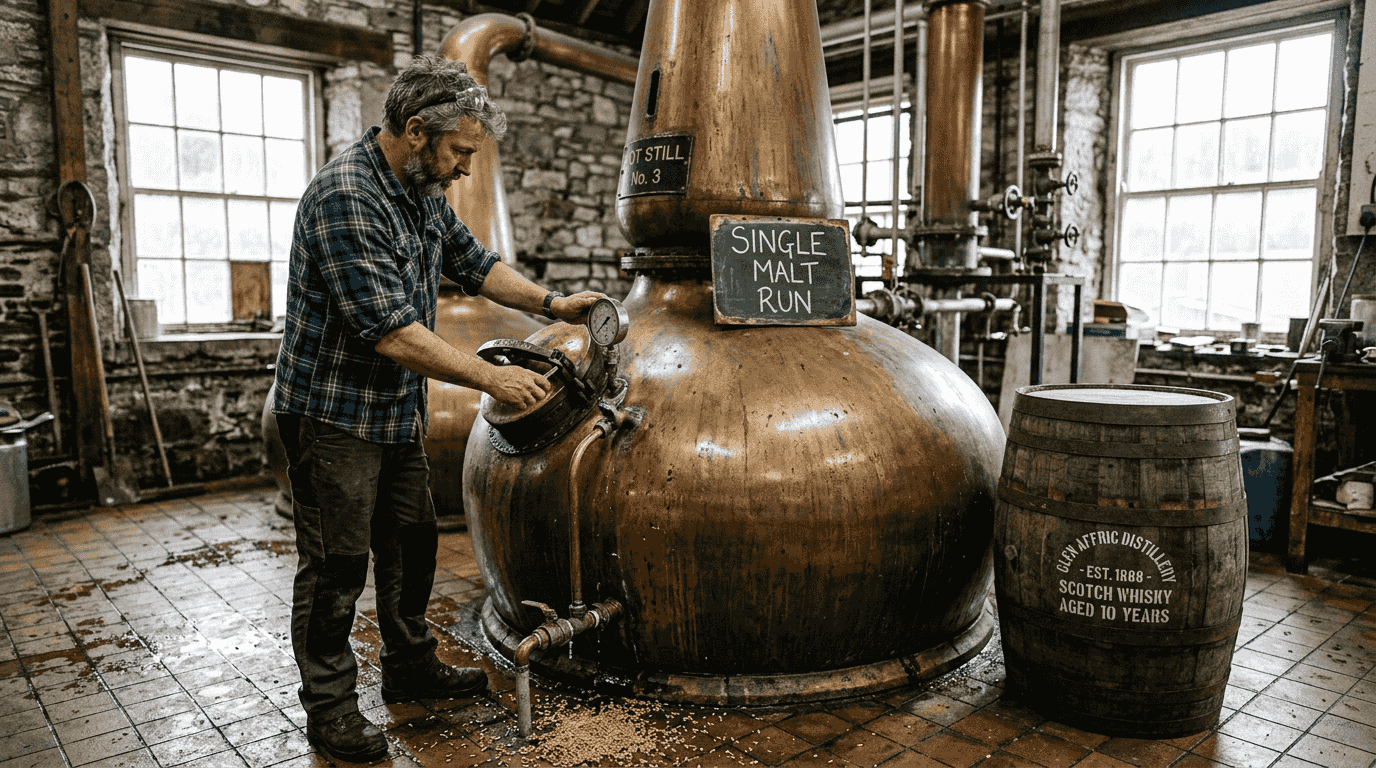
Distillation typically occurs in copper pot stills, with many distilleries employing double or triple distillation to refine spirit purity. The shape and size of these stills influence final flavour, as taller stills produce lighter spirits whilst shorter, wider designs yield heavier, oilier textures. Each distillery’s still configuration becomes part of its signature style, passed down through generations.
Reused oak casks shape Scotch maturation, with ex-bourbon barrels being most common due to bourbon’s requirement for new wood. These seasoned casks impart subtle vanilla and oak notes without overwhelming the malt’s inherent character. Sherry casks, port pipes, and wine barriques add complexity through previous contents, creating rich fruity dimensions. Minimum ageing spans three years, though premium expressions often mature for decades.
Peat usage distinguishes regional Scotch styles dramatically. Islay malts embrace heavily peated barley, producing intensely smoky, medicinal flavours reminiscent of coastal bonfires. Speyside distilleries largely avoid peat, crafting elegant, fruity whiskies with apple, pear, and floral notes. Highland and Lowland regions offer middle ground, with some peated expressions and many showcasing honeyed, grassy profiles. Understanding these Scotch flavour profiles helps collectors target preferred styles.
Pro Tip: When exploring Scotch, start with Speyside malts for approachable fruitiness before venturing into heavily peated Islay expressions, allowing your palate to appreciate the full spectrum gradually.
Scotch production essentials:
- Malted barley forms the foundation, especially for single malts
- Pot still distillation, often doubled or tripled for refinement
- Maturation in reused oak casks, frequently ex-bourbon barrels
- Regional peat influence varies from none to dominant smoky character
Exploring bourbon’s distinct identity
Bourbon’s legal definition establishes strict parameters that create its recognisable profile. Federal regulations mandate mash bills contain at least 51% corn, with most premium bourbons using 60-80% corn for pronounced sweetness. The remaining grains typically include rye for spice or wheat for smoothness, creating flavour variations within the bourbon category. These proportions remain closely guarded secrets at many distilleries.
Distillation limits prevent over-refinement that would strip character. Bourbon cannot exceed 160 proof during distillation, preserving congeners and flavour compounds that lighter spirits lose. Entry into barrels occurs at 125 proof or below, ensuring wood interaction develops properly without excessive dilution later. These thresholds balance purity with personality, distinguishing bourbon from neutral grain spirits.
New charred oak barrels define bourbon’s signature taste profile. The charring process caramelises wood sugars, creating a layer of carbon that filters spirit whilst releasing vanilla, caramel, and toffee notes. Unlike Scotch’s reused casks, bourbon’s virgin wood imparts aggressive flavour quickly, allowing younger whiskies to achieve remarkable complexity. Most bourbon matures four to twelve years, though no minimum age exists for standard expressions.
Bottling strength must reach 80 proof minimum, with many craft distillers offering barrel-proof versions exceeding 120 proof for intense flavour. No additives or colouring agents are permitted, ensuring authentic expression of grain, wood, and time. This purity requirement distinguishes bourbon from many international whiskies that allow caramel colouring.
Pro Tip: Compare wheated bourbons like Maker’s Mark against high-rye recipes such as Four Roses to experience how secondary grains dramatically shift bourbon’s spice and sweetness balance.
Understanding bourbon production rules and Kentucky bourbon characteristics deepens appreciation for regional craftsmanship and legal protections.
| Bourbon Requirement | Specification | Flavour Impact |
|---|---|---|
| Corn content | Minimum 51% of mash bill | Natural sweetness, full body |
| Distillation proof | Maximum 160 proof | Preserves grain character |
| Barrel entry proof | Maximum 125 proof | Optimal wood extraction |
| Barrel type | New charred American oak | Vanilla, caramel, toffee notes |
| Bottling proof | Minimum 80 proof | Balanced alcohol warmth |
Bourbon defining features:
- Corn-dominant mash bill creating inherent sweetness
- Distillation and barrelling proof limits preserving character
- Exclusive use of new charred oak barrels for maturation
- No additives permitted, ensuring authentic grain and wood expression
Key differences highlighted: a comparative overview
Comparing whiskey, Scotch, and bourbon side by side clarifies their relationships and distinctions. Geography establishes the first dividing line: Scotch originates exclusively in Scotland, bourbon typically comes from America (especially Kentucky), whilst whiskey broadly encompasses spirits from multiple nations. These geographic markers carry legal weight, protecting regional heritage and production standards.
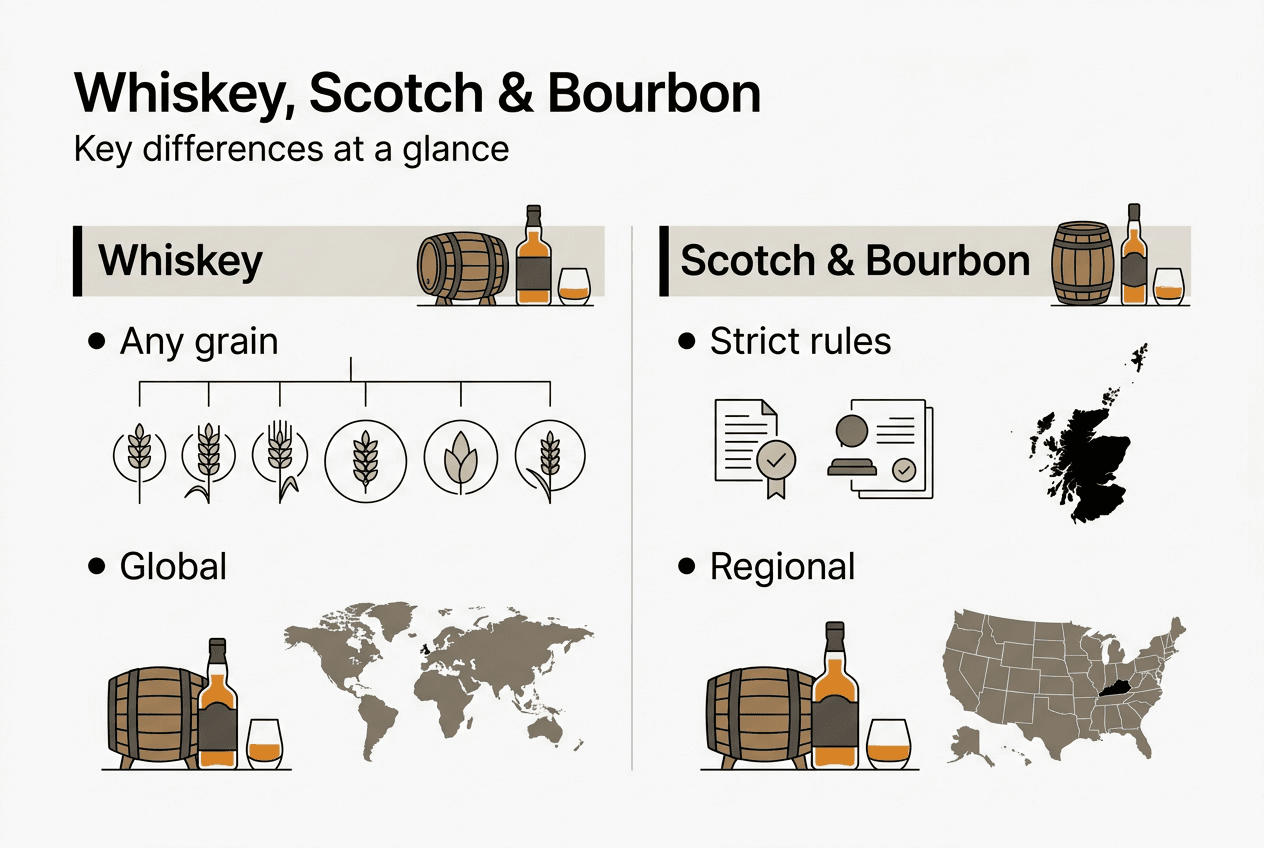
Grain selection creates foundational flavour differences. Scotch emphasises malted barley, particularly in single malts, delivering malty, sometimes nutty characteristics. Bourbon’s corn majority produces sweeter, fuller-bodied spirits with prominent grain sweetness. The secondary grains in bourbon mash bills, whether rye or wheat, add complexity that parallels Scotch’s regional peat variations.
Used bourbon barrels influence 70-80% of Scotch flavour development, creating an interesting cyclical relationship between these spirits. Bourbon’s requirement for new oak means a constant supply of seasoned barrels flows to Scotland, where they gently season maturing Scotch without dominating its delicate malt character. This symbiotic relationship shapes both industries economically and flavour-wise.
Barrel practices represent perhaps the most dramatic production divergence. Bourbon’s new charred oak imparts bold vanilla and caramel rapidly, whilst Scotch’s reused casks work subtly over longer periods. This difference explains why quality bourbon can emerge after four years, whereas Scotch typically requires eight to twelve years minimum for comparable complexity. The wood’s previous contents also matter: ex-sherry casks create richer, fruitier Scotch than ex-bourbon barrels.
Exploring Scotch vs bourbon comparison and following a whisky tasting comparison guide develops discernment through direct experience.
| Characteristic | Whiskey (General) | Scotch Whisky | Bourbon Whiskey |
|---|---|---|---|
| Geographic origin | Various countries | Scotland exclusively | United States (typically Kentucky) |
| Primary grain | Varies by style | Malted barley | Corn (minimum 51%) |
| Barrel type | Oak, various ages | Reused oak casks | New charred American oak |
| Typical flavour | Highly variable | Malty, peaty to fruity | Sweet, vanilla, caramel |
| Minimum age | Varies by jurisdiction | Three years | None (except “straight” designation) |
Tasting these spirits systematically reveals their distinctions:
- Pour equal measures of each spirit into separate glasses at room temperature
- Observe colour variations: bourbon tends darker gold, Scotch ranges pale to deep amber
- Nose each spirit separately, noting bourbon’s sweet corn and vanilla against Scotch’s malt or peat
- Taste neat first, letting spirit coat your palate before swallowing
- Add a few drops of water to each, observing how flavours open and evolve
- Note finish length and character: bourbon’s sweetness versus Scotch’s complexity
Applying your knowledge: selecting whisky with confidence
Choosing between whiskey types becomes intuitive once you understand their core characteristics. Bourbon’s sweeter, more approachable profile suits cocktails beautifully, with its vanilla and caramel notes complementing mixers without disappearing. Classic bourbon cocktails like Old Fashioneds and Manhattans showcase this versatility. For sipping, bourbon offers immediate gratification with bold, friendly flavours that require less contemplation.
Scotch rewards patient exploration and typically shines when consumed neat or with minimal water. Its complexity unfolds gradually, revealing layers that change as the dram warms and opens in the glass. Single malts especially demand attention, offering meditative drinking experiences that showcase terroir, craftsmanship, and maturation nuances. Scotch collectors often focus on building vertical collections from favourite distilleries or horizontal tastings across regions.
Flavour preferences guide selection logically. If you enjoy sweet, dessert-like spirits, bourbon’s corn-forward profile and new oak influence deliver satisfaction. Those preferring drier, more nuanced spirits gravitate toward Scotch, particularly non-peated Speyside or Lowland expressions. Adventurous palates seeking bold, challenging flavours find Islay’s peated monsters irresistible, whilst others consider them overpowering.
Reading labels reveals crucial information about production and quality. Age statements indicate minimum maturation time, though older doesn’t always mean better. Cask finish descriptions signal additional flavour layers from secondary maturation. Proof or ABV percentages help gauge intensity, with cask strength offerings providing undiluted distillery character. Understanding these markers prevents disappointment and focuses purchases on preferred styles.
Pro Tip: Build a diverse collection by selecting one bourbon, one peated Scotch, and one non-peated Scotch as your foundation, then expand based on which style you reach for most frequently.
Exploring whisky flavour insights and consulting a whisky tasting guide accelerates your learning curve through structured comparison.
Selection strategies for different occasions:
- Cocktail base: Choose bourbon or blended Scotch for robust flavour that withstands dilution
- Contemplative sipping: Select single malt Scotch or small-batch bourbon for complexity
- Gift giving: Opt for recognisable distillery names with age statements for perceived value
- Collection building: Focus on distillery verticals or regional horizontals for educational depth
- Investment potential: Research limited releases and discontinued expressions with provenance
Discover premium whisky selections at Uisuki
Now that you understand what distinguishes whiskey, Scotch, and bourbon, exploring authentic expressions becomes the natural next step. Uisuki curates exceptional whiskies from Scotland, America, and beyond, offering collectors and enthusiasts access to both classic distillery bottlings and rare limited releases. Our selection includes distinctive options like Hobart Whisky bourbon matured rum finished single malt, showcasing innovative Australian craftsmanship.

Whether you’re drawn to the elegant complexity of Ichiro’s malt and grain limited edition or the traditional character of Ardnamurchan MacLean’s Nose blended Scotch, our range caters to diverse palates and collecting goals. Visit Uisuki to explore our full catalogue, discover new arrivals, and find your next exceptional dram with confidence.
Frequently asked questions
What is the main difference between whiskey, Scotch and bourbon?
Whiskey serves as the umbrella term for all grain-based distilled spirits aged in oak barrels, encompassing numerous regional styles worldwide. Scotch specifically denotes whisky produced in Scotland using predominantly malted barley and aged minimum three years. Bourbon represents American whiskey with at least 51% corn mash, aged in new charred oak barrels with no minimum maturation period except for “straight” designations.
Does Scotch always have a smoky flavour?
No, smoky character in Scotch depends entirely on peat usage during barley malting, which remains optional. Speyside and Lowland distilleries typically produce non-peated whiskies with fruity, floral, or honeyed profiles lacking any smoke. Islay and some Highland distilleries embrace heavy peat influence, creating intensely smoky, medicinal characteristics. Regional style and distillery philosophy determine peat levels, offering tremendous flavour diversity across Scotland.
What gives bourbon its sweet flavour profile?
Bourbon’s characteristic sweetness stems primarily from its corn-dominant mash bill, as corn contributes natural sugars and full body during fermentation. New charred oak barrels amplify this sweetness by releasing vanilla, caramel, and toffee compounds from caramelised wood sugars in the char layer. This combination of corn’s inherent sweetness and aggressive wood influence creates bourbon’s signature dessert-like profile that distinguishes it from other whiskey styles.
Can I use whisky and whiskey interchangeably?
Both spellings refer to the same category of spirit, though regional conventions dictate which spelling appears on labels. Scotland, Canada, and Japan use “whisky” whilst Ireland and the United States prefer “whiskey”. These spelling differences reflect historical traditions rather than production distinctions. When discussing spirits generally, either spelling works, though matching the regional convention shows attention to detail and respect for local heritage.