

TL;DR:
- Blended Scotch combines whiskies from multiple distilleries, making up about 90% of global sales. Single malt Scotch is produced from one distillery using malted barley and pot stills, but often blends barrels for consistency. Personal flavor preference and occasion should guide your choice rather than brand reputation or category labels.
Blended versus single malt Scotch whisky describes whether a whisky comes from one distillery using malted barley alone, or from a mix of distilleries and grain types combined by a master blender. Single malt Scotch is made from 100% malted barley at a single distillery using copper pot stills. Blended Scotch combines single malt and grain whiskies from multiple distilleries into one consistent product. Blended Scotch accounts for about 90% of all Scotch sold globally. That figure alone tells you blends are not a lesser category. They are the category most drinkers reach for first, and for good reason.
How are blended and single malt Scotch whiskies made?
The production method is what separates these two styles at their core. Understanding it removes most of the confusion around which is “better.”
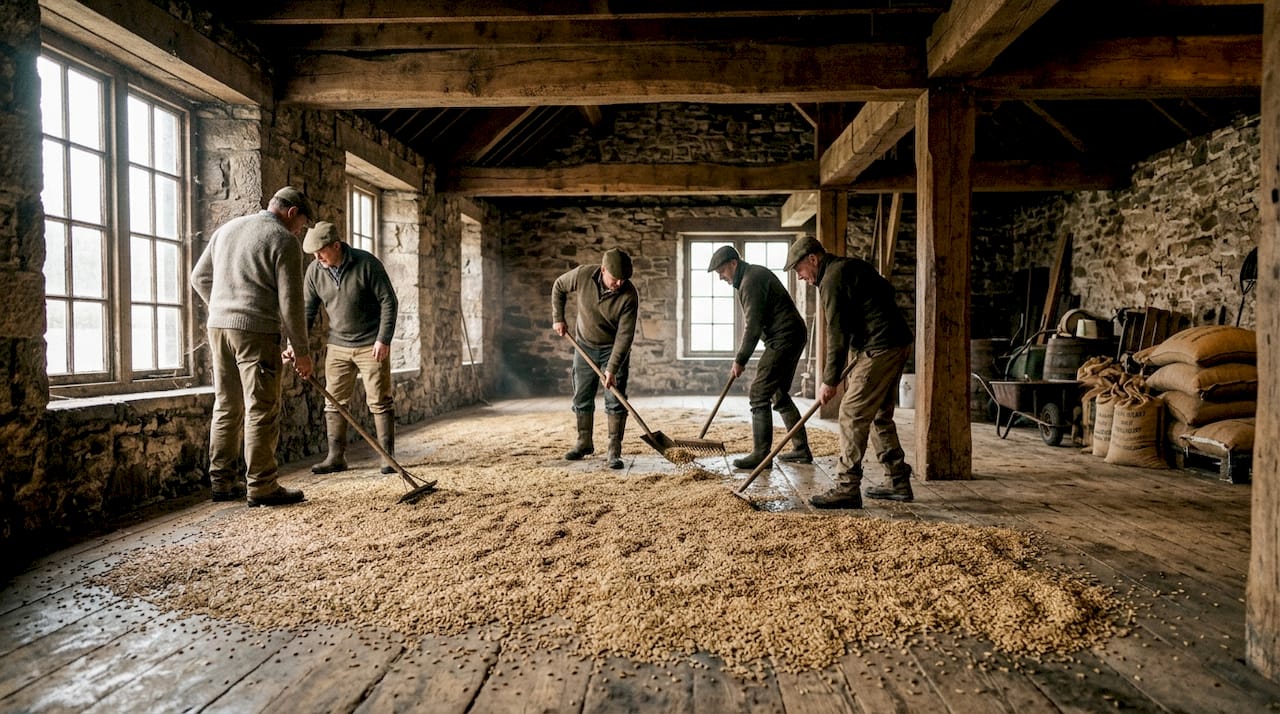
Single malt production
Single malt Scotch starts with malted barley, water, and yeast. The barley is malted by soaking it in water and allowing it to germinate, which converts starches into fermentable sugars. Distillers then mash the malted barley, ferment it, and distil it twice in copper pot stills. Every drop must come from a single distillery. The spirit then matures in oak casks for a minimum of three years in Scotland.
One widely held misconception is that “single malt” means the whisky comes from a single cask. It does not. Single malt is typically a vatting of many barrels from the same distillery, blended by the distiller to hit a consistent house style. The “single” refers to the distillery, not the barrel.
Grain whisky and the blending process
Grain whisky uses wheat or corn instead of malted barley. It is produced in continuous column stills, which run far more efficiently than pot stills. Grain whisky is lighter in flavour and cheaper to produce than malt whisky. That cost efficiency is a key reason blended Scotch can be sold at accessible price points.
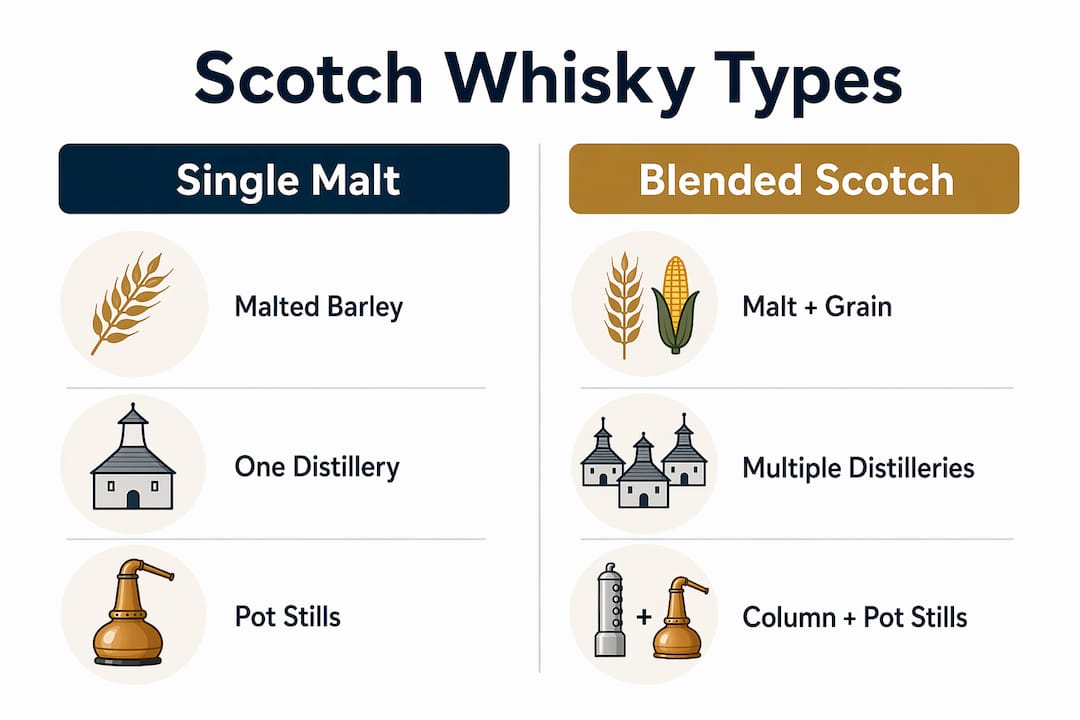
Blended Scotch combines single malt and grain whiskies from multiple distilleries. A master blender selects and proportions dozens of individual whiskies to create a final product that tastes the same bottle after bottle, year after year. That consistency is a genuine craft skill, not a shortcut.
The blended malt category
There is a third category worth knowing. Blended malt Scotch contains only malt whiskies from multiple distilleries, with no grain whisky at all. It sits between single malt and blended Scotch in both complexity and price. Monkey Shoulder is one of the most recognised examples. Understanding single malt versus grain whisky production helps clarify why blended malts occupy this middle ground.
Pro Tip: When reading a label, look for the words “single malt,” “blended malt,” or “blended Scotch whisky.” These are legally defined terms in Scotland, so the label tells you exactly what is in the bottle.
What flavour differences can you expect?
Flavour is where the two styles diverge most noticeably, and where personal preference becomes the only rule that matters.
Single malts showcase the unique character of a single distillery, shaped by local water, the shape of the pot stills, and the type of casks used for maturation. The result is a wide range of distinct flavour profiles:
- Speyside malts (Glenfiddich, Macallan) tend to be fruity, honeyed, and approachable, with notes of apple, pear, and vanilla.
- Islay malts (Laphroaig, Ardbeg) are famous for heavy peat smoke, iodine, and maritime character.
- Highland malts cover a broad range, from light and floral to rich and spiced.
- Lowland malts are typically the lightest and most delicate, often with grassy or floral notes.
- Campbeltown malts carry a briny, oily, and sometimes smoky character that is unlike any other region.
Blended Scotch generally delivers a smoother, lighter, and more consistent flavour. Master blenders craft blended Scotch to appeal to a broad range of palates, which means the sharp edges of any one distillery’s character are softened by the blend. The grain whisky component adds a light, creamy sweetness that rounds out the malt components.
Blended malts sit in an interesting position. Without grain whisky, they retain the depth and texture of malt whisky while drawing on the character of multiple distilleries. The result is often more complex than a standard blend but more accessible than a heavily peated or sherried single malt.
Pro Tip: If you enjoy smoky barbecue flavours in food, start with an Islay single malt. If you prefer lighter, fruit-forward food, a Speyside malt or a quality blended Scotch will suit your palate better. Matching whisky to food preferences is one of the fastest ways to find a style you love.
How do price and value compare?
Price in Scotch whisky is driven primarily by production cost, maturation time, and scarcity. Single malts cost more to produce because pot still distillation is slower and less efficient than column still production. Longer maturation in oak also ties up capital for years or decades.
Entry-level Scotch suitable for beginners typically ranges from $35 to $70 AUD, covering both accessible blends and fruit-forward Speyside single malts. That price range is a practical starting point for building your palate without committing to expensive bottles.
The assumption that single malts always outperform blends in quality is not supported by tasting results. Top-tier blended Scotches scored 95–97 at the 2026 International Wine and Spirits Competition, placing them firmly alongside the best single malts on the market. A high score from a rigorous competition is harder to argue with than a category label.
Well-made blended whiskies can offer superior complexity and value compared to mediocre single malts. Price does not guarantee enjoyment. A $50 blended Scotch from a skilled master blender can outperform a $90 single malt from a distillery having an off year.
For collectors and enthusiasts chasing rare expressions, aged single malts from distilleries like Springbank, GlenDronach, or Glenfarclas hold their value and offer unique experiences that no blend can replicate. That is a different kind of value, one measured in rarity and provenance rather than everyday drinking pleasure.
How should you choose scotch for your taste and occasion?
Choosing between a blend and a single malt comes down to three things: your current palate, the occasion, and your budget. There is no wrong answer.
For whisky newcomers, the clearest path forward is to start accessible and build from there:
- Start with a quality blend. A well-regarded blended Scotch gives you a smooth, consistent introduction to the category without overwhelming your palate with intensity.
- Move to a Speyside single malt next. Fruit-forward and approachable, Speyside malts like those from Glenfiddich or Glenlivet are the natural next step for anyone curious about single malt character.
- Try a blended malt for a middle ground. Monkey Shoulder, for example, blends three Speyside malts into a smooth, malt-driven dram that sits between the two main categories.
- Match your whisky to the occasion. Blends work brilliantly in cocktails and highballs because their lighter profile does not fight with mixers. Single malts are better suited to sipping neat or with a small amount of water to open up the aromas.
- Ignore prestige, follow flavour. Focusing on personal flavour preferences rather than marketing labels leads to better choices and more enjoyment.
Gifting is another consideration. A single malt with a clear regional identity (a peated Islay malt, for example) makes a more memorable gift than a generic blend, because it tells a story. For casual entertaining, a quality blended Scotch is the practical choice. It pleases a wider range of guests and costs less per pour.
Exploring the full range of types of Scotch brands by flavour profile is the most efficient way to map your preferences. The best whiskies for beginners cover both categories and give you a structured path through the options.
Key takeaways
Single malt Scotch and blended Scotch are defined by their composition and production method, and neither category is inherently superior to the other.
| Point | Details |
|---|---|
| Definition matters | Single malt comes from one distillery using malted barley; blended Scotch mixes malt and grain from multiple distilleries. |
| Blends dominate the market | Blended Scotch accounts for about 90% of global Scotch sales, reflecting its broad appeal and consistent quality. |
| Flavour drives the choice | Single malts show distinct distillery character; blends offer smoother, more consistent profiles suited to a wider palate. |
| Price does not equal quality | Top blended Scotches scored 95–97 at IWSC 2026, proving premium blends rival single malts in complexity. |
| Start accessible, then explore | Beginners should try a quality blend or Speyside single malt in the $35–$70 AUD range before moving to more complex expressions. |
The blend versus malt debate misses the point
I have spent years tasting across both categories, and the most common mistake I see is whisky drinkers treating “single malt” as a quality guarantee. It is not. The category tells you where the whisky came from and how it was made. It says nothing about whether the distiller did a good job.
Some of the most memorable drams I have had were blended Scotches from master blenders who spent decades learning how to balance dozens of whiskies into something greater than the sum of its parts. That craft deserves more respect than it typically gets. The whisky world has a habit of awarding prestige to single malts by default, and that bias costs drinkers real enjoyment.
My honest advice is to stop asking “blend or single malt?” and start asking “what flavour am I after?” A smoky, coastal single malt from Islay and a smooth, honeyed blend are not competing for the same occasion. They are different tools for different moments. The drinker who understands that gets far more out of their whisky collection than the one chasing labels.
The industry is also shifting. Blended malts in particular are attracting serious attention from distillers who want the complexity of malt whisky without the constraints of a single distillery’s character. That category is worth watching closely over the next few years.
— Brendan
Scotch whiskies worth adding to your collection
Whether you are drawn to the depth of a single malt or the balance of a well-crafted blend, Uisuki.com.au has both covered.

The Hobart Whisky Bourbon Matured single malt is a standout Australian expression, matured in bourbon casks and finished in rum barrels for a layered, fruit-driven profile. For those drawn to blends, the Ichiros Malt and Grain Limited Edition World Blended Whisky at 48% ABV shows exactly what a skilled blender can achieve across multiple grain types and origins. Both bottles reflect the quality and range available at Uisuki.com.au, where the selection spans Scotland, Japan, Australia, and beyond.
FAQ
What is the main difference between blended and single malt Scotch?
Single malt Scotch is made from 100% malted barley at one distillery using pot stills. Blended Scotch combines single malt and grain whiskies from multiple distilleries to create a consistent, approachable flavour.
Does single malt mean the whisky comes from one cask?
No. Single malt refers to a single distillery, not a single cask. Most single malts are a vatting of many barrels from the same distillery, selected to achieve a consistent house style.
Is blended Scotch lower quality than single malt?
Not necessarily. Top blended Scotches scored 95–97 at the 2026 International Wine and Spirits Competition, matching the quality of many premium single malts. Quality depends on the skill of the maker, not the category.
What is a blended malt Scotch whisky?
A blended malt contains only malt whiskies from multiple distilleries, with no grain whisky. It sits between single malt and blended Scotch in complexity and price, and Monkey Shoulder is one of the best-known examples.
How should a beginner choose between blended and single malt Scotch?
Start with a quality blended Scotch or a fruit-forward Speyside single malt in the $35–$70 AUD range. Match the style to your food flavour preferences, then experiment across regions and categories to build your palate.