

TL;DR:
- Top Japanese whiskies emphasize flavor harmony and restrained complexity over boldness. They are built on cask influences like mizunara oak, sherry, and bourbon, creating distinct profiles. Accessible options like Nikka From The Barrel and Hibiki Harmony offer quality and value for new drinkers.
Japanese whisky is defined by precision, restraint, and a blending philosophy that treats flavour harmony as the highest goal. The top Japanese whiskies available today span a wide range, from age-statement single malts to no-age-statement (NAS) blends that rival expressions twice their price. Whether you are new to the category or deepening a serious collection, understanding what separates a great Japanese whisky from a good one will sharpen every purchase you make.
What makes top Japanese whiskies stand out?
Japanese whisky is built on quiet complexity. Where Scotch often leads with bold peat or sherry, Japanese whisky favours restraint. Master blenders layer cask influences so that no single element dominates, creating what experts describe as a perfect flavour harmony.
Three cask types define most of the flavour vocabulary in this category:
- Ex-bourbon casks deliver vanilla, honey, and light caramel.
- Sherry casks add dried fruit, spice, and depth.
- Mizunara oak casks contribute incense, sandalwood, and a distinctive Japanese character found nowhere else in the whisky world.
The category also splits into four main styles. Single malts come from one distillery using malted barley. Blended malts combine single malts from multiple distilleries. Grain whiskies use other cereals and tend toward lighter, creamier profiles. NAS expressions carry no age statement but are not lower in quality. Age statements in Japanese whisky do not always signal better quality. Many NAS blends are carefully crafted to deliver complex, harmonious profiles that equal or surpass older age statements.
Pro Tip: When reading a Japanese whisky label, look for the cask type listed in the tasting notes. Mizunara oak is rare and expensive to source, so its presence usually signals a more considered, premium expression.
1. Yamazaki 12 Year Old
Yamazaki 12 Year Old is the benchmark single malt Japanese whisky. Experts regard it as the epitome of the Japanese whisky style, valued for its quiet complexity over boldness. The nose opens with light honey and stone fruit, while the palate delivers a gentle mizunara oak influence that lingers without overpowering.
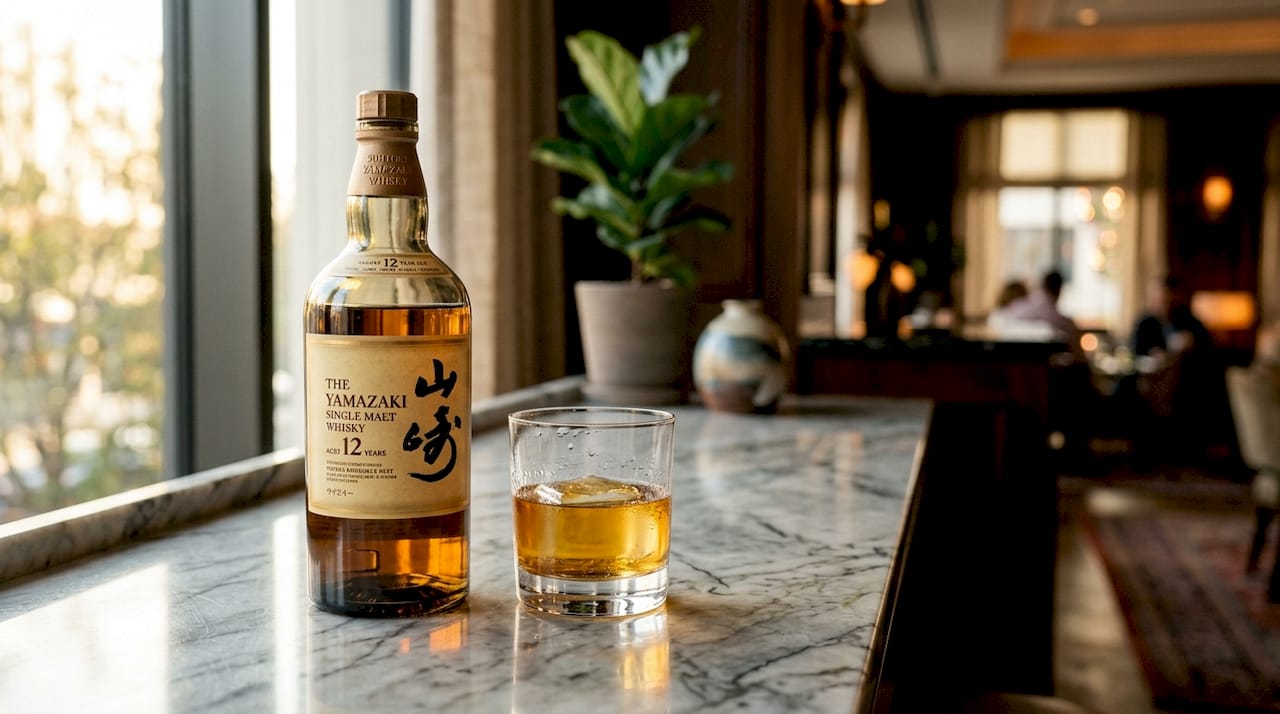
Bartenders consistently recommend Yamazaki 12 as the ideal introduction to the category. Its balance and gentle complexity make it approachable for curious drinkers while still rewarding experienced palates. Pricing starts around £150 and can exceed £500 for older expressions, reflecting both its reputation and limited availability.
2. Hibiki 21 Year Old
Hibiki 21 Year Old is considered a modern icon and the pinnacle of Japanese blended whisky. Experts cite its perfect layering of orchard fruit, sandalwood, and mizunara spice as a masterclass in blending. No single element overshadows the others. The result is a whisky that feels effortless despite the extraordinary craft behind it.
This is the bottle to reach for when you want to understand what Japanese blending philosophy achieves at its peak. It is not a casual purchase, but for a special occasion or a serious addition to a collection, nothing in the blended category comes close.
3. Hibiki Harmony
Hibiki Harmony is the most accessible entry point into the Hibiki range. As a NAS expression, it draws on whiskies aged in five different cask types, including mizunara oak, to build a profile of white flowers, honey, and light wood spice. It delivers genuine complexity without the premium price of an age-statement bottle.
Hibiki Harmony is praised for its complexity per dollar compared to many aged malts. That makes it one of the most practical choices for drinkers who want quality without committing to a collector-level spend. It also works beautifully in a highball, which is the most popular way to drink whisky in Japan.
4. Nikka From The Barrel
Nikka From The Barrel is the best value Japanese whisky on the market. Bottled at 51.4% ABV and typically priced between £40–£70, it punches well above its weight in intensity and flavour complexity. The higher ABV means you get more whisky character per sip, and a small amount of water opens it up beautifully.
The profile combines dried fruit, vanilla, and a rich malt backbone. It is popular with both beginners and serious enthusiasts, which is a rare combination. If you are building a home whisky collection and want a bottle that impresses guests without a significant outlay, this is the one.
5. Hakushu 12 Year Old
Hakushu 12 Year Old is the freshest, most distinctive single malt in the Japanese whisky canon. Produced at Suntory’s mountain distillery in the Japanese Alps, it carries a light, herbal smokiness alongside green apple, mint, and forest floor notes. It is unlike anything else in the category.
Drinkers who find Yamazaki too fruit-forward often gravitate to Hakushu for its cooler, more mineral character. The unique flavours of Japanese whisky from this distillery reflect its high-altitude water source and the surrounding forest environment. It is a whisky that genuinely tastes like its place of origin.
6. Yoichi Single Malt
Yoichi Single Malt is the most Scotch-like Japanese whisky available. Produced by Nikka on the northern island of Hokkaido, it uses coal-fired pot stills, a method abandoned by most distilleries worldwide. The result is a peaty, robust single malt with dark fruit, smoke, and sea salt that surprises drinkers expecting the typical Japanese delicacy.
Yoichi suits whisky lovers who enjoy Islay Scotch but want to explore how Japanese craftsmanship handles smoke. The distillery’s cold, maritime climate mirrors parts of Scotland, and that geography shows up clearly in the glass. It is one of the most distinctive Japanese distilleries in the world for good reason.
7. Chichibu expressions
Chichibu is the most exciting distillery in Japan right now. Founded in 2008 by Ichiro Akuto, it produces small-batch single malts that have attracted serious collector attention globally. The distillery uses a mix of Japanese and imported casks, including rare mizunara oak, to create expressions with unusual depth for their age.
Chichibu releases are limited and sell out quickly. The Ichiro’s Malt and Grain Limited Edition world blended whisky at 48% ABV is one example of the creative, boundary-pushing work coming from this producer. For drinkers who want something genuinely rare and forward-thinking, Chichibu is the name to follow.
8. Mars Maltage Cosmo
Mars Maltage Cosmo is the best Japanese whisky for Scotch lovers making the transition. The Mars distillery, located in the Japanese Alps, produces a blended malt that mirrors the approachable, fruity profile of a Highland Scotch. It is noted for appealing to Scotch drinkers seeking similar profiles in a Japanese expression.
The flavour profile runs through dried apricot, light toffee, and a gentle spice finish. It is not the most complex bottle on this list, but it serves a clear purpose. If someone in your circle loves Scotch but has never tried Japanese whisky, Mars Maltage Cosmo is the bottle that will convert them.
How to choose Japanese whisky based on your taste
Choosing the right bottle comes down to three questions: How much smoke do you want? How much fruit? And what is your budget?
- Light and fruity: Yamazaki 12, Hibiki Harmony, Mars Maltage Cosmo.
- Fresh and herbal: Hakushu 12 Year Old.
- Smoky and intense: Yoichi Single Malt.
- Rich and complex blends: Hibiki 21 Year Old.
- Best value: Nikka From The Barrel.
- Collector and rare releases: Chichibu expressions.
Cask finish also shapes the experience significantly. A sherry cask finish adds richness and dried fruit. A mizunara finish adds incense and spice. A bourbon cask finish keeps things lighter and sweeter. Understanding cask influence is the fastest way to predict whether a bottle will suit your palate. A complete tasting guide can help you map your preferences before you buy.
Pro Tip: If you are new to Japanese whisky, start with Nikka From The Barrel or Hibiki Harmony. Both are widely available, genuinely excellent, and give you a clear reference point for everything else in the category.
Key takeaways
The best Japanese whiskies reward drinkers who prioritise balance and craftsmanship over age statements and price tags alone.
| Point | Details |
|---|---|
| Yamazaki 12 is the benchmark | It is the ideal starting point for single malt exploration and the most cited introduction by experts. |
| NAS does not mean lower quality | Hibiki Harmony and Nikka From The Barrel prove that no-age-statement whiskies can match aged expressions in complexity. |
| Cask type drives flavour | Mizunara oak, sherry, and bourbon casks each create distinct profiles worth understanding before you buy. |
| Chichibu leads emerging producers | Small-batch releases from Chichibu represent the most exciting new direction in Japanese whisky. |
| Value exists at every price point | From £40 Nikka to £500-plus Yamazaki aged expressions, quality Japanese whisky spans a wide range. |
Brendan’s take on buying Japanese whisky in 2026
The biggest mistake I see whisky drinkers make with Japanese whisky is chasing age statements as a proxy for quality. A 21-year-old Hibiki is extraordinary, but it is not better than Hibiki Harmony in every context. The NAS bottle is more versatile, more available, and honestly more interesting to drink on a Tuesday night.
The second mistake is buying for investment before you have developed a palate. Mizunara-finished bottles carry unique collector value driven by rarity and wood influence, not always by what is in the glass. Buy those when you understand what you are tasting, not before.
My honest recommendation is to spend your first few hundred dollars on variety. Buy Nikka From The Barrel, Hakushu 12, and Hibiki Harmony. Taste them side by side. That exercise will teach you more about Japanese whisky styles than any amount of reading. Once you know what you love, then you spend up.
— Brendan
Premium Japanese whiskies, curated and ready to order
Uisuki.com.au stocks a carefully selected range of Japanese whiskies, from accessible everyday bottles to limited-edition collector releases. Every bottle is vetted for quality and authenticity, so you are never guessing about what you are buying.
The Ichiro’s Malt and Grain Limited Edition world blended whisky is currently available, alongside a rotating selection of rare and hard-to-find expressions. Uisuki ships across Australia with free shipping thresholds and multiple payment options. If you are looking for a specific bottle that is not listed, the team welcomes personalised sourcing requests. Browse the full Japanese whisky range and find your next favourite bottle.
FAQ
What is the best Japanese whisky for beginners?
Nikka From The Barrel and Hibiki Harmony are the two best starting points. Both are widely available, genuinely complex, and priced accessibly relative to their quality.
Are no-age-statement Japanese whiskies worth buying?
Yes. NAS whiskies like Hibiki Harmony deliver complexity that rivals many aged expressions. Japanese blending expertise means NAS does not indicate lower quality.
What makes mizunara oak special in Japanese whisky?
Mizunara oak is native to Japan and imparts incense, sandalwood, and spice notes found in no other cask type. Its rarity makes it a marker of premium and collector-grade expressions.
How do I choose between a single malt and a blended Japanese whisky?
Single malts like Yamazaki 12 showcase one distillery’s character. Blended whiskies like Hibiki 21 combine multiple casks and distilleries for greater harmony and layered complexity.
Which Japanese distillery produces the most collectible releases?
Chichibu, founded in 2008, produces the most sought-after limited releases in Japan. Its small-batch, mizunara-influenced expressions attract serious collector attention globally.