

TL;DR:
- Most Scotch whisky must be made from malted barley, with other whole cereals allowed depending on the category.
- The term “single” refers exclusively to the distillery, not the grain type, and blends combine malt and grain whiskies to achieve desired flavors.
Most whisky lovers know Scotch is tied to barley. But scotch is made from what grain, exactly, is a question with a more layered answer than you’d expect. The reality is that the grain composition of Scotch whisky varies significantly depending on the category, and legally permitted cereals extend well beyond barley alone. Whether you’re reaching for a smoky Islay single malt or a silky blended Scotch at your local bottle-o, understanding the grain story behind the bottle transforms how you read labels, taste differences, and make smarter choices at the shelf.
Table of Contents
- The legal foundation: malted barley as the core grain
- Single malt versus single grain: differing grain architectures
- Common cereal grains used alongside malted barley
- Understanding blended Scotch: the grain mix behind the flavour
- Interpreting Scotch labels: how grain types affect your choice
- The grain question decoded: fresh insights for enthusiasts
- Explore quality Scotch whiskies featuring authentic grain profiles
- Frequently asked questions
The legal foundation: malted barley as the core grain
Scotch whisky is defined and protected by one of the most exacting legal frameworks in the spirits world. The Scotch Whisky Regulations 2009 establish that malted barley must be used in all Scotch whisky production, and only whole grains of other cereals may be added alongside it. No non-cereal ingredients can substitute for the cereal base. Full stop.
This is worth pausing on. Not processed flour, not cereal extracts, not anything derived from grain that isn’t the whole grain itself. The law draws a sharp line.
“Scotch whisky is made from malted barley (i.e., malted barley must be used); for most Scotch categories, the law allows only whole grains of other cereal(s) to be added — no non-cereal ingredients replace the cereal base.”
Here is what the legal framework means in practical terms for grain use:
- Malted barley is mandatory across every single Scotch category without exception
- Other whole cereal grains (such as wheat or maize) may be added in certain categories
- No non-cereal ingredients can substitute for or replace the grain base
- Fermentation must be initiated by the grain’s own naturally occurring enzymes, primarily sourced from the malted barley
This provides important clarity against one of the most common misconceptions floating around: that Scotch is either “just barley” or that you can use any ingredients you like as long as it’s distilled in Scotland. Neither is true. If you want to go deeper on this, our authentic Scotch grains guide lays out the full picture behind what grains make genuine Scotch.
Now that you understand Scotch legally requires malted barley, let’s explore how this base grain applies across different Scotch whisky categories.
Single malt versus single grain: differing grain architectures
This is where the confusion really kicks in for most enthusiasts. When you see the word “single” on a Scotch label, it is tempting to assume it refers to a single grain or even a single cask. It means neither. The word “single” refers exclusively to the distillery of origin, meaning the whisky was produced at one distillery.
The grain architecture, however, differs dramatically between the two categories. Single malt vs grain differences come down to this: Single Malt must use only malted barley in its mash, while Single Grain must include malted barley but may also incorporate other whole cereal grains.
| Feature | Single malt Scotch | Single grain Scotch |
|---|---|---|
| Grain base | 100% malted barley | Malted barley plus other cereals |
| Common additional grains | None | Wheat or maize (corn) |
| Still type | Pot still | Column still (Coffey still) |
| Distillery origin | One distillery | One distillery |
| Flavour character | Rich, complex, grain-forward barley | Lighter, smoother, often sweeter |
The still type is not just a production detail — it’s the key to understanding how grain composition translates into flavour. Pot stills used for Single Malt retain more of the grain’s character through distillation. Column stills used for Single Grain produce a lighter, higher-ABV spirit where the cereal grain blend softens the profile considerably.
Key points to remember when reading a label:
- “Single” always means one distillery, never one grain type or one cask
- Single Malt is the only Scotch category restricted entirely to malted barley
- Single Grain opens the door to a broader cereal palette
- Both categories are subject to the same ageing and geographic requirements as all Scotch
Pro Tip: If you want to taste the pure character of malted barley with nothing else in the grain bill, reach for a Single Malt. If you’re curious how wheat or maize changes the profile, a single grain whisky guide will point you toward some eye-opening bottles.
Common cereal grains used alongside malted barley
Having compared the main Scotch categories, it’s important to understand which specific grains supplement malted barley in production and why they matter.
In Single Grain and blended Scotch production, the dominant additional cereals are wheat and maize (also called corn in some markets). Most operating grain distilleries rely on one or the other as the bulk of their mash bill. Wheat or maize make up the majority of the grain bill at most grain distilleries, with malted barley included specifically to supply the enzymes needed for fermentation.
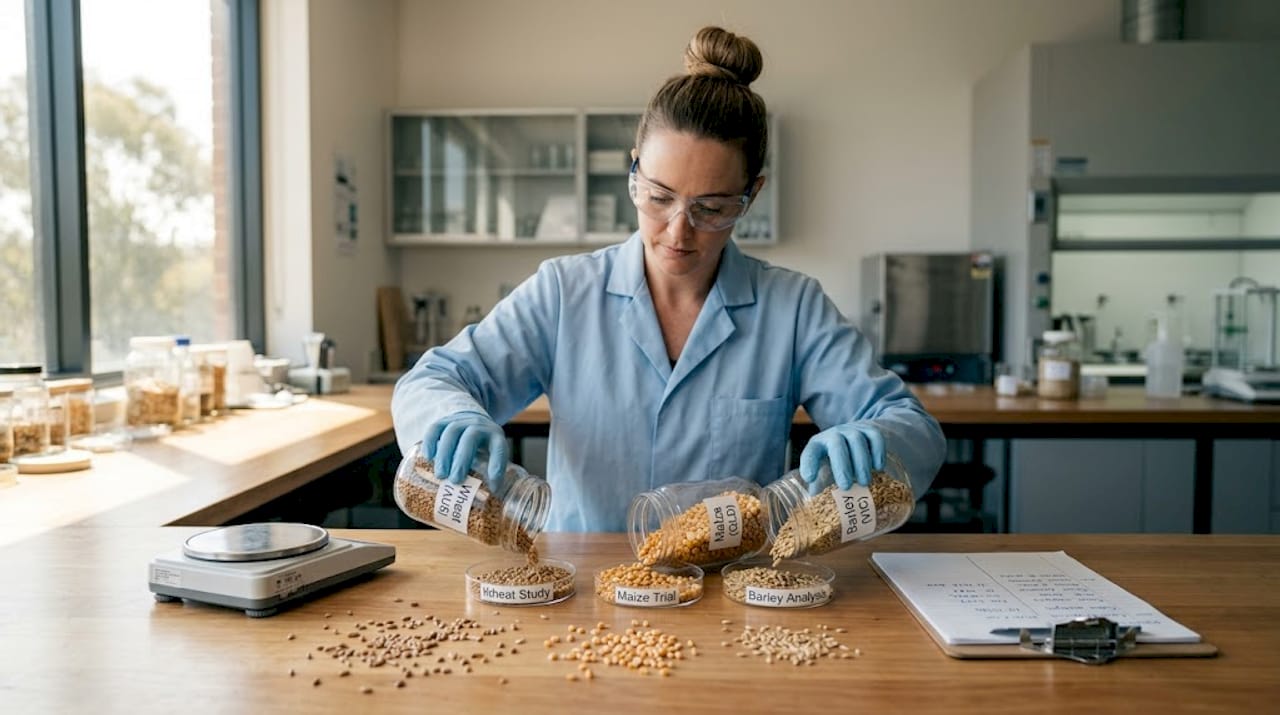
This enzymatic role of malted barley is something a lot of enthusiasts overlook entirely. During mashing, the enzymes naturally present in malted barley (primarily amylase enzymes) convert the starches in both the barley and the added cereal grains into fermentable sugars. Without malted barley, you simply cannot complete fermentation. It is not merely traditional — it is biochemically necessary under current production regulations.
How each grain contributes to the whisky grain types and flavour profile:
- Malted barley: nutty, biscuity, sometimes fruity character; provides fermentation enzymes
- Wheat: contributes a softer, slightly sweet, creamy profile; common in many Lowland grain distilleries
- Maize: delivers a rounder sweetness with a starchy backbone; used historically at several Scottish grain distilleries
Pro Tip: When comparing a wheat-dominant grain Scotch against a maize-dominant one, look for the textural difference first. Wheat tends to produce a slightly lighter mouthfeel, while maize adds a rounder, more viscous quality on the palate. It is a subtle but detectable distinction once you know what to look for.
Understanding blended Scotch: the grain mix behind the flavour
Now that you know about the grains used individually, let’s see how Scotch blends use these grain whiskies to craft consistent flavour profiles.
Blended Scotch is the world’s most consumed style of Scotch, and for good reason. It is designed for balance and accessibility. The blend brings together malt whisky (from pot stills, using only malted barley) and grain whisky (from column stills, using malted barley with wheat or maize). Blended Scotch combines malt and grain whisky streams to create smoother, balanced flavour profiles that neither style achieves alone.
Here is how the grain composition plays out at the blending stage:
- Malt whiskies from multiple distilleries bring complexity, character, and depth, all driven by malted barley
- Grain whiskies from one or more distilleries supply volume, smoothness, and a lighter cereal sweetness from wheat or maize
- The master blender adjusts the ratio of malt to grain whisky to hit a target flavour profile
- Age statements on blended Scotch reflect the youngest whisky in the blend, not an average
| Component | Grain type(s) | Contribution to blend |
|---|---|---|
| Malt whisky | Malted barley only | Flavour complexity, body, character |
| Grain whisky | Malted barley plus wheat or maize | Smoothness, volume, lighter sweetness |
| Final blend | Mix of both | Balanced, consistent, approachable profile |
Checking out a single grain whisky guide can give you a sharper sense of what the grain whisky component contributes before it disappears into a blend. Tasting a standalone grain whisky first is genuinely one of the best ways to develop your blending literacy.
Interpreting Scotch labels: how grain types affect your choice
Having examined grain use and blends, let’s wrap up by learning how to use labels to choose Scotch whisky based on grain content.
Label literacy is the practical payoff of everything above. Once you understand the grain rules behind each Scotch category, reading a label becomes a genuine window into the whisky’s production. Malted barley is mandatory; beyond that, the grain type varies by category, and misreading “single” remains one of the most persistent sources of confusion among enthusiasts worldwide.
Here is a quick-reference guide to what each label category signals about grain content:
- Single Malt Scotch: Malted barley only, pot stills, one distillery. Expect the most direct expression of barley character
- Single Grain Scotch: Malted barley plus other cereals (usually wheat or maize), column stills, one distillery. Expect a lighter, often sweeter profile
- Blended Malt Scotch: Only malted barley whiskies from multiple distilleries, no grain whisky in the mix. Richer than blended Scotch
- Blended Grain Scotch: Only grain whiskies from multiple distilleries. Rare and worth exploring
- Blended Scotch: Mix of malt and grain whiskies from multiple distilleries. The broadest grain mix of all
For anyone who wants to understand the difference between malt and grain whisky at a deeper level, the malt vs grain whisky difference breakdown is well worth reading before your next purchase.
Pro Tip: When shopping, use the category as a starting point for grain content, then look at the distillery region for flavour cues. A Single Grain from a Lowland distillery using wheat will drink very differently from a blended Scotch where that same grain whisky is paired with peated Islay malts.
The grain question decoded: fresh insights for enthusiasts
Here is something the average whisky article misses entirely. The grain story behind Scotch is not just production trivia. It is a direct map to flavour, category, and the legal integrity that makes Scotch worth seeking out in the first place.
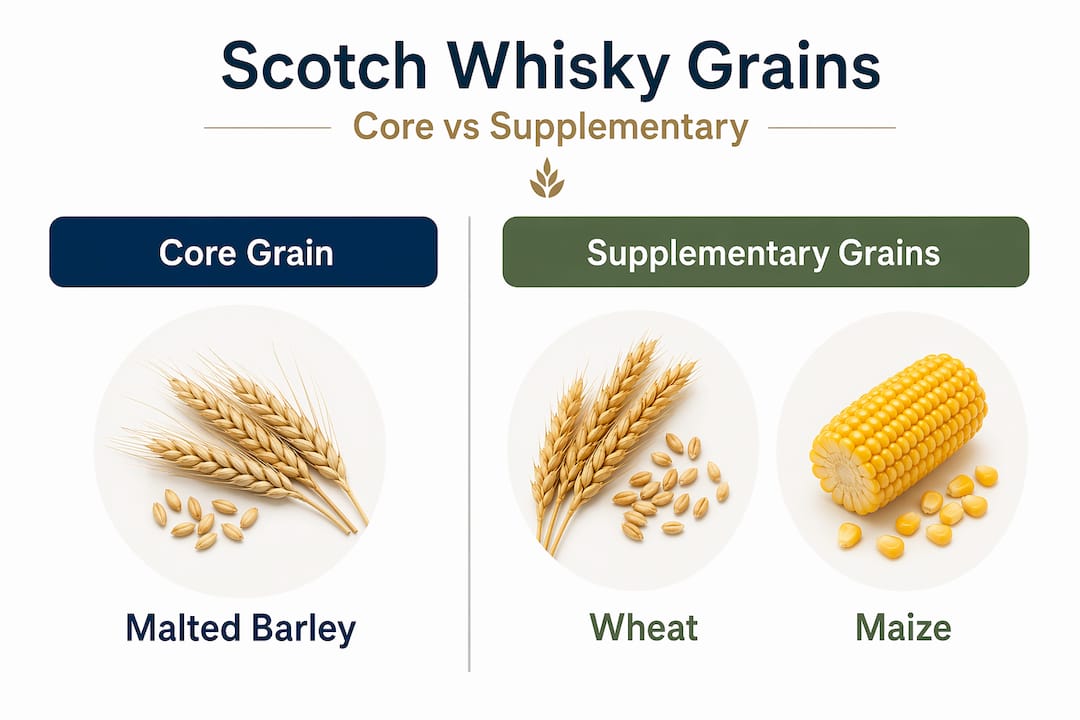
Most people who ask what grain Scotch is made from are actually asking a more interesting question without realising it: why does this bottle taste the way it does? The answer is rooted in grain selection, enzyme function, and still design working together.
The “single” misconception is the one that frustrates us most. Single refers to distillery origin, not a single grain type or a single barrel, and conflating these terms leads enthusiasts to make assumptions about grain content that simply are not accurate. A “Single Grain” Scotch almost certainly contains more than one cereal grain. A “Blended Malt” contains no grain whisky at all despite the word “grain” being right there in the name.
The real insight is this: malted barley is always the anchor, but the grains layered on top of it are what separate categories from one another. A distillery choosing wheat over maize is making a flavour decision, not just a logistical one. The still design then amplifies or softens those grain-derived characteristics further. Understanding this interplay makes you a far sharper taster and a more deliberate buyer.
If you want to test this practically, find a standalone Single Grain Scotch and taste it alongside a Single Malt from a similar region. The contrast in body, sweetness, and texture will teach you more about grain selection than any description can. Our authentic Scotch grains guide offers a thoughtful framework for exactly that kind of comparative tasting.
Explore quality Scotch whiskies featuring authentic grain profiles
If you’re ready to taste the grains in action, Uisuki’s curated collection brings these distinctions to life in the glass. We’ve selected bottles that showcase malted barley’s pure character, the smoothing effect of grain whisky blends, and everything in between.

For pure single malt expression driven entirely by malted barley, the Hobart single malt whisky is a superb Australian example of what a single-grain mash can achieve with exceptional barrel work. If you want to explore how malt and grain whiskies combine across borders, the Ichiro’s malt and grain whisky is a world-class illustration. And for a classic blended Scotch that demonstrates the malt-grain balance with real finesse, the Ardnamurchan blended Scotch is one of our standout recommendations. Shop with the grain knowledge you now have and every bottle tells a richer story.
Frequently asked questions
Is Scotch whisky always made from barley?
Malted barley is mandatory in all Scotch whiskies, but certain categories such as Single Grain and blended Scotch also include other whole cereals like wheat or maize alongside it.
What does ‘single’ mean in single malt or single grain Scotch?
“Single” refers to the distillery of origin, meaning the whisky was produced at one distillery. It has nothing to do with a single grain variety or a single barrel.
Which grains are used in single grain Scotch whisky?
Single grain Scotch includes malted barley as a mandatory component, with other whole cereal grains, most commonly wheat or maize, making up the bulk of the mash bill.
Why do grain distilleries add other cereals besides barley?
Cereals like wheat or maize make up most of the grain bill for production efficiency and flavour balance, while malted barley is kept in the mix specifically to supply the enzymes that drive fermentation.
Can blended Scotch whisky contain grains other than barley?
Yes. Blended Scotch uses malt whisky alongside grain whisky, and grain whisky typically incorporates wheat or maize as the primary cereal alongside the mandatory malted barley component.