

Many whisky enthusiasts believe Scotch is crafted solely from barley, but the reality is far more nuanced. While malted barley forms the foundation of all Scotch whisky, the Scotch Whisky Regulations 2009 permit other whole grains under specific conditions. Understanding which grains distillers use and why they matter transforms how you appreciate and select your drams. This guide clarifies the grain composition rules, explores how different cereals influence flavour profiles, and equips you with practical knowledge to identify grain types when choosing your next bottle.
Table of Contents
- Key takeaways
- Understanding Scotch’s legal grain requirements
- Distinguishing single malt and single grain Scotch whisky
- Role of grains in Scotch flavour and fermentation
- Practical guide to identifying Scotch grains when choosing whiskies
- Explore premium Scotch whiskies with authentic grain profiles
- Frequently asked questions
Key Takeaways
| Point | Details |
|---|---|
| Malted barley essential | Malted barley supplies the natural enzymes needed to convert starches into fermentable sugars during mashing. |
| Only whole grains allowed | Other whole grains may be added but must remain whole and no external enzymes may be used. |
| Single Malt defined | Single Malt Scotch Whisky requires 100% malted barley and distillation in pot stills at a single distillery. |
| Single Grain uses other cereals | Single Grain Scotch includes malted barley plus other cereals such as wheat or corn, typically distilled in column stills. |
Understanding Scotch’s legal grain requirements
The Scotch Whisky Regulations 2009 establish strict parameters for what qualifies as authentic Scotch whisky. These regulations protect the integrity of Scotland’s national spirit whilst allowing controlled variation in grain composition. Every bottle labelled Scotch must meet these foundational standards, regardless of whether it’s a single malt, single grain, or blended expression.
At the core of these requirements sits malted barley. This grain must feature in every Scotch whisky production, serving a dual purpose that extends beyond mere ingredient status. Malted barley supplies the natural enzymes necessary to convert starches into fermentable sugars during the mashing process. Without these enzymes, fermentation cannot occur, making malted barley functionally indispensable rather than simply traditional.
The regulations permit distillers to add other whole grains of cereals to the mash, but with important caveats. These additional grains must remain whole, meaning no flour or processed grain products qualify. More critically, distillers cannot introduce external enzymes to assist fermentation. The malted barley whisky production process must provide all enzymatic activity naturally, ensuring traditional methods remain central to Scotch creation.
This legal framework achieves several objectives simultaneously:
- Preserves authentic Scottish distilling heritage and methods
- Maintains quality standards across all Scotch whisky categories
- Allows controlled innovation through grain selection and blending
- Protects consumer expectations about what constitutes genuine Scotch
- Differentiates Scotch from other whisky styles produced globally
The requirement for whole grains without added enzymes distinguishes Scotch from many other whisky styles. American bourbon, for instance, permits enzyme additions and uses predominantly corn with smaller proportions of other grains. These distinctions matter because they fundamentally shape the flavour profiles and production characteristics that define each whisky category. Understanding whisky grain types flavour value helps you appreciate why Scotch tastes distinctly different from bourbon, Irish whiskey, or Japanese whisky.
Distinguishing single malt and single grain Scotch whisky
The grain composition of Scotch whisky varies dramatically depending on the category, with single malt and single grain expressions representing opposite ends of the spectrum. These classifications reflect both ingredient choices and distillation methods, creating confusion even among experienced whisky drinkers. Clarifying these distinctions helps you understand what you’re tasting and why certain bottles command different price points.
Single Malt Scotch Whisky requires 100% malted barley, distilled in pot stills at a single distillery. This category represents the most traditional and often most celebrated expression of Scotch whisky. The exclusive use of malted barley creates rich, complex flavour profiles ranging from light and floral to heavily peated and maritime. Pot still distillation preserves more congeners and flavour compounds than column distillation, contributing to single malt’s characteristic depth and complexity.
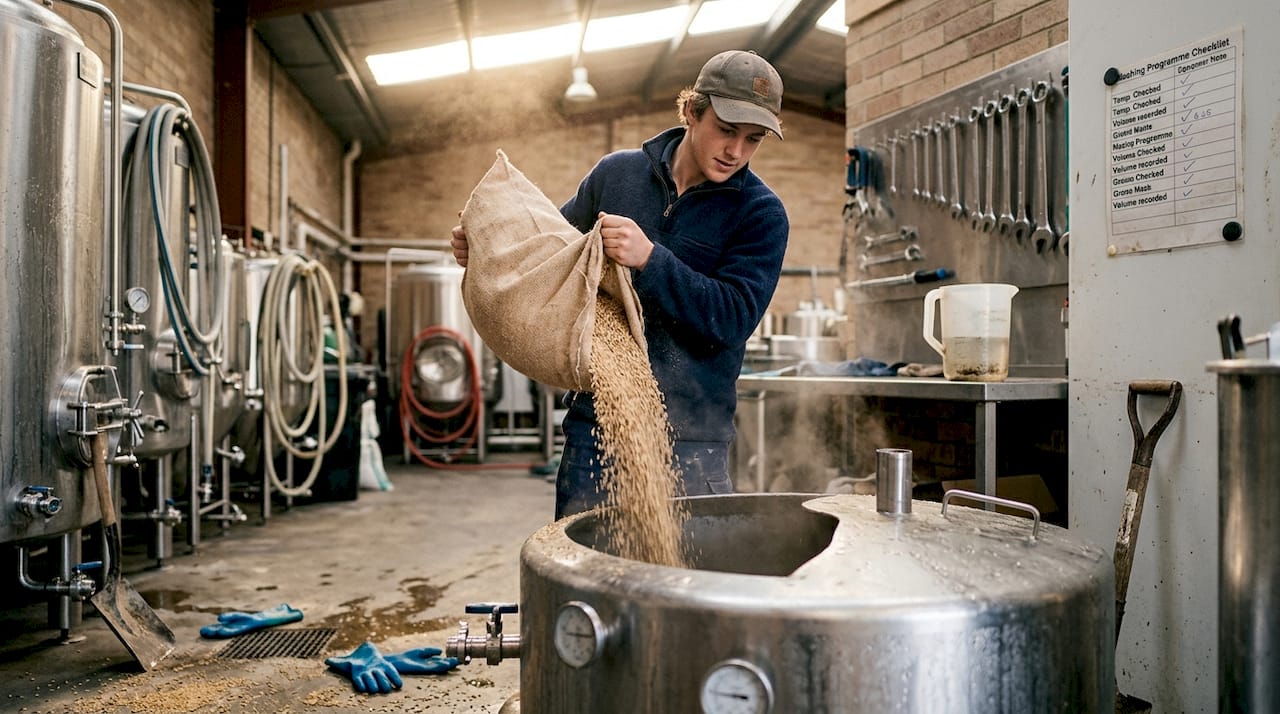
Single Grain Scotch Whisky is made at one distillery using malted barley plus other malted or unmalted cereals like wheat or corn, typically in column stills. Despite the name, single grain whisky usually contains multiple grain types, not just one. The term “single” refers to production at a single distillery, not grain variety. Column stills operate continuously and produce lighter, smoother spirits with fewer congeners than pot stills, creating a cleaner flavour profile.
Pro Tip: Single grain Scotch can technically be made from 100% malted barley if distilled in column stills rather than pot stills. The distillation method, not just grain composition, determines the classification. This unusual scenario rarely occurs commercially but highlights how regulations prioritise production methods alongside ingredients.
Here’s how single malt and single grain Scotch compare across key dimensions:
| Characteristic | Single malt | Single grain |
|---|---|---|
| Grain composition | 100% malted barley only | Malted barley plus wheat, corn, or rye |
| Distillation method | Pot stills exclusively | Column stills typically |
| Flavour profile | Rich, complex, varied by region | Lighter, smoother, more neutral |
| Primary use | Bottled as single malts or premium blends | Primarily used in blended Scotch |
| Price range | Generally higher, especially aged expressions | Usually more affordable |
| Production volume | Lower, batch process | Higher, continuous process |
The single grain whisky guide reveals how these whiskies have gained recognition beyond their traditional role as blending components. Several distilleries now bottle premium single grain expressions that showcase the category’s unique characteristics. These releases challenge preconceptions about grain whisky being inferior to malt whisky, demonstrating how skilled distillers create remarkable spirits regardless of grain composition.
Common grains used in single grain Scotch production include:
- Wheat: contributes soft, gentle sweetness with bread-like notes
- Corn: adds smooth, slightly sweet vanilla characteristics
- Rye: introduces spicy, peppery elements (less common in Scotch)
- Malted barley: provides necessary enzymes and foundational malt character
Blended Scotch whisky combines single malt and single grain whiskies from multiple distilleries, creating consistent flavour profiles that represent the majority of Scotch sales globally. Master blenders select grain whiskies for their smooth, neutral character that allows malt whiskies’ distinctive flavours to shine whilst maintaining drinkability and affordability.
Role of grains in Scotch flavour and fermentation
Grain selection profoundly influences both the production process and final flavour profile of Scotch whisky. Malted barley is essential for enzyme conversion in fermentation, whilst other grains provide lighter and smoother profiles in grain whisky. Understanding these functional and sensory contributions helps you appreciate the craft behind each bottle and predict flavour characteristics based on grain composition.
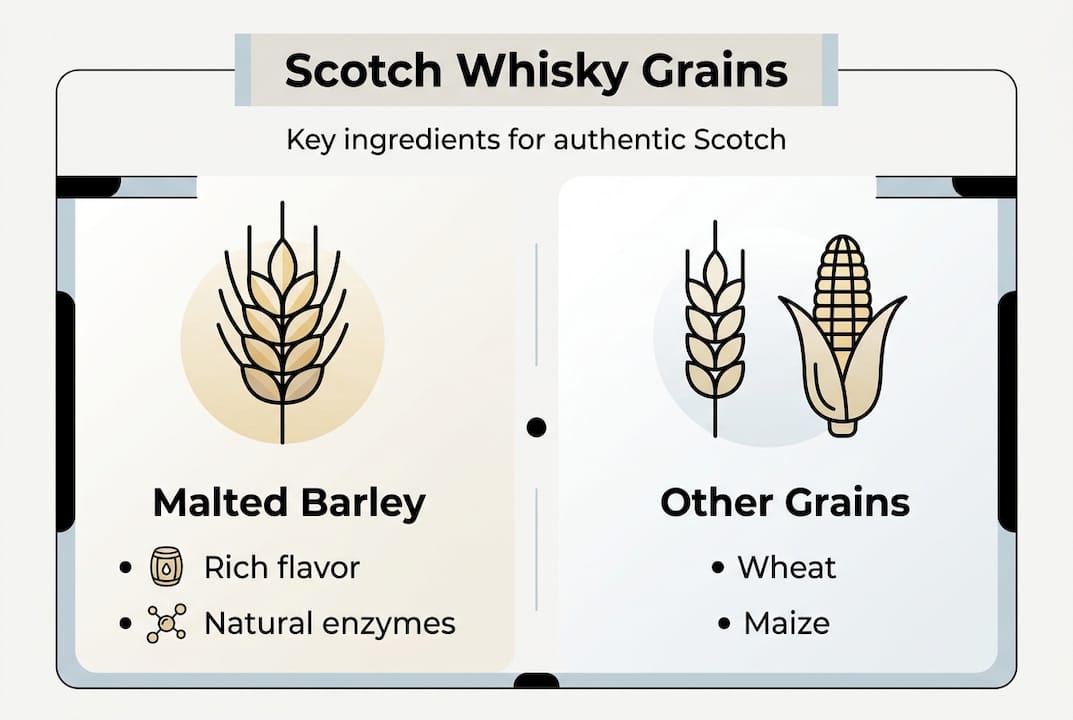
Malted barley undergoes germination before distilling, a process that activates enzymes called amylases and proteases. These enzymes break down starches into fermentable sugars during mashing, enabling yeast to produce alcohol during fermentation. The Scotch Whisky Regulations mandate that malted barley must supply all necessary enzymes naturally, prohibiting external enzyme additions that some other whisky styles permit. This requirement preserves traditional methods and ensures malted barley remains central to every Scotch whisky’s creation.
Beyond its enzymatic function, malted barley contributes distinctive flavour compounds that define Scotch character. Barley imparts rich, biscuity, and cereal notes with varying intensity depending on malting techniques. Heavily peated barley introduces smoky, medicinal phenolic compounds that characterise Islay and some Highland malts. Even lightly kilned barley provides foundational malt sweetness and body that anchors the spirit’s flavour profile.
Other grains serve different purposes in Scotch production:
- Wheat delivers soft, gentle sweetness with subtle bread and pastry notes
- Corn contributes smooth vanilla characteristics and natural sweetness
- Rye adds spicy, peppery complexity though rarely used in Scottish distilling
- Unmalted barley occasionally appears in grain whisky for textural qualities
Pro Tip: The difference between malt and grain whisky extends beyond ingredients to production philosophy. Malt whisky prioritises flavour complexity and regional character, whilst grain whisky emphasises consistency, smoothness, and blending versatility. Neither approach is superior; they serve different purposes in the whisky ecosystem.
“The grain composition determines not just flavour but the entire production approach. Malted barley demands pot still distillation to preserve its complex character, whilst grain whisky’s lighter profile suits continuous column distillation for efficiency and consistency.” — Master Distiller perspective
Grain whisky typically exhibits a milder, smoother palate compared to single malt expressions. This characteristic makes grain whisky invaluable for blending, where it provides a neutral canvas that allows selected malt whiskies to contribute distinctive regional and distillery character. The lighter grain whisky profile also appeals to consumers seeking approachable, easy-drinking spirits without the intensity of heavily flavoured single malts.
Fermentation dynamics shift based on grain composition. Pure malted barley mashes ferment vigorously due to high enzyme concentrations and readily available sugars. Mixed grain mashes containing wheat or corn ferment differently, producing distinct congener profiles that influence new make spirit character. These subtle fermentation variations compound through distillation and maturation, ultimately creating the flavour distinctions between whisky categories.
Practical guide to identifying Scotch grains when choosing whiskies
Armed with knowledge about grain composition and its effects, you can now apply these insights when selecting and tasting Scotch whisky. Reading labels correctly, understanding tasting notes, and recognising production indicators helps you choose bottles aligned with your flavour preferences and appreciate the craft behind each expression.
Follow these steps to identify grain composition from bottle labels:
- Check the category designation: “Single Malt” guarantees 100% malted barley, whilst “Single Grain” or “Blended” indicates multiple grain types
- Read the distillery information: single malt and single grain come from one distillery; blended combines multiple sources
- Look for production details: some labels specify grain types used, particularly for single grain expressions
- Research the distillery: brand websites and whisky grain types explained resources provide detailed composition information
- Examine tasting notes: flavour descriptors often reveal grain influences even when not explicitly stated
Tasting notes associated with different grain profiles help you predict what to expect:
- Malted barley dominant: rich malt sweetness, biscuit, cereal, honey, and varied regional characteristics (peat, fruit, spice)
- Wheat inclusion: soft, gentle, bread-like sweetness with smooth mouthfeel
- Corn inclusion: vanilla, caramel, smooth sweetness with lighter body
- Mixed grain blends: balanced, approachable, harmonious with moderate complexity
This table summarises how grain types correlate with distillation methods and flavour outcomes:
| Grain composition | Typical distillation | Flavour characteristics | Common applications |
|---|---|---|---|
| 100% malted barley | Pot stills | Rich, complex, regional variation | Single malt, premium blends |
| Barley plus wheat | Column stills | Soft, gentle, bread-like | Single grain, standard blends |
| Barley plus corn | Column stills | Smooth, vanilla, sweet | Single grain, everyday blends |
| Multiple grains | Column stills | Balanced, neutral, versatile | Blended Scotch base |
When buying whisky based on grain preferences, consider these practical tips:
- For maximum barley character: choose single malt expressions, particularly from traditional regions
- For smooth, approachable profiles: explore single grain bottlings or quality blended Scotch
- For understanding grain influence: compare single malt against blended versions from the same distillery
- For educational tasting: sample across categories to experience how grains shape flavour
The single grain whisky guide offers deeper exploration of this often overlooked category. Recent years have seen distilleries release premium single grain expressions that showcase wheat and corn’s contributions when given proper maturation and attention. These bottles challenge assumptions about grain whisky being inferior, demonstrating how any grain composition can produce exceptional spirits with skilled production.
Understanding malted barley whisky production provides context for appreciating single malt complexity. The malting process, kilning techniques, and barley variety selection all influence final spirit character before distillation even begins. Distilleries that malt their own barley maintain greater control over these variables, often producing more distinctive house styles than those using commercially malted barley.
Pro Tip: Don’t dismiss blended Scotch as inferior based solely on grain composition. Master blenders create remarkable complexity by harmonising dozens of single malt and grain whiskies, often achieving flavour profiles impossible in single distillery expressions. Many legendary Scotch whiskies are blends that showcase the art of combining different grain compositions for greater than the sum of parts.
Explore premium Scotch whiskies with authentic grain profiles
Now that you understand how grains shape Scotch whisky character, explore expressions that showcase these principles in practice. Whether you prefer the rich complexity of 100% malted barley single malts or the smooth versatility of grain-inclusive blends, curated selections help you experience authentic Scottish distilling traditions.

Discover single malt expressions like Hobart Whisky bourbon matured rum finished single malt, crafted from 100% malted barley using traditional pot still methods. Experience how innovative cask finishing techniques build upon barley’s foundational character to create unique flavour journeys. For those curious about grain whisky’s evolving reputation, explore Ichiro’s malt and grain whisky, which demonstrates how skilled blending harmonises different grain compositions into cohesive, compelling expressions. Traditional blended Scotch like Ardnamurchan MacLean’s Nose showcases how master blenders combine malt and grain whiskies to create balanced, accessible profiles that honour Scottish heritage whilst appealing to modern palates.
Frequently asked questions
What grains are used to make Scotch whisky?
Scotch whisky must contain malted barley, which provides essential enzymes for fermentation and foundational flavour. Single malt Scotch uses exclusively malted barley, whilst single grain and blended Scotch may include wheat, corn, or occasionally rye alongside the required malted barley. All grains must be whole cereals without added enzymes, preserving traditional production methods.
Can single grain Scotch whisky be made without other grains?
Yes, single grain can be 100% malted barley if distilled in column stills rather than pot stills. The classification depends on distillation method, not just grain composition. However, most single grain Scotch includes wheat or corn alongside malted barley to achieve the lighter, smoother profile this category typically offers.
Why is malted barley important in Scotch whisky production?
Malted barley provides natural enzymes that convert starches into fermentable sugars during mashing, making fermentation possible without external enzyme additions. This enzymatic function is legally required in Scotch production, ensuring traditional methods remain central. Beyond functionality, malted barley whisky production contributes distinctive malt sweetness, biscuit notes, and foundational flavour that defines Scotch character.
How do different grains affect Scotch whisky flavour?
Malted barley creates rich, complex malt character with regional variations from peat to fruit notes. Wheat adds soft, gentle sweetness with bread-like qualities and smooth mouthfeel. Corn contributes vanilla, caramel notes, and natural sweetness with lighter body. Grain selection fundamentally shapes whether whisky tastes bold and complex or smooth and approachable.
What’s the difference between single malt and blended Scotch grain composition?
Single malt contains only malted barley from one distillery, distilled in pot stills. Blended Scotch combines single malt whiskies with single grain whiskies from multiple distilleries, incorporating wheat or corn alongside malted barley. This grain diversity allows blenders to create consistent, balanced profiles that showcase malt character whilst maintaining smoothness and affordability through grain whisky inclusion.