

TL;DR:
- Whiskey categories are defined by legal regulations, including origin, grain composition, distillation, and aging methods. Scotch has five legal types, with single malts from one distillery and blended Scotch being the most prominent; blended offers consistency, while single malts showcase regional complexity. American, Irish, Japanese, Canadian, and Australian whiskeys each have distinct styles and production rules that shape flavor profiles, influencing choices for newcomers and collectors alike.
Walk into any bottle shop or browse an online whisky store and you’ll quickly realise that the world of different types of whiskey brands is staggeringly wide. Scotch, bourbon, Irish, Japanese, Australian. Single malts, blends, pot stills. The sheer variety across different brands of whiskey can make even a seasoned drinker’s head spin. This guide cuts through the noise by mapping the major categories, the production rules that define them, and the flavour profiles you can expect, so you can shop, sip, and collect with genuine confidence.
Table of Contents
- Key takeaways
- 1. How whiskey brands are categorised: the foundational criteria
- 2. Scotch whisky brands and their five legal categories
- 3. American whiskey brands: bourbon, rye, and Tennessee
- 4. Irish whiskey brands and the single pot still tradition
- 5. Japanese, Canadian, and emerging Australian whisky brands
- 6. Whiskey brand comparison: choosing by taste, budget, and occasion
- My honest take on building a whiskey collection
- Explore premium whiskies at Uisuki
- FAQ
Key takeaways
| Point | Details |
|---|---|
| Production rules define brands | Legal regulations like grain bills, ageing requirements, and distillation methods shape every whiskey category. |
| Scotch has five legal categories | Single malt, single grain, blended malt, blended grain, and blended Scotch each carry distinct production standards. |
| Single malt means one distillery | “Single malt” refers to the distillery, not a single barrel, with multiple casks vatted to maintain house style. |
| American straight is a quality signal | The “straight” designation guarantees no additives and at least two years in new charred oak. |
| Regional styles shape flavour | Where a whiskey is made, and under which laws, directly determines the colour, aroma, and taste in your glass. |
1. How whiskey brands are categorised: the foundational criteria
Before comparing types of whisky brands, you need to understand what actually separates one category from another. The answer is not just geography, though that matters a great deal.
Several key factors work together to define and differentiate whiskey brands:
- Geographical origin and legal frameworks. Scotch must be made in Scotland. Bourbon must be made in the USA. These are not marketing claims. They are legal protections enforced by national and international trade agreements.
- Grain bill and mash composition. The mix of grains used, whether corn, malted barley, rye, or wheat, defines the base character of the spirit. Bourbon requires at least 51% corn in its mash. Rye whiskey must hit 51% rye grain.
- Distillation method. Pot still distillation retains more congeners and flavour compounds, producing richer, heavier spirits. Column still distillation produces a lighter, cleaner spirit and is typically used for grain whiskies and blends.
- Ageing vessel and duration. The barrel type, its previous contents, and how long the spirit rests inside determine colour, texture, and much of the final flavour. New charred oak barrels are mandatory for bourbon. Scotch must use oak casks for a minimum of 3 years.
- Additives and colouring. Some categories, like straight American whiskeys, prohibit any added colour or flavour. Others permit a small addition of caramel colouring for consistency.
Understanding these criteria is what separates a knowledgeable buyer from someone who just picks the most attractive label.
Pro Tip: When comparing whisky categories and regional styles, always check the legal category on the label before reading any marketing copy. The category tells you far more about what’s in the bottle than the brand story does.
2. Scotch whisky brands and their five legal categories
Scotch is arguably the most tightly regulated and widely imitated whisky style on the planet. The Scotch Whisky Regulations divide it into five legally defined categories, each with its own production rules and flavour profile.
| Category | Distillery source | Primary still type | Typical flavour notes |
|---|---|---|---|
| Single malt | One distillery | Pot still | Fruity, smoky, rich, complex |
| Single grain | One distillery | Column still | Light, sweet, cereal, vanilla |
| Blended malt | Multiple distilleries | Pot still (malts only) | Layered, varied, accessible |
| Blended grain | Multiple distilleries | Column still (grains only) | Rare, light, delicate |
| Blended Scotch | Multiple distilleries | Both | Consistent, smooth, versatile |
Single malt Scotch is often treated as the prestige category, but it is worth understanding what the term actually means. As the research confirms, single malt refers to one distillery, not a single barrel. Most bottles are a marriage of many casks selected for consistency and character. Brands like Glenfarclas, Bruichladdich, and Lagavulin each express a distinct distillery signature. You can explore single malt types across regional styles including Speyside, Islay, Highland, and Lowland.
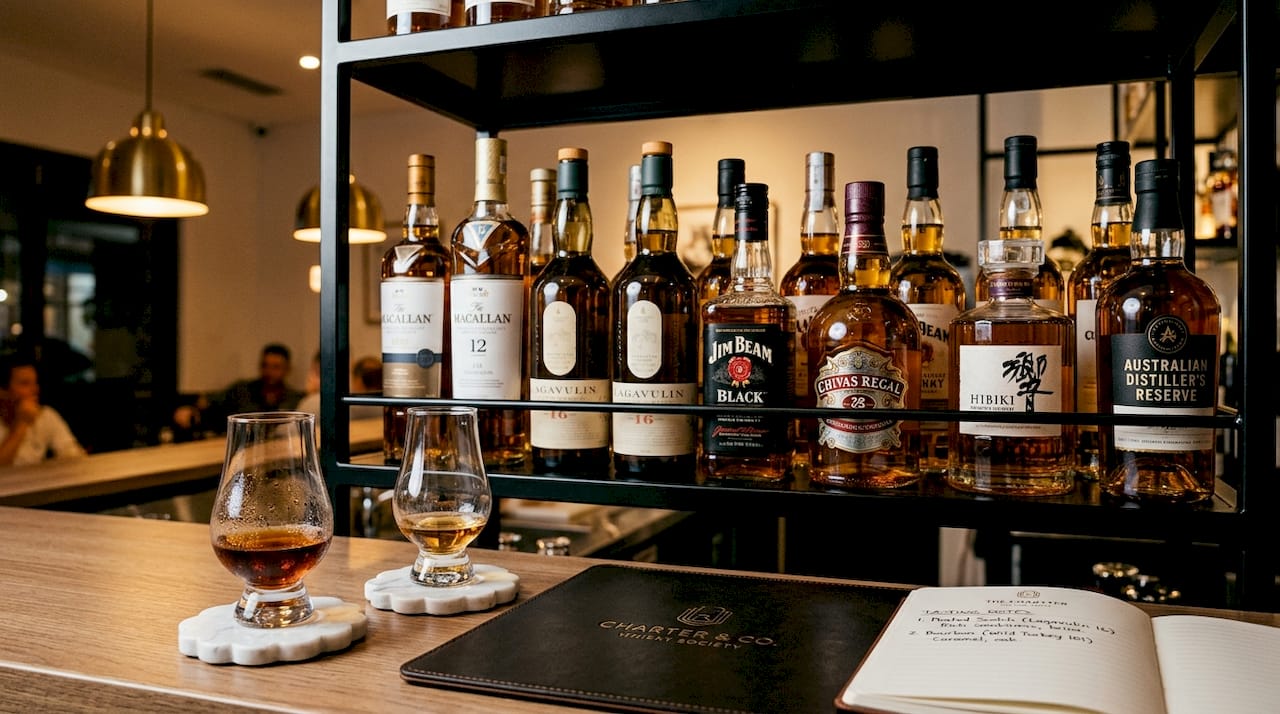
Blended Scotch is the dominant commercial category and deserves more respect than it typically receives. Blended is not inferior. As the evidence shows, single malt versus blended Scotch is a style distinction rather than a quality hierarchy. Johnnie Walker sells over 21 million cases annually, making it the world’s best-selling Scotch brand, and its quality is no accident. Skilled blenders maintain extraordinary consistency across millions of bottles by combining malt and grain whiskies from dozens of distilleries.
Pro Tip: If you want to understand what a great blended Scotch can do, try the Ardnamurchan MacLean’s Nose Blended Scotch at 46% ABV. It demonstrates that blended Scotch at higher strength and without chill filtration can compete directly with premium single malts.
3. American whiskey brands: bourbon, rye, and Tennessee
American whiskey is a world of its own, and the regulatory framework is surprisingly strict. The kinds of whiskey brands produced in the USA are defined by very specific production laws that affect everything from grain ratios to barrel types.
The key American styles and their defining rules are:
- Bourbon. Must contain at least 51% corn in the mash bill, be distilled to no more than 80% ABV, and aged in new charred oak. There is no minimum age for standard bourbon, though the spirit must be aged for some period. Brands like Buffalo Trace, Wild Turkey, and Maker’s Mark typify the category with notes of caramel, vanilla, dried fruit, and toasted oak.
- Straight bourbon. The straight designation requires a minimum of two years ageing and prohibits added colour or flavour. If aged under four years, the age must be stated on the label. This is your quality guarantee when buying American whiskey.
- Rye whiskey. Must contain at least 51% rye grain, delivering a spicier, drier profile than bourbon. Rye had a lengthy decline in the 20th century but is now one of the fastest growing categories in premium whiskey.
- Tennessee whiskey. Technically meets bourbon’s production requirements but goes through an additional charcoal mellowing step known as the Lincoln County Process. This is mandated by Tennessee state law and imparts a distinctly smoother, softer character. Jack Daniel’s and George Dickel are the two most prominent Tennessee whiskey brands.
Pro Tip: When doing a whiskey brand comparison between bourbon and Tennessee whiskey, the charcoal mellowing step is the only practical distinction. Both come from Tennessee, both use corn-heavy mash bills, but the process creates a measurable difference in texture and finish.
4. Irish whiskey brands and the single pot still tradition
Irish whiskey went from near extinction in the mid-20th century to one of the fastest-growing categories in the world. Understanding the types of whiskey brands from Ireland means getting to grips with a genuinely unique style that exists nowhere else.
Irish whiskey is typically triple distilled, which produces a famously smooth and approachable spirit. The main categories are single malt, single grain, blended, and the distinctly Irish category of single pot still. That last one deserves special attention.
Irish single pot still whiskey uses a mash of both malted and unmalted barley, and the origins of this style are rooted in history. Historical tax pressures shaped unique Irish styles, with distillers in the 17th century adding unmalted barley to their mash specifically to reduce the tax burden on malted grain. The result was an accidental innovation that became a defining national style. Under current regulations, single pot still Irish whiskey must contain at least 30% malted and 30% unmalted barley, distilled in a pot still, producing a signature creamy, spicy, and full-bodied character.
Brands like Redbreast, Green Spot, and Yellow Spot are excellent examples of this style. For a solid comparison of how these expressions differ from their Scotch counterparts, the Scotch versus Irish whiskey breakdown is well worth reading.
5. Japanese, Canadian, and emerging Australian whisky brands
The global footprint of whisky continues to expand well beyond the traditional production powerhouses. For anyone exploring all type whisky styles, these three regions offer some of the most exciting drinking right now.
- Japanese whisky. Built on techniques borrowed from Scotch production in the early 20th century, Japanese distilleries have developed a distinctly refined house aesthetic. The emphasis is on balance, subtlety, and complexity. Brands like Nikka, Suntory, and Chichibu produce expressions ranging from delicate and floral to heavily peated and smoky. The scarcity of aged Japanese whisky has driven prices significantly upward since the mid-2010s.
- Canadian whisky. Canadian whiskies tend to be lighter and blended, with rye often used as a flavouring grain rather than the base grain. The result is typically gentler and more approachable than American rye or Scotch, making it popular for cocktails and entry-level drinking. Crown Royal and Canadian Club are the two most internationally recognised names in the category.
- Australian whisky. This is the region with the most exciting growth trajectory right now. Australian distilleries are working with native botanicals, locally grown barley, wine and port cask finishes, and a warm climate that accelerates maturation compared to Scotland or Ireland. Brands from Tasmania in particular, including Lark, Sullivans Cove, and Hobart Whisky, have collected international awards and genuine global recognition.
6. Whiskey brand comparison: choosing by taste, budget, and occasion
With so many varieties of whiskey to choose from, a practical comparison table goes a long way.
| Whiskey type | Flavour profile | Best for | Price range (AUD) |
|---|---|---|---|
| Blended Scotch | Smooth, consistent, light smoke | Beginners, cocktails, gifting | $40 to $150 |
| Single malt Scotch | Complex, regional, layered | Collectors, sipping neat | $80 to $500+ |
| Bourbon | Sweet, vanilla, caramel, oak | Everyday drinking, mixing | $50 to $200 |
| Irish single pot still | Creamy, spicy, medium body | Enthusiasts, palate building | $70 to $250 |
| Japanese whisky | Delicate, balanced, floral | Connoisseurs, special occasions | $100 to $600+ |
| Australian single malt | Fruit-forward, wine cask influence | Collectors, supporting local | $90 to $400 |
For beginners, a quality blended Scotch or an entry-level Irish blended whiskey is the smartest starting point. The price is lower, the flavour profile is forgiving, and both styles teach you the fundamentals of grain character and oak influence without demanding a trained palate. Once you can identify vanilla and dried fruit from oak, smoke from peat, and spice from rye or unmalted barley, you’re ready to move into single malts and pot stills.
For collectors, the rule is simple: buy what you actually want to drink. Whiskey is not wine. Most expressions do not appreciate dramatically in value, and bottles that sit unopened for years often deliver no more joy than ones that were opened and savoured.
Pro Tip: Before buying a bottle as a gift, check whether the recipient prefers their whiskey neat, on ice, or in a cocktail. This tells you far more about the right brand choice than their nationality or how famous the distillery is.
My honest take on building a whiskey collection
I’ve spent years working with whisky enthusiasts at all levels, and the single biggest mistake I see is letting brand prestige override personal taste. Someone spends $300 on a heavily peated Islay single malt because it’s famous, and then discovers they genuinely prefer a smooth, fruit-forward Irish blend that costs $60. That’s not a failure of taste. That’s a failure of process.
What I’ve learned is that the legal definitions behind whiskey styles are not dry regulations. They are the clearest map you have to understanding what will actually be in the glass. A whiskey brand that markets itself as “handcrafted” and “artisanal” with no mention of legal category is almost always hiding something, usually a non-aged blended spirit or a product with added flavouring.
My other strong belief is that Australian whisky is genuinely undervalued by local drinkers. We produce world-class expressions in our own backyard, and the unique cask combinations and climate conditions create flavours that Scotland and Japan simply cannot replicate. If your whisky shelf has no Australian bottles on it, that’s worth changing.
The popular whiskey types from Scotland, Ireland, and America are outstanding starting points, but they are not the finish line. Trust your palate, buy across categories, and never let a famous logo tell you what to enjoy.
— Brendan
Explore premium whiskies at Uisuki
Whether you’re building your first whisky shelf or hunting down a rare expression you’ve been chasing for months, Uisuki stocks a curated range that covers every major category discussed in this article.

Right now, the Hobart Whisky Bourbon Matured Rum Finished Single Malt is one of the standout Australian bottles available, showcasing exactly what makes local production so exciting. For those drawn to world blended styles, the Ichiro’s Malt and Grain Limited Edition is a rare and genuinely collectible bottle. Uisuki ships across Australia with expert guidance available for personalised sourcing requests. Your next favourite whisky is already on the shelf.
FAQ
What are the main different types of whiskey brands?
The main categories are Scotch (five legal sub-types), American bourbon and rye, Irish whiskey including single pot still, Japanese whisky, Canadian whisky, and Australian single malt. Each is defined by its region’s production laws and grain composition.
Is single malt whisky always better than blended?
No. Single malt versus blended is a style distinction, not a quality ranking. Blended Scotch offers consistency and complexity through careful cask selection, while single malt showcases one distillery’s character.
What does “straight” mean on an American whiskey label?
The straight designation guarantees the whiskey was aged at least two years in new charred oak with no added colour or flavouring. It is the clearest quality signal on an American whiskey bottle.
What makes Irish single pot still whiskey unique?
Irish single pot still whiskey uses a mash of at least 30% malted and 30% unmalted barley, distilled in pot stills. The unmalted barley creates the style’s signature creamy texture and spicy character, a tradition dating to 17th-century malt tax avoidance.
How do I choose between popular whiskey types as a beginner?
Start with a quality blended Scotch or an Irish blended whiskey to develop your palate at an accessible price point. Once you can identify oak, fruit, and spice notes, move into single malts, pot stills, or bourbon to deepen your understanding of distinct regional styles.