

Many whisky enthusiasts find themselves confused when distinguishing between Scotch whisky and bourbon, despite these spirits representing fundamentally different traditions and production methods. Understanding these distinctions transforms your appreciation and selection process, allowing you to navigate whisky offerings with confidence. This guide clarifies the origins, production methods, and unique characteristics that define each style, helping you recognise what makes Scotch and bourbon distinct expressions of the whisky maker’s craft.
Table of Contents
- What Defines Scotch Whisky: Origins And Production
- Understanding Bourbon: American Heritage And Mash Bill
- Key Flavour And Production Differences Between Scotch And Bourbon
- How To Enjoy And Appreciate Scotch And Bourbon
- Explore Our Curated Selection Of Scotch And Bourbon Whiskies
- Frequently Asked Questions
Key takeaways
| Point | Details |
|---|---|
| Scotch whisky origins | Must be produced in Scotland using malted barley and aged minimum 3 years in oak barrels |
| Bourbon composition | American whisky containing at least 51% corn and matured in new charred oak barrels |
| Production impact | Regional laws and maturation methods create the distinct flavour profiles of each type |
| Single malt definition | Comes from one distillery using only malted barley, though may blend multiple casks |
| Palate development | High-strength spirits become more enjoyable as your whisky appreciation skills mature |
What defines scotch whisky: origins and production
Scotch whisky represents one of the world’s most regulated spirit categories, with strict legal requirements governing every aspect of production. The spirit must be manufactured exclusively in Scotland, following United Kingdom regulations that protect its distinctive character and quality standards. These laws ensure consistency and authenticity across all Scotch whisky expressions.
The ingredients for single malt Scotch remain remarkably simple yet strictly defined. Distillers may use only three components:
- Malted barley for fermentable sugars
- Water sourced from Scottish springs or lochs
- Yeast to drive fermentation
Maturation requirements form another crucial aspect of Scotch whisky’s legal definition. Every expression must age in oak barrels for a minimum of three years on Scottish soil. This extended maturation period allows the spirit to develop complexity, drawing colour and flavour compounds from the wood whilst mellowing harsh alcoholic notes. Many premium expressions age significantly longer, with 10, 12, or 18 year statements common among quality bottlings.
Geography and production methods profoundly influence the final character of Scotch whisky. Scotland’s five whisky regions produce distinctive styles, from the peaty, maritime expressions of Islay to the lighter, floral whiskies of the Lowlands. Distillery choices regarding malt treatment, fermentation length, still shape, and cask selection all contribute to the remarkable diversity found within the category.
“Scotch whisky is a distinctive product of Scotland, manufactured in Scotland in compliance with the laws of the United Kingdom regulating the manufacture of Scotch whisky for consumption in the United Kingdom.”
Classification within Scotch whisky includes several categories, with single malt and blended variants representing the most common types. Single malts showcase the character of individual distilleries, whilst blended Scotch combines malt and grain whiskies to achieve consistent flavour profiles. Understanding these prized qualities helps enthusiasts appreciate the craftsmanship behind each bottle.
Understanding bourbon: American heritage and mash bill
Bourbon whiskey emerged from American frontier traditions, developing into a spirit with trademark legal definitions that protect its authenticity. Unlike Scotch’s geographical restriction to Scotland, bourbon can be produced anywhere in the United States, though Kentucky remains the spiritual and commercial heartland of bourbon production. Federal regulations establish clear standards that distinguish bourbon from other whiskey styles.
The mash bill, or grain recipe, forms bourbon’s most distinctive requirement. Federal law mandates that bourbon must contain at least 51% corn in its grain mixture. This corn dominance creates bourbon’s characteristic sweetness and full body, setting it apart from other whiskey categories. The remaining 49% typically includes:
- Rye for spicy, peppery notes
- Malted barley to provide enzymes for fermentation
- Wheat for softer, gentler flavour profiles in wheated bourbons
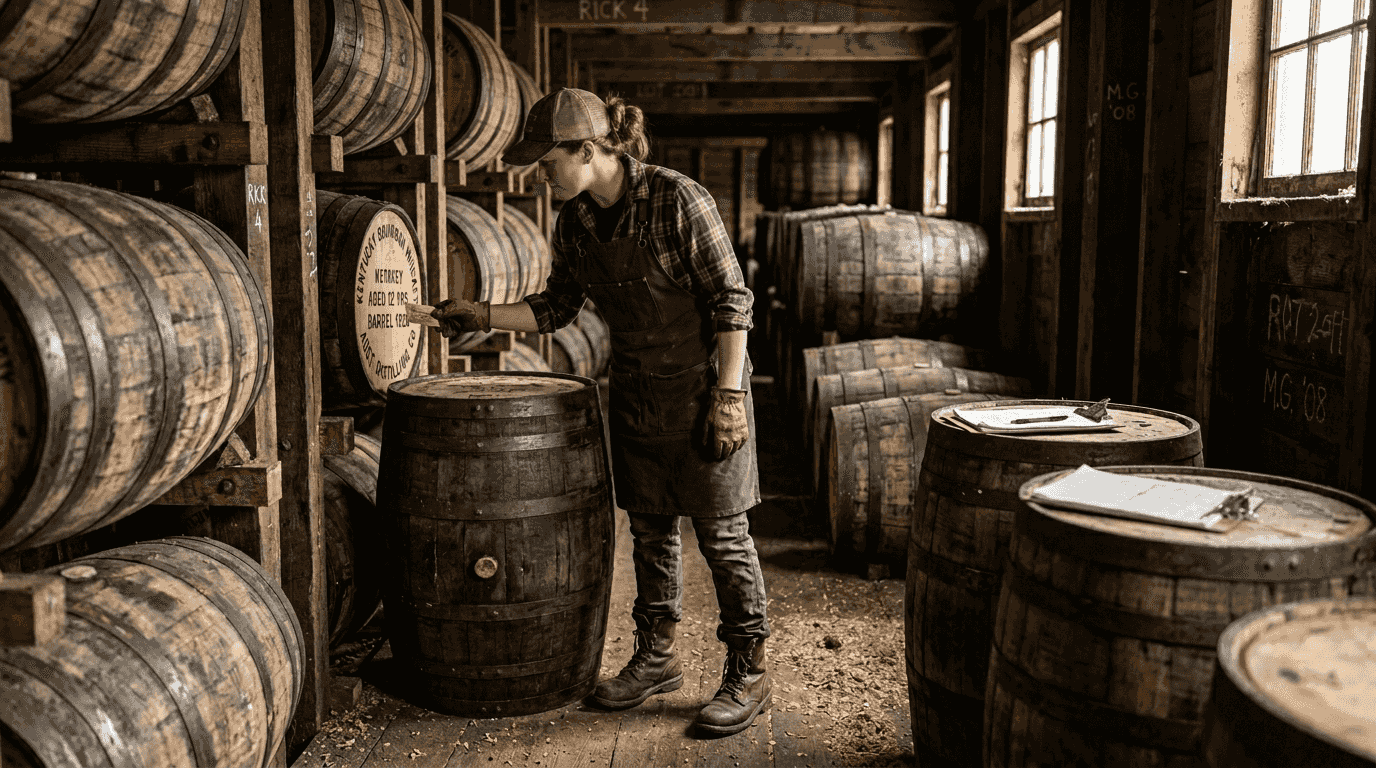
Maturation requirements for bourbon differ significantly from Scotch whisky standards. Bourbon must age in new charred oak barrels, never previously used for any purpose. This requirement emerged partly from economic considerations in America’s timber-rich landscape and partly from the desire to create a distinctly American spirit. The charring process caramelises wood sugars, creating a layer of activated carbon that filters the spirit whilst imparting vanilla, caramel, and toasted oak flavours.
Pro Tip: Understanding a bourbon’s mash bill composition helps you anticipate its flavour profile before tasting, with high-rye bourbons offering spicier notes and wheated versions providing smoother, sweeter characteristics.
No minimum ageing period exists for bourbon, though “straight bourbon” must mature for at least two years. Most quality bourbons age between four and twelve years, with the intense climate variation in Kentucky accelerating maturation compared to Scotland’s temperate conditions. The new charred oak requirement means bourbon extracts colour and flavour more rapidly than Scotch whisky aged in used casks.
Key flavour and production differences between scotch and bourbon
The fundamental ingredients create the first major distinction between these whisky styles. Scotch whisky relies primarily on malted barley, which produces lighter, more delicate spirit characteristics. Bourbon’s corn-dominant mash bill generates a richer, sweeter base that defines the category’s approachability. This grain difference influences everything from fermentation behaviour to final flavour profiles.
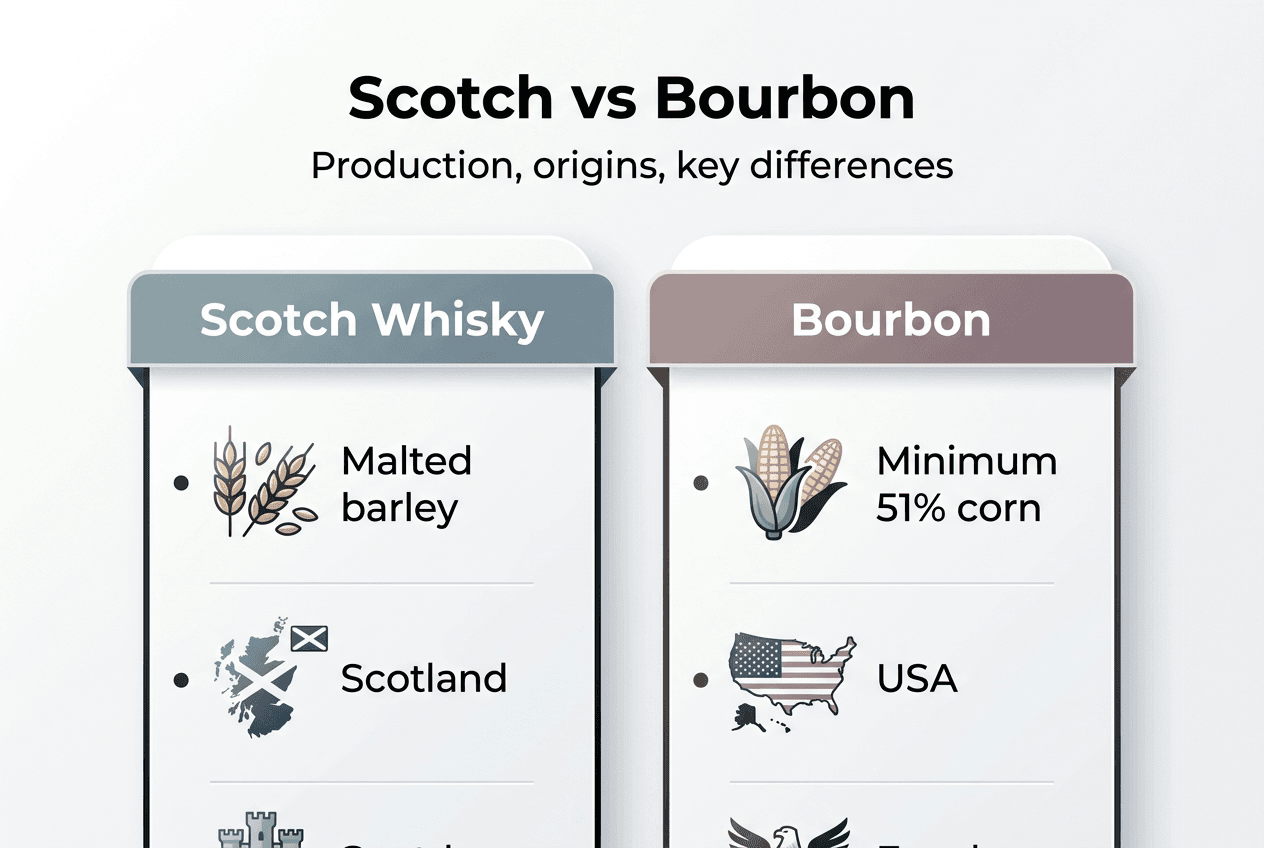
Maturation practices represent another critical divergence. Scotch whisky ages in used oak casks, often previously holding bourbon, sherry, or wine. These seasoned barrels impart subtler wood influence, allowing the distillery character to shine through. Bourbon’s requirement for new charred oak creates more aggressive wood interaction, rapidly developing the spirit’s colour and contributing pronounced vanilla, caramel, and toasted oak notes.
| Characteristic | Scotch whisky | Bourbon |
|---|---|---|
| Primary grain | Malted barley | Minimum 51% corn |
| Barrel type | Used oak casks | New charred oak |
| Minimum age | 3 years | None (2 years for straight) |
| Flavour profile | Varies by region, often complex and subtle | Generally sweeter and fuller-bodied |
| Production location | Scotland only | Anywhere in USA |
Flavour profiles diverge significantly due to these production differences. Scotch whisky expressions range from light and floral to heavily peated and maritime, with regional characteristics playing a major role. Islay malts often showcase smoky, medicinal notes from peat smoke used in malting. Speyside whiskies tend towards fruity, elegant profiles. Highland expressions offer diverse characteristics depending on specific location.
Bourbon typically presents sweeter, more approachable flavours. Common tasting notes include:
- Vanilla and caramel from charred oak interaction
- Corn sweetness providing a smooth foundation
- Spice notes from rye content in the mash bill
- Butterscotch and toffee from wood sugars
- Oak tannins creating structure and dryness
The term single malt in Scotch refers to whisky from one distillery made from 100% malted barley, though master blenders often combine multiple casks to achieve consistency. This practice differs from single barrel bourbon, where each bottle comes from one specific cask, creating variation between batches. Understanding these blending philosophies helps explain why single malt Scotch often shows remarkable consistency whilst single barrel bourbon celebrates individual cask character.
Pro Tip: Pay attention to how maturation vessels and grain composition affect tasting notes, recognising that bourbon’s new oak creates bold, sweet flavours whilst Scotch’s used casks allow more subtle, complex characteristics to develop over extended ageing periods.
Your palate development plays a crucial role in appreciating these differences. Whisky experts recognise that when high-strength spirits no longer burn your throat and receive proper attention, it signals your palate has matured. This tolerance allows you to perceive nuanced flavours that harsh alcohol burn previously masked, opening up both Scotch and bourbon appreciation.
How to enjoy and appreciate scotch and bourbon
Developing your whisky palate requires patience and intentional tasting practices. Start with small sips, allowing the spirit to coat your mouth before swallowing. This technique helps identify individual flavour notes rather than experiencing only alcohol heat. Hold the whisky briefly, noting how flavours evolve from initial contact through the finish.
Proper glassware significantly enhances your tasting experience. Tulip-shaped glasses, such as Glencairn or copita styles, concentrate aromatic compounds at the rim, allowing you to appreciate the whisky’s nose fully. The tapered design captures volatile aromatics that would dissipate in tumbler glasses, revealing complexity you might otherwise miss. Nosing the whisky before tasting prepares your palate for the flavours to come.
Adding water to whisky remains a contentious topic, yet it serves legitimate purposes. A few drops of room temperature water can open up essential characteristics, particularly in cask strength expressions. Water reduces alcohol percentage, allowing volatile flavour compounds to release more readily. Start with one or two drops, taste, then add more if desired. Never feel pressured to drink whisky at full strength if dilution enhances your enjoyment.
Developing your whisky appreciation follows a natural progression:
- Begin with approachable expressions at standard strength (40-46% ABV) to build tolerance
- Explore different styles systematically, comparing bourbon against Scotch and noting distinctions
- Progress to higher proof offerings as your palate adapts to alcohol presence
- Experiment with adding water to discover how dilution affects flavour perception
- Return to earlier favourites periodically to notice how your preferences evolve
- Join tasting groups or attend events to learn from experienced enthusiasts
Pro Tip: Building tolerance to higher ABV expressions strengthens your appreciation by allowing you to perceive subtle flavours that alcohol burn previously obscured, transforming your whisky experience from endurance test to genuine pleasure.
Tasting multiple expressions side by side accelerates learning. Compare a bourbon directly against a Scotch whisky to identify the grain and maturation differences discussed earlier. Notice how bourbon’s corn sweetness contrasts with Scotch’s malt character. Observe the colour differences resulting from new versus used oak. These direct comparisons cement theoretical knowledge through practical experience.
Temperature affects whisky perception significantly. Room temperature (18-22°C) generally provides optimal conditions for appreciating complexity. Chilling whisky suppresses aromatic compounds and flavour perception, whilst warming it in your hands releases additional volatiles. Experiment with temperature to find your preference, recognising that cooler temperatures suit some high-proof expressions whilst others shine at room temperature.
Explore our curated selection of scotch and bourbon whiskies
Having explored the fundamental differences between Scotch whisky and bourbon, experiencing these distinctions firsthand through quality examples brings the concepts to life. Uisuki offers expertly selected expressions that showcase the unique characteristics discussed throughout this guide.

Our Hobart bourbon matured single malt demonstrates how Australian distillers combine traditional Scotch whisky production methods with bourbon barrel maturation, creating a fascinating bridge between styles. For those interested in international blending artistry, Ichiro’s malt and grain showcases how Japanese master blenders honour Scotch traditions whilst creating distinctive expressions. The Ardnamurchan blended Scotch represents classic Scottish blending, offering an accessible introduction to quality Scotch whisky craftsmanship.
Frequently asked questions
What is the main difference between Scotch whisky and bourbon?
Scotch whisky must be produced in Scotland from malted barley and aged in oak barrels for minimum three years, whilst bourbon is manufactured in the United States from at least 51% corn and matured in new charred oak barrels. The differences extend to origin, grain composition, maturation requirements, and resulting flavour profiles. Both represent distinct whisky categories with loyal followings and rich traditions.
Can bourbon be called whiskey in Australia?
Yes, bourbon is recognised internationally as a whiskey type and labelled accordingly in Australia. Australian retailers and consumers use both “whiskey” (with an ‘e’, following American convention) and “whisky” (without an ‘e’, following Scottish convention) depending on the spirit’s origin. When selecting bottles, pay attention to origin and style distinctions rather than spelling variations.
Why does Scotch whisky taste smokier than bourbon?
Many Scotch whiskies use peat smoke during the malting process, particularly expressions from Islay and some Highland distilleries, creating distinctive smoky, medicinal characteristics. Bourbon production methods and grain composition typically produce sweeter, less smoky profiles focused on corn sweetness and oak influence. Not all Scotch tastes smoky, with many Speyside and Lowland expressions offering fruity, floral notes without peat influence.
Is single malt Scotch better than bourbon?
Neither style is objectively “better”, as quality and preference depend on individual taste and specific expressions. Single malt Scotch and bourbon offer fundamentally different experiences, each with premium examples and dedicated enthusiasts worldwide. Both categories include exceptional craft expressions and mass-market offerings, making generalised quality comparisons meaningless. Explore both styles to discover your personal preferences.