

Many whisky lovers confuse bourbon and whiskey as interchangeable terms, yet bourbon operates under strict legal definitions that separate it from other whiskies worldwide. Understanding these distinctions impacts flavour expectations, collecting decisions and purchasing confidence. This guide clarifies the key differences in production, legal requirements and taste profiles, empowering you to make informed choices when building your collection.
Table of Contents
- Legal Definitions And Geographic Origins
- Production Process And Key Requirements
- Flavour Profiles And Barrel Influence
- Labelling Laws And Terms For Collectors
- Practical Tips For Collectors Comparing Bourbon And Whiskey
- Explore Exquisite Bourbon And Whiskey Selections At Uisuki
- Frequently Asked Questions
Key takeaways
| Point | Details |
|---|---|
| Bourbon is a specific type of American whiskey | It must meet strict federal standards including at least 51% corn and ageing in new charred oak barrels. |
| Legal geography matters | Bourbon must be produced in the United States, while whiskey encompasses styles from Scotland, Ireland, Canada and beyond. |
| Production rules differ significantly | Bourbon requires new charred oak barrels and specific proof limits, whereas whiskey has more diverse methods and barrel options. |
| Labelling terms have legal meanings | ‘Straight bourbon’ requires at least two years ageing, helping collectors identify authentic quality and production standards. |
Legal definitions and geographic origins
Bourbon whiskey is a distinctive American spirit whose identity is strictly defined and protected by federal statute, setting it apart from all other whiskies worldwide. Since 1964, bourbon has held a unique legal status in the United States, making it as much a cultural and legal product as a beverage. This framework ensures consistency and authenticity across all bourbon production.
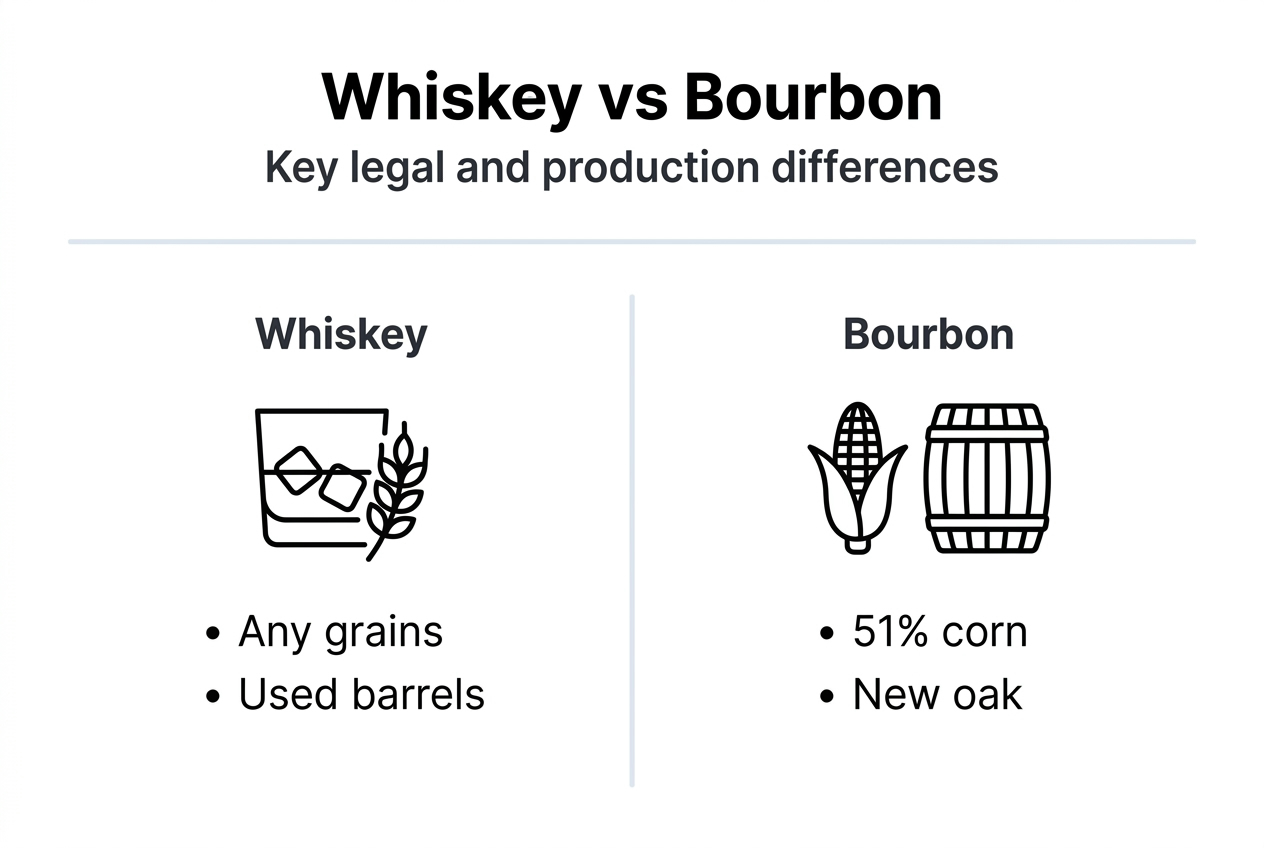
Bourbon must be made in the United States, from a grain mixture consisting of at least 51% corn, and aged in new charred oak barrels. These requirements create a foundation that distinguishes bourbon from broader whiskey categories. No spirit produced outside America can legally carry the bourbon name, regardless of how closely it mimics production methods.
Whiskey, by contrast, is an umbrella term encompassing many styles from various countries. Scotch whisky comes from Scotland, Irish whiskey from Ireland, Canadian whisky from Canada, and Japanese whisky from Japan. Each of these regions enforces its own strict geographic and production rules, but they differ fundamentally from bourbon’s standards.
Key legal distinctions include:
- Bourbon requires production within the United States under federal law
- At least 51% corn must comprise the grain mixture for bourbon
- New charred oak barrels are mandatory for bourbon ageing
- Whiskey includes diverse international styles with varied grain and barrel requirements
“The bourbon law of 1964 enshrined bourbon as America’s native spirit, distinguishing it legally from all other whiskies and protecting its identity for generations of distillers and collectors.”
This legal framework ensures bourbon’s consistent identity and distinction from other whiskies. For collectors in Australia, recognising these geographic and legal boundaries helps verify authenticity when sourcing bottles from American bourbon producers or comparing them with international whisky offerings.
Production process and key requirements
The production standards bourbon must meet create its signature character and separate it from broader whiskey production flexibility. Bourbon must be made from a mash bill that’s at least 51% corn, distilled to no more than 160 proof, entered into new charred oak barrels at no more than 125 proof, and bottled at no less than 80 proof. These precise requirements eliminate guesswork and ensure every bourbon shares foundational qualities.
The mash bill composition determines the grain foundation, with corn providing sweetness and body. Distillers blend corn with secondary grains such as rye, wheat or malted barley to shape flavour profiles. Rye adds spice, wheat contributes softness, and malted barley aids fermentation while introducing subtle complexity.
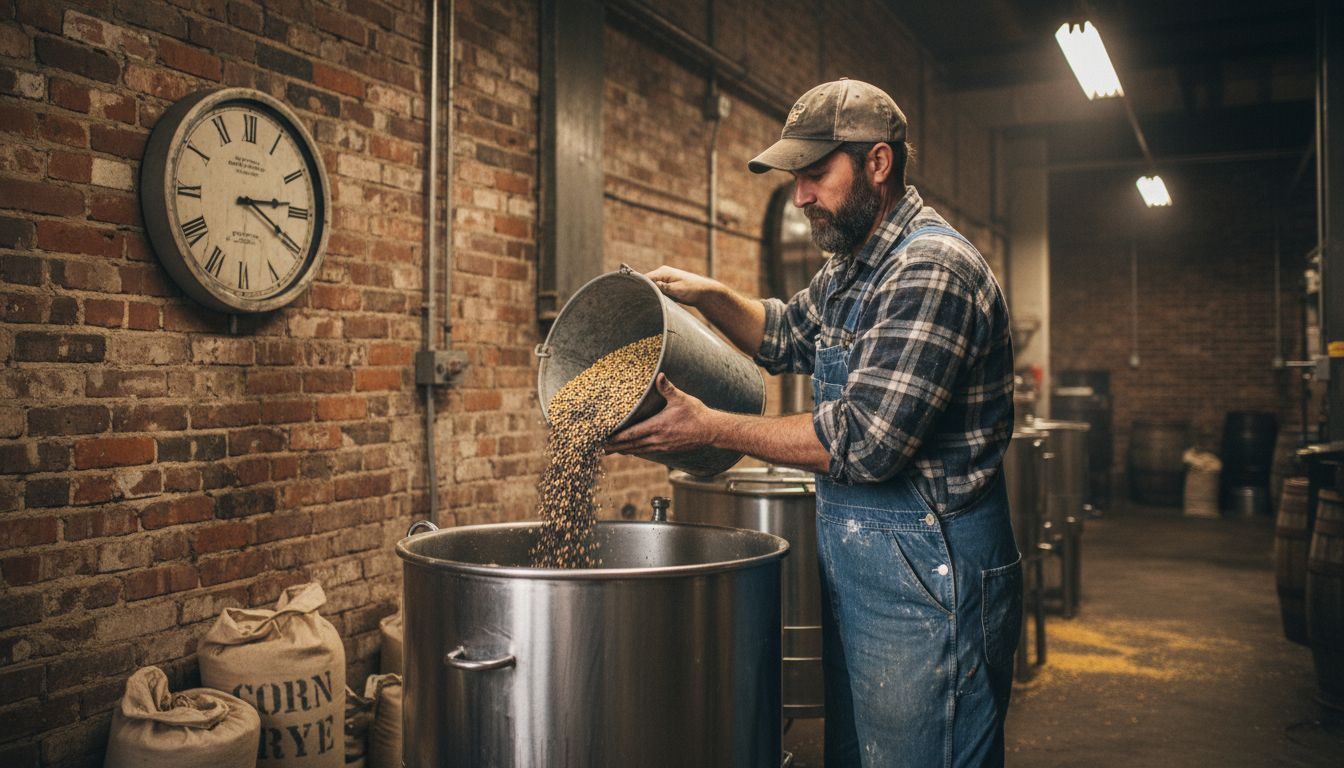
Distillation proof must not exceed 160 proof, or 80% ABV. This ceiling preserves essential flavour compounds that higher proof distillation would strip away. Spirit enters new charred oak barrels at no more than 125 proof, ensuring optimal interaction between wood and whiskey without overwhelming alcohol harshness.
Bottling occurs at a minimum of 80 proof, or 40% ABV, balancing drinkability with flavour intensity. Some premium bourbons bottle at higher proofs, labelled as barrel strength or cask strength, offering collectors robust, undiluted expressions.
Key production requirements:
- Mash bill contains at least 51% corn
- Distillation does not exceed 160 proof
- Barrel entry proof stays at or below 125 proof
- Bottling occurs at minimum 80 proof
- New charred oak barrels are mandatory for all ageing
Whiskey in general has more diverse production methods without these specific rules. Scotch, Irish and other whiskies use varied grains, barrel types and proof standards, allowing broader stylistic interpretation. This flexibility means whiskey encompasses an enormous range of flavours and textures, whereas bourbon operates within tighter boundaries.
Pro Tip: When evaluating bourbon for your collection, check the mash bill composition if disclosed. High rye bourbons deliver spicier notes, whilst wheated bourbons offer smoother, sweeter profiles, helping you match bottles to your flavour preferences.
Understanding these production differences enhances your ability to assess quality and authenticity when selecting bottles for whisky ageing appreciation.
Flavour profiles and barrel influence
Mash bill composition affects bourbon’s flavour, with traditional, high rye and wheated variants delivering distinct profiles. Traditional bourbons balance corn sweetness with rye spice, creating versatile sipping experiences. High rye mash bills push peppery, herbal notes forward, appealing to those who favour bold complexity. Wheated bourbons replace rye with wheat, yielding softer, sweeter expressions with pronounced caramel and vanilla.
New charred oak barrels impart signature caramel, vanilla and tannic notes, with char level impacting this intensity. The charring process caramelises wood sugars, creating layers of sweetness and colour. Higher char levels increase caramelisation and vanilla extraction, whilst lighter chars allow subtler wood influence. This mandatory use of new barrels ensures every bourbon batch draws fresh flavour compounds from virgin wood.
Bourbon is frequently non chill filtered, retaining fatty acids and congeners that contribute to taste and mouthfeel. Non chill filtration preserves oils that create a richer, fuller texture on the palate. These compounds enhance complexity, though they may cause cloudiness when chilled or diluted. Many collectors prize this natural presentation for its authenticity and depth.
Whiskeys overall use varied barrel types including used barrels and different woods, influencing broader taste diversity. Scotch whiskies often age in ex bourbon or ex sherry casks, absorbing residual flavours from previous contents. Irish whiskeys may employ virgin oak, ex bourbon or wine casks, creating layered profiles. Japanese whiskies experiment with mizunara oak and other exotic woods, pushing flavour boundaries further.
These production choices result in bourbon’s distinctive sweetness and richness compared to other styles. The combination of corn forward mash bills, new charred oak and non chill filtration creates a signature taste profile that collectors can identify blind.
| Characteristic | Bourbon | Other Whiskeys |
|---|---|---|
| Barrel type | New charred oak only | Used, virgin or exotic wood barrels |
| Primary grain | At least 51% corn | Barley, rye, wheat, corn or combinations |
| Filtration | Often non chill filtered | Varies by producer and style |
| Flavour base | Sweet, caramel, vanilla | Varies widely from smoky to fruity to spicy |
Key flavour influences:
- Corn delivers natural sweetness and body
- Char level determines caramel and vanilla intensity
- Non chill filtration preserves mouthfeel and complexity
- New oak extracts fresh tannins and wood sugars
Pro Tip: Sample bourbons side by side with Scotch or Irish whiskey to appreciate how new charred oak creates bourbon’s signature sweetness versus the subtler, fruitier notes from used barrels in other non chill filtered whisky expressions.
Labelling laws and terms for collectors
‘Straight bourbon’ means bourbon whiskey aged in a new charred oak barrel for at least two years. This designation signals extended ageing and adherence to specific legal standards. Straight bourbon cannot contain added colouring, flavouring or other spirits, ensuring purity and authenticity.
If aged less than four years, the label must disclose the exact ageing period for straight bourbon. This transparency helps collectors assess value and maturity. Bourbons aged four years or longer need not state the age, though many premium brands voluntarily disclose it to signal quality.
‘Straight bourbon’ does not mean the spirit is undiluted or unfiltered after barreling. Confusion arises because ‘straight’ implies purity, yet it refers only to ageing standards and blending restrictions. Producers may still dilute straight bourbon to bottling proof or apply filtration without losing the designation.
Terms like ‘finished’ indicate secondary barrel ageing and must be truthfully labelled. Bourbon finished in port, sherry or wine casks undergoes additional flavour development after initial ageing. These expressions offer collectors unique profiles beyond traditional bourbon, though they must still meet foundational bourbon requirements.
Understanding these terms helps collectors identify authenticity and production quality. Labels reveal critical information about ageing, blending and finishing, empowering informed purchasing decisions.
Key labelling insights:
- ‘Straight bourbon’ requires minimum two years ageing in new charred oak
- Age statements are mandatory if ageing is under four years
- ‘Straight’ does not guarantee cask strength or non chill filtration
- ‘Finished’ bourbons undergo secondary barrel maturation
- All label claims must comply with federal standards
For collectors building quality collections, scrutinising labels separates genuine craft from marketing language. Age statements, mash bill disclosures and finishing details signal transparency and quality. Bourbon whisky examples showcase how these labelling standards apply across premium offerings.
Practical tips for collectors comparing bourbon and whiskey
The most crucial distinction between bourbon and whiskey lies in their production process. Focus on grain composition and barrel type to understand flavour profiles when evaluating bottles. Bourbon’s corn forward mash bill and new charred oak create predictable sweetness, whilst other whiskeys offer wider stylistic variation.
Sample bourbons that range from high rye to wheated mash bills to appreciate their diversity. High rye expressions deliver spice and complexity, wheated bourbons offer smoothness, and traditional blends balance both. Tasting across this spectrum builds your palate and clarifies personal preferences.
Use tasting guides to compare mouthfeel differences influenced by filtration and ageing. Non chill filtered bourbons present fuller textures, whilst chill filtered spirits taste lighter. Ageing duration impacts tannin levels and wood integration, with older bourbons often displaying deeper complexity.
Consider labels carefully for ageing statements and authenticity of straight bourbon. Age disclosures signal maturity and transparency, whilst straight bourbon designations confirm adherence to strict standards. These markers help you assess value and quality before purchasing.
Explore limited editions that showcase unique finishing barrels or regional styles. Finished bourbons offer experimental flavour profiles, whilst single barrel releases highlight individual cask character. These bottles add diversity and interest to collections beyond standard offerings.
Collecting strategies:
- Prioritise bottles with clear age statements and mash bill details
- Taste across different proof points to understand alcohol’s impact on flavour
- Compare bourbon with Scotch or Irish whiskey to appreciate production differences
- Seek out small batch releases for consistent quality and craftsmanship
- Document tasting notes to track preferences and guide future purchases
Pro Tip: Build your collection around mash bill diversity rather than focusing solely on age. A well rounded selection spanning high rye, wheated and traditional bourbons offers more tasting variety than multiple bottles of similar profiles, even if older. Comparing whisky types systematically sharpens your ability to discern quality and identify personal favourites.
Explore exquisite bourbon and whiskey selections at Uisuki
Understanding the distinctions between bourbon and whiskey enhances your ability to select exceptional bottles with confidence. Uisuki offers a curated selection of bourbons and whiskies perfect for enthusiasts and collectors in Australia. Our range includes rare single malts and unique bourbon matured finishes that showcase the diversity of production methods and flavour profiles discussed throughout this guide.

Explore featured products like Hobart whisky bourbon matured rum finished single malt, which demonstrates how bourbon barrel maturation influences Australian whisky character. For those seeking world class blends, Ichiro’s malt and grain limited edition whisky represents Japanese craftsmanship at its finest. Visit the site to browse detailed descriptions, secure authentic bottles and expand your collection with confidence.
Frequently asked questions
What is the main difference between whiskey and bourbon?
Bourbon is a type of American whiskey made from at least 51% corn and aged in new charred oak barrels, whilst whiskey is a broader category with fewer restrictions. The legal standards and geographic origin differentiate bourbon from other whiskies.
Can bourbon be made outside the United States?
No, by law, bourbon must be made in the United States to carry the name. Whiskeys made elsewhere cannot legally be labelled bourbon regardless of production methods.
What does ‘straight bourbon’ mean on a label?
‘Straight bourbon’ means the spirit is aged at least two years in new charred oak barrels without blending other spirits. If aged less than four years, the label must disclose the exact ageing period.
Is all bourbon non chill filtered?
Most bourbons are non chill filtered to retain fatty acids that enhance flavour and mouthfeel. However, some producers may chill filter depending on brand style and preferences.