

This page is an A–Z catalogue of single malt whisky brands and distilleries, paired with a curated shortlist of top picks and a regional classification guide. The scope is primarily Scotch single malts, with notable international expressions from Japan, the USA, India, Australia, and beyond included where they have earned recognition. Use the alphabetical index to locate any specific name, jump to the ranked shortlist for quick recommendations, or read the regional table to understand how geography shapes flavour.
Key takeaways
Single malt whisky is defined by distillery of origin, malted barley, and pot still production, with Scotch requiring a minimum of three years’ maturation and bottling at 40% ABV or above.
| Point | Details |
|---|---|
| Definition matters | Single malt means one distillery, malted barley, pot stills; “single” does not mean one cask. |
| Region predicts flavour | Islay means peat and smoke; Speyside means fruit and elegance; Lowlands means light and floral. |
| Start with core range | Approachable entry expressions from Glenlivet, Glenmorangie, and Auchentoshan are reliable starting points. |
| Rare bottles are finite | Closed distillery releases like Port Ellen and Brora draw from irreplaceable stock; collect deliberately. |
| Uisuki for sourcing | Uisuki stocks curated single malts from Scotland, Japan, and Australia, with worldwide shipping available. |
Table of Contents
- The complete list of single malt whisky brands, A to Z
- Top single malts worth knowing: a curated shortlist
- How Scotch regions and international origins shape what’s in your glass
- What actually qualifies as a ‘single malt’?
- Quick reference: notable distilleries at a glance
- How single malt whisky is made
- The main flavour profiles you’ll encounter
- How to taste and evaluate single malts if you’re new to it
- A brief history of single malt whisky
- Rare, vintage, and limited editions: what makes them significant
- What this list is really trying to do
- Curated single malts, ready to order
- Sources
The complete list of single malt whisky brands, A to Z
The entries below draw on the official list of currently operating Scotch whisky distilleries (April 2026) and cross-referenced against the Wikipedia list of whisky brands for international coverage. Each entry carries a region tag and a brief note. Independent bottlings and NAS (no age statement) expressions are included where the distillery itself is the primary reference point.
A
- Aberfeldy (Highland) — Honey-rich, waxy Speyside-adjacent style; flagship of Dewar’s portfolio.
- Aberlour (Speyside) — Double-cask matured; known for rich sherry influence and accessible price.
- Ailsa Bay (Lowland) — Girvan complex, lightly peated; one of Scotland’s newer distilleries.
- Ardbeg (Islay) — Intensely peated, medicinal, and beloved by smoke enthusiasts worldwide.
- Ardmore (Highland) — Lightly peated Highland; accessible and underrated.
- Ardnamurchan (Highland) — Young, coastal, and gaining fast recognition for maritime character.
- Auchentoshan (Lowland) — Triple-distilled; light, floral, and approachable for newcomers.
B
- Balblair (Highland) — Vintage-dated releases; fruity and elegant with good coastal lift.
- Balvenie (Speyside) — Handcrafted ethos; DoubleWood and Caribbean Cask are widely loved.
- Ben Nevis (Highland) — Rugged, full-bodied; distillery sits at the foot of Britain’s highest peak.
- BenRiach (Speyside) — Diverse cask programme; peated and unpeated expressions available.
- Benromach (Speyside) — Organic certified; classic Speyside style with a subtle smoky edge.
- Bladnoch (Lowland) — Scotland’s most southerly distillery; light and grassy.
- Bowmore (Islay) — Balanced peat and sweetness; World’s Best Single Malt 2026 (Bowmore 21 Years Old Sherry Oak Cask, World Whiskies Awards).
- Brora (Highland) — Closed 1983, reopened 2021; vintage releases command collector premiums.
- Bruichladdich (Islay) — Unpeated Islay; progressive cask experimentation and terroir focus.
C
- Caol Ila (Islay) — Lighter peat than Ardbeg or Laphroaig; often used in blends but superb as a single malt.
- Cardhu (Speyside) — Smooth and approachable; historically significant as a Johnnie Walker component.
- Clynelish (Highland) — Waxy, coastal; a collector favourite and Brora’s spiritual successor.
- Craigellachie (Speyside) — Sulphurous, meaty, and deliberately old-fashioned in style.
D
- Dailuaine (Speyside) — Rarely seen as a single malt; heavy and sherried when it appears.
- Dalmore (Highland) — Sherry-forward, rich; premium expressions attract collectors.
- Dalwhinnie (Highland) — Scotland’s highest distillery; gentle, heathery, and honeyed.
- Deanston (Highland) — Unpeated, organic; nutty and malty with good value.
E
- Edradour (Highland) — Scotland’s smallest traditional distillery; rich and creamy.
- Elgin (Speyside) — Regional hub rather than a single distillery; home to Glen Moray and Miltonduff.
F
- Fettercairn (Highland) — Unusual production method (water-cooled still necks); tropical fruit notes.
G
- GlenAllachie (Speyside) — Billy Walker’s project; exceptional cask selection and sherry influence.
- Glenburgie (Speyside) — Rarely bottled independently; light and floral.
- Glendronach (Highland) — Sherry-bomb reputation; PX and Oloroso cask expressions are benchmarks.
- Glenfarclas (Speyside) — Family-owned; 105 cask strength and 25-year expressions are classics.
- Glenfiddich (Speyside) — World’s best-selling single malt; 12 Year Old is the global entry point.
- Glen Grant (Speyside) — Light and fruity; hugely popular in Italy.
- Glenkinchie (Lowland) — Edinburgh’s distillery; light, grassy, and a reliable Lowland representative.
- Glenlivet (Speyside) — One of the first legally licensed distilleries; 12 Year Old remains a benchmark.
- Glenmorangie (Highland) — Tall stills produce a delicate, floral spirit; Original and Lasanta are entry points.
- Glen Scotia (Campbeltown) — Briny, oily, and underrated; one of only three Campbeltown distilleries.
- Glentauchers (Speyside) — Mostly used in blends; fruity and clean when bottled independently.
H
- Highland Park (Islands/Orkney) — Balanced peat and heather honey; consistently award-winning.
- Hobart Whisky (Australia) — Tasmanian single malt; Bourbon Matured Rum Finished expression showcases Southern Hemisphere maturation.
I
- Inchgower (Speyside) — Coastal Speyside; salty and fruity, mostly used in blends.
J
- Jura (Islands) — Light, slightly peated; approachable island whisky.
K
- Kilchoman (Islay) — Farm distillery; heavily peated, young, and vibrant.
- Knockando (Speyside) — Vintage-dated; light and grassy.
L
- Lagavulin (Islay) — 16 Year Old is a peat-lover’s icon; rich, smoky, and complex.
- Laphroaig (Islay) — Medicinal, seaweed, and iodine; polarising and beloved in equal measure.
- Linkwood (Speyside) — Floral and delicate; rarely seen as a single malt.
M
- Macallan (Speyside) — Sherry-oak programme defines the brand; among the most collected whiskies globally.
- Mannochmore (Speyside) — Light and grassy; mostly used in blends.
- Mortlach (Speyside) — “The Beast of Dufftown”; meaty and complex, distilled 2.81 times.
N
- Nikka Yoichi (Japan) — Peated Japanese single malt; coal-fired stills produce a distinctive smoky character.
- Nikka Miyagikyo (Japan) — Lighter, fruity Japanese single malt; elegant and floral.
O
- Oban (Highland) — Small production; maritime and lightly peated; 14 Year Old is the core expression.
P
- Port Ellen (Islay) — Closed 1983, reopened 2023; annual releases are among the most sought-after bottles in the world.
R
- Rosebank (Lowland) — Closed 1993, reopened 2023; triple-distilled Lowland classic.
S
- Scapa (Islands/Orkney) — Light and floral; underrated island malt.
- Springbank (Campbeltown) — Handmade, partially peated; distils 2.5 times; cult following worldwide.
- Strathisla (Speyside) — Oldest operating distillery in the Highlands; rich and fruity.
T
- Talisker (Islands/Skye) — Peppery, maritime, and smoky; 10 Year Old is a classic.
- Tamdhu (Speyside) — Exclusively sherry-matured; rich and approachable.
- Tomatin (Highland) — Large-production Highland; accessible and consistent.
- Tomintoul (Speyside) — “The Gentle Dram”; light and easy-drinking.
U
- Urquhart (see Glen Urquhart) — Regional name used by some independent bottlers for Highland expressions.
W
- Wolfburn (Highland) — Scotland’s most northerly mainland distillery; maritime and lightly peated.
Y
- Yamazaki (Japan) — Japan’s oldest distillery; Mizunara oak expressions are globally celebrated.
Top single malts worth knowing: a curated shortlist
The following picks balance award recognition, historical significance, and accessibility. They span the flavour spectrum so you can use them as a tasting map rather than a shopping list.
-
Bowmore 21 Years Old Sherry Oak Cask — Named World’s Best Single Malt at the 2026 World Whiskies Awards. Balanced Islay peat with rich dried-fruit sweetness from extended sherry maturation. The benchmark for what Islay can do beyond smoke.
-
Glenfiddich 12 Year Old — The world’s best-selling single malt for a reason. Fresh pear and light oak; the global entry point for the category and a reliable gift for anyone new to Scotch.
-
Macallan 18 Year Old Sherry Oak — The sherry-cask programme at its most refined. Dark fruit, chocolate, and spice. Among the most collected expressions in the world, and a reference point for sherried style.
-
Lagavulin 16 Year Old — Peat, smoke, and a long, warming finish. The 16 Year Old has held its reputation for decades and remains the standard by which heavily peated Scotch is measured.
-
Laphroaig 10 Year Old — Iodine, seaweed, and medicinal smoke. Divisive by design, and that is exactly the point. The 10 Year Old cask strength version adds intensity without losing the signature character.
-
Ardbeg 10 Year Old — Younger than Lagavulin but no less complex. Tarry, peaty, and with a surprising citrus lift on the finish. Consistently wins awards in its age bracket.
-
Springbank 15 Year Old — Campbeltown’s finest. Oily, fruity, and lightly peated, with a complexity that punches well above its price. Handmade in small batches; availability can be limited.
-
Glenlivet 12 Year Old — One of the first legally licensed distilleries in Scotland. Soft, fruity, and floral; the textbook Speyside expression and a reliable starting point for choosing your first single malt.
-
Talisker 10 Year Old — Skye’s signature. Peppery, maritime, and smoky without being as heavily peated as Islay malts. The finish lingers with sea salt and black pepper.
-
Glenmorangie Original 10 Year Old — Produced in Scotland’s tallest pot stills, which strip out heavier compounds and leave a delicate, floral spirit. Vanilla, peach, and cream. Ideal for newcomers.
-
Highland Park 12 Year Old — Orkney’s contribution: heather honey, gentle smoke, and dried fruit. Balanced in a way few distilleries achieve across all age statements.
-
Bruichladdich Classic Laddie — Unpeated Islay, which surprises people. Creamy, coastal, and complex. The progressive cask programme means no two batches are identical.
-
Brora 30 Year Old (vintage releases) — Closed in 1983 and reopened in 2021, Brora’s archived releases are among the most significant collector bottles in Scotch whisky. Waxy, coastal, and irreplaceable.
-
Port Ellen (annual releases) — Closed in 1983 and reopened in 2023, Port Ellen’s limited annual releases from old stock remain among the most sought-after bottles at auction. Each release is a piece of whisky history.
-
Yamazaki 12 Year Old — Japan’s answer to Speyside. Subtle, refined, and layered with stone fruit and sandalwood. The 2026 World Whiskies Awards confirmed that international single malts now compete directly with Scotch at the highest level.
How Scotch regions and international origins shape what’s in your glass
Understanding where a whisky comes from is the fastest shortcut to predicting how it will taste. The five recognised Scotch regions each carry a flavour signature, though distilleries within them vary considerably.
| Region | Characteristic flavour | Representative examples |
|---|---|---|
| Speyside | Fruity, elegant, often sherried | Glenfiddich, Macallan, Glenlivet |
| Highland | Broad and varied; heather, honey, maritime notes | Glenmorangie, Dalmore, Talisker (Islands) |
| Islay | Peaty, smoky, medicinal, coastal | Ardbeg, Lagavulin, Laphroaig, Bowmore |
| Lowland | Light, floral, grassy | Auchentoshan, Glenkinchie, Bladnoch |
| Campbeltown | Oily, briny, lightly peated | Springbank, Glen Scotia |
| Islands | Varied; maritime, sometimes peated | Highland Park, Talisker, Jura |
Regional flavour profiles are a practical roadmap for new buyers, as outlined in beginner guidance from Scannabar. If you enjoy lighter, approachable drams, start in the Lowlands or Speyside. If smoke is the draw, Islay is the destination.
International single malts have closed the gap on Scotch considerably. Japanese distilleries such as Yamazaki and Nikka Yoichi benefit from extreme seasonal temperature swings, which accelerate maturation and produce concentrated flavours in fewer years. Indian distilleries like Amrut and Paul John work in tropical heat, where angels’ share losses run high but the spirit matures quickly and richly. Australian distilleries, particularly in Tasmania, combine cool maritime air with diverse cask types to produce single malts that sit stylistically between Scotch and Japanese whisky. For a flavour-first guide to Scotch types, the regional lens is the most useful starting point.
What actually qualifies as a ‘single malt’?
A single malt whisky is made at a single distillery, from 100% malted barley, using pot stills. That is the core definition, and it applies whether the whisky comes from Scotland, Japan, or Tasmania.
For Scotch specifically, the rules are tighter. Scottish law requires that Scotch be matured for a minimum of three years in oak casks in Scotland, and bottled at no less than 40% ABV. The “single” in single malt refers to the distillery, not the cask or the batch. A single malt can be a vatting of many casks from the same distillery and still carry the designation.
Terms that often cause confusion:
- Single cask: bottled from one individual cask, unblended. Often cask strength.
- Single grain: made at one distillery but from grains other than malted barley (or a mix), typically in column stills.
- Blended malt: a mix of single malts from two or more distilleries (formerly called “vatted malt”).
- NAS (no age statement): the bottle carries no age declaration, though the whisky must still meet minimum maturation requirements.
Scotland currently has over 140 operating Scotch whisky distilleries, according to the Scotch Whisky Association’s April 2026 list, reflecting the industry’s sustained growth over the past two decades.
For a deeper look at how these categories interact, the Uisuki guide to single malt types covers the distinctions clearly.
Quick reference: notable distilleries at a glance
Provenance data draws on the Scotch Whisky Association’s operating distillery list and individual distillery records. For researchers needing image resources or brand history cross-references, the Wikimedia Commons whisky category is a useful supplementary archive.
How single malt whisky is made
The production process is what separates single malt from every other whisky category, and understanding it helps explain why two distilleries a kilometre apart can taste completely different.
Malting is the first step. Barley is soaked in water, allowed to germinate, then dried in a kiln. The kiln fuel matters: peat smoke during drying is what creates the smoky, phenolic character in Islay malts. Distilleries like Ardbeg and Laphroaig use heavily peated malt; Bruichladdich uses unpeated barley entirely.
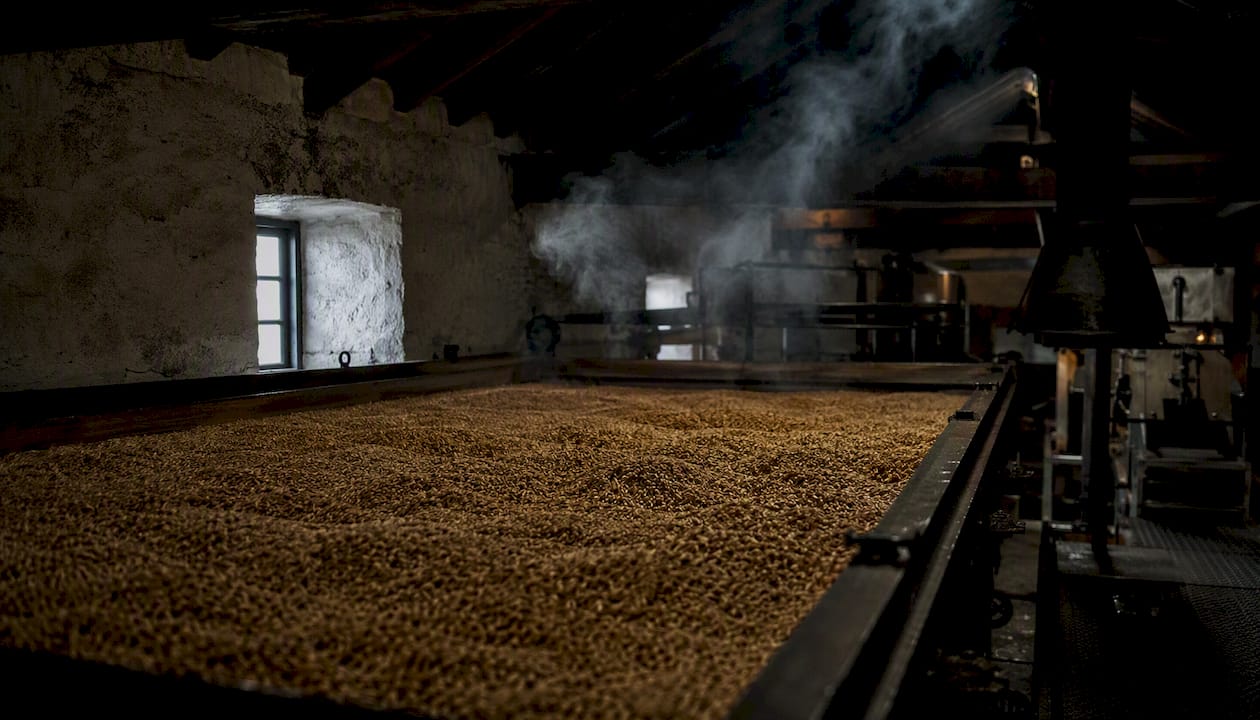
Mashing and fermentation follow. The dried malt is ground into grist, mixed with hot water to extract fermentable sugars, and the resulting liquid (wort) is fermented with yeast in large vessels called washbacks. Fermentation time influences flavour: longer fermentation tends to produce fruitier, more complex spirit.
Distillation in copper pot stills is the defining step. Single malts are distilled at least twice (Springbank does 2.5 times; Auchentoshan does three). The shape of the still, particularly the height of the neck, determines how much heavier flavour compounds carry over into the final spirit. Tall stills like those at Glenmorangie produce a lighter, more delicate spirit; shorter, fatter stills at Macallan retain more weight and richness.
Maturation in oak casks for a minimum of three years (for Scotch) is where most of the final flavour develops. The cask type, previous contents (bourbon, sherry, wine), and warehouse conditions all leave their mark. A Macallan aged in first-fill Oloroso sherry casks will taste fundamentally different from the same distillate aged in ex-bourbon barrels.
The main flavour profiles you’ll encounter
Single malts divide roughly into four flavour families, and knowing them makes the A–Z list above far more navigable.
Peaty and smoky is the profile most associated with Islay. Ardbeg, Lagavulin, and Laphroaig sit at the intense end; Bowmore and Caol Ila offer a more moderate smoke. The phenolic compounds from peat drying create flavours ranging from bonfire ash and iodine to smoked meat and sea spray.
Sherried and rich describes whiskies matured primarily in ex-sherry casks. Macallan, Glendronach, and GlenAllachie are the benchmarks. Expect dried fruit, Christmas cake, chocolate, and warming spice. The depth of colour is usually a reliable visual cue.
Fruity and elegant is Speyside’s calling card. Glenfiddich, Glenlivet, and Balvenie deliver fresh orchard fruit, vanilla, and gentle oak. These are the most approachable for newcomers and the most food-friendly at the table.
Light and floral covers the Lowlands and some Highland expressions. Auchentoshan and Glenkinchie are the clearest examples: grassy, delicate, and often with a citrus or floral note. They work well as aperitifs or for drinkers who find heavier whiskies overwhelming.
For a more detailed breakdown of how these profiles map to specific bottles, the Uisuki guide to Scotch single malt types is worth reading alongside this list.
How to taste and evaluate single malts if you’re new to it
The Scotland Whisky beginner’s guide recommends starting with core-range expressions rather than aged or limited releases. The reason is straightforward: distilleries put their most consistent, representative work into their core range, and those bottles are the most reliable introduction to a house style.
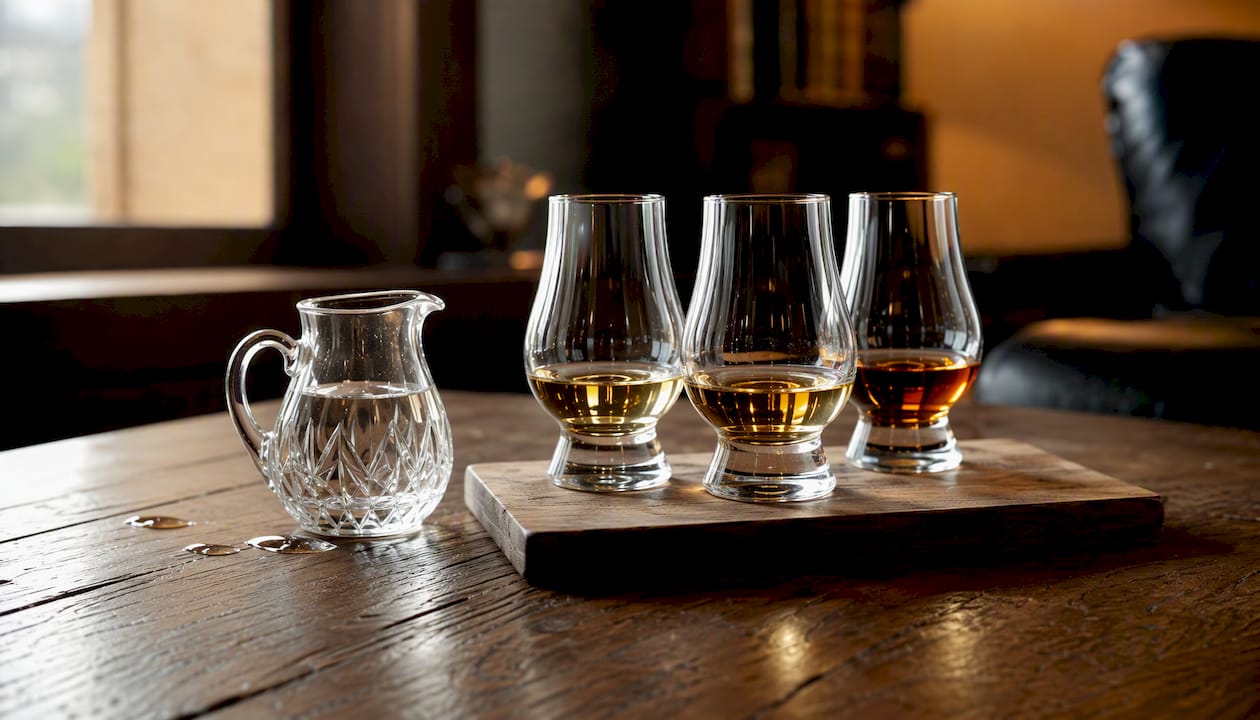
Use a tulip-shaped glass (a Glencairn is the standard) rather than a tumbler. The narrowed rim concentrates the aromas, which is where most of the complexity lives before the liquid even reaches your lips.
Nose first. Hold the glass at chest height and let the alcohol dissipate before bringing it to your nose. Tilt the glass slightly and breathe in slowly. Try to identify broad categories: fruit, smoke, grain, wood, floral. Don’t rush to a verdict.
Add a few drops of water. A small amount of still water at room temperature opens up the spirit, particularly at cask strength. It reduces the alcohol burn and releases aromatic compounds that were suppressed. This is not a compromise; it is how distillers and blenders evaluate whisky.
Taste in flights. Comparing three expressions side by side, ideally from different regions, is the fastest way to develop a palate. A Lowland (Auchentoshan), a Speyside (Glenlivet), and an Islay (Bowmore) in one sitting will teach you more about regional character than reading about it for an hour.
Pro Tip: Write down your impressions immediately after tasting, even if they seem obvious. Your notes from a first tasting become a useful reference when you encounter the same distillery’s older or different expressions later.
A brief history of single malt whisky
Scotch whisky’s origins are tangled with illicit distillation. Before the Excise Act of 1823, most production in the Highlands was unlicensed, and the industry operated largely underground. The Act created a legal framework that made licensed distilling commercially viable, and Glenlivet was among the first to take the licence in 1824.
For most of the 19th and early 20th centuries, single malt was not a consumer category at all. Distilleries sold their spirit to blending houses, and blended Scotch, not single malt, was what the world drank. Glenfiddich is widely credited with pioneering the modern single malt market when it began actively promoting its bottled expression in the 1960s and 1970s.
The 1980s and 1990s saw a wave of distillery closures, including Port Ellen and Brora in 1983, as blended Scotch demand fell. Those closures created the vintage stock that now commands extraordinary prices at auction. The subsequent boom in single malt appreciation, driven partly by Japanese and American collectors, transformed the category from a niche product into a global luxury market.
Today, the Scotch Whisky Association lists over 140 operating distilleries, and single malt now accounts for a significant share of Scotch exports by value. Japan, India, Taiwan, and Australia have all developed credible single malt industries of their own, each shaped by local climate and grain.
Rare, vintage, and limited editions: what makes them significant
Not all single malts are created equal in terms of scarcity, and the rarest bottles occupy a different category entirely from standard retail releases.
Closed distillery releases carry an irreplaceable quality. Port Ellen and Brora were both shuttered in 1983, and the remaining casks from that era are finite. Each annual release from Diageo’s Special Releases programme draws from diminishing stock. When those casks are gone, they are gone. The reopened Port Ellen distillery (2023) will eventually produce new spirit, but it will be decades before it reaches the age of the archived releases currently available.
Independent bottlers such as Gordon & MacPhail, Signatory Vintage, and Berry Bros. & Rudd source casks directly from distilleries and bottle them independently, often at cask strength and without chill-filtration. These releases frequently surface expressions from distilleries that never officially bottle their own single malt, making them essential for researchers and collectors.
Limited annual releases from active distilleries, including Ardbeg’s Committee Releases and Springbank’s limited runs, generate significant secondary market activity. Springbank in particular produces in small enough quantities that allocation is tightly controlled, and bottles regularly trade above retail on release day.
For collectors in Australia, the Uisuki guide to single malts for Australian collectors covers what to look for and how to source rare expressions locally and internationally.
What this list is really trying to do
The conventional approach to a single malt catalogue is to rank by score, sort by price, or default to the same dozen bottles that appear on every “best of” list. That approach is useful up to a point, but it tends to flatten a category that is genuinely diverse.
What I tried to do here is build something more useful for researchers and enthusiasts who already know the category: an A–Z that is broad enough to function as a reference, paired with a shortlist that explains why each pick matters rather than just asserting it does. The regional table is there because flavour geography is the most practical tool for choosing a first bottle or a next bottle, and it is consistently underused in favour of age statements and scores.
The inclusion of international single malts is deliberate. The 2026 World Whiskies Awards confirmed what collectors have known for years: Japan, India, and Australia are producing single malts that compete directly with Scotch at the highest level. A list that ignores them is incomplete.
If you know a distillery or expression that belongs here and isn’t listed, the sourcing team at Uisuki welcomes suggestions.
Pro Tip: When researching tasting notes, cross-reference at least two independent sources. Distillery tasting notes are written to sell; independent bottler notes and community reviews tend to be more candid about a whisky’s limitations.
Curated single malts, ready to order
Uisuki stocks a hand-picked selection of single malts from Scotland, Japan, Australia, and beyond, with bottles sourced for quality and rarity rather than volume. The Hobart Whisky Bourbon Matured Rum Finished Single Malt is a strong example of what Australian distilling is producing right now: a Tasmanian expression that holds its own against established Scotch benchmarks.
For collectors, the Ardnamurchan Macleans Nose Blended Scotch represents the kind of modern independent-style bottling that is reshaping how people think about Highland whisky. Shipping is available worldwide; check local import regulations before ordering internationally. Browse the full range or submit a sourcing request at Uisuki.
Sources
- Best Single Malts 2026: World Whiskies Awards Winners by Country
- List of current operating scotch whisky distilleries (April 2026)
- List of whisky distilleries in Scotland
- How to choose your first single malt whisky
- Beginner’s Guide to Scotch Whisky: How To Taste, Choose, and Enjoy Single Malt - Scotland Whisky