

TL;DR:
- A smooth single malt typically comes from Speyside or Lowland regions, aged in ex-bourbon or sherry casks, and often non-chill filtered. True smoothness depends on texture and balanced alcohol integration, not just alcohol content, with sensory markers like creaminess and fruitiness indicating quality. Regional styles, maturation, and production choices influence smoothness, and the best approach is to evaluate through tasting and selecting bottles with specific cask and aging profiles.
For a smooth single malt, the simplest rule is this: look for a Speyside or Lowland expression matured in ex-bourbon or sherry casks, bottled at a moderate ABV typically considered ideal for smoothness, and ideally non-chill filtered. That combination consistently delivers the creamy, rounded mouthfeel most drinkers mean when they say “smooth.” Uisuki stocks a curated range of exactly these styles for Australian buyers, with tasting notes and cask details on every listing.
Quick shopping checklist for Australia:
- Cask type: ex-bourbon (vanilla, toffee) or sherry (dried fruit, roundness) on the label
- Age band: a sensible age band is recommended for mellowed oak integration without harsh spirit edges
- ABV cue: 40–46% ABV; non-chill filtered at 46% often feels richer than a chill-filtered 40%
- Tasting note signals: look for “creamy,” “honeyed,” “orchard fruit,” or “vanilla” on the label
- Region shortcut: Speyside or Lowlands for Scotland; Tasmanian or Japanese-style for local and overseas options
Table of Contents
- What do drinkers actually mean by ‘smooth’?
- How production and maturation create a smooth mouthfeel
- Which regions tend to produce smooth single malts?
- How to taste for smoothness at home
- How to buy smooth single malts in Australia
- Allergens and ingredients that can affect your experience
- Smooth single malt brands worth trying in Australia
- Uisuki: curated smooth single malts for Australian buyers
- Key takeaways
What do drinkers actually mean by ‘smooth’?
The word gets thrown around in marketing so often it has almost lost meaning. But among experienced tasters, “smooth” has a precise definition: it refers to texture and mouthfeel first, balanced alcohol integration second, and flavour continuity across the palate and finish third. A smooth dram coats the tongue, develops gently through the midpalate, and finishes without a harsh alcohol spike.
Common sensory markers include creamy or velvety texture, toffee, vanilla, honey, and orchard fruits like pear and apple. These differ from “gentle” or “light,” which describe flavour intensity. A whisky can be light in body but still feel rough if the alcohol is poorly integrated.
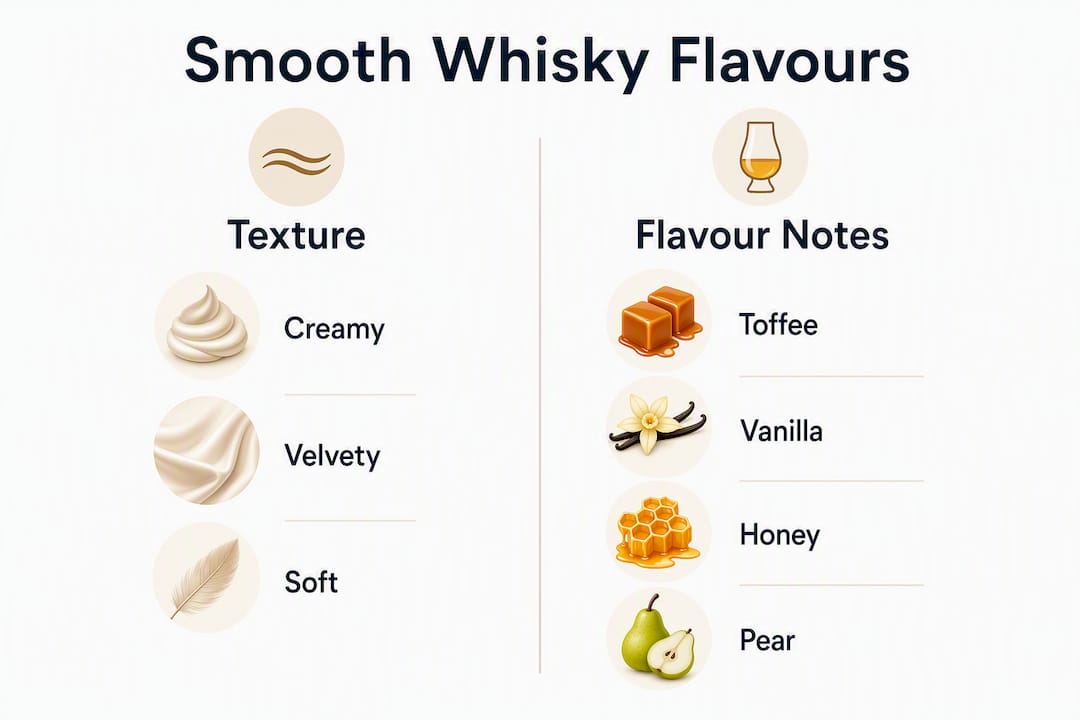
The biggest misconception is that low ABV automatically equals smooth. It does not. Some 40% bottles feel thin and sharp; some 46–50% ABV non-chill-filtered expressions are described by critics as genuinely creamy and round. What matters is how the spirit was made and matured, not just the number on the label.
Sensory markers that signal smoothness:
- Creamy or oily texture on the tongue
- Vanilla, butterscotch, or toffee from oak contact
- Honey and orchard fruit (pear, apple, peach)
- A finish that fades gradually rather than cutting off with heat
- Balanced sweetness that doesn’t tip into cloying
Pro Tip: Pour a small measure into a tulip-shaped glass and hold it at the back of your tongue before swallowing. If the warmth spreads evenly without a sharp spike at the back of the throat, the whisky is well-integrated. That single test tells you more about smoothness than reading the label.
How production and maturation create a smooth mouthfeel
Smoothness is built in the distillery and the warehouse, not added at bottling. Several production choices compound to create that creamy, rounded result.
Cask influence is the single biggest lever. Ex-bourbon and sherry casks contribute vanilla, creamy toffee, pear, honey, and citrus. The Glen Grant Arboralis, for example, uses ex-bourbon barrels and Oloroso sherry casks together, producing creamy toffee and ripe pear notes with a long vanilla finish. Sherry casks add dried fruit and a rounder, fuller body. Either way, the wood is doing most of the smoothing work.

Age and maturation matter because time in cask mellows harsh new-make spirit. The rough, grainy edges of young whisky soften as the spirit interacts with oak. Ten to fifteen years is generally where this mellowing peaks for most Scotch styles, though some distilleries achieve it earlier with active cask management.
ABV and bottling choices are more nuanced than most labels suggest. Non-chill filtration preserves the natural fatty acids and esters that create viscosity. Chill filtration removes them for clarity, which can strip the very texture that reads as smooth. Natural colour (no added caramel) is a related signal: a distillery confident enough to skip E150a is usually confident in the quality of its maturation.
Distillation style also plays a role. Tall, narrow pot stills produce a lighter, more delicate spirit; shorter, wider stills retain more congeners and oils, contributing to a richer, creamier texture. Slow, gentle distillation, like The Singleton’s 75-hour fermentation followed by careful maturation in American and European oak, produces a notably balanced result.
| Production factor | What it does | Sensory result |
|---|---|---|
| Ex-bourbon cask | Adds vanilla, coconut, toffee | Creamy, sweet, rounded |
| Sherry cask | Adds dried fruit, spice, richness | Full-bodied, warming |
| 10–15 years maturation | Mellows harsh spirit edges | Softer, more integrated |
| Non-chill filtration | Preserves natural oils and esters | Viscous, coating mouthfeel |
| Tall pot stills | Lighter, more delicate spirit cut | Floral, gentle, clean |
| Slow fermentation | Deeper ester development | Fruity, complex, smooth |
Tasting standard: A 25 ml pour at 18°C–20°C in a tulip-shaped glass is the recommended baseline for evaluating smoothness accurately.
Which regions tend to produce smooth single malts?
Region is a reliable shortcut, not a guarantee. But certain traditions and climates do consistently favour approachable, easy-drinking expressions.
Speyside is the obvious starting point. The concentration of distilleries along the River Spey produces Scotland’s most fruit-forward, honey-driven malts. Lighter peat levels, long fermentations, and heavy sherry and ex-bourbon cask use all point toward the smooth end of the spectrum. Speyside and Lowland styles are consistently recommended for first-time single malt drinkers precisely because they lead with fruit and honey rather than smoke or astringency.

Lowlands take approachability even further. Triple distillation (at some distilleries) produces a lighter, more delicate spirit with grassy, floral, and gentle citrus notes. These are the whiskies that convert wine drinkers.
Highlands are more variable, but several subregions deliver surprising smoothness. Perthshire and Speyside-adjacent Highland distilleries often produce rich, fruit-driven malts. The key is avoiding heavily peated Highland expressions if smoothness is the goal.
Japanese single malts follow a philosophy of balance and refinement that often produces exceptionally smooth results. Lighter spirit character, careful blending of cask types, and meticulous distillation all contribute. Several Japanese expressions available in Australia sit at the approachable end of the spectrum.
Australian and Tasmanian single malts are worth serious attention. Tasmanian distilleries like those in Hobart and the Huon Valley use ex-bourbon and port casks, and the island’s cool, humid climate accelerates maturation. The result is often a rich, rounded spirit that punches well above its age statement. For a local example, Uisuki stocks Hobart Whisky’s bourbon-matured expression as a reference point for Australian cask-driven smoothness.
| Region | Typical flavour profile | Why it feels smooth | Good ABV/age to look for |
|---|---|---|---|
| Speyside | Honey, orchard fruit, vanilla, light spice | Fruit-forward, low peat, heavy cask influence | Typically, mid-range ABV and age statements are sought for smoothness |
| Lowlands | Floral, grassy, gentle citrus, cream | Light spirit, often triple-distilled | Moderate ABV and age statements are common for smoothness |
| Highlands (selected) | Stone fruit, toffee, gentle oak | Rich maturation, minimal peat | 43–46%, 12+ years |
| Japanese | Delicate fruit, rice, subtle oak | Refined distillation, balanced cask use | Typical ranges of ABV and age statements are found in these whiskies |
| Tasmanian/Australian | Vanilla, dried fruit, warm spice | Active cask maturation, cool climate | A range of ABV and age statements are seen in these whiskies |
How to taste for smoothness at home
The method matters. A rushed sip from a tumbler tells you almost nothing about texture. This approach takes five minutes and gives you a reliable read on any bottle.
- Prepare your glass. Use a Glencairn or tulip-shaped glass. Pour 25–30 ml and let it rest for two minutes. Room temperature (around 18°C–20°C) is ideal; a cold glass mutes aroma and texture.
- Nose with your mouth open. Hold the glass just below your nose. Keep your mouth slightly open as you sniff. This lets alcohol vapour escape rather than overwhelming your olfactory sense, so you can actually smell the fruit, vanilla, and oak underneath. Short, gentle sniffs work better than one long inhale.
- Take a small sip and ‘chew’ it. Let the whisky move across your whole tongue. Notice where you feel warmth, where you feel creaminess, and how the flavour develops from front to back. A smooth whisky spreads evenly; a rough one spikes at the back of the throat.
- Add a few drops of water. Room-temperature spring water opens floral and fruity aromas without chilling the spirit. Add three or four drops, swirl, and nose again. If the texture improves and new aromas appear, the whisky has more to give.
- Compare the finish. A smooth finish fades gradually, leaving warmth and flavour rather than heat and astringency. Time it loosely: a finish that lingers for 20–30 seconds with pleasant flavour is a reliable smoothness signal.
For a deeper dive into whisky tasting technique, Uisuki’s tasting guides cover nosing, palate development, and glassware in more detail.
Pro Tip: To reset your palate between drams, smell the back of your wrist rather than coffee beans. Coffee is a myth; your own skin scent is neutral and genuinely clears the olfactory slate.
How to buy smooth single malts in Australia
Australian whisky retail has matured considerably. You can now find well-stocked online specialists, bottle shops with dedicated whisky sections, and curated platforms that do the selection work for you.
Label signals to prioritise:
- “Matured in ex-bourbon casks” or “sherry cask finish” — both point toward smooth flavour profiles
- An age statement of 10 years or more (though some NAS expressions from quality distilleries are excellent)
- “Non-chill filtered” — preserves the texture that makes a whisky feel creamy
- “Natural colour” — a sign the distillery isn’t compensating for thin maturation with caramel
- ABV of 43–46%: high enough to carry flavour, low enough to be approachable
For Australian whisky buying guidance including current price bands and what to expect at each level, Uisuki’s shopping guide is a practical reference.
| Price band (AUD) | What to expect | Typical examples |
|---|---|---|
| $60–$90 | Entry approachable single malts, 10–12 years, ex-bourbon cask | Speyside 10–12 year expressions |
| $90–$150 | Mid-range crowd-pleasers, richer cask influence, 12–15 years | Sherry-matured Speyside, Tasmanian single malts |
| $150–$250+ | Premium and gift-worthy, complex maturation, rare casks | Aged Highlands, Japanese single malts, limited Tasmanian releases |
Quick shopping checklist:
- Check the cask type in the product description (not just the label)
- Look for tasting notes that mention vanilla, honey, or orchard fruit
- Confirm age statement or ask the retailer about maturation length
- Ask whether the bottle is non-chill filtered
- For online purchases, read the retailer’s tasting notes — a good retailer writes them from actual tasting, not the distillery press release
Allergens and ingredients that can affect your experience
Single malt Scotch whisky contains three ingredients: malted barley, water, and yeast. That simplicity is part of its appeal, but it does create some considerations for sensitive drinkers.
Gluten is the primary concern. Malted barley contains gluten, though distillation removes the vast majority of gluten proteins. Most coeliac organisations and distilleries note that the distillation process reduces gluten to levels below standard detection thresholds, but individuals with severe coeliac disease or wheat sensitivity should consult a medical professional before drinking any grain-based spirit.
Sulphur compounds from sherry cask maturation can affect some drinkers. A small number of people are sensitive to sulphites, and heavily sherried expressions occasionally carry a detectable sulphur note that can feel harsh or irritating. If you find sherry-cask whiskies consistently unpleasant, try an ex-bourbon expression instead.
Caramel colouring (E150a) is added to many commercial single malts for colour consistency. Some drinkers report that heavily coloured expressions feel slightly harsher on the finish. “Natural colour” on the label means no E150a has been added.
Alcohol itself is the most significant factor for most people. Higher ABV amplifies any existing sensitivity. Starting with 40–43% expressions and adding a few drops of water reduces perceived heat without altering the flavour profile significantly.
Australian labelling requirements mean allergen information must appear on the bottle or be available from the retailer. If you have a specific sensitivity, ask before you buy.
Smooth single malt brands worth trying in Australia
These are widely available expressions that consistently appear in “smooth” and “approachable” roundups, and that Uisuki either stocks or can source for Australian buyers.
Glenmorangie The Original 12 Year Old is one of the most cited examples of cask-driven smoothness. Matured exclusively in ex-bourbon casks, it delivers vanilla, peach, and a creamy, light texture that rarely challenges even cautious drinkers. At 40% ABV, it is genuinely gentle without feeling thin.
The Glen Grant Arboralis combines ex-bourbon barrels and Oloroso sherry casks for a profile of creamy toffee, ripe pear, and a long vanilla finish. It sits at the entry-to-mid price point and is one of the more reliable crowd-pleasers available in Australia.
The Singleton range (from Glen Ord, Glendullan, and Dufftown distilleries) is built explicitly around smooth texture. The 75-hour fermentation and slow distillation process produce a spice-then-soft-sweet profile with citrus, vanilla, and silky honey. It is widely stocked and consistently approachable.
Tasmanian single malts from producers in Hobart and surrounding areas represent the most exciting local option. Ex-bourbon and port cask maturation in Tasmania’s cool climate produces rich, rounded spirits that often feel more mature than their age statements suggest. For top Australian whiskies worth trying, Uisuki’s comparison guide covers the local field in detail.
Japanese single malts available in Australia, while often at a premium, reliably deliver the refined, balanced texture that defines smoothness. Their distillation philosophy prioritises harmony over intensity, which translates directly to easy-drinking approachability.
For Australian whisky brands and styles, Uisuki’s local market primer is a useful starting point if you want to explore beyond the Scottish classics.
Uisuki: curated smooth single malts for Australian buyers
Buying smooth single malts online in Australia used to mean sorting through generic bottle-shop listings with no tasting notes and no curation. Uisuki was built to fix that.

Every bottle in the Uisuki range comes with curator-written tasting notes drawn from actual tasting, not distillery press releases. The selection is organised by style and flavour profile, so you can filter for approachable, easy-drinking expressions without wading through heavily peated or high-ABV bottles that don’t suit your palate. Stock updates are regular, and the team can source specific bottles on request.
For Australian buyers, Uisuki offers local shipping with free shipping thresholds, multiple payment options, and a range that spans entry-level approachable single malts through to gift-worthy premium expressions. Whether you’re after a reliable Speyside crowd-pleaser, a Tasmanian expression with local character, or a Japanese single malt for a special occasion, the curated inventory covers all three price bands covered in this guide.
Browse the curated range and use the tasting notes to match a bottle to your palate before you buy.
Key takeaways
The most reliable path to a smooth single malt is combining the right cask type (ex-bourbon or sherry), a sensible age statement (10–15 years), non-chill filtration, and a Speyside, Lowland, or Tasmanian style.
| Point | Details |
|---|---|
| Cask type is the biggest lever | Ex-bourbon adds vanilla and cream; sherry adds dried fruit and roundness. Both signal smooth. |
| Non-chill filtration preserves texture | Look for “non-chill filtered” on the label to confirm the mouthfeel-creating oils are intact. |
| Age band 10–15 years | This range mellows harsh spirit edges without over-oaking; the sweet spot for most smooth expressions. |
| Region as a shortcut | Speyside, Lowlands, Tasmanian, and Japanese styles consistently deliver approachable, fruit-forward profiles. |
| Uisuki for Australian buyers | Uisuki’s curated range covers entry, mid, and premium smooth single malts with curator tasting notes and local shipping. |
A curator’s note
I’m Brendan, the whisky curator at Uisuki… The tasting method in this guide reflects the approach we use when evaluating every bottle before it goes into the range: small pours, proper glassware, water added deliberately, and attention to finish length over first-impression burn… My honest suggestion for anyone starting out: buy one Speyside expression and one Tasmanian single malt side by side. The contrast between Scottish tradition and local character is the fastest education in what “smooth” can mean across different production philosophies.
Further reading and sources
- Beginner’s guide to Scotch whisky — Scotland Whisky
- Complete guide on how to drink whisky — Cotswolds Distillery
- How to drink single malt — Cotswolds Distillery
- Why ‘smooth’ deserves a comeback: top 10 smoothest Scotch whiskies — The Whiskey Wash
- Glenmorangie The Original 12 Year Old — Glenmorangie
- The Glen Grant Arboralis tasting notes — The Glen Grant
- Community tasting notes and non-chill filtration discussion — Reddit r/Scotch
- 3 ways to drink single malt whiskey — wikiHow
- Uisuki curated whisky range — Uisuki