

The five bottles worth prioritising right now are the Yamazaki Distillery Exclusive (available via Uisuki; sherry- and mizunara-influenced, multi-layered), Hakushu Single Malt 12-Year-Old (forest-fresh and herbal, ISC Gold-decorated), Yoichi Single Malt (coastal and lightly peated, Nikka’s boldest expression), Mars Tsunuki Single Malt (the World Whiskies Awards 2025 NAS category winner), and Chichibu Single Malt (Ichiro’s Malt’s flagship, a collector’s bottle from one of Japan’s most talked-about newer distilleries). A quick note on price: expect to pay a moderate amount for the more accessible picks, and considerably more for age-stated Yamazaki or limited Chichibu releases. Collector bottles can be priced very high at retail and significantly more on the secondary market.
- Yamazaki Distillery Exclusive — sherry and mizunara cask influence, multi-layered fruit; sourced via Uisuki (common for specialist retail)
- Hakushu 12 Year Old — green apple, mint and light smoke; ISC Gold-decorated; limited but findable
- Yoichi Single Malt — coastal peat, dark fruit and brine; the go-to for Scotch lovers; available via Uisuki
- Mars Tsunuki Single Malt — WWA 2025 NAS category winner; ex-bourbon and sherry matured; scarce but worth seeking
- Chichibu Single Malt — Ichiro’s Malt house; small-batch, collector-grade; typically limited allocation in Australia
Statistic callout: The Yamazaki 18 Year Old was named ISC Supreme Champion Spirit in 2025, making Suntory’s flagship distillery the most decorated Japanese single malt producer in recent international competition history.
Key takeaways
The single most important thing to know: Japanese single malts span an enormous style range, from heavily peated Hokkaido coastal expressions to delicate mizunara-influenced Suntory malts, and award results from the ISC and WWA consistently confirm that NAS releases compete directly with age-stated bottles.
| Point | Details |
|---|---|
| Top five picks | Yamazaki Distillery Exclusive, Hakushu 12, Yoichi Single Malt, Mars Tsunuki, and Chichibu cover the full style range. |
| Awards matter here | ISC Supreme Champion 2025 went to Yamazaki 18; WWA 2025 NAS winner was Mars Tsunuki — both are reliable quality signals. |
| NAS is not inferior | Mars Tsunuki’s WWA 2025 win proves NAS expressions can outperform age-stated bottles in blind competition. |
| Australian availability | Under A$150 gets you Miyagikyo, Yoichi NAS, or Akashi; collector bottles (Chichibu, Yamazaki 18) require specialist sourcing. |
| Buy via Uisuki | Uisuki stocks key bottles and offers sourcing requests for scarce releases, with Australia-wide shipping. |
Table of Contents
- How do the best Japanese single malts compare at a glance?
- Why each pick made the list — tasting notes and award context
- How do you choose the right Japanese single malt for your palate?
- Where can you buy Japanese single malts in Australia?
- Why you can trust these picks
- A curator’s note on this shortlist
- Uisuki stocks these bottles and can source the rest
- Sources
How do the best Japanese single malts compare at a glance?
Three decision factors stand out from this table:
- Peat vs no peat is the sharpest style divide. Yoichi, Akkeshi Hakuro, and Saburomaru Shin Megami Tensei V Type - Lucifer are the bottles for smoke lovers; Miyagikyo, Fuji, and Hinomaru Signature 1823 sit at the opposite, fruit-forward end.
- Availability shapes the shortlist more than price. Several bottles priced under A$200 are genuinely hard to find in Australia; a bottle at A$350 from a reliable specialist retailer is often the smarter buy than chasing a cheaper listing that never arrives.
- NAS does not mean inferior. Mars Tsunuki won the WWA 2025 NAS category outright, and Miyagikyo NAS consistently outscores many age-stated bottles in blind tastings.
Pro Tip: If you are torn between an age-stated bottle and a NAS expression from the same distillery, try the NAS first. Distillers release NAS to protect house style when aged stock is tight — the flavour profile is often indistinguishable from the age-stated sibling at a lower price.
Why each pick made the list — tasting notes and award context
Yamazaki Distillery Exclusive sits at the heart of what makes Yamazaki special: the multi-layered fruit and mizunara aromas that come from maturing spirit across American, Spanish, and Japanese oak simultaneously. Nose: dried apricot, cinnamon, and a faint sandalwood lift. Palate: ripe plum, vanilla, and a gentle spice. Finish: long, with that characteristic mizunara incense note that no other oak species replicates. Style tag: sherry-forward, multi-layered. Available via Uisuki in a 300ml format, which makes it a practical way to try the house style without committing to a full bottle.
Yamazaki 12 Year Old is the entry point most whisky guides recommend, and for good reason. The 12 years in cask smooth out any rough edges while preserving the distillery’s signature fruit-and-spice character. The ISC awarded Yamazaki 12 a top medal in 2024, and the 2026 ISC continued the streak with Gold medals across multiple Yamazaki expressions. Serve neat or with a single large ice cube to open the nose.
Yamazaki 18 Year Old is the bottle that won the ISC Supreme Champion Spirit in 2025, the highest honour in international spirits competition. Nose: dark chocolate, dried fig, and incense. Palate: concentrated sherry fruit, beeswax, and mizunara spice. Finish: extraordinary length. Collector tier in Australia; treat it as a special-occasion pour rather than an everyday dram.
Hakushu 12 Year Old is the forest to Yamazaki’s orchard. Distilled in the Japanese Alps near Hakushu, it carries green apple, fresh mint, and a whisper of smoke from lightly peated malt. The 2026 ISC Double Gold for Hakushu 18 confirms the distillery’s current form. Style tag: forest-herbal, lightly peated. Serve with a splash of cold water to amplify the herbal notes.
Yoichi Single Malt is Nikka’s coastal powerhouse, distilled on Hokkaido using direct coal-fired pot stills, a technique almost no other Japanese distillery maintains. The result is a malt with genuine weight: sea salt, dark fruit, light peat smoke, and a finish that lingers. Style tag: coastal, peated. The Yoichi NAS is stocked by Uisuki and is one of the more accessible peated Japanese single malts in Australia.
Miyagikyo Single Malt is Nikka’s softer, more perfumed counterpart to Yoichi. Distilled in Miyagi Prefecture using steam-heated stills, it produces a lighter, fruitier spirit: peach, melon, and floral notes on the nose, with a creamy palate and gentle sherry sweetness. Style tag: fruity, floral. A reliable crowd-pleaser and a good introduction for drinkers coming from Scotch Speyside malts.
Mars Tsunuki Single Malt earned the WWA 2025 Best Japanese Single Malt (NAS) title and the 2026 edition is matured in ex-bourbon and sherry casks at 49% ABV. Nose: tropical fruit, vanilla, and toasted oak. Palate: mango, dark caramel, and a warming spice. Finish: medium-long with a pleasant dryness. Style tag: tropical-fruity, spiced. Scarce in Australia; worth buying when you find it.
Fuji Single Malt comes from Kirin’s Fuji Gotemba distillery, which sits at the foot of Mount Fuji at an elevation that slows maturation and produces a naturally lighter spirit. The result is a clean, grain-influenced single malt with honey, vanilla, and soft citrus. Style tag: light, honeyed. A good bridge for drinkers who enjoy blended Japanese whisky and want to explore single malts.
Akkeshi Hakuro Single Malt is Hokkaido’s answer to Islay. Distilled using heavily peated malt and aged in a coastal climate, it delivers smoke, brine, and a maritime intensity that rivals Scottish coastal malts. Cask strength bottlings push ABV above 55%. Style tag: heavily peated, coastal. Scarce and collectible; the WWA 2025 results confirmed smaller distilleries like Akkeshi are producing world-class single malts.
Chichibu Single Malt from Ichiro’s Malt is the most sought-after bottle on this list among collectors. The Chichibu distillery, founded in 2008, produces small-batch releases that sell out within hours. Expect bourbon and wine cask influence, a rich malt character, and a finish that punches well above the distillery’s age. Collector-grade; if you see it, buy it.
Kanosuke Single Malt is a small-batch release from Kagoshima Prefecture, where the warm southern climate accelerates maturation and adds a tropical richness. Limited allocation in Australia; worth tracking through specialist retailers.
Akashi 5 Year Old is the most accessible bottle on the list by price and profile. Light, clean, and bourbon-cask influenced, it is a friendly introduction to Japanese single malt without the collector anxiety. Style tag: light, approachable. Serve over ice or in a highball.
Saburomaru Shin Megami Tensei V Type - Lucifer is a collaboration between the Saburomaru distillery and the Shin Megami Tensei video game franchise. Heavily peated and bottled at cask strength, it is a niche collector’s item as much as a whisky. Style tag: heavily peated, bold. Limited globally.
Hinomaru Whisky Signature 1823 represents a newer wave of Japanese producers building house style from scratch. Accessible NAS, bourbon and sherry matured, and priced to compete with the entry-level expressions from larger houses.
World Whiskey Society Single Malt Finished in Bourbon and Port Ruby Casks offers a dual-cask finish that adds red fruit and chocolate notes to a clean single malt base. Gift-friendly packaging and an approachable flavour profile make it a reliable choice for someone new to Japanese whisky.
How do you choose the right Japanese single malt for your palate?
The category is wide enough that two bottles labelled “Japanese single malt” can taste almost nothing alike. A short decision framework helps narrow it down.
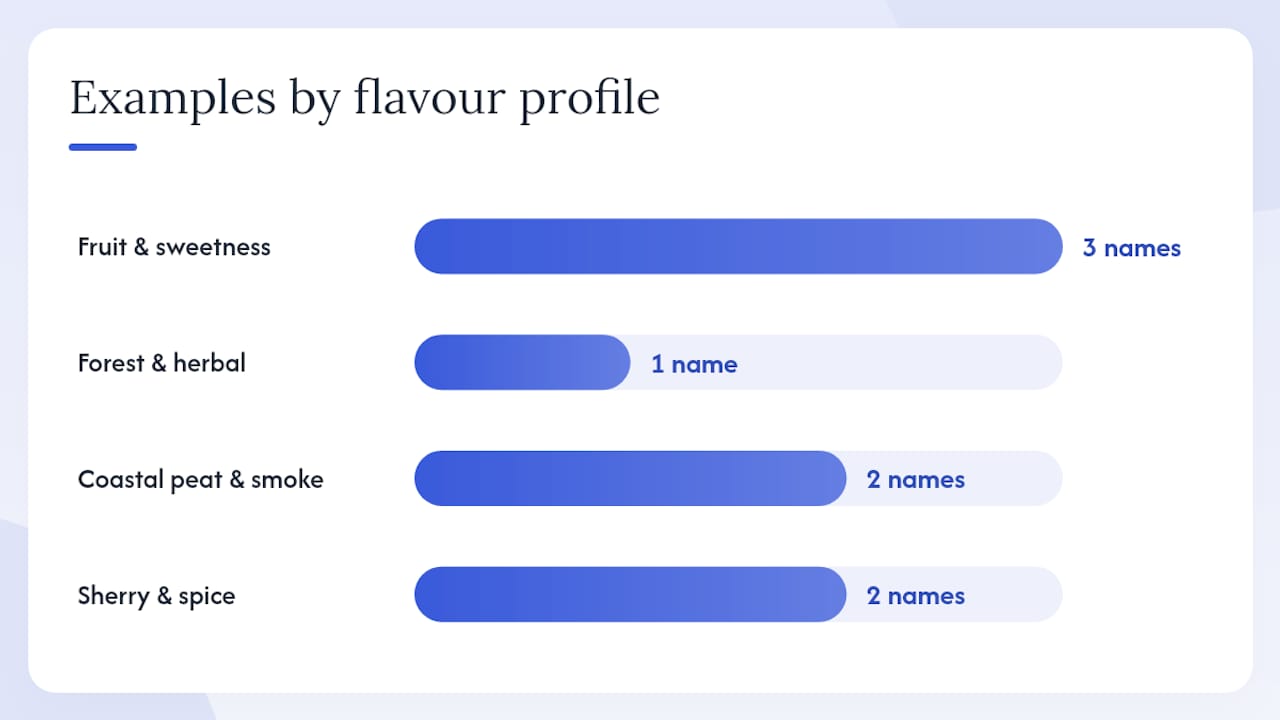
- Start with your palate preference. Do you want fruit and sweetness (Miyagikyo, Fuji, Hinomaru), forest and herbal freshness (Hakushu), coastal peat and smoke (Yoichi, Akkeshi), or concentrated sherry and spice (Yamazaki, Mars Tsunuki)?
- Set a realistic budget. Under A$150 covers Akashi, Miyagikyo NAS, and Yoichi NAS. A$150–A$300 opens up Hakushu 12, Fuji, and Mars Tsunuki. Above A$300 is collector territory: Chichibu, Akkeshi, and age-stated Yamazaki.
- Decide on cask influence. Mizunara oak adds incense and sandalwood but takes decades to show its character, so it appears mainly in older or premium releases. Sherry casks add dried fruit and chocolate. Bourbon casks give vanilla and coconut. Peat is a separate variable entirely, determined by the malting process rather than the cask.
- Age statement vs NAS. Global demand for Japanese whisky has driven many distilleries toward NAS releases to protect house style while aged stock catches up with orders. As industry reporting notes, this is a supply management strategy, not a quality compromise. Mars Tsunuki’s WWA 2025 win is the clearest proof.
- Check ABV and bottling format. Cask-strength releases (Akkeshi, Saburomaru) deliver more intensity but need water to open up. Standard 43–46% ABV bottlings are more immediately approachable. The 300ml Yamazaki Distillery Exclusive format is a practical way to try a premium expression without the full-bottle outlay.
Pro Tip: Before committing to a full 700ml bottle, look for 200ml or 300ml formats, or ask your specialist retailer about sample programmes. The Yamazaki Distillery Exclusive 300ml on Uisuki is a good example of a premium expression in a trial-friendly size.
Where can you buy Japanese single malts in Australia?
Australian buyers have more options than a few years ago, but scarcity is real for anything above the entry tier.
Price bands and scarcity at a glance:
| Price band | Typical bottles | Availability |
|---|---|---|
| Under A$150 | Akashi 5 YO, Miyagikyo NAS, Yoichi NAS, Hinomaru 1823 | Common via specialist retail |
| A$150–A$300 | Hakushu 12, Fuji Single Malt, Mars Tsunuki, Yoichi Single Malt | Limited; check stock regularly |
| — | Chichibu, Kanosuke, Akkeshi Hakuro, Yamazaki 12 | Scarce; waitlists common |
| — | Yamazaki 18, Hakushu 18, Ichiro’s Malt single casks | Collector; secondary market active |
Where to shop:
- Specialist online retailers (Uisuki and similar) carry curated Japanese selections with accurate tasting notes and genuine stock. They are the most reliable channel for bottles in the A$100–A$300 range and can often source scarce bottles on request.
- Auction platforms (Whisky Auctioneer, Langton’s) are the main route for collector bottles. Prices reflect secondary market demand and can be significantly above retail; factor in buyer’s premium.
- Bottle shops and liquor chains stock the most common expressions (Yamazaki 12, Hakushu 12, Yoichi NAS) but rarely carry anything limited or NAS from smaller distilleries.
- Duty-free at major Australian airports occasionally stocks Yamazaki and Hakushu at competitive prices; worth checking on international travel.
Pro Tip: When buying on the secondary market, check the JSLMA labelling standard seal on the bottle. Not every product labelled in Japan uses fully Japanese-distilled spirit; the JSLMA mark confirms authenticity. Reputable specialist retailers already screen for this, which is one concrete advantage of buying through a curated channel over a general auction.
Why you can trust these picks
The shortlist is built on three layers of evidence, not personal preference alone.
- International competition results. The ISC and World Whiskies Awards use panels of distillers, blenders, and buyers judging blind. The ISC 2026 awarded Double Gold to Hakushu 18 and Gold to multiple Yamazaki and Yoichi expressions, and the Forbes coverage of the 2025 ISC specifically highlighted mizunara oak and blending skill as the defining factors in top-scoring Japanese whiskies.
- Distillery pedigree and house style. Yamazaki, Nikka (Yoichi and Miyagikyo), Mars, and Ichiro’s Malt each have documented house styles and decades of production history. The WWA 2025 results also confirmed that smaller distilleries, including Akkeshi and Kanosuke, are producing category-level quality, which is why they appear on this list alongside the established names.
- Australian availability via Uisuki. Every bottle recommended here can be sourced in Australia, either as regular stock or via specialist sourcing request. Uisuki’s product pages carry verified ABV, cask, and format details, and the platform screens for JSLMA-compliant products.
A curator’s note on this shortlist
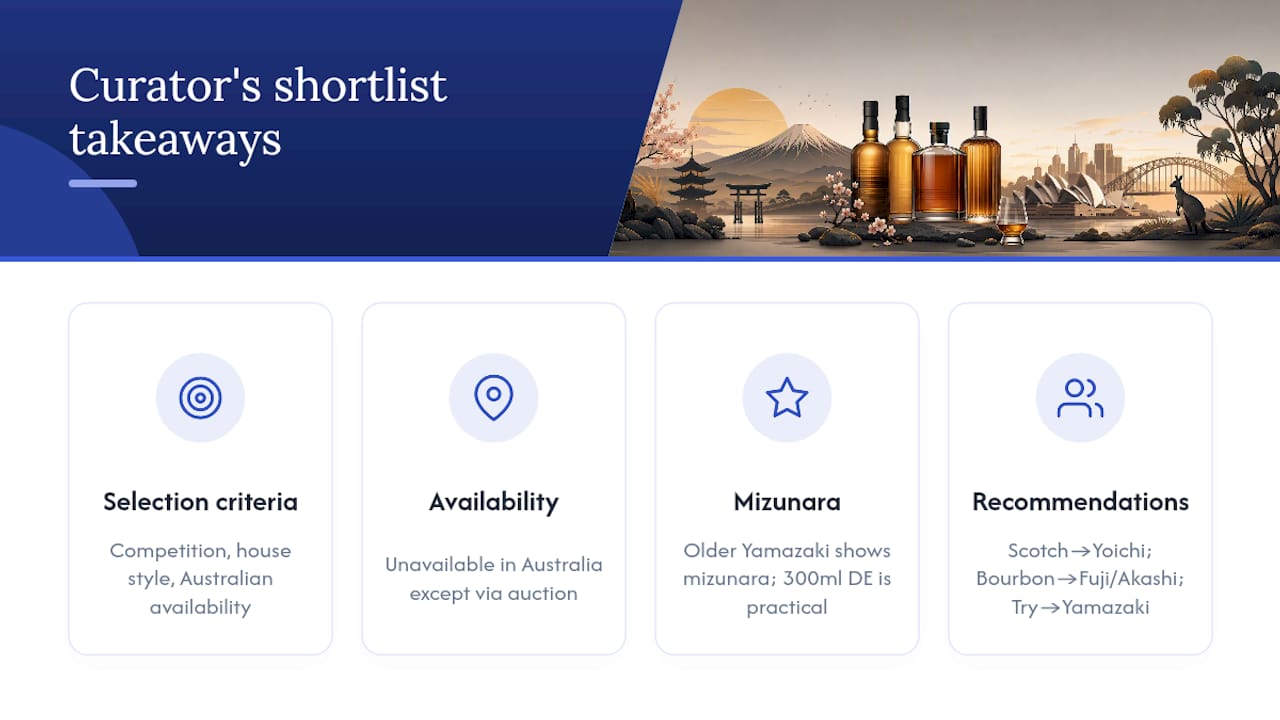
The bottles here were selected by weighing three things against each other: competition performance, house style consistency, and whether an Australian buyer can actually get hold of them at a fair price. That last criterion cuts more bottles than you might expect. Several highly awarded Japanese single malts are effectively unavailable in Australia outside of auction, and recommending them without that caveat would be unhelpful.
Mizunara-influenced expressions deserve special mention. Mizunara oak takes decades to show its signature incense and sandalwood notes, which is why the most compelling mizunara character appears in older Yamazaki releases. If budget is a constraint, the Yamazaki Distillery Exclusive 300ml is the most practical way to encounter that profile without spending A$500 on a full bottle of the 18 Year Old.
For drinkers coming from Scotch, Yoichi is the natural entry point. For those who prefer bourbon, start with Fuji or Akashi. And if you want to understand what makes Japanese whisky genuinely different from everything else, buy a bottle of Yamazaki and take your time with it.
Uisuki stocks these bottles and can source the rest
Uisuki carries several of the bottles on this shortlist as regular stock, including the Yamazaki Distillery Exclusive 300ml, Nikka Yoichi Single Malt, Miyagikyo Single Malt, and Hakushu 18 Year Old. For collector bottles like Chichibu or Kanosuke, Uisuki accepts sourcing requests and will notify you when stock becomes available.
Uisuki also stocks Ichiro’s Malt releases and ships Australia-wide with free shipping above the threshold. If you are after a bottle not currently listed, use the sourcing request form on the site. The team specialises in tracking down hard-to-find Japanese and international whiskies, and that personal sourcing service is where Uisuki genuinely earns its place over a general bottle shop. Browse the full Japanese whisky range at Uisuki and check current stock before a bottle sells out.
Sources
- Yamazaki® Single Malt Japanese Whisky | The House of Suntory
- Winner whisky | World Whiskies Awards 2025
- 2026 ISC Japanese whisky winners: full medal list | The Whiskey Wash