

TL;DR:
- Japanese whisky offers a complex flavor profile that spans smoky, maritime, floral, and sherry-infused notes, shaped by climate, water quality, and cultural influences. Its distinctiveness is enhanced by mizunara oak, gentle peat levels, precise fermentation, and innovative cask use, emphasizing harmony over intensity. To appreciate it fully, taste slowly with proper glassware and consider serving as a highball to reveal its subtle nuances.
Japanese whisky has a reputation problem. Not a bad one — quite the opposite. Most people assume it all tastes the same: light, delicate, vaguely fruity, maybe a whisper of oak. That assumption undersells one of the most technically sophisticated whisky traditions on the planet. The unique flavors of Japanese whisky span from sandalwood and incense to briny maritime smoke, sherry-soaked dried fruit, and crisp alpine herbs. This guide unpacks what actually drives those flavours, how the major distilleries differ, and how to taste Japanese whisky in a way that lets you genuinely appreciate everything in the glass.
Table of Contents
- Key takeaways
- What shapes the unique flavours of Japanese whisky
- Flavour components that make Japanese whisky distinctive
- Flagship whiskies and their flavour differences
- How to taste Japanese whisky properly
- My perspective on what makes Japanese whisky worth the effort
- Discover Japanese whisky at Uisuki
- FAQ
Key takeaways
| Point | Details |
|---|---|
| Not just delicate or fruity | Japanese whisky spans smoky, maritime, floral, and rich sherry profiles across different distilleries. |
| Mizunara oak is a game-changer | This rare Japanese timber adds sandalwood, incense, and coconut notes found nowhere else in whisky. |
| Climate accelerates complexity | Variable temperatures in Japanese maturation regions push flavour development faster than many Scotch equivalents. |
| Highballs reveal hidden notes | Serving Japanese whisky as a highball at 8–10% ABV exposes delicate umami-friendly nuances that neat pours can mask. |
| New distilleries are redefining style | Award-winning releases from newer producers show that Japanese whisky’s flavour range is still expanding. |
What shapes the unique flavours of Japanese whisky
The story of Japanese whisky begins with a man who went to Scotland to learn, then came home and did something entirely different. Masataka Taketsuru studied distilling in Scotland in the early 1920s and brought back the technical framework. What emerged over the following century, however, was shaped far more by Japanese culture than by any Scottish blueprint.
The Japanese whisky philosophy prioritises harmony and elegance, not intensity. Where a heavily peated Scotch whisky announces itself loudly, Japanese whisky is designed to sit alongside food, complement it, and disappear gracefully from the palate rather than dominate it. That design philosophy has direct consequences for flavour. Distillers aim for balance across multiple layers rather than a single bold statement.
Several cultural and environmental forces converge to create the distinctive Japanese whisky flavors you encounter across different expressions:
- Climate variation. Japan’s variable maturation climate accelerates the interaction between spirit and cask. Hot summers push the liquid deep into the wood, cold winters contract it back out. This cycle, happening faster than in Scotland, builds complexity quickly.
- Water quality. Japan’s distilleries, particularly in the highlands, draw on exceptionally soft, mineral-light water. Soft water produces a cleaner, purer mouthfeel and allows subtle fermentation esters to remain intact rather than being masked by mineral sharpness.
- Food culture. Japanese cuisine, built around umami, freshness, and precision, shaped what distillers wanted their whisky to taste like. A spirit that overwhelms grilled fish or delicate sashimi is a bad spirit by Japanese standards.
- Craft tradition. The same attention to detail that shapes Japanese ceramics, tea ceremony, and cooking — the pursuit of refined mastery in small things — runs directly through whisky production. Every variable is managed with uncommon care.
Flavour components that make Japanese whisky distinctive
This is where things get genuinely interesting. The flavor profile of Japanese whisky draws from a specific set of ingredients and techniques that produce aromas and tastes simply not found elsewhere.
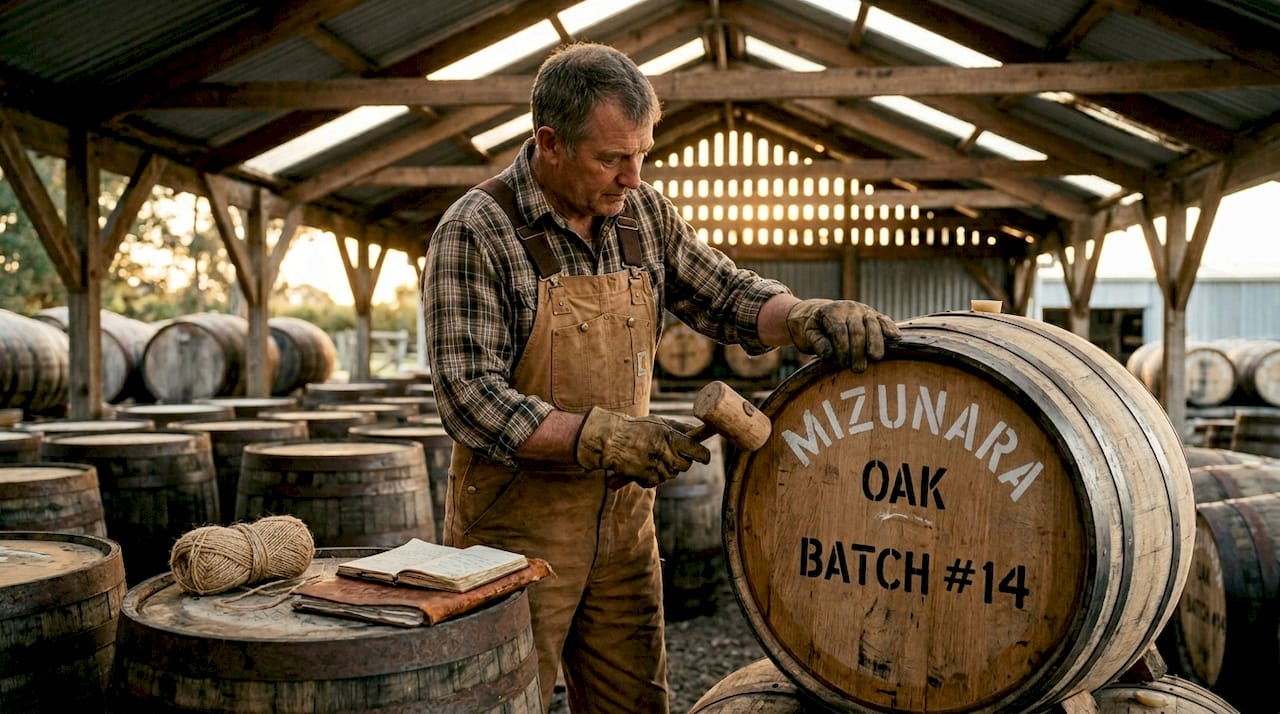
Mizunara oak. This is the single most unusual flavour contributor in the Japanese whisky world. Mizunara is a Japanese oak species that is notoriously difficult to work with. It warps, it leaks, and it takes decades to mature properly as a cask. But the sandalwood, incense, and coconut aromas that mizunara imparts are genuinely irreplaceable. No European or American oak comes close to replicating that temple-incense quality. If you have ever smelled a well-aged Yamazaki and wondered about that slightly exotic, almost resinous note, that is mizunara.
Peat, used gently. Japanese distillers do use peat, but almost never at the levels common in Islay Scotch. Most fall in the 1–5ppm range, which produces a nuanced whisper of smokiness rather than a full campfire. Hakushu is the clearest example: a faint, green smoke that reads more like burning pine needles than burning peat bog.
Still design. Japanese distilleries use pot stills with upward-angled line arms, a design choice that extracts lighter, fruitier congeners and leaves heavier sulphurous compounds behind. The result is a cleaner, more refined spirit that responds beautifully to cask maturation.
Fermentation precision. Yeast and barley strain selection in Japan is meticulous. Distinct yeast strains contribute to cleaner fermentations, which means the subtle fruit esters and floral notes survive all the way to the bottle rather than being buried under heavier fermentation by-products.
Cask innovation. Beyond mizunara, producers are exploring cherry wood casks, wine cask finishes, and yakushima tropical aging. A cherry wood cask finish can add a delicate, sweet, almost confected fruit quality that sits quite differently from the vanilla-heavy character of American oak.
Pro Tip: If you want to understand mizunara oak without spending a fortune, look for a blended expression that mentions mizunara in the cask breakdown rather than committing to a single malt aged entirely in it. You will get the character with more approachable pricing.
Flagship whiskies and their flavour differences
Reading about flavour is one thing. Comparing real expressions makes it tangible. Here is how the major distilleries contrast across the key dimensions of the Japanese whisky flavor profile:
| Whisky | Primary flavour notes | Style | Peat level |
|---|---|---|---|
| Yamazaki 12 Year | Peach, plum, dried fruit, gentle mizunara spice | Balanced, fruit-forward | None |
| Hakushu 12 Year | Green apple, fresh herbs, light smoke, menthol | Alpine, light, vegetal | Low (2–3ppm) |
| Nikka Yoichi Single Malt | Sea salt, smoke, dried fruit, dark chocolate | Maritime, robust | Medium |
| Miyagikyo Single Malt | Pear, jasmine, light malt, soft tannin | Delicate, floral | None |
| Ontake No.18 Single Cask | Rich sherry, dried plum, complex spice, oak | Dense, layered | None |
The Yamazaki 12 Year is widely regarded as the benchmark expression for anyone new to Japanese whisky. Its balance of stone fruit sweetness and gentle oak influence makes it a reliable reference point. Once you know what Yamazaki tastes like, the differences elsewhere become much easier to identify.
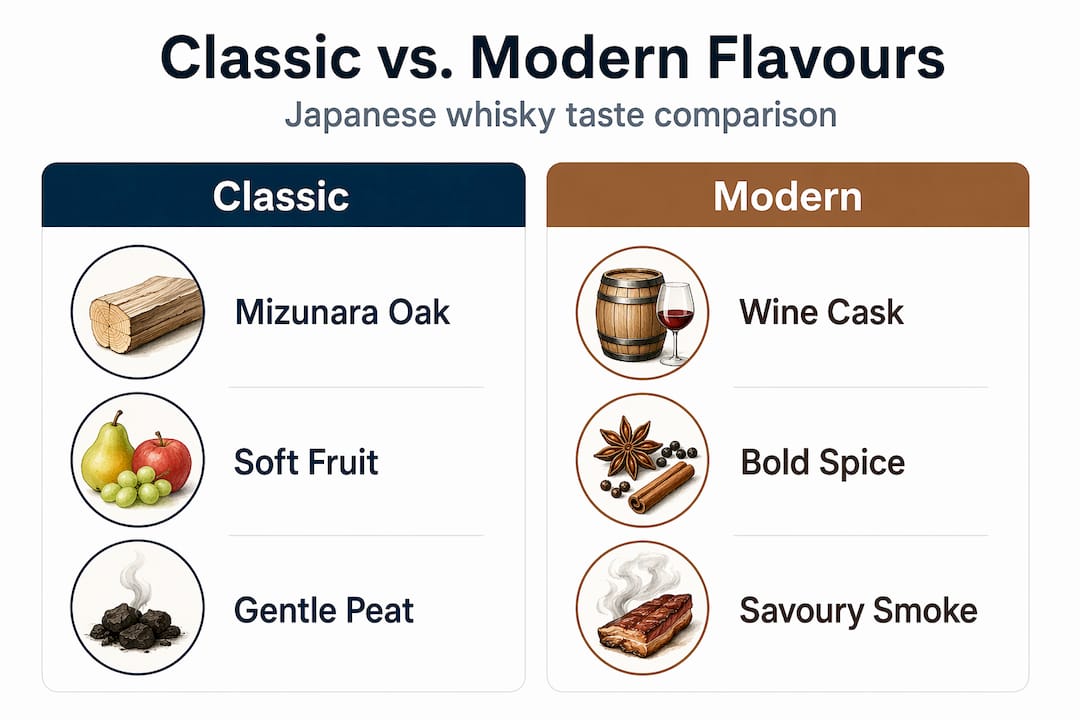
Nikka’s Yoichi distillery is the outlier that surprises most newcomers. Positioned on Hokkaido, it produces a whisky with genuine maritime weight and smoke that some Scotch drinkers find more familiar than expected. Yoichi proves that the distinctive Japanese whisky flavors are not all gentle. Miyagikyo, also from Nikka but softer in character, demonstrates how differently two distilleries from the same company can express themselves.
For a glimpse at where Japanese whisky is heading, the Ontake No.18 Single Cask Strength won the highest gold at the Tokyo Whisky and Spirits Competition in 2026, noted specifically for its rich sherry character. Newer, smaller distilleries are producing expressions that compete directly with the established giants.
Pro Tip: When you explore Japanese whisky comparisons side by side, pour small measures and let each glass sit for five minutes before nosing. The aromas develop considerably as the alcohol opens up, particularly with more complex expressions.
For a structured look at how these distilleries compare, the expert whisky comparisons at Uisuki are worth reading alongside this guide.
How to taste Japanese whisky properly
Japanese whisky rewards patience in a way that few other spirits do. If you approach it the way you might a bold bourbon or a heavily peated Scotch, nosing fast and taking large sips, you will miss most of what is in the glass.
Here is a practical tasting approach built around how to taste Japanese whisky with the subtlety it deserves:
- Use a tulip-shaped glass. A Glencairn or similar tulip concentrates the aromas toward the nose without trapping alcohol. Wide-mouthed glasses diffuse the delicate high notes before you catch them.
- Nose before you sip. Spend at least sixty seconds with the nose. Approach the glass from above rather than burying your nose in it. Japanese whisky’s aromatic complexity builds on multiple passes.
- Add a few drops of still water. A small amount of water, three or four drops maximum, opens up the mid-palate notes considerably. This is particularly effective with mizunara-aged expressions where water releases the incense compounds.
- Let the finish develop. Japanese whisky finishes tend to be long and evolving. After swallowing, wait ten to fifteen seconds before assessing the aftertaste. Notes shift considerably during this window.
- Try the highball test. Highball consumption at 8–10% ABV is the dominant way Japanese whisky is drunk in Japan. Diluting a quality whisky in cold soda water sounds counterintuitive, but it genuinely amplifies the lighter floral and umami-complementary notes that get compressed in the neat pour.
For food pairing, lean into the harmony principle. Japanese whisky alongside grilled salmon, miso-glazed chicken, or even a good aged cheddar works beautifully because the spirit does not compete. It lifts the food. That design to complement food rather than dominate it is baked into the flavour choices at every stage of production.
Pro Tip: The most common mistake when tasting Japanese whisky is dismissing it as “too subtle.” Subtle and empty are not the same thing. If a whisky seems understated on the first nose, try it again fifteen minutes later. Many Japanese expressions reveal themselves slowly, particularly if the bottle has just been opened.
For further development of your palate, the whisky tasting guide at Uisuki covers flavour profiling techniques that apply directly to Japanese expressions.
My perspective on what makes Japanese whisky worth the effort
I have tasted a lot of whisky from a lot of countries, and the question I get asked most often is whether Japanese whisky justifies its premium pricing given how restrained it sometimes seems. My honest answer is yes, but only once you retrain your expectations.
Most Western palates are calibrated for intensity. Bold vanilla from American oak, big phenolic smoke from Scottish peat, or rich dried fruit from sherry bombs. Japanese whisky does not play that game. What it does instead is layer complexity so precisely that you keep finding new things on the third, fifth, and tenth pour. The Hibiki 30 Year Old, which has tripled in price over recent years, is not expensive because of hype alone. It is expensive because what is in the bottle genuinely cannot be replicated.
I think the most exciting development right now is not from the big two producers. It is from smaller distilleries experimenting with low peat and cask innovation that sits outside any established tradition. They are taking the core Japanese philosophy of balance and applying it to flavour combinations nobody has tried before. That is where the next decade of unique Japanese spirits will come from.
My advice is to start with Yamazaki, understand the benchmark, then deliberately seek out something from Nikka’s portfolio that challenges your assumptions about what Japanese whisky is supposed to taste like. The contrast between those two producers alone will tell you more about the range of this category than anything else you can do.
— Brendan
Discover Japanese whisky at Uisuki
If this has given you the itch to explore the full range of what Japanese whisky can offer, Uisuki is a genuinely good place to start. The platform carries a curated selection of Japanese expressions from flagship releases to rare and limited edition bottles that are difficult to find elsewhere in Australia. Whether you are after a first bottle of Yamazaki, hunting a mizunara-aged expression, or curious about what newer distilleries are producing, the Japanese whisky collection is worth browsing. Expert product descriptions help you understand what is in each bottle before you commit, and the team is experienced at helping newcomers navigate a category that rewards a little guidance. Free shipping thresholds and multiple payment options make the whole process straightforward.
FAQ
What makes Japanese whisky taste different from Scotch?
Japanese whisky prioritises harmony and balance, designed to complement food rather than overpower it. Unique elements like mizunara oak, soft water, and precise fermentation techniques produce flavours not found in Scotch production.
What is mizunara oak and why does it matter?
Mizunara is a Japanese oak species that imparts distinctive sandalwood, incense, and coconut aromas during maturation. It is difficult and expensive to work with, which is why mizunara-aged expressions tend to carry a price premium.
Does Japanese whisky use peat?
Some Japanese whiskies do use peat, but typically at very low levels between 1 and 5ppm. This produces a subtle, nuanced smokiness rather than the bold campfire character associated with heavily peated Scotch.
Which Japanese whisky should a beginner start with?
The Yamazaki 12 Year is widely considered the benchmark entry point, offering a balanced combination of fruit sweetness, gentle oak, and mild spice that makes the broader Japanese whisky flavour profile easy to understand.
What is the best way to serve Japanese whisky?
Neat in a tulip-shaped glass with a few drops of water is ideal for full flavour appreciation. The Japanese highball, mixing whisky with cold soda water, is also an excellent method that highlights the lighter, more delicate aromatic notes.