

TL;DR:
- Australian whisky collectors find it challenging to choose top Japanese bottles due to market hype and limited availability. A reliable method involves blind-tasting competition results combined with rarity assessments, focusing on genuine awards like ISC and WWA. Notable expressions include Yamazaki 18 for quality, Yamazaki 25 Mizunara for rarity, and Mars Tsunuki for emerging excellence.
Australian whisky collectors face a genuinely difficult task when building a shortlist of the best Japanese bottles available. Award season brings a flood of press releases, limited allocations sell out in hours, and the line between genuine quality and marketing hype has never been blurrier. The good news is that a defensible, evidence-based framework exists: blind-tasting competition results combined with honest rarity assessments. This article walks through the leading award winners, rare collector gems, and a side-by-side comparison to help you make sharper decisions in 2026 whether you are buying for your own collection or choosing a genuinely impressive gift.
Table of Contents
- What makes a Japanese whisky ‘top’: Award criteria and collector benchmarks
- Yamazaki 18 Years Old: Award-winning excellence and collector demand
- Yamazaki 25 Years Old Mizunara: The rarest collector gem in Japanese whisky
- Mars Tsunuki Single Malt and art collection: Recent award winners to watch
- Head-to-head comparison: Award winners versus rare collector bottles
- Our perspective: Why ‘top’ Japanese whisky means blending blind tasting and rarity
- Where to discover and buy top Japanese whiskies in Australia
- Frequently asked questions
Key Takeaways
| Point | Details |
|---|---|
| Awards matter most | Blind-tasting wins, especially from ISC and WWAs, set the standard for authentic ‘top’ Japanese whiskies. |
| Rarity drives collector value | Allocation and ageing in special casks, like Mizunara, make bottles like Yamazaki 25 prized beyond their taste scores. |
| Benchmark versus grail | The best shortlist blends recent award champions and ultra-rare collectors’ bottles. |
| Mars Tsunuki is rising | Mars Tsunuki has clinched major awards recently, making it a new contender for both enthusiasts and collectors. |
| Australian buying tips | Use both award results and rarity insights when choosing Japanese whisky for enjoyment or gifting. |
What makes a Japanese whisky ‘top’: Award criteria and collector benchmarks
Not every “best of” list is created equal. Some rely on paid placements, others on public popularity votes, and a few on genuine blind-tasting panels where judges score bottles without knowing what they are drinking. For serious collectors, that last method is the gold standard.
Whisky enthusiasts commonly use awards and blind-tasting competitions as a trustworthy benchmark for identifying genuine standouts. The International Spirits Challenge (ISC) and the World Whiskies Awards (WWA) are the two competitions that carry the most weight among collectors and trade buyers globally. Both use panels of experienced judges, and the ISC in particular runs its entire judging process without labels visible to the panel.
Key criteria worth understanding before you buy:
- Blind tasting: Judges score without seeing the bottle, brand, or price, removing bias toward prestige labels
- Category breadth: Some competitions separate single malts, blended malts, and small-batch releases, so a bottle can win its category without beating all other Japanese expressions
- Allocation status: A whisky released in very small numbers commands collector interest regardless of its score, because scarcity itself drives value
- Cask pedigree: The type of oak used for maturation, especially rare Mizunara, adds a flavour dimension that attracts premium pricing
Understanding Japanese whisky types matters here because category definitions affect which bottles compete against each other. A single malt Yamazaki is judged differently from a blended malt like Hibiki, so award comparisons only make sense within categories.
“A bottle that wins a blind-tasting title carries more credibility than one that leads a popularity poll, because the score comes from flavour alone, not marketing spend.”
For a deeper look at how leading expressions stack up against each other, the Japanese whisky expert comparison on our site breaks down profiles, finishes, and value across key expressions.
Yamazaki 18 Years Old: Award-winning excellence and collector demand
If one bottle defines the current peak of Japanese single malt achievement, Yamazaki 18 Years Old is it. The Suntory distillery in the hills outside Kyoto has been producing whisky since 1923, and the 18-year expression represents the most decorated version of their flagship single malt.
In September 2025, Yamazaki 18 was named Supreme Champion Spirit at the International Spirits Challenge, the highest honour the competition awards across all spirits categories globally. The result came from blind tasting, meaning judges had no idea they were scoring a Japanese single malt when they gave it top marks.
What sits inside the bottle justifies that result:
- Sherry cask maturation contributes rich dried fruit, dark chocolate, and a warming sweetness
- American white oak casks add vanilla, coconut, and a lighter honeyed character
- Mizunara Japanese oak casks bring sandalwood, incense, and a uniquely Eastern spice profile that no European or American cask can replicate
The combination of all three cask types, blended by Suntory’s master blenders, creates a flavour complexity that is genuinely difficult to find anywhere in the world at the same level of consistency. Suntory’s Yamazaki range has earned recognition at the ISC across multiple years, with a three-year streak of recognition that no other distillery has matched at the same competition.
For Australian buyers, expect retail pricing to sit between $700 and $900 AUD depending on the retailer and availability. Secondary market prices climb considerably higher when allocation runs dry. This is a bottle that rewards patience during release windows and justifies investment as a prestige gift or a meaningful addition to any serious collection.
Explore further context and tasting notes in our rare whisky examples guide, which covers why certain expressions hold their value better than others over time.
Yamazaki 25 Years Old Mizunara: The rarest collector gem in Japanese whisky
There is a category beyond award-winning, and it belongs to bottles so scarce that most collectors will never hold one. Yamazaki 25 Years Old Mizunara Single Malt sits firmly in that territory.
Mizunara oak is sourced exclusively from forests in Hokkaido, Japan. The wood is famously difficult to work with: it is porous, prone to leaking, and requires exceptionally long ageing times before it imparts its signature flavours. Distilleries that use it accept lower yields and higher loss from evaporation in exchange for a flavour profile that is unlike anything produced in a European or American cask. Sandalwood, aloeswood, and a distinct oriental spice character emerge only after decades of contact with this particular wood.
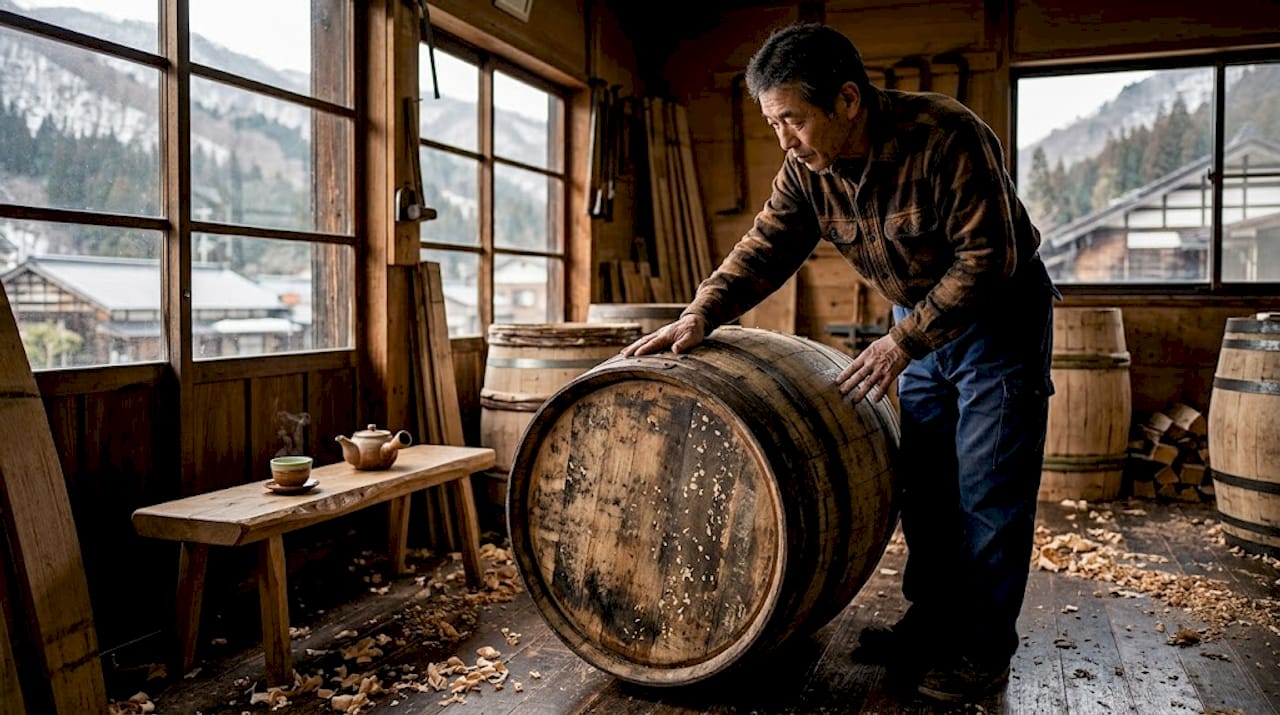
Yamazaki 25 Mizunara is positioned as one of the rarest Japanese whiskies available anywhere, with allocation so small it can only be described as minuscule, and pricing that sits at approximately $20,000 AUD per bottle on the secondary market.
Key facts for collectors considering this expression:
- Annual production is extremely limited and allocated to select markets and retailers
- The 25-year age statement means liquid that was put into cask around 2000 or earlier
- Mizunara cask whisky often continues developing in the glass for 30 to 60 minutes after pouring, a sign of its chemical complexity
- Secondary market demand consistently outpaces supply, making resale value relatively stable for patient holders
Pro Tip: If you are gifting or purchasing for investment purposes, ask the retailer for documentation confirming provenance and authenticity. The secondary market for rare Japanese whisky has seen a notable increase in counterfeit bottles, and a trustworthy paper trail protects both buyer and recipient.
“Rarity alone does not guarantee flavour superiority. The Mizunara 25 is both scarce and genuinely extraordinary, but collectors should understand that not every rare bottle scores as highly in blind tasting as it prices on the open market.”
For context on what makes certain cask types so prized by collectors, our article on rare Japanese whisky types covers the full spectrum including Sherry, Bourbon, and Japanese oak expressions. You can also explore a locally produced Mizunara aged whisky from Lark Distillery as a more accessible point of entry into Mizunara maturation.
Mars Tsunuki Single Malt and art collection: Recent award winners to watch
Not every top Japanese whisky carries a Suntory label. Hombo Shuzo, a distillery based in the Kagoshima region of Kyushu, produces Mars Tsunuki Single Malt from a distillery that opened in 2016 after a long hiatus. In a short period, it has earned serious recognition at the highest level of global competition.
At the World Whiskies Awards 2025, Mars 2024 Tsunuki was named Best Japanese Single Malt, a category win that puts it ahead of expressions from far more established and better-funded producers. This result signals that the southern Japanese climate, which accelerates maturation through warm temperatures, produces a distinctive flavour profile that judges find genuinely compelling.
The 2026 awards brought further recognition. The Mars Tsunuki Minami-satsuma Art Collection #04 earned a Gold Category Win and was named Best Japanese Small Batch Single Malt at the World Whiskies Awards 2026. Two consecutive years of top-category wins at the same prestigious competition is not a coincidence.
| Expression | Award | Competition | Year |
|---|---|---|---|
| Mars 2024 Tsunuki | Best Japanese Single Malt | World Whiskies Awards | 2025 |
| Tsunuki Art Collection #04 | Best Japanese Small Batch Single Malt | World Whiskies Awards | 2026 |
| Yamazaki 18 Years Old | Supreme Champion Spirit | International Spirits Challenge | 2025 |
What sets Mars Tsunuki apart for collectors:
- Southern Kyushu’s sub-tropical climate creates faster angel’s share loss but more rapid flavour integration
- Production volumes remain small compared to Suntory, making bottles relatively limited even if not as scarce as Mizunara expressions
- The Art Collection series introduces a collectability dimension through numbered releases
Pro Tip: Watch the Art Collection series closely. Numbered releases with award wins behind them have historically appreciated in value once they sell through initial allocation.
If you want to explore the full range, our Mars Tsunuki complete set brings together multiple editions in one curated purchase, and Mars Tsunuki The First remains a benchmark bottle from the distillery’s earliest commercial releases.
Head-to-head comparison: Award winners versus rare collector bottles
Australian buyers often ask a direct question: should I chase the award winner or the rarest bottle? The honest answer is that they serve different purposes, and a strong collection includes both.
| Bottle | Key award | Rarity level | Approx. AUD price | Best for |
|---|---|---|---|---|
| Yamazaki 18 Years Old | ISC Supreme Champion 2025 | Moderate to high | $700 to $900 | Drinking and gifting |
| Yamazaki 25 Mizunara | No major blind-tasting win | Extremely high | $20,000+ | Investment and display |
| Mars Tsunuki 2024 | WWA Best Japanese Single Malt | Moderate | $150 to $250 | Enthusiasts and emerging collectors |
| Tsunuki Art Collection #04 | WWA Best Small Batch 2026 | Limited | $300 to $500 | Collectors watching new releases |
Rarest does not automatically mean best scored. The Yamazaki 25 Mizunara commands its extraordinary price because of allocation constraints and the prestige of Mizunara maturation, not because it consistently outscores other expressions in blind panel competitions. Award winners like Yamazaki 18 and Mars Tsunuki succeed on flavour merit alone.
Award criteria and results vary considerably between competitions. Australian buyers who rely on a single awards body risk missing bottles that scored highly elsewhere or ignoring expressions that won categories their preferred competition does not separate. Cross-referencing ISC and WWA results gives a far more reliable picture.
For broader context on what makes Japanese whisky genuinely distinctive from other styles, the Japanese whisky unique qualities article covers the cultural, geographic, and technical factors that separate these expressions from Scotch or American whiskey. If you are navigating finding limited edition whisky in Australia, that guide walks through practical strategies for joining allocation lists and identifying reputable sources.
Our perspective: Why ‘top’ Japanese whisky means blending blind tasting and rarity
Here is the part of the conversation that most buyer guides skip. The bottles that appear on every “top 10” list are not always the same bottles that collectors quietly stockpile for long-term value or genuine personal enjoyment. There is a significant gap between popular and genuinely top-tier.
Yamazaki 18 Years Old earned its Supreme Champion title through a process that removed every advantage a famous name normally provides. That is meaningful. Mars Tsunuki earned its Best Japanese Single Malt title at the WWA through the same merit-based process. Both bottles deserve to be on a serious shortlist. Neither should be on that shortlist simply because they appear in a glossy magazine feature.
The Yamazaki 25 Mizunara situation is more nuanced. Its pricing reflects scarcity and cultural prestige, not necessarily a blind-panel score. For a collector focused on resale value or on giving the most impressive possible gift, that price reflects perceived status. For a collector focused purely on flavour-per-dollar, there are expressions that score equally well at one-tenth of the cost.
Our honest recommendation is to build your shortlist using three filters: a verified blind-tasting result from ISC or WWA, an allocation status that is genuinely limited rather than artificially hyped, and a clear purpose whether that is drinking now, ageing, or gifting. Applying all three filters simultaneously removes most of the noise in the Japanese whisky market.
For a practical breakdown of Japanese whisky examples explained with tasting notes and collector context, that resource will help ground your decision in specifics rather than generalities.
Where to discover and buy top Japanese whiskies in Australia
If the bottles in this article have caught your attention, the next step is finding reliable access to curated stock that has been properly vetted and stored. Australian collectors deserve a source that brings together award winners, emerging stars, and genuine rarities without the uncertainty of unverified grey-market sellers.
At Uisuki, our inventory includes both accessible award-winning expressions and highly sought collector bottles. We source carefully, maintain proper storage conditions, and provide detailed provenance information on rare releases. If you are exploring beyond Japanese whisky, expressions like our exclusive aged whisky demonstrate the calibre of rare and aged releases we curate across all regions. For everything from immediate purchase to personalised sourcing requests on hard-to-find Japanese bottles, browse our full collection and contact our team directly. We handle shipping across Australia and can advise on the best options for gifting or adding to a serious collection.
Frequently asked questions
What does ‘blind tasting’ mean in whisky awards?
Blind tasting is when judges sample whiskies without knowing their brand or origin, ensuring unbiased scoring. The International Spirits Challenge explicitly describes its process as blind, which is why its results carry significant weight among serious collectors.
Why are Yamazaki Mizunara whiskies so expensive?
Yamazaki Mizunara whiskies are extremely rare and aged in difficult-to-source Japanese oak, with very small allocations that drive up demand and price. Allocation is described as minuscule and secondary market pricing sits at approximately $20,000 AUD per bottle.
How do awards like ISC and World Whiskies Awards compare for collectors?
Award criteria and results vary considerably between the two competitions, so cross-referencing both gives a more reliable picture. Awards differ by competition and criteria, and Australian buyers should use both systems rather than relying solely on one.
Are there affordable Japanese whiskies worth considering?
There are genuinely flavourful Japanese expressions at more accessible price points, though global award winners and rare collector bottles come at a premium. Mars 2024 Tsunuki was named Best Japanese Single Malt at the World Whiskies Awards 2025, and it sits at a fraction of the cost of top Yamazaki expressions.