

TL;DR:
- Japanese whisky has gained recognition for its distinct production standards and Mizunara oak influence.
- Popular brands like Suntory and Nikka offer key expressions for collectors and enthusiasts.
- Limited releases and awards drive prices and scarcity, making authenticity and provenance essential for buyers.
Japanese whisky has quietly overtaken Scotch at the world’s most prestigious competitions, and Australian collectors are paying close attention. The Yamazaki 18 YO named Supreme Champion at the International Spirits Challenge 2025 marks the third consecutive year this bottle has claimed the top prize. That kind of consistency doesn’t happen by accident. It reflects a deeply considered approach to production, flavour, and craft that makes Japanese whisky genuinely different from anything else in your collection. This guide walks you through the major types, the key producers, what’s worth hunting down, and how to build your knowledge as an Australian enthusiast.
Table of Contents
- What defines Japanese whisky today
- Suntory: The pillars of popularity
- Nikka: Robust character and blending artistry
- Award winners and rare finds
- Perspective: What most Japanese whisky guides overlook
- Find popular Japanese whisky types in Australia
- Frequently asked questions
Key Takeaways
| Point | Details |
|---|---|
| Japanese whisky standards | Modern rules ensure Japanese whisky is 100% produced and matured in Japan, often featuring Mizunara oak. |
| Popular core ranges | Suntory and Nikka lead with internationally awarded releases accessible to Australian collectors. |
| Value of blends and age | Blended and non-age statement whiskies offer great flavour and collectability alongside rare aged bottles. |
| Australian availability | Importers make Suntory and Nikka lines, especially Yamazaki, Hibiki, and From the Barrel, easy to find. |
What defines Japanese whisky today
For years, Japanese whisky operated in a grey area. Bottles labelled “Japanese” could legally contain imported Scotch or Canadian spirit, blended and bottled in Japan. That changed in 2021 when the Japan Spirits and Liqueurs Makers Association introduced formal production standards. Under these rules, Japanese whisky must be distilled and matured in Japan, using malted grain, and aged in wooden casks on Japanese soil for a minimum of three years. This was a watershed moment for collectors and enthusiasts worldwide, including here in Australia, because it finally gave the category a meaningful guarantee of provenance.
One of the most fascinating production elements unique to Japan is Mizunara oak. This native Japanese timber is notoriously difficult to work with. It’s porous, prone to leaking, and requires decades of maturation before it fully expresses its character. But the flavour it imparts is unlike anything from European or American oak: think sandalwood, incense, coconut, and a lingering oriental spice. Distilleries like Suntory have been working with Mizunara for generations, which is part of why their aged expressions command such extraordinary prices.
Japanese whisky also differs from Scotch in its blending philosophy. Where Scotch blenders often work with spirit from dozens of independent distilleries, Japanese producers like Suntory and Nikka have historically sourced everything from within their own distillery network. This creates a tightly controlled house style. You can explore Japanese whisky examples explained to see how this plays out across different expressions.
Here’s a quick summary of what makes Japanese whisky distinctive:
- Strict 2021 production standards requiring distillation and maturation in Japan
- Mizunara oak ageing producing incense, spice, and coconut notes
- In-house blending using spirit from a single producer’s distilleries
- Accelerated maturation due to Japan’s hot, humid summers and cold winters
- Precise, restrained flavour profiles built on balance rather than intensity
“Japanese whisky is not an imitation of Scotch. It is a distinct tradition shaped by Japanese aesthetics, climate, and an obsession with precision that has no real parallel elsewhere in the whisky world.”
For Australian drinkers who value authenticity and traceability, the 2021 standards matter. Buying a bottle now means you know exactly where it was made.
Suntory: The pillars of popularity
Suntory dominates popular Japanese whisky with four flagship lines that cover almost every flavour preference. Understanding the differences between Yamazaki, Hakushu, Hibiki, and Chita is the foundation of any serious Japanese whisky education.
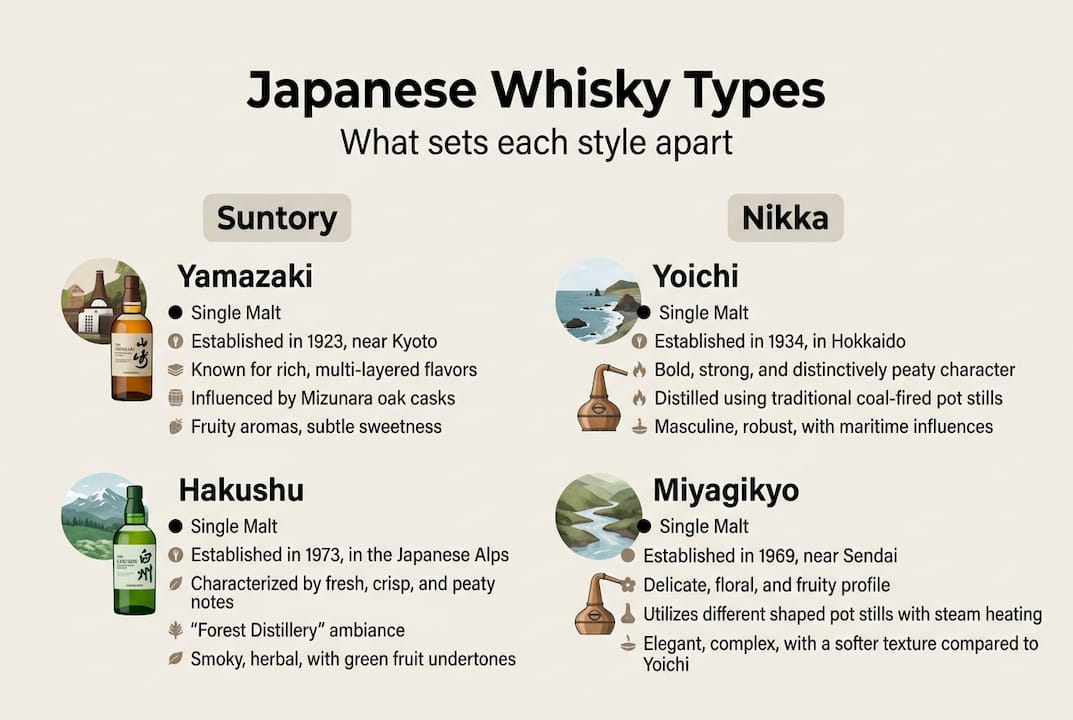
Yamazaki is Japan’s oldest malt distillery, founded in 1923. It sits in a valley near Kyoto where the rivers Katsura, Uji, and Kizu meet, creating naturally humid conditions ideal for maturation. The flavour profile leans toward rich stone fruit, plum, and vanilla with age adding dried fig and dark chocolate. The 12 Year Old is an accessible entry point; the 18 Year Old is the bottle that keeps winning global trophies.
Hakushu sits in the Japanese Alps at 700 metres above sea level. The cooler, forested environment produces a lighter, fresher style with green apple, mint, and a subtle smokiness. It’s the Japanese whisky that surprises people who expect something heavier.
Hibiki is Suntory’s blended range, combining malt from Yamazaki and Hakushu with grain whisky from the Chita distillery. The Hibiki Blender’s Choice is a masterclass in harmony, with rose, lychee, and honey notes woven together seamlessly. Chita itself, as a single grain whisky, is lighter and more approachable, making it a great introduction for those new to the category.
| Expression | Style | Key flavours | Best for |
|---|---|---|---|
| Yamazaki 12 YO | Single malt | Stone fruit, vanilla, oak | Entry-level collectors |
| Yamazaki 18 YO | Single malt | Plum, fig, dark chocolate | Award chasers |
| Hakushu 12 YO | Single malt | Green apple, mint, smoke | Lighter palate lovers |
| Hibiki Harmony | Blend | Rose, lychee, honey | Beginners and gifting |
| Chita | Single grain | Vanilla, coconut, light oak | Cocktail enthusiasts |
In Australia, Suntory leads Japanese whisky imports and retail popularity by a significant margin, reflecting both brand recognition and consistent availability through specialist retailers. For collectors, the Yamazaki 2022 Limited Edition represents exactly the kind of release worth tracking down before it disappears.
Pro Tip: If you’re new to Suntory, start with Hibiki Harmony before moving to aged single malts. It gives you the full blending philosophy in a single glass without the premium price tag. Check out our Japanese whisky comparison to map your tasting journey.
Nikka: Robust character and blending artistry
Nikka’s story begins with Masataka Taketsuru, a young Japanese chemist who travelled to Scotland in 1918 to learn distilling firsthand. He brought back not just techniques but a deep respect for peated malt and pot still production. That Scottish influence is still unmistakable in Nikka’s portfolio today, particularly at Yoichi.
Nikka’s core range includes Yoichi, Miyagikyo, Taketsuru Pure Malt, From the Barrel, and Days, each with a distinct personality. The contrast between Yoichi and Miyagikyo is one of the most instructive comparisons in all of Japanese whisky.
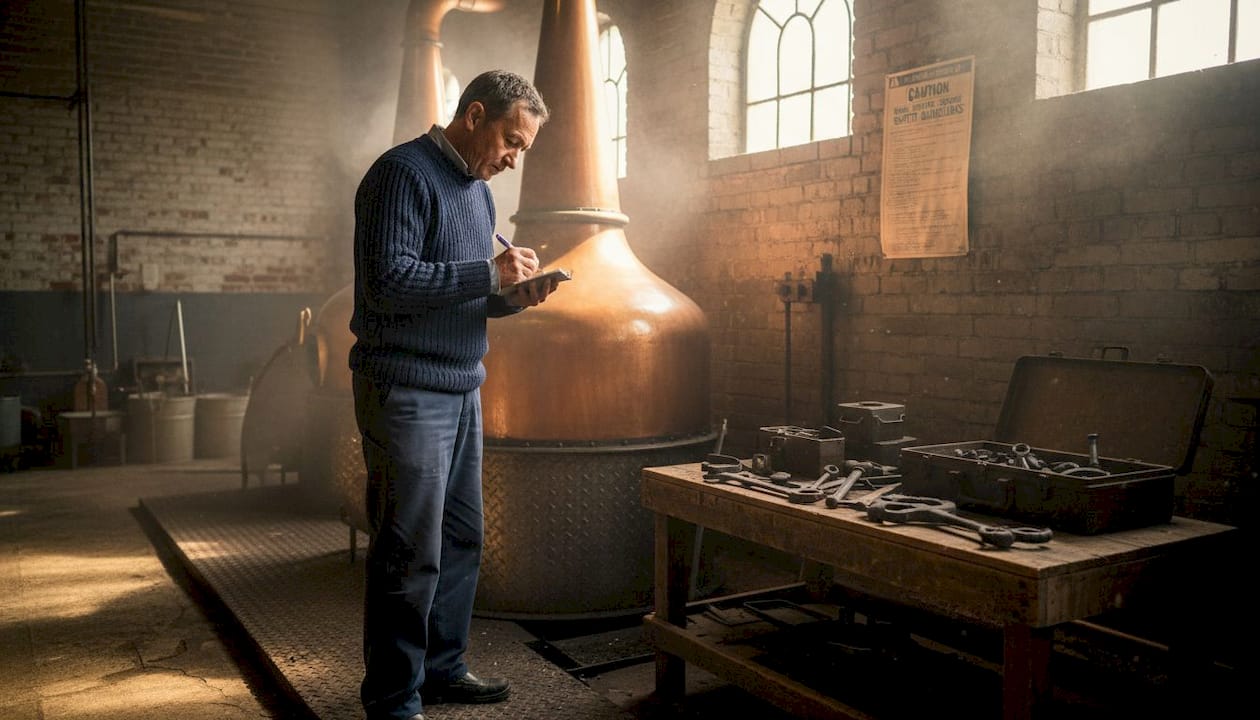
Yoichi, on Hokkaido’s northern coast, uses coal-fired pot stills that add peat and smoke to the spirit in a way that no other Japanese distillery replicates. The result is bold, briny, and complex, closer in character to an Islay Scotch than anything from Suntory. The Nikka Yoichi Single Malt is a bottle that genuinely surprises people expecting delicate Japanese subtlety.
Miyagikyo, in contrast, sits in a misty river valley near Sendai. It uses steam-heated stills and produces a much more elegant, fruit-driven spirit: think red berries, melon, and floral notes. If Yoichi is the bold statement, Miyagikyo is the quiet conversation.
Here’s what makes Nikka particularly compelling for collectors:
- From the Barrel (51.4% ABV) is one of the best value premium whiskies in the world, full stop
- Taketsuru Pure Malt honours the founder and blends Yoichi and Miyagikyo malt for a balanced, complex result
- The Taketsuru 17 Year Old is now discontinued, making existing bottles highly sought after
- Nikka’s NAS (no age statement) expressions offer serious quality at accessible prices
Pro Tip: If you love smoky Scotch but want to explore Japanese whisky, start with Yoichi 10 Year Old. It bridges both worlds beautifully and gives you a clear reference point for understanding how Japanese production techniques diverge from their Scottish roots.
Aussie collectors who gravitate toward Nikka tend to appreciate complexity and weight over delicacy. If your Scotch shelf leans toward Islay or Highland expressions, Nikka is your natural Japanese counterpart.
Award winners and rare finds
Both Suntory and Nikka offer core range appeal, but the prestige market is shaped by a handful of headline-grabbing bottles and limited releases. Knowing which ones matter, and why, separates serious collectors from casual buyers.
Award-winning expressions include Yamazaki 18 and 25 Year Old, Ichiro’s Malt and Grain, and Mars Tsunuki, with Suntory named Producer of the Year at the International Spirits Challenge for the sixth consecutive year. That’s not marketing copy. It’s a sustained track record that reflects genuine quality across an entire portfolio, not just a single lucky bottling.
Here’s a snapshot of recent standout releases and what drives their value:
| Bottle | Why it matters | Approx. Australian retail |
|---|---|---|
| Yamazaki 18 YO | Three-time ISC Supreme Champion | $700 to $900 |
| Yamazaki 25 YO Mizunara | Ultra-rare, Mizunara oak aged | $3,000 and above |
| Ichiro’s Malt and Grain | Boutique, globally recognised | $200 to $350 |
| From the Barrel | Best value premium Japanese whisky | $90 to $130 |
| Taketsuru 17 YO | Discontinued, collector item | $400 to $600 |
For collectors looking to invest or simply taste these rarities, follow these steps:
- Buy from verified specialist retailers who source directly through official import channels
- Check original packaging including seals, batch numbers, and distillery markings
- Track release dates through distillery newsletters and specialist whisky communities
- Prioritise flavour first because bottles bought purely for investment can disappoint if the market shifts
- Document your collection with purchase receipts and provenance records
The scarcity issue is real. Supply genuinely cannot meet demand for premium Japanese whisky, particularly aged expressions. Hibiki Harmony uses carefully selected malts and grains, and production timelines mean that what’s in the warehouse today was laid down years ago. That constraint won’t ease quickly, which is why prices for top Japanese whiskies have moved sharply upward and are unlikely to reverse.
Perspective: What most Japanese whisky guides overlook
Most guides to Japanese whisky spend their energy on trophy bottles: the aged Yamazaki, the discontinued Taketsuru, the Ichiro’s Malt that sold at auction for a staggering sum. And while those bottles are genuinely extraordinary, chasing them can actually narrow your appreciation of the category rather than deepen it.
Here’s what we’ve noticed: the collectors who get the most from Japanese whisky are the ones who spend serious time with accessible expressions first. Hibiki Harmony and From the Barrel are far more gettable than ultra-aged Yamazaki, and they teach you more about Japanese blending philosophy per dollar spent than almost anything else.
NAS expressions get dismissed by some enthusiasts as lesser products, but in Japan, NAS often means the master blender has more freedom, not less. The result can be more interesting than a rigidly age-stated bottle.
Our honest advice: build your palate on the explained Japanese whisky examples across different producers before committing serious money to rare releases. The trophy bottles will still be there, and you’ll appreciate them far more.
Find popular Japanese whisky types in Australia
Knowing what to look for is only half the journey. Finding authentic bottles from a trusted source is where it gets practical for Australian collectors.
At Uisuki, we’ve built our catalogue specifically for enthusiasts who want more than what the bottle shop stocks. Whether you’re after everyday expressions or rare limited releases, Japanese whisky delivered to your door from a specialist retailer means you’re getting verified stock with genuine provenance. We carry everything from the accessible Nikka Yoichi retail expression to hard-to-find aged bottlings, with expert guidance to help you choose. Explore the range and let your collection reflect real knowledge, not just hype.
Frequently asked questions
What makes Japanese whisky different from Scotch or Irish whisky?
Japanese whisky relies on Mizunara oak and precise in-house blending, producing flavours like sandalwood, incense, and stone fruit that are distinct from European and Irish styles. The climate-driven maturation in Japan also accelerates flavour development in ways that Scotch or Irish distilleries simply cannot replicate.
Which Japanese whisky brands are easiest to find in Australia?
Suntory leads availability in Australia, particularly Yamazaki and Hibiki, while Nikka From the Barrel is widely stocked through specialist retailers. These three expressions are your best starting points for building a Japanese whisky collection without the frustration of chasing ultra-rare bottles.
Are limited edition or aged Japanese whiskies a good investment?
Aged and rare releases often appreciate in value, but they’re best approached for their flavour and provenance first. Aged bottles like Yamazaki 18 YO regularly break records at awards and auctions, but the market can be unpredictable for those buying purely for financial return.
How can collectors spot authentic Japanese whisky in Australia?
Look for verified specialist importers, original distillery packaging, and official retail stockists with clear provenance information. Buying via official Suntory and Nikka channels or authorised Australian retailers is the most reliable way to ensure you’re getting the genuine article.
Why are some Japanese whiskies so expensive?
Supply cannot keep up with soaring global demand, and aged stocks take decades to build. High-profile international awards have also pushed collector interest and auction prices well beyond what retail pricing alone would suggest.