

TL;DR:
- Single grain whisky is produced at a single distillery using malted barley and other grains, distilled in continuous stills, and matured for at least three years in oak casks. It offers a lighter, sweeter flavor profile with notes of vanilla, toffee, and tropical fruits, making it versatile in cocktails and accessible for new drinkers. Its longer aging and value compared to single malts make it an underrated yet excellent addition to any whisky collection.
Single grain whisky is defined as whisky produced at a single distillery using malted barley combined with other cereal grains, distilled in continuous stills, and matured for a minimum of three years in oak casks. The term “single” refers to one distillery, not one grain variety. That distinction trips up even seasoned whisky drinkers. Under the Scotch Whisky Regulations, the spirit must be bottled at a minimum of 40% ABV and produced entirely within Scotland. The result is a lighter, often sweeter style that sits in a category of its own, distinct from single malt and increasingly worth your attention as a standalone dram.
What is single grain whisky and how is it made?
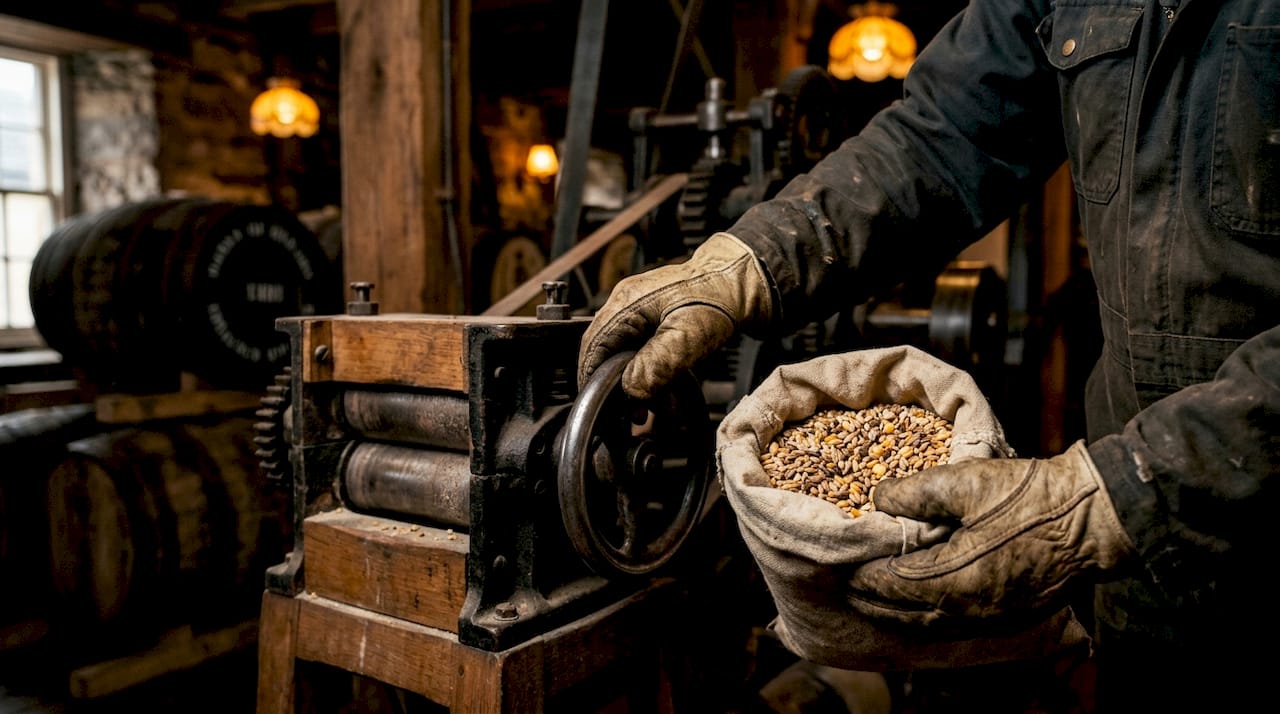
Single grain whisky starts with malted barley plus at least one other cereal grain. Common additions include wheat, corn, and rye, each bringing its own character to the final spirit. The grain bill is cooked, fermented, and then distilled in a continuous column still rather than the copper pot stills used for single malt.
Column stills run continuously and produce spirit at a higher level of purity than pot stills. That efficiency strips away many of the heavier congeners, which are the chemical compounds responsible for robust, oily textures in pot still whisky. The outcome is a cleaner, lighter spirit that carries the character of the grain and the cask more directly.
The grain choice matters more than most drinkers realise. Unmalted barley, for instance, produces a creamier, more textured spirit compared to traditional wheat or corn bases. Wheat tends toward soft, biscuity notes. Corn leans sweeter and rounder.
- Malted barley plus other cereals: the legal minimum for single grain production
- Continuous column still: the defining distillation method, producing a lighter, higher-purity spirit
- Oak cask maturation: all single grain must mature in oak casks of no more than 700 litres, per Scotch regulations
- Minimum three years: the legal maturation floor before the spirit can be called Scotch
- Minimum 40% ABV: the bottling threshold required under Scotch Whisky Regulations
Pro Tip: If you want to understand how grain choice shapes a whisky, compare a wheat-based expression side by side with a corn-heavy one. The difference in texture and sweetness is immediate and instructive.
For a deeper look at how grain selection shapes the final spirit, the guide to Scotch grains on Uisuki is worth reading before you buy.
What does single grain whisky taste like?
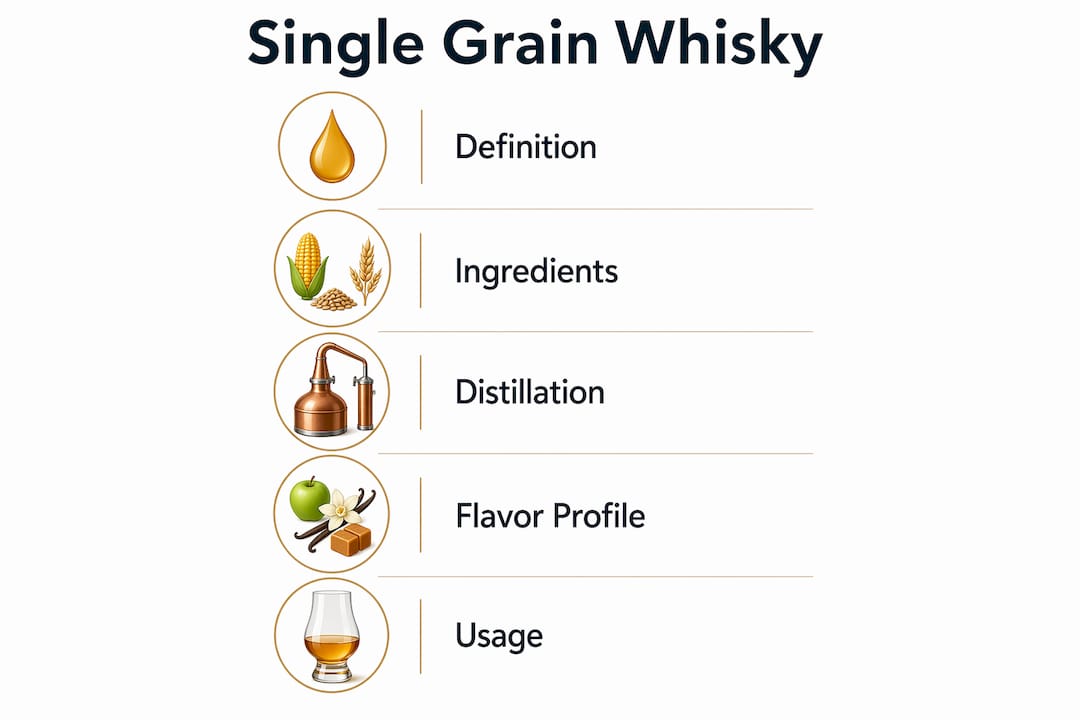
Single grain whisky delivers creamy vanilla, toffee, tropical fruit notes such as pineapple and banana, and soft spices that can evoke crème brûlée with a hint of cinnamon. These flavours arise from the combination of a clean, high-purity distillate and the influence of oak cask maturation. Ex-bourbon barrels are the most common choice, contributing coconut, vanilla, and light caramel.
The contrast with single malt is real and worth understanding. Single malts, especially those from heavily peated Scottish distilleries, carry smoke, dried fruit, and a richer, oilier body. Single grain sits at the opposite end of that spectrum. It is approachable, often sweeter, and rarely confronting for newcomers.
“Single grain whisky offers a refined, polished character that rewards those willing to look beyond the blending vat. Its elegance comes not from complexity forced by smoke or peat, but from the quiet interplay of grain, oak, and time.”
Age statements shift the flavour profile considerably. A younger expression, say four to eight years old, tends toward fresh fruit and light vanilla. A longer-aged grain whisky, matured for 20 or more years, develops deeper toffee, dried stone fruit, and a silky mouthfeel that rivals aged single malt in sophistication.
Cask finishing adds another layer. Some producers finish their grain whisky in sherry, port, or wine casks, which introduces dried fruit, spice, and colour. These expressions sit at the more complex end of the style and reward slow, attentive tasting.
For readers building their whisky tasting skills, single grain is an excellent training ground. Its lighter profile makes individual flavour elements easier to identify than in a heavily peated malt.
Single grain whisky in cocktails
Single grain whisky is excellent in cocktails because its lighter structure supports long drinks and seasonal serves without overpowering other ingredients. A highball with soda water and a lemon twist lets the grain’s natural sweetness shine. A whisky sour made with a grain expression produces a cleaner, brighter result than one built on a heavy malt. Bartenders prize it for exactly this reason.
Why is single grain whisky gaining recognition?
Single grain whisky spent most of its history as an invisible ingredient. Distilleries produced it in large volumes to form the backbone of blended Scotch, where it softened and extended the more characterful single malts. The idea of bottling it solo and selling it as a premium product was, for a long time, considered unnecessary.
That perception has shifted. Single grain now earns recognition for its elegant, unique flavour and its better age-to-price ratio compared to single malt. A 25-year-old single grain expression regularly costs less than a 12-year-old single malt from a prestigious distillery. That gap represents genuine value for the whisky enthusiast willing to look past the marketing.
The value case is compelling for several reasons:
- Longer ageing at lower cost: efficient production means distilleries can afford to age grain whisky for decades without the same financial pressure as malt
- Refined character: extended maturation in oak produces a silky, polished spirit that rewards patience
- Versatility: grain whisky works equally well neat, on ice, or in cocktails, making it one of the most flexible styles in any collection
- Accessibility: the lighter flavour profile makes it a natural entry point for drinkers new to Scotch
The single malt vs grain comparison is worth reading if you want to understand exactly where each style sits in the broader Scotch category. Single grain is not a lesser product. It is a different one, with its own strengths.
How to taste, select, and buy single grain whisky
Tasting single grain whisky well requires a slightly different approach than tasting a heavily peated malt. The flavours are quieter and more integrated, so patience pays off.
- Nose slowly: give the glass time to open up. The vanilla and fruit notes emerge gradually, especially in older expressions.
- Add a few drops of water: a small amount of water opens up grain whisky more than almost any other style. It lifts the fruit and softens any residual spirit heat.
- Taste neat first: before adding water or ice, take one small sip to establish the baseline flavour.
- Note the texture: mouthfeel is a key differentiator in grain whisky. Creamier textures often signal unmalted barley or longer oak contact.
- Finish length: grain whisky finishes are often shorter and cleaner than malt. That is not a flaw. It is a feature that makes the style particularly food-friendly.
Pro Tip: When reading a label, check whether the bottle carries an age statement. Older single grain expressions, particularly those aged 20 years or more, often deliver the best value in the entire Scotch category.
Reading labels and age statements
Age statements on single grain whisky tell you the minimum time the spirit spent in oak. A no-age-statement (NAS) bottle is not automatically inferior, but it gives you less information to work with. For single grain, age matters more than in some other categories because the style depends heavily on oak contact for its character. Longer maturation means more vanilla, more toffee, and a silkier texture.
When selecting by grain type, wheat-based expressions tend toward lighter, more delicate profiles. Corn-based versions lean sweeter and fuller. Expressions using unmalted barley deliver the most texture and weight. Cask finish matters too. An ex-bourbon matured grain whisky is the classic style. A sherry-finished version adds dried fruit and spice that can transform the entire character of the dram.
| Selection factor | What to look for |
|---|---|
| Grain type | Wheat for delicate, corn for sweet, unmalted barley for creamy texture |
| Age statement | Older expressions (20+ years) offer the best value for quality |
| Cask type | Ex-bourbon for vanilla and coconut; sherry for dried fruit and spice |
| ABV | Cask strength expressions deliver more intensity and complexity |
| NAS vs aged | Aged expressions give more predictable flavour development |
For those new to the category, the guide for beginners on Uisuki is a practical starting point before committing to a bottle.
Key takeaways
Single grain whisky is the most undervalued style in Scotch, offering longer ageing, genuine elegance, and better value than almost any other category at equivalent price points.
| Point | Details |
|---|---|
| Legal definition | Single grain is produced at one distillery, uses malted barley plus other grains, and must mature at least three years in oak. |
| Production method | Continuous column stills produce a lighter, cleaner spirit than the pot stills used for single malt. |
| Flavour profile | Expect creamy vanilla, toffee, tropical fruit, and soft spice, with texture varying by grain choice and cask type. |
| Value for age | Long-aged single grain expressions regularly cost less than younger single malts of comparable quality. |
| Cocktail use | The lighter structure makes single grain one of the most versatile whisky styles for both neat drinking and mixed serves. |
Brendan’s take: the most overlooked dram in your collection
Single grain whisky is the style I recommend most often to enthusiastic drinkers who feel they have already explored Scotch. They have worked through the classic single malts, they know their Speyside from their Islay, and they think they have a complete picture. They do not.
The common misconception is that grain whisky is a lesser product, something used to fill out a blend and not worth serious attention on its own. That view is wrong, and it costs people some genuinely memorable drinking experiences. A well-aged grain whisky, given 20 or 25 years in good oak, develops a silky, layered character that is unlike anything a pot still produces. It is not trying to be a single malt. It is doing something different, and doing it well.
What I find most interesting is the texture question. Grain choice shapes mouthfeel in ways that most tasting notes do not capture. An unmalted barley grain whisky feels almost creamy on the palate, with a weight that surprises people who expect something thin and neutral. That surprise is the point. Single grain rewards curiosity.
My practical advice: buy an older expression first. The younger releases can feel a little simple, and they do not always show the category at its best. A grain whisky with 20 or more years in oak will change your mind about what this style can do.
— Brendan
Single grain whisky worth adding to your collection
Uisuki stocks a curated range of whiskies that showcase the full breadth of grain and malt styles, from accessible everyday drams to rare, long-aged expressions. If you are ready to move beyond the familiar and try something with genuine depth, the Ichiro’s Malt and Grain Limited Edition is a compelling starting point. It brings together malt and grain components from multiple countries into a single, well-balanced bottle that shows exactly what grain whisky contributes to a great blend.

Uisuki ships across Australia with free shipping thresholds and multiple payment options. The team also takes personalised sourcing requests for rare or hard-to-find bottles. Whether you are building a collection or simply looking for your next great dram, the range at Uisuki is worth exploring.
FAQ
What is single grain whisky?
Single grain whisky is whisky produced at one distillery using malted barley plus other cereal grains, distilled in continuous stills, and matured for at least three years in oak casks at a minimum of 40% ABV.
How does single grain differ from single malt?
Single malt uses only malted barley and is distilled in pot stills, producing a richer, heavier spirit. Single grain uses additional cereals and continuous stills, resulting in a lighter, softer, and often sweeter dram.
What are the typical tasting notes for grain whisky?
Common flavours include creamy vanilla, toffee, tropical fruits such as pineapple and banana, and soft spice. Older expressions develop deeper caramel and dried stone fruit notes from extended oak contact.
Is single grain whisky good value?
Single grain whisky offers some of the best value in Scotch. Long-aged expressions often cost less than younger single malts of comparable quality, because efficient production makes extended maturation more affordable.
Can you use single grain whisky in cocktails?
Single grain whisky works very well in cocktails. Its lighter structure supports highballs, whisky sours, and seasonal long drinks without overpowering other ingredients, making it a favourite among bartenders.