

TL;DR:
- Building a unique whisky collection in Australia requires sourcing rare bottles with clear provenance, such as limited editions and historic distillery releases.
- Collectors should focus on verified production details and store bottles properly to maintain value, emphasizing personal taste over trends.
What makes a unique whisky collection worth building in Australia?
The best unique whisky collections available to Australian collectors include reputations like Pappy Van Winkle bourbon and Glenfarclas Scotch, with local gems like the Lark Anniversary Edition and other globally celebrated rarities. These are not bottles you stumble across at a bottle shop. They require deliberate sourcing, a clear sense of what you value, and the patience to wait for the right opportunity.
Collector appeal comes down to three things: provenance, rarity, and the story behind the liquid. A bottle from a defunct distillery carries finite supply by definition. A hand-numbered release from a distillery with a declared production run of 600 bottles is genuinely scarce. A 50-year-old single malt is a document of time. These qualities hold their weight on the secondary market in ways that generic “limited edition” labels rarely do.
Standout collections and gift sets accessible to Australian collectors include:
- Pappy Van Winkle 20 Year Old (Buffalo Trace, USA): cult-status bourbon with a secondary market that dwarfs its retail price
- Ardbeg Second Fill Oloroso Sherry Cask #0050: a single-cask Islay malt with documented cask provenance
- Lark 30th Anniversary Edition: a landmark Australian release celebrating three decades of Tasmanian distilling
- Ardnahoe Inaugural Release: the first bottling from Islay’s newest distillery, carrying strong collector interest as a founding expression
- Johnnie Walker House “Willow” The Casks Edition: a prestige blended Scotch gift set with distinctive packaging
- Benriach 1966 (50 Years Old): a vintage Speyside single malt distilled over half a century ago
- Glenfarclas 70 Years Old: one of the oldest commercially released single malts from a family-owned Highland distillery
- The Glendronach 50 Years Old: a heavily sherried Highland expression with exceptional age and depth
- Bushmills 2012 Burgundy Cask: an Irish single malt finished in Burgundy wine casks, adding a rare European dimension
Brands like Buffalo Trace and The Macallan maintain strong secondary market performance globally, making their annual releases and limited sets reliable anchors for any serious collection.
Pro Tip: Buy two bottles of any release you genuinely love. Drink one and preserve the other. Professional collectors call this the “drink one, keep one” rule, and it lets you enjoy the whisky without sacrificing the investment-grade bottle.
Table of Contents
- How to evaluate and choose unique whisky collections and gift sets
- Notable rare bottles and premium gift sets for Australian collectors
- Why authenticity, provenance, and personal taste shape a lasting collection
- Which whisky gift set type suits your collection goals?
- Uisuki.com.au: curated rare whisky for Australian collectors
- Key takeaways
How to evaluate and choose unique whisky collections and gift sets
Retail price is the worst guide to a bottle’s real value. Auction records give a far more accurate picture of what the market actually thinks a whisky is worth, particularly for high-demand releases where retail allocations are scarce and prices are set artificially low or high depending on the retailer.
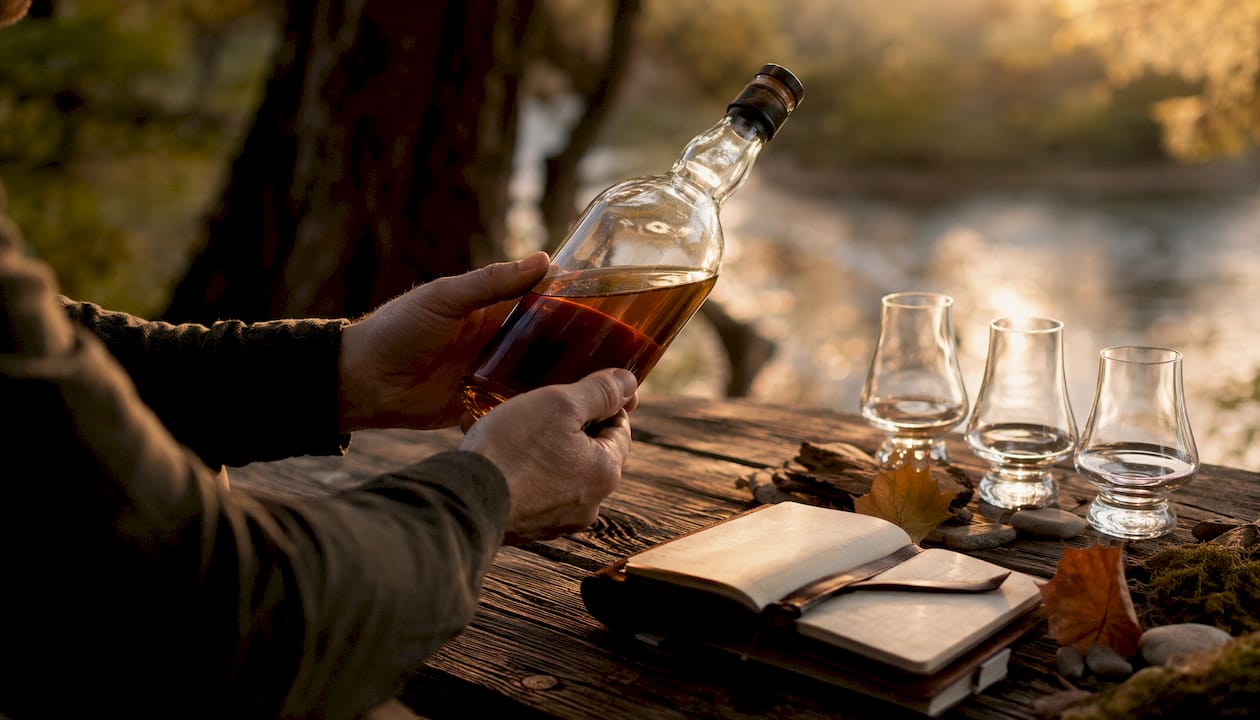
Age statements carry real weight. They guarantee the minimum time every drop spent in barrel, and whiskies with declared age statements consistently attract more collector interest than no-age-statement releases. Pair that with a vintage year marking on the label, and you have a bottle that collectors can place precisely in time, which adds desirability.
Cask type matters more than many new collectors expect. An Oloroso sherry cask finish, a Burgundy wine cask, or a rare Tawny port maturation each leaves a fingerprint on the spirit that distinguishes it from standard releases. The Ardbeg Second Fill Oloroso Sherry Cask #0050 and the Bushmills 2012 Burgundy Cask are good examples of how cask provenance becomes part of the bottle’s identity.
Practical checklist for evaluating a whisky purchase:
- Check recent auction results before accepting retail price as a benchmark
- Confirm the production run is declared, ideally hand-numbered on the label
- Verify the distillery’s reputation and whether it is still operating or defunct
- Look for a stated vintage year, distillation date, or bottling date
- Assess cask type, cask number, and any finish details on the label
- Research whether the bottle is part of a collectable series or vertical
- For Australian imports, confirm the importer holds the correct permits under the Australian Border Force’s alcohol import regulations
Pro Tip: To spot counterfeit bottles, check the fill level against known standards for that release, examine the capsule and label print quality under good light, and cross-reference the bottle number against any declared production count. Tampered bottles often show inconsistent font weight or slightly misaligned labels.
Collectors pursuing complete verticals, such as the Buffalo Trace Antique Collection or The Macallan James Bond series, gain both bragging rights and social prestige within the community. Completing a set also tends to lift the value of individual bottles within it.
Notable rare bottles and premium gift sets for Australian collectors
The bottles below represent the kind of depth serious collectors pursue. Each has a distinct reason to exist beyond marketing copy.
| Bottle / Set | Type | Collector appeal | Value for price | Australian availability |
|---|---|---|---|---|
| Pappy Van Winkle 20 Year Old | American bourbon | Cult status, secondary market premium | High secondary value vs retail | Rare; specialist importers and auctions |
| Ardbeg Second Fill Oloroso Sherry Cask #0050 | Islay single malt | Documented single cask, Oloroso finish | Strong for single-cask releases | Limited; specialist retailers |
| Lark 30th Anniversary Edition | Australian single malt | Landmark local release, finite production | High for Australian collectors | Occasional specialist stock |
| Ardnahoe Inaugural Release | Islay single malt | First-ever bottling from newest Islay distillery | Strong founding-expression premium | Limited import availability |
| Johnnie Walker House “Willow” The Casks Edition | Blended Scotch gift set | Prestige packaging, gifting appeal | Moderate; gift-set premium | Specialist whisky retailers |
| Benriach 1966 (50 Years Old) | Speyside single malt | Vintage distillation year, 50-year age statement | Very high; museum-grade rarity | Auction and specialist only |
| Glenfarclas 70 Years Old | Highland single malt | One of the oldest family-distillery releases | Exceptional; ultra-rare category | Auction only |
| The Glendronach 50 Years Old | Highland single malt | Heavy sherry influence, 50-year statement | Very high collector premium | Auction and specialist only |
| Bushmills 2012 Burgundy Cask | Irish single malt | Burgundy cask finish, documented vintage | Good for Irish malt collectors | Specialist retailers and auctions |
What sets these bottles apart:
- Glenfarclas and The Glendronach both carry significant age statements, placing them in a category where supply is genuinely finite and will never increase.
- Benriach 1966 was distilled before most current collectors were born. Its vintage year is stamped into the bottle’s identity permanently.
- Defunct and “silent” distilleries command premium prices on the secondary market because their supply cannot be replenished. Ardnahoe, as the newest Islay distillery, sits at the opposite end: its inaugural release captures a beginning rather than an ending, which carries its own collector logic.
- The Lark 30th Anniversary Edition holds particular relevance for Australian collectors as a domestic milestone release, with provenance tied directly to Tasmania’s distilling heritage.
For sourcing in Australia, specialist auction houses and retailers remain the most reliable channels for bottles at this level.
Why authenticity, provenance, and personal taste shape a lasting collection
A collection built purely on market trends tends to feel hollow within a few years. Sotheby’s spirits specialist Jonny Fowle makes this point plainly:
Provenance underpins everything else. A bottle with a clear chain of custody, documented auction history, and verifiable label details is worth more than an identical bottle with a murky past. Hand-numbered labels and declared production counts are the most reliable scarcity signals available to collectors. When a distillery states it produced 800 bottles and numbers each one, that claim is verifiable. When a label simply says “limited edition,” it could mean anything from 600 to 45,000 bottles, with no regulation requiring transparency.
Storage conditions directly affect both quality and resale value. Store bottles upright, in a cool and dark environment with UV-filtered cabinetry. Horizontal storage causes the spirit’s high alcohol content to degrade the cork over time, risking spoilage and reducing the bottle’s condition grade at auction. If a bottle is less than half full, decanting into a smaller glass vessel with minimal air space preserves the remaining spirit from oxidation.
Personal taste is not a soft consideration. According to Sotheby’s whisky guide, the most enduring collections are shaped by curiosity and genuine preference rather than chasing prestige. A collector who buys what they love will always find reasons to engage with their collection. One who buys purely for investment often ends up with bottles they cannot contextualise or enjoy.
Tips for maintaining collection quality and choosing with intention:
- Store all bottles upright in a cool, dry, dark space with UV protection
- Decant partially consumed bottles into smaller glass containers to limit oxidation
- Look past “limited edition” marketing and focus on declared production numbers and verified provenance
- Prioritise bottles with distillation dates, bottling dates, or vintage year markings
- Build around a theme you genuinely care about: a region, a distillery, a cask type, or a decade
- Review auction records periodically to understand how your collection is tracking on the secondary market
Which whisky gift set type suits your collection goals?
Gift sets and tasting formats serve different purposes, and choosing the right one depends on whether you are collecting to drink, to give, or to hold.
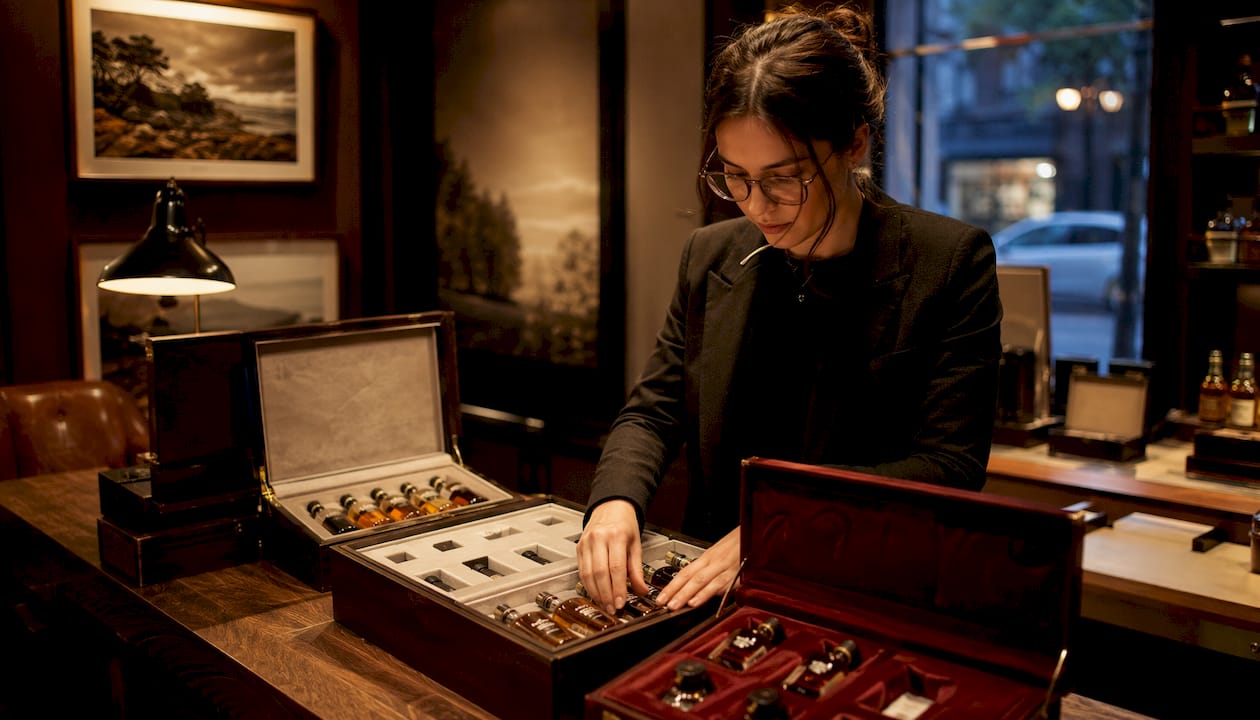
Tasting flights are the entry point for collectors who want to explore before committing. A flight typically brings together three to five expressions from a single distillery or region, often at miniature or sample size. They are ideal for mapping your palate across a distillery’s range before purchasing full bottles. The Johnnie Walker House “Willow” The Casks Edition sits at the prestige end of this format, combining multiple expressions in a gift-ready presentation that works as both a tasting experience and a display piece.
Advent calendars have become a serious collector format in Australia over the past several years. The best ones feature 24 miniatures drawn from rare, limited, or hard-to-find releases rather than standard shelf stock. They function as a curated tasting programme across a month, and the better editions include bottles that are not available for individual retail purchase. For collectors, they also serve as a discovery mechanism: a calendar that includes an expression from a distillery you have never tried can redirect your collecting focus entirely.
Single bottles remain the core of any serious collection. A single bottle from Glenfarclas, The Glendronach, or a Tasmanian distillery like Lark carries more weight than any multi-bottle set because it represents a deliberate, singular choice. The Ardnahoe Inaugural Release and the Ardbeg Second Fill Oloroso Sherry Cask #0050 are both single-bottle acquisitions that stand alone as collector pieces. When a bottle has a documented cask number, a declared production run, and a clear distillation date, it does not need packaging or a companion set to justify its place on the shelf.
The format that suits you depends on your intent. Tasting flights build knowledge. Advent calendars build breadth. Single bottles build the collection itself.
Uisuki.com.au: curated rare whisky for Australian collectors
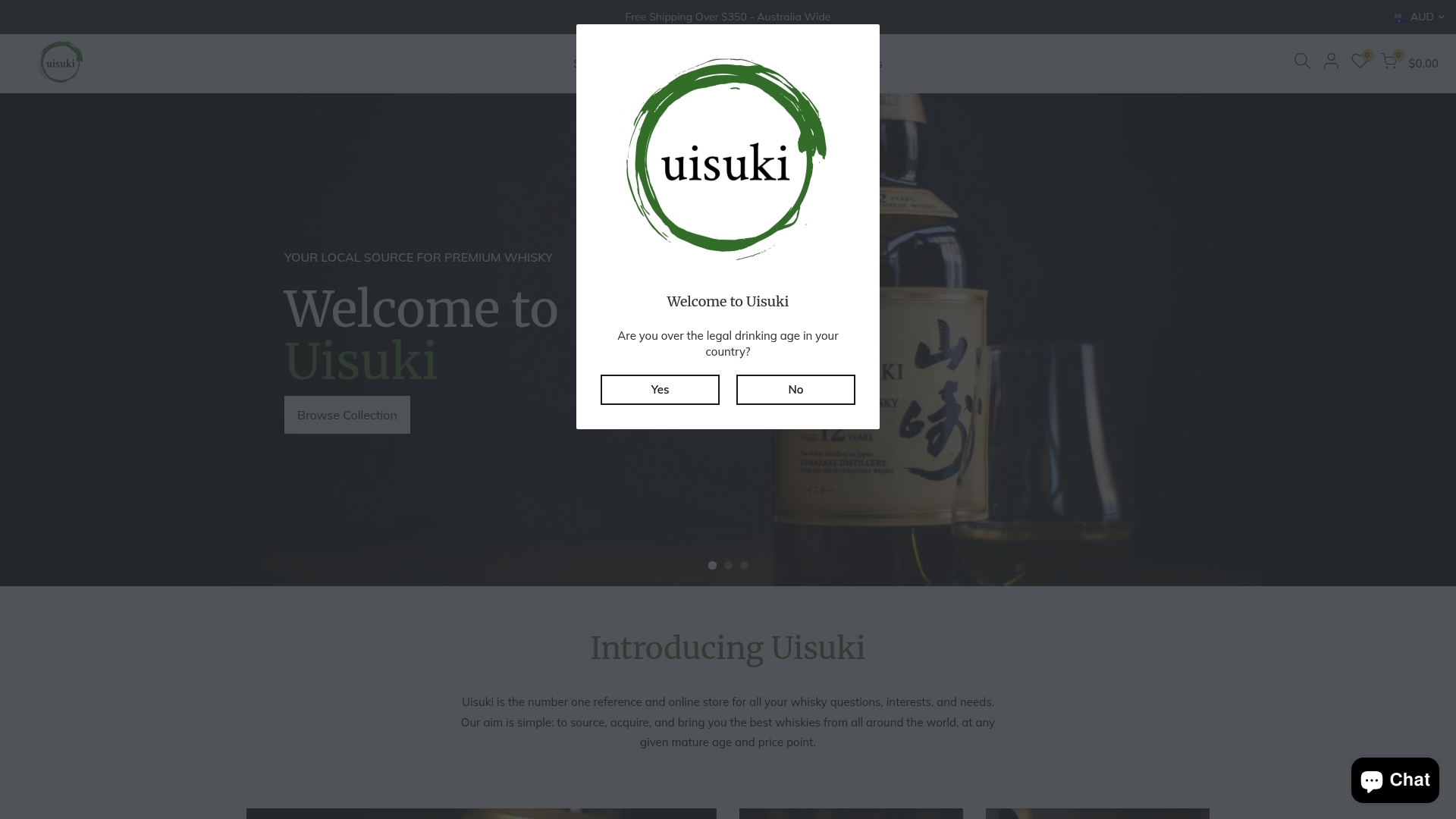
Australian collectors no longer need to rely on international auction houses or grey-market imports to access genuinely rare and premium whisky. Uisuki.com.au stocks a curated selection of bottles from Scotland, Japan, the USA, and Australia, including new arrivals, hard-to-find releases, and collector-grade expressions that rarely appear on standard retail shelves.
The platform is built specifically for collectors who know what they are looking for and want detailed product information to back their decisions. Every listing includes ABV, provenance details, and descriptive tasting notes, so you are not buying blind. Uisuki also accepts personalised sourcing requests for bottles not currently in stock, which is how serious collectors track down releases like the Hobart Whisky Bourbon Matured Rum Finished Single Malt or the Ichiro’s Malt and Grain Limited Edition without spending months on waiting lists. Browse the current range at uisuki.com.au and submit a sourcing request for anything you cannot find.
Key takeaways
The most valuable unique whisky collections combine verified provenance, genuine rarity, and bottles chosen for personal meaning rather than hype alone.
| Point | Details |
|---|---|
| Auction records over retail price | Check secondary market results to understand true bottle value before purchasing. |
| Provenance signals to trust | Hand-numbered labels and declared production counts are the most reliable rarity indicators. |
| Storage protects value | Store bottles upright in cool, dark, UV-filtered conditions to prevent cork degradation and flavour loss. |
| Personal taste sustains collecting | Collections built around genuine preference outlast those driven purely by market trends. |
| Uisuki.com.au for Australian sourcing | Uisuki stocks rare and premium whiskies with detailed provenance information and personalised sourcing support. |