

TL;DR:
- Malt type fundamentally determines whisky flavor, shaping its core taste profile before maturation influences it. Different kilning methods produce distinctive flavor notes, from cereal and honey to smoky and roasted characteristics. Recognizing malt types enhances tasting skills and deepens understanding of whisky’s complex aroma and palate.
Malt type is the primary driver of whisky flavour, determining the foundational taste compounds that no amount of distillation or maturation can manufacture from scratch. Barley that has been steeped, germinated, and kilned becomes malt, and the precise conditions of that kilning process define whether your glass carries biscuity sweetness, dark chocolate depth, or the unmistakable smoke of an Islay peat fire. Understanding the relationship between malt type and whisky taste transforms you from a passive drinker into a confident taster who can decode what is actually happening in the glass.
What are the main malt types and how do they shape whisky taste?
The whisky industry recognises four principal malt categories, each produced through a distinct kilning method that generates a specific set of flavour compounds. Knowing these four types gives you a working map of the entire flavour universe of malt whisky.
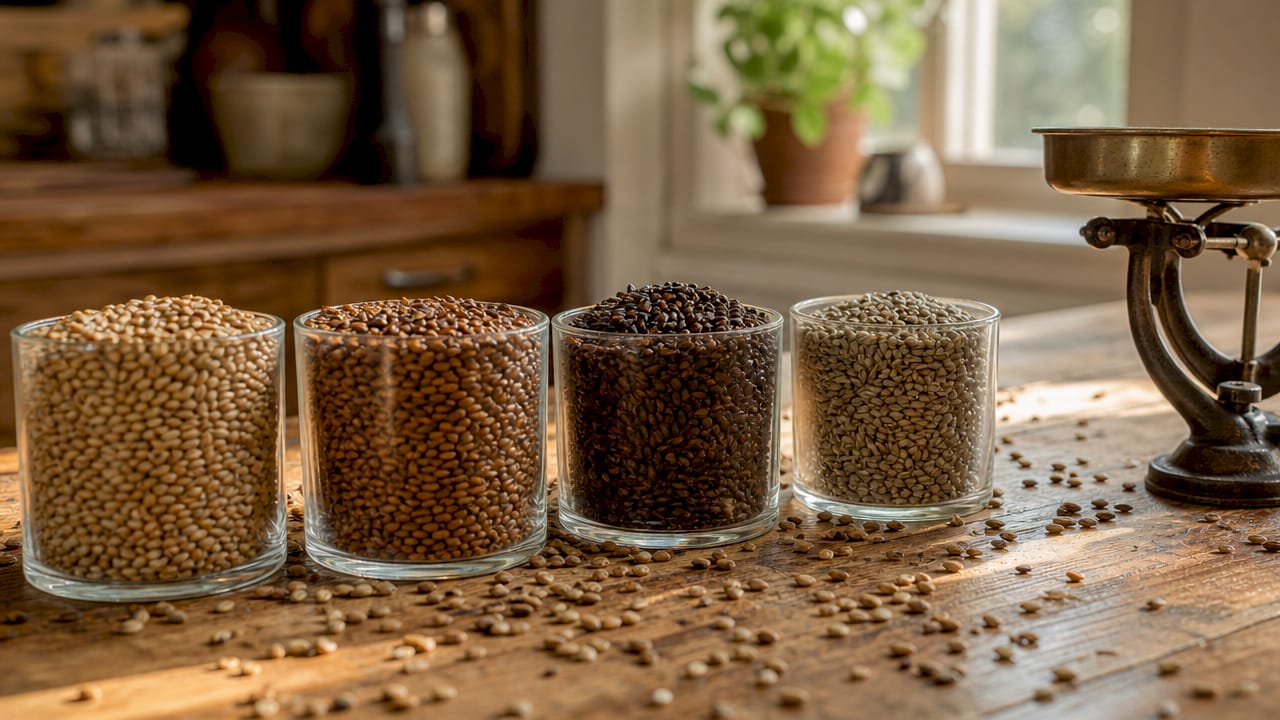
Pale malt is the workhorse of Scotch and bourbon production. Kilned at low temperatures, it preserves the enzymes needed for fermentation while producing biscuity, sweet, cereal notes that form the backbone of Speyside expressions like Glenfiddich and Glenlivet. The flavour is subtle, clean, and grain-forward. It is the blank canvas upon which distillers paint everything else.
Crystal or caramel malt undergoes a two-stage process: the grain is stewed while still green, then kilned at medium to high temperatures. This converts starches inside the husk into glassy, non-fermentable sugars that survive into the final spirit. The result is toffee, caramel, and dried fruit flavours that add richness and body. Craft American single malts use crystal malt sparingly to build complexity without overwhelming the base spirit character.
Chocolate and roasted malts are taken to extreme kilning temperatures, approaching or exceeding 200°C. At that heat, sugars caramelise and proteins denature, producing the dark chocolate, espresso, and bitter coffee notes found in heavily roasted expressions. These malts contribute colour as much as flavour and appear most prominently in craft distilleries experimenting outside traditional Scotch production rules.
Peated malt is dried over a smouldering peat fire rather than a conventional heat source. The smoke deposits phenolic compounds directly onto the grain, and those phenols carry through fermentation and distillation into the finished whisky. Phenol levels are measured in parts per million (ppm). Lightly peated malts sit at 5 to 15 ppm, while heavily peated malts used by Islay distilleries like Ardbeg and Laphroaig can exceed 160 ppm. That difference in ppm is the difference between a whisper of smoke and a bonfire in your glass.
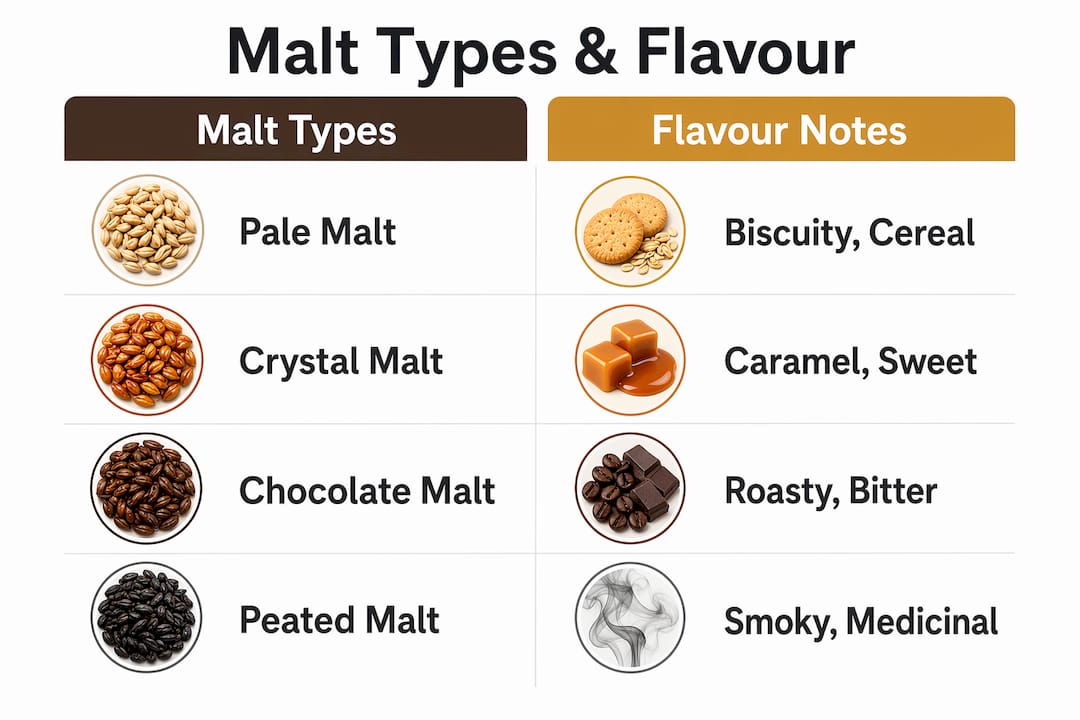
| Malt type | Kilning method | Primary flavour notes |
|---|---|---|
| Pale malt | Low heat, short duration | Biscuit, cereal, honey, sweet grain |
| Crystal/caramel malt | Stewed then medium-high heat | Toffee, caramel, dried fruit, raisin |
| Chocolate/roasted malt | Very high heat (200°C+) | Dark chocolate, espresso, bitter coffee |
| Peated malt | Dried over peat smoke | Smoke, medicinal, seaweed, earthy |
Pro Tip: When reading a whisky label, look for the phrase “heavily peated” or a stated ppm figure. Any whisky above 40 ppm will deliver a pronounced smoke character that will dominate the palate regardless of cask type.
How does the malting process chemically influence whisky flavour?
The flavour of malt whisky begins not in the still but in the malting floor, where biochemistry sets the stage for everything that follows. Germination activates alpha and beta amylase enzymes that convert barley starches into fermentable sugars. Without active enzymes, the yeast has nothing to work with, and the wash lacks the sugar density needed to produce a flavourful spirit.
The germination window runs for four to seven days, and temperature and moisture fluctuations during that period directly affect enzyme activity and the character of the resulting spirit. Distillery experts treat this window as the most critical control point in production. A malt that germinates unevenly produces a wash with inconsistent sugar profiles, which translates to an uneven spirit off the still.
Kilning stops germination and locks in the enzyme profile. The temperature applied during kilning also drives the formation of key flavour precursors. Furfurals and pyrazines, the compounds responsible for malty and cereal notes, form during this stage. Researchers have identified over 300 flavour-active compounds in Scotch whisky, and malt contributes a significant proportion of those compounds through the kilning reaction. That is not a trivial contribution. It means the flavour complexity you experience in a well-made single malt begins with decisions made before a single litre of wash enters the still.
Peat smoke adds another chemical layer. When green malt is exposed to peat smoke, phenolic compounds including guaiacol and cresols bind to the grain surface. These compounds are volatile enough to survive fermentation and distillation, which is why the smoke character in an Islay whisky is genuinely traceable back to the malting kiln, not to any later stage of production.
Pro Tip: If you want to understand how malt affects whisky at a chemical level without reading a chemistry textbook, compare a Speyside single malt against an Islay expression from the same age statement. The difference you taste is almost entirely attributable to malt type and kilning method.
How does malt type interact with other production factors?
Malt provides the sugar and flavour foundation, but the final whisky taste is a product of how that foundation interacts with fermentation, distillation, and maturation. Understanding this interaction prevents a common mistake: attributing all flavour to the cask when malt character is equally present.
-
Fermentation. Yeast strains convert malt sugars into alcohol and produce fruit esters as a byproduct. The ester profile depends partly on the sugar composition of the wash, which is determined by malt type. A pale malt wash fermented with a fruity yeast strain produces the classic light, floral Speyside character. The malt and the yeast are co-authors of that flavour.
-
Distillation. Still shape and the distiller’s cut points modulate which flavour compounds reach the final spirit. Tall, narrow pot stills favour lighter, more delicate malt-derived flavours by allowing heavier compounds to fall back and redistil. Shorter, wider stills retain more of the heavier, oilier malt character. The distiller uses still geometry to amplify or suppress what the malt has already created.
-
Maturation. Cask influence contributes 60 to 70% of final flavour in a mature Scotch, but that figure does not mean malt character disappears. It means cask flavours layer on top of a permanent malt foundation. The vanilla and coconut of an ex-bourbon cask will read differently over a pale malt base than over a heavily peated one. The smoke in a peated malt whisky persists through decades of maturation, as Ardbeg Uigeadail demonstrates at 54.2% ABV.
-
Peat and ageing interaction. Phenol levels in peated malt do soften over time in cask, but they never vanish entirely. A 12-year-old Laphroaig will be smokier than a 25-year-old expression from the same distillery, but both remain unmistakably peated. The malt sets the ceiling for smokiness; maturation determines how close the final whisky gets to that ceiling.
-
Malt quality as a non-negotiable baseline. Poor malt cannot be corrected downstream. A wash lacking the necessary flavour foundation will produce a thin, characterless spirit regardless of still quality or cask selection. Malt selection is the chain of causation that everything else depends upon.
How to identify malt type influence when tasting whisky
Tasting for malt character is a learnable skill. The sensory cues are consistent across expressions once you know what to look for, and they follow directly from the kilning methods described above.
The nose is your first and most reliable instrument. Pale malt influence registers as cereal, fresh bread, or digestive biscuit on the nose, sometimes with a light honey note. Crystal malt announces itself as toffee, brown sugar, or dried apricot. Roasted malt smells like a freshly pulled espresso shot or dark baker’s chocolate. Peated malt is unmistakable: smoke, iodine, seaweed, or a medicinal quality that some describe as TCP or bandage.
On the palate, cereal, biscuit, honey, and toast flavours confirm pale malt dominance. Toffee and dried fruit on the mid-palate point to crystal malt influence. A bitter, roasted finish that lingers suggests chocolate or black malt. Smoke that coats the tongue and persists through a long finish is the signature of heavily peated malt.
The finish is where malt type reveals its staying power. Pale malt finishes are clean and short to medium in length. Peated malt finishes are long, warming, and smoky, sometimes lasting several minutes. Roasted malt finishes carry a pleasant bitterness that resembles the aftertaste of quality dark chocolate.
A common pitfall is confusing cask-derived smoke with malt-derived smoke. Some whiskies aged in heavily charred barrels carry a charcoal or ashy note that mimics peat smoke. The distinction is that cask smoke tends to be dry and woody, while peat smoke carries a wetter, more organic quality with medicinal or coastal undertones. Exploring whisky flavour profiling in depth will sharpen this distinction considerably.
Pro Tip: Run a side-by-side tasting of Glenlivet 12 (pale malt, unpeated Speyside) against Laphroaig 10 (heavily peated Islay). Both are single malts of similar age, but the contrast in malt type and whisky taste is as stark as any comparison in the category.
Key takeaways
Malt type sets the irreversible flavour foundation of whisky, and no downstream process can substitute for the character it creates at the kiln.
| Point | Details |
|---|---|
| Pale malt defines Speyside character | Low-heat kilning produces biscuity, cereal, and honey notes that underpin light, floral whiskies. |
| Peat level is measurable and traceable | Phenol content in ppm directly predicts smokiness intensity in the finished whisky. |
| Malt quality cannot be corrected downstream | Poor malt produces a thin wash that no still shape or premium cask can rescue. |
| Cask and malt interact, not compete | Maturation layers vanilla and oak over a permanent malt foundation rather than replacing it. |
| Tasting malt type is a learnable skill | Nose for cereal or smoke first, then confirm on the palate and finish for malt-specific cues. |
Why malt type deserves more attention than it gets
Most whisky conversations start and end with the cask. Bourbon barrel or sherry butt, first fill or refill, these are the questions that dominate tasting notes and marketing copy. After years of tasting across Scottish regions, Japanese distilleries, and Australian craft producers, I find that framing incomplete.
The malt is where the distiller’s intent lives. A master distiller at Bruichladdich or Sullivans Cove chooses a malt specification before a single cask is selected, and that choice defines the spirit’s personality for its entire life. When I taste a heavily peated Octomore against a lightly peated Port Charlotte from the same distillery, the difference is not the wood. It is the malt. The cask is a modifier; the malt is the message.
What I have found most rewarding is building a sensory vocabulary around malt types before worrying about regional styles or age statements. Once you can reliably identify pale malt biscuit character versus crystal malt toffee richness, you start reading whiskies rather than just drinking them. That shift changes what you buy, what you enjoy, and how much you get from every glass. Exploring the types of single malt whisky across different traditions is the fastest way to build that vocabulary in practice.
The craft whisky movement has also expanded the malt palette considerably. Australian distilleries are experimenting with heritage barley varieties and local peat sources, producing malt characters that sit outside the traditional Scotch or bourbon frameworks entirely. That experimentation makes this the most interesting period in whisky history to be paying attention to malt.
— Brendan
Discover malt-driven whiskies at Uisuki
Understanding malt type is one thing. Tasting the difference is another entirely.

At Uisuki, the curated range spans pale malt Speyside expressions, heavily peated Islay bottlings, and Australian single malts that showcase what local barley and climate can produce. The Hobart Whisky Bourbon Matured Rum Finished Single Malt is a precise example of how pale malt character interacts with dual cask maturation, producing a spirit where the cereal backbone remains visible beneath layers of vanilla and tropical fruit. For those who want to compare malt and grain expressions side by side, the Ichiro’s Malt and Grain Limited Edition offers a direct study in how malt type shapes the flavour of a world-class blended whisky. Browse the full range at Uisuki and let your malt knowledge guide the next purchase.
FAQ
What is the difference between peated and unpeated malt?
Peated malt is dried over a smouldering peat fire, depositing phenolic compounds onto the grain that produce smoky, medicinal flavours in the finished whisky. Unpeated malt is kilned with conventional heat, producing cereal, biscuit, and honey notes without any smoke character.
How does malt type affect whisky taste compared to cask influence?
Malt type creates the permanent flavour foundation of the spirit, while cask maturation layers additional flavours on top. Cask influence accounts for 60 to 70% of final flavour in a mature Scotch, but it modifies rather than replaces the malt character established at the kiln.
Can you taste malt type in a blended Scotch?
Yes. Blended Scotch combines malt and grain whiskies, and the malt component contributes the cereal, fruity, or smoky notes that distinguish one blend from another. Blends with a higher malt content tend to show more pronounced malt-derived flavour complexity.
What ppm level makes a whisky taste heavily peated?
Whiskies above 40 ppm phenol content are generally considered heavily peated and will deliver a pronounced smoke character on both the nose and palate. Lightly peated expressions sit between 5 and 15 ppm, where smoke is present but does not dominate the tasting experience.
Does the malting process vary between distilleries?
Yes. The germination environment during malting is a critical control point, and distilleries that malt on-site, such as Springbank and Bowmore, maintain precise temperature and moisture conditions to achieve their signature malt character. Most distilleries source malt from commercial maltsters to a defined specification.