

Bourbon and Scotch are both whisky, but they’re not interchangeable. Whisky is the umbrella term for any spirit distilled from fermented grain mash and aged in wood. Bourbon is a legally defined American style built on corn and new charred oak, which pushes it toward vanilla and caramel. Scotch must be made and matured in Scotland for at least three years, and its style runs from delicate and honeyed to thick with peat smoke.
TL;DR:
- Bourbon must be produced in the US with at least 51% corn and aged in new charred oak barrels for at least two years, affecting its sweet and rounded flavor profile.
- Scotch requires distillation and aging entirely in Scotland for a minimum of three years, with regional differences influencing its flavor from fruity Highlands to smoky Islay.
- Younger bourbons tend to be more vibrant and sweet, while longer aging enhances complexity but risks overpowering the spirit with oak if overaged.
- Cask finishing, like sherry or port finishes, adds flavor layers to both Scotch and bourbon without extending their minimum aging periods.
- Personal preference for smoothness varies with ABV, age, and cask history, making it essential to compare specific bottles rather than categories alone.
Table of Contents
- Bourbon vs Scotch vs whisky: what the umbrella term actually covers
- What is bourbon? US legal rules and what they mean in the glass
- What is Scotch? Protected rules, categories and regional character
- Production and ageing: why bourbon and Scotch taste so different
- Scotch vs bourbon taste: matching flavour to your preferences
- How do you choose between bourbon, Scotch and other whisky styles?
- Where do bourbon, Scotch and whisky actually come from?
- How do you actually taste and drink bourbon versus Scotch?
- Which brands actually show the difference between bourbon and Scotch?
- Does age really change bourbon and Scotch beyond the legal minimum?
- Uisuki’s take on picking between these styles
- Ready to try a bourbon or Scotch for yourself?
- Sources
- FAQ
Bourbon vs Scotch vs whisky: what the umbrella term actually covers
Whisky (or whiskey) is any spirit distilled from a fermented grain mash and matured in wooden barrels. Everything else, including bourbon and Scotch, is a subcategory sitting underneath that umbrella, not a separate drink entirely, according to Dictionary.
The spelling split is a genuine clue to origin, though not to quality. Scotland, Canada, Japan and Australia use “whisky.” The United States and Ireland use “whiskey.” It’s a naming convention rather than a flavour signal, as the WSET explains.
Within that broad category, a few structural terms come up constantly:
- Single malt – made from 100% malted barley at one distillery
- Single grain – made from any grain, including unmalted, at one distillery
- Blended – a mix of malt and grain whiskies from multiple distilleries
- Bourbon – a US-specific style, always corn-led
- Scotch – whisky made and matured entirely in Scotland
What is bourbon? US legal rules and what they mean in the glass
Bourbon isn’t a marketing term. It’s a legally enforced category under US law, overseen by the Alcohol and Tobacco Tax and Trade Bureau. Miss any one of the requirements and the bottle can’t legally carry the name.
The rules are specific:
- Produced in the United States
- Mash bill of at least 51% corn
- Distilled to no more than 80% ABV
- Enters the barrel at no more than 62.5% ABV
- Matured in new, charred oak barrels
- Bottled at a minimum of 40% ABV
Straight bourbon must be aged for a minimum amount of time, and any product aged less than a certain period requires an age statement on the label. That single rule tells you more about what’s in the bottle than most tasting notes do.
The production method explains bourbon’s personality. Corn brings natural sweetness, and a fresh, heavily charred barrel dumps vanillin, caramelised sugar and toasted oak compounds into the spirit fast. That’s why bourbon reads as rounder and sweeter than most Scotch, even at a young age. High-rye bourbons (extra rye in the mash bill) lean peppery and spicy. Wheated bourbons swap rye for wheat and come out softer, with more baked-bread and honey notes.
What is Scotch? Protected rules, categories and regional character
Scotch whisky carries legal protection under the Scotch Whisky Regulations 2009, and the rules are strict about geography and time.
- Must be distilled and matured entirely in Scotland
- Must meet a minimum maturation period in oak casks
- Bottled at a minimum alcoholic strength
- No additives beyond water and permitted caramel colouring (for colour consistency, not flavour)
Scotch also splits into five formal categories: single malt, single grain, blended malt, blended grain, and blended Scotch whisky, which combines malt and grain whiskies. If you’re deciding between a single malt and a blend, it’s worth reading through the practical difference between blended and single malt whisky before you buy.
Geography does a lot of the flavour work here. The Scotch Whisky Association points to five recognised regions, each with a loose stylistic signature: Speyside (fruity, honeyed, often the most approachable), Highland (bold, sometimes fruity, sometimes lightly smoky), Lowland (light and grassy), Islay (heavily peated, smoky, maritime), and Campbeltown (a small region known for a briny, oily character). None of these are hard rules, just tendencies, and a deeper look at Scotland’s protected whisky regions shows how much variation sits inside each one.
Production and ageing: why bourbon and Scotch taste so different
The rules above set the boundaries, but the technical choices inside those boundaries decide what actually ends up in your glass.
Bourbon’s mash bill is corn-forward (51% minimum, often 70% or higher), while Scotch relies on barley, sometimes blended with other grains for grain whisky. Distillation style differs too: bourbon is typically run through column stills for efficiency, while single malt Scotch almost always uses pot stills, which carry more of the raw spirit’s character through to the final product.
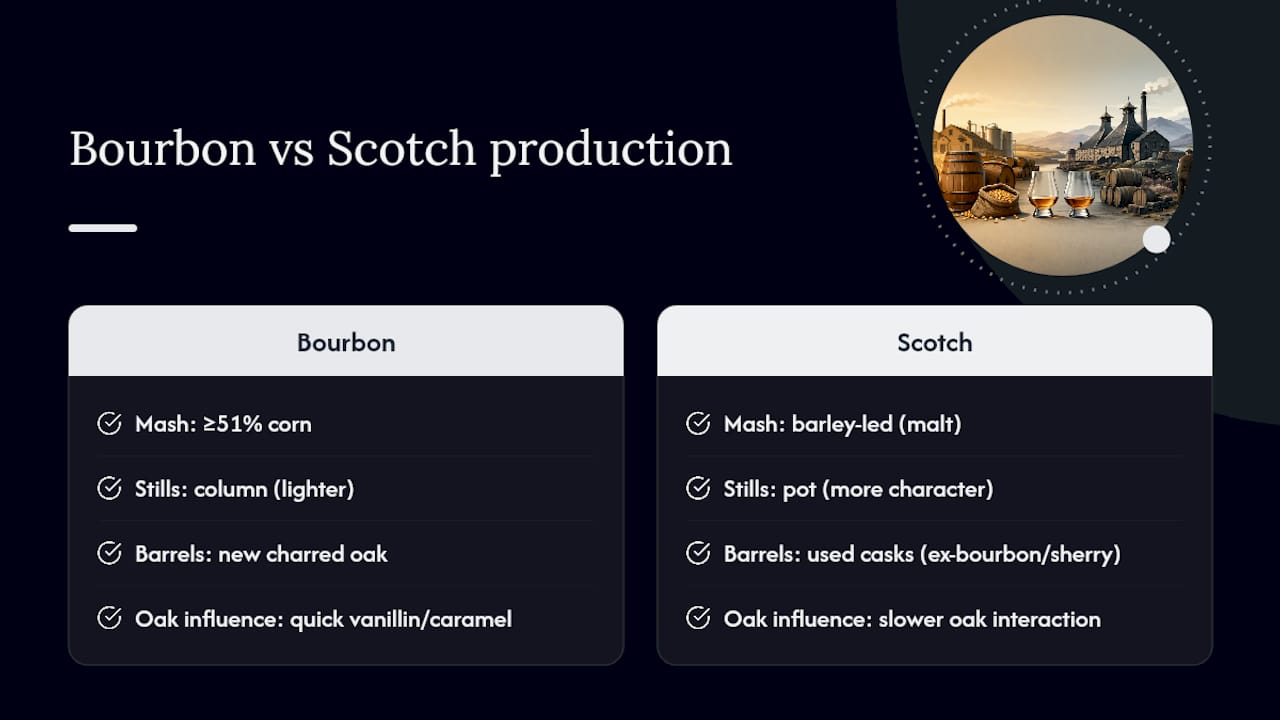
Barrel choice is the biggest lever of all. Bourbon must use new charred oak, which releases vanillin and caramelised sugar quickly and aggressively. Scotch typically matures in used casks, often ex-bourbon or ex-sherry barrels, which interact more slowly and let the malt’s own character stay prominent rather than getting buried in oak.
Peat is a Scotch-only variable. Some Scotch is peated (dried over peat smoke during malting, giving it that smoky, medicinal edge), and some isn’t. Islay is famous for peat; Speyside mostly isn’t. Cask finishing (a stint in a former sherry, port or rum barrel before bottling) is how Scotch producers add complexity without breaking the three-year minimum.
Pro Tip: If a bottle mentions a “finish” (sherry finish, port finish, rum cask finish), that’s a secondary maturation step, usually a relatively short period, layered on top of the whisky’s main ageing. It’s a way to add a new flavour dimension without waiting a very long time.
Scotch vs bourbon taste: matching flavour to your preferences
Bourbon and Scotch reward different moods, and the tasting notes on the bottle usually aren’t exaggerating.
- Bourbon, generally – vanilla, caramel, toffee, baking spice, a rounded, slightly sweet finish. High-rye versions add black pepper and cinnamon; wheated versions soften everything toward honey and soft bread.
- Speyside Scotch – orchard fruit, honey, sometimes a light floral note. The easiest entry point for someone new to single malt.
- Islay Scotch – peat smoke, iodine, sea salt, sometimes tar or medicinal notes. Polarising, but a genuine favourite once it clicks.
- Highland Scotch – bolder fruit, spice and occasionally a whisper of smoke, sitting between Speyside’s softness and Islay’s intensity.
ABV, age and cask history all shape body and finish independently of the category. A higher-proof pour carries more weight on the tongue; more time in an active cask adds depth but can also mute the base spirit’s character if pushed too far. If you like sweet and approachable, start with a standard bourbon or a Speyside single malt. If smoke appeals, Islay is the obvious target. For something in between, a lightly peated Highland or a sherry-finished Scotch splits the difference nicely, a distinction worth exploring further in this comparison of bourbon and Scotch taste.
How do you choose between bourbon, Scotch and other whisky styles?
Buying a bottle without a plan usually means buying the wrong bottle. A short checklist fixes that:
- Decide your flavour priority first: sweet, smoky, light or complex
- Check the ABV. Cask strength (often 50% plus) hits harder than standard 40% bottlings
- Look for an age statement. No statement doesn’t mean bad, but it does mean younger
- Note any cask-finish language on the label. It signals added complexity beyond the base spirit
- Set a price bracket before you start browsing, not after
- Decide if it’s for mixing or sipping neat, since younger, punchier bottles mix better than delicate aged ones
Three rough profiles cover most shoppers. Beginners do well with an approachable bourbon or a Speyside single malt. Cocktail drinkers should look at younger bourbon or a solid blended Scotch, since mixers don’t need decades of ageing to shine. Adventurous drinkers should head straight for a peated Islay or an older single malt with real cask complexity.
Pro Tip: If a retailer’s product page doesn’t list the mash bill, ABV or cask history, ask before buying. Those three details predict flavour far better than the brand name does.
Where do bourbon, Scotch and whisky actually come from?
Whisky’s roots trace back to distillation practices that monks and farmers in Scotland and Ireland refined over centuries, initially as a way to preserve surplus grain. Scotland formalised the craft first, and by the 1700s and 1800s, licensed and illicit distilling was already a major part of Highland and Speyside economic life. The industry’s growth into distinct regional styles, especially Islay’s smoky character, came from necessity as much as tradition. Peat was the local fuel source for drying malted barley, so the smoke got baked into the spirit almost by accident.
Bourbon’s story runs on a separate but parallel track. American settlers, many of Scottish and Irish descent, brought distilling knowledge to Kentucky and nearby states in the late 1700s. Corn grew abundantly and cheaply, so it became the base grain by necessity rather than design. The naming ties to Bourbon County, Kentucky, though the exact origin story is disputed among historians. What’s not disputed is the legal outcome: bourbon became codified as an American product, eventually protected by federal regulation that locked in the new charred oak requirement and the corn-heavy mash bill.
Both drinks carry weight beyond the liquid itself. Scotch built an export identity around craftsmanship and regional pride, with distilleries like Glenfiddich and Macallan becoming shorthand for Highland and Speyside prestige. Bourbon became tied to American identity and hospitality, showing up in bartending culture from Prohibition-era speakeasies through to today’s classic cocktail revival. Neither industry stayed static. Innovation in cask finishing and small-batch bourbon has reshaped both categories over the last few decades.
How do you actually taste and drink bourbon versus Scotch?
Serving ritual differs slightly between the two, and it’s worth knowing before you order at a bar or pour at home.
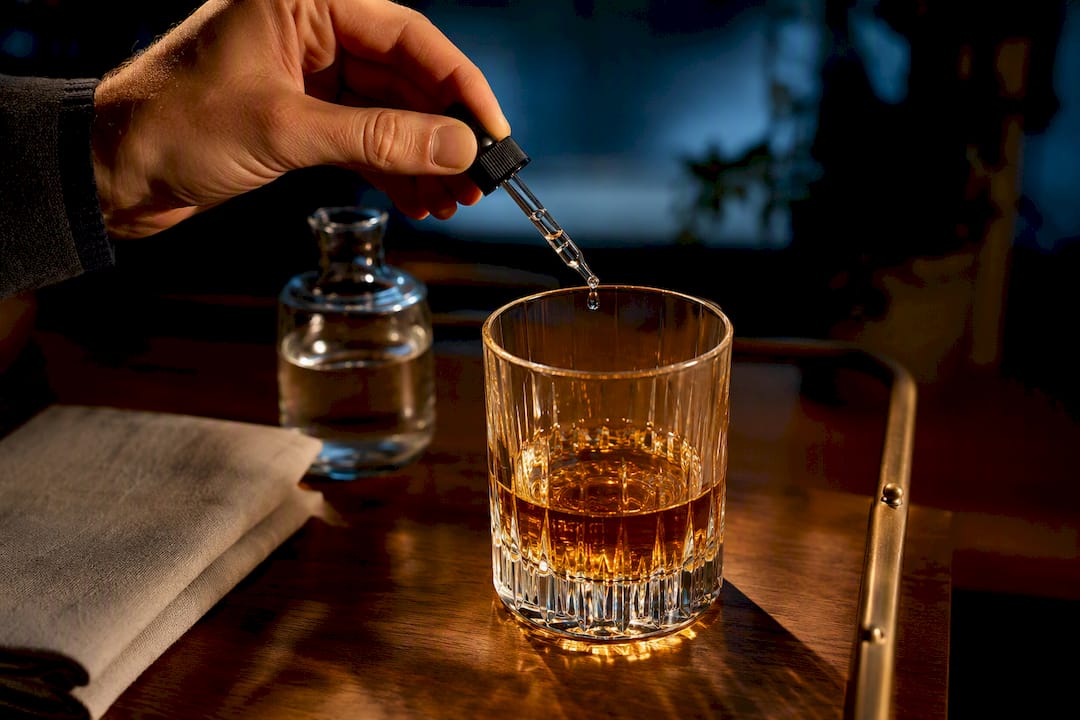
Bourbon is traditionally poured neat or over ice, and it’s the backbone of classic cocktails. An Old Fashioned, a Manhattan or a Whiskey Sour all lean on bourbon’s sweetness to balance bitters, vermouth or citrus. A splash of water opens up the vanilla and caramel notes without diluting the drink into blandness, and most bourbon drinkers add a few drops deliberately to “open the nose.”
Scotch tasting tends to be more ceremonial, particularly with single malt. A tulip-shaped glass (a Glencairn is the standard) concentrates the aroma at the rim, which matters more with Scotch because its flavour range is broader and more dependent on nosing before the first sip.
Ice is more contentious with Scotch than bourbon. Diluting a delicate Speyside with ice can mute the fruit and honey notes it’s built around, while a heavily peated Islay can handle a cube or two without losing its identity. Bourbon, being more oak-forward and robust from the start, tends to hold up better over ice, which is part of why it’s the more common base for long, ice-heavy cocktails. Neither rule is absolute. Personal preference beats ceremony every time.
Which brands actually show the difference between bourbon and Scotch?
Naming a few well-known examples makes the legal and production differences concrete rather than abstract.
On the bourbon side, a classic Kentucky straight bourbon typically shows the vanilla-caramel-toffee profile straight from new charred oak, with minimal fuss. High-rye bourbons push further into pepper and clove territory, while wheated bourbons (Wheated bourbons rely on wheat instead of rye) go soft and honeyed. Tennessee whiskey follows the same legal bourbon framework but adds the Lincoln County Process, a charcoal-mellowing step before barrelling, which smooths the spirit further before it even touches oak.
On the Scotch side, the regional spread does the talking. A Speyside single malt shows soft orchard fruit and honey with barely a whisper of smoke. An Islay single malt goes the other direction entirely, built around peat, brine and sometimes iodine-like intensity. Blended Scotch, which mixes malt and grain whisky from multiple distilleries, tends to sit in the middle: consistent, approachable, and usually far more affordable than a single malt of comparable age. Cask-finished releases, where a whisky spends its final months in a former sherry, port or rum barrel, show how far a distillery can stretch flavour without breaking the three-year minimum maturation rule.
Does age really change bourbon and Scotch beyond the legal minimum?
The legal minimums (two years for straight bourbon, three years for Scotch) are floors, not targets, and the flavour gap between a minimum-aged bottle and a well-aged one is significant.
Extra time in the barrel means more oxidative interaction, more extraction from the wood, and more evaporation, which concentrates the remaining spirit. For bourbon, that typically means deeper caramel and dried-fruit notes emerging alongside the vanilla, plus a fuller, sometimes drier mouthfeel as the spirit spends more years pulling colour and tannin from the charred oak. Push it too far, though, and over-oaked bourbon can turn bitter or overly woody, which is why older isn’t automatically better.
Scotch behaves differently because it usually matures in a used cask rather than a fresh one. The extraction curve is slower, so the difference between a 10-year and an 18-year single malt often shows up as added complexity and roundness rather than a dramatic shift in character. A cask that’s already given up most of its punch (a third or fourth-fill barrel, for instance) will influence the spirit gently even over a long maturation, letting the base malt’s own personality stay front and centre.
Climate plays a role too, though it rarely gets mentioned. Scotland’s cool, damp climate slows the ageing process compared to Kentucky’s hot summers and cold winters, which is part of why bourbon can develop deep barrel character in four to eight years while Scotch often needs a decade or more to reach a comparable depth. Neither approach is superior. They’re just different clocks running at different speeds.
Uisuki’s take on picking between these styles
Curating whisky by style and flavour, not just by region label, is the only way to make a range genuinely useful to shoppers. Our product pages break down mash bill, ABV and cask history so you can match a bottle to taste before you buy, and our blog articles go deeper on regional and production nuance than most retail listings bother to. If you’re chasing a specific style, a sourcing request is often faster than scrolling.
— Brendan
Ready to try a bourbon or Scotch for yourself?
Once you know whether you’re chasing vanilla-forward sweetness or peat-driven smoke, the next step is finding a bottle that actually delivers it, and that’s where a curated range beats a supermarket shelf. A curated whisky range typically includes products from Scotland, Japan, Australia and the US, often featuring detailed information such as ABV, cask history and tasting notes to help customers make informed choices.

If cask-finish curiosity has you interested after reading about secondary maturation, the Hobart Whisky Bourbon Matured Rum Finished Single Malt is a genuinely interesting example of how a finishing cask reshapes a spirit. Prefer to explore blended styles first? The Ardnamurchan Macleans Nose Blended Scotch is a solid, approachable place to start. Browse the current range, or send a sourcing request if you’re after something specific and hard to find. Shipping options may be available locally and internationally to help get bottles delivered.
Sources
FAQ
Which whiskey is better, bourbon or Scotch?
Neither is objectively better. Bourbon suits drinkers who want sweet, oak-forward flavour, while Scotch offers a broader range from delicate and fruity to heavily peated, so the right choice depends on your taste.
Is Jack Daniel’s a bourbon or a Scotch whiskey?
Jack Daniel’s is Tennessee whiskey, made in the US and following bourbon’s legal rules, but with an added charcoal-mellowing step called the Lincoln County Process before barrelling. It’s not Scotch, since Scotch must be distilled and matured in Scotland.
Why do people prefer Scotch over bourbon?
Scotch drinkers often cite the broader flavour range, from Speyside’s honeyed fruit to Islay’s peat smoke, along with the complexity that comes from longer ageing in used casks. It comes down to personal taste rather than one style being objectively superior.
What is smoother to drink, Scotch or bourbon?
Smoothness depends more on ABV, age and filtration than on the category itself. A well-aged wheated bourbon can feel just as smooth as a mellow Speyside single malt, so it’s worth comparing specific bottles rather than whole categories.