

Start with a fruity, honey-forward single malt or a well-made blend in the mid-price range, and drink it in a small measure with two or three drops of water. Skip anything heavily peated or bottled at cask strength for now. That single move, gentle flavour profile plus a proper tasting method, will teach you more about your own palate than reading ten “best of” lists ever will.
TL;DR:
- The most approachable beginner Scotch is a honey-forward single malt from Speyside or a well-made blend priced between $40 and $90, with standard ABV around 40%.
- Cask influence significantly affects flavor, with ex-bourbon barrels offering sweet, familiar notes, while sherry casks add dried fruit and spice, but heavily sherried or single-cask bottles can be overwhelming at first.
- Proper tasting technique involves using a tulip-shaped glass, small pours, gentle nose, retrohale, and careful water addition to reveal the whisky’s true character.
- Avoid heavily peated, sherry-bomb, single-cask, and cask strength whiskies as first choices, since these can be harsh or too intense for beginners.
- Comparing two contrasting profiles using the five-step method helps new drinkers identify their preferences more effectively than reading reviews or following brand fame.
Table of Contents
- What makes a beginner scotch whisky actually approachable?
- How to taste your first dram, step by step
- What to avoid as a beginner, and what it should cost
- A flavour-first checklist for choosing your first bottle
- Why trust this guide
- Why the “just buy a famous bottle” advice misses the point
- Where to start with Uisuki
- Sources
- FAQ
What makes a beginner scotch whisky actually approachable?
The word “beginner” doesn’t appear anywhere in whisky law. Under the Scotch Whisky Regulations 2009, a spirit only earns the name “Scotch” if it’s distilled and matured in Scotland for a minimum of three years in oak casks no larger than 700 litres, and bottled at a minimum of 40% ABV. That’s the legal floor. “Beginner-friendly” is something else entirely: it’s shorthand drinkers use for a whisky that doesn’t fight you on the first sip.
Three things decide whether a bottle earns that label.
Cask influence does most of the heavy lifting on flavour. Whisky picks up almost all its colour and a huge share of its taste from the wood it sleeps in, and the two casks you’ll see most often behave very differently.
- Ex-bourbon casks (previously used for American bourbon) push vanilla, honey, caramel, and light citrus notes. These are the friendliest starting points because the flavours are sweet, familiar, and rarely aggressive.
- Sherry casks (previously holding Spanish sherry, usually Oloroso or Pedro Ximénez) add dried fruit, dark chocolate, and Christmas cake spice. Lovely once you’ve got your bearings, but a heavily sherried bottle can taste thick and overwhelming as a first dram.
- Refill or “tired” casks that have already been used several times contribute less flavour of their own, letting more of the raw spirit character show through, which can taste rougher and more grain-forward.
ABV is the second lever. That’s not a gimmick for collectors; it genuinely changes how the whisky hits your palate, and it’s a rough place to start.
Region gets talked about more than it deserves, but it’s a useful rough guide. Speyside malts (from the area around the River Spey) lean sweet, fruity, and light. Lowland whiskies tend to be soft and grassy. Highland malts sit somewhere in the middle, often with a touch of heather or honey. Islay, the island most associated with peat smoke, produces some of the most polarising whisky in Scotland, brilliant once you’ve developed a taste for it, tough as a first bottle. None of this is a hard rule. Treat region as a hint, not a guarantee, and let the actual tasting notes on the label do the real work.
Here’s the practical shortcut: read the back label before you read the region. Words like “honeyed,” “orchard fruit,” “vanilla,” “soft,” or “mellow” are doing you a favour. Words like “peat monster,” “intense,” “maritime smoke,” or “cask strength” are telling you to come back to this bottle in six months.
How to taste your first dram, step by step
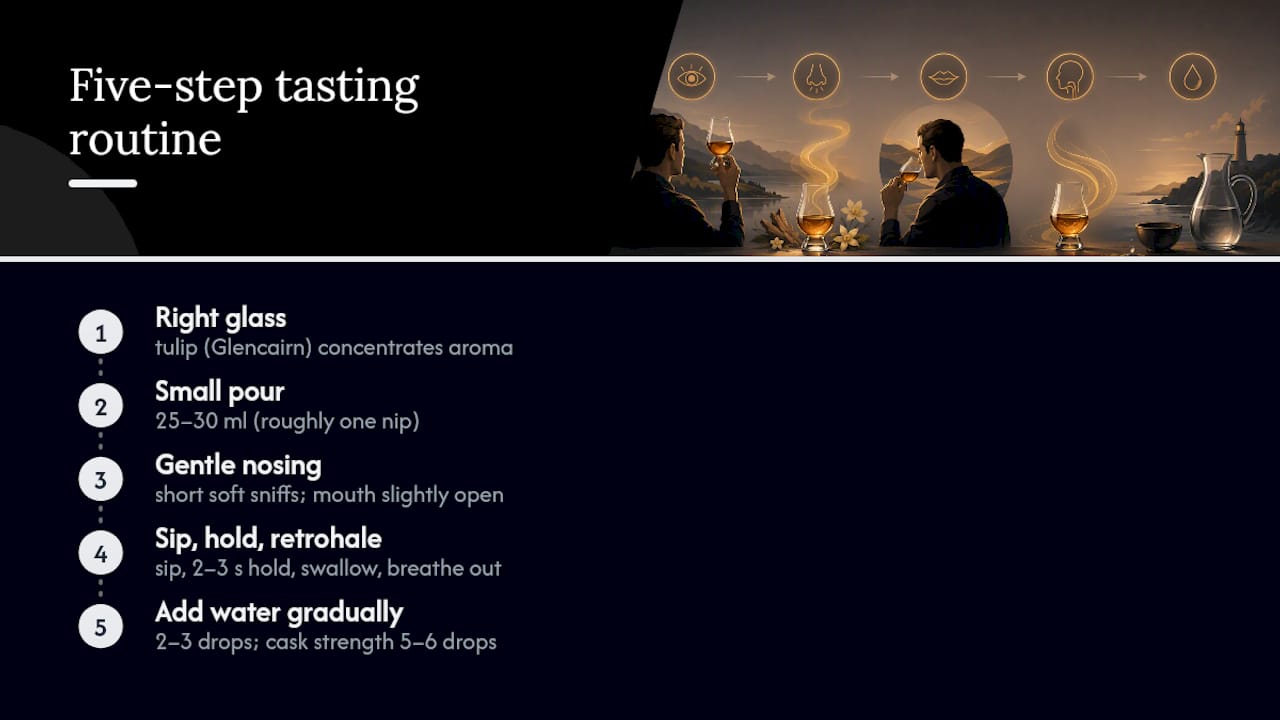
Most people ruin their first proper tasting before they even pour the whisky, usually by using the wrong glass, pouring too much, or knocking it back like a shot. None of that gets you anywhere near what the whisky actually tastes like. Brendan’s approach, built from a straightforward five-step routine that TasteSCOT and other tasting guides converge on, fixes all three problems in under ten minutes.
1. Choose the right glass. A tulip-shaped glass, the Glencairn is the standard example, narrows toward the top and concentrates the aroma toward your nose. A wide tumbler scatters the aroma into the room instead of into your face, which sounds trivial until you try both side by side.
2. Pour small. Stick to 25 to 30 millilitres. That’s roughly a standard nip, not a generous one, and there’s a real reason for the restraint: a small pour keeps your palate fresh for a second or third taste, whereas a big glass encourages you to drink past the point where you’re actually paying attention.
3. Nose it gently. Bring the glass toward your face slowly, keep your mouth slightly open, and take short, soft sniffs rather than one deep inhale. A hard sniff drags ethanol vapour straight into your nose and numbs it, burying the more delicate aromas underneath. Short sniffs, repeated a few times, reveal far more of the whisky’s actual character than one big lungful ever will.
4. Sip, hold, then swallow. Take a small sip, let it sit on your tongue for two or three seconds, then swallow and breathe out through your nose (this is called retrohale). That breath-out step is where a lot of the flavour actually shows up, so don’t skip it.
5. Add water, carefully. This is the step most newcomers get wrong by skipping entirely. A few drops of water, added with a pipette or teaspoon rather than poured, can open up aromas that alcohol alone keeps locked down. Start with two or three drops on a standard-strength whisky. If you’re brave enough to try a cask-strength bottle early, water isn’t optional. Add it gradually, tasting between each addition, until the burn settles and the flavour comes forward, that can mean five or six drops rather than two or three.
Pro Tip: Buy two bottles with contrasting profiles, say a light Speyside single malt and a mellow blend, and taste them side by side in the same sitting. Take one-word notes for each (“honey,” “toast,” “green apple,” “smoke”) rather than trying to write full sentences. The contrast teaches your palate faster than drinking either one alone ever could.
Run this same five-step process every time you open something new, and by your third or fourth bottle you’ll notice you’re picking up detail you missed entirely on your first dram. That’s not a coincidence. It’s what happens when repeat tasting under controlled conditions trains your palate rather than just your enthusiasm.
What to avoid as a beginner, and what it should cost
Four categories of whisky trip up more newcomers than anything else, and none of them are bad whisky. They’re just the wrong place to start.
- Heavily peated Islay bottlings. These deliver intense smoke, iodine, and maritime notes that read as “medicinal” or “burnt” to an untrained palate. Working up gradually, light peat first, then medium, then the heavy stuff, avoids the common mistake of being put off peat entirely because of one rough first encounter.
- Heavily sherried “bombs.” A whisky finished for years in first-fill sherry casks can taste like concentrated dried fruit and burnt sugar. Rich, occasionally brilliant, but a lot for a first bottle to carry.
- Single-cask releases. Because each cask is unique, a single-cask bottling can vary wildly from batch to batch. Fine once you know your preferences; a gamble when you don’t have a baseline yet.
- Cask strength. As covered above, the higher ABV changes everything about how the whisky feels on the tongue. Save it until you’ve built up some tasting experience.
Price causes just as much confusion as flavour does. The instinct is either to grab whatever’s cheapest or to assume the expensive bottle must be the safer choice. Both instincts are wrong.
| Price band | What you typically get | Beginner risk |
|---|---|---|
| Under $40 | Younger blends, higher grain content, sometimes harsh or thin | Can taste rough or one-dimensional; hit-and-miss |
| $40–$90 | Well-made blends and entry single malts, the practical sweet spot | Low risk; balanced, approachable profiles are common here |
| $90–$100 | Older age statements, better cask management, more complexity | Low to moderate; good for a second or third bottle once you know your taste |
| $100+ | Rare, limited, or heavily aged releases | Poor value as a first buy; you’re paying for scarcity, not learning value |
The mid-range band earns its reputation because distillers aren’t cutting corners on cask quality, but they’re also not charging a premium for age statements or rarity that a new drinker can’t yet appreciate. A $40 supermarket blend can genuinely be a smart first buy. A $300 limited release almost never is, no matter how good the reviews.
Before you buy, run this quick checklist: check the ABV (standard strength, not cask strength), read the tasting notes for sweet or fruity language rather than “intense” or “peaty,” confirm the price sits in the $40 to $90 range if it’s your first bottle, and check whether it’s a single malt or blend so you know what you’re comparing it against later.
A flavour-first checklist for choosing your first bottle
Forget brand names for a minute. The fastest way to pick a bottle you’ll actually enjoy is to shop by flavour category first, then let the label confirm you’re in the right territory. Four broad profiles cover almost everything a new drinker should consider.
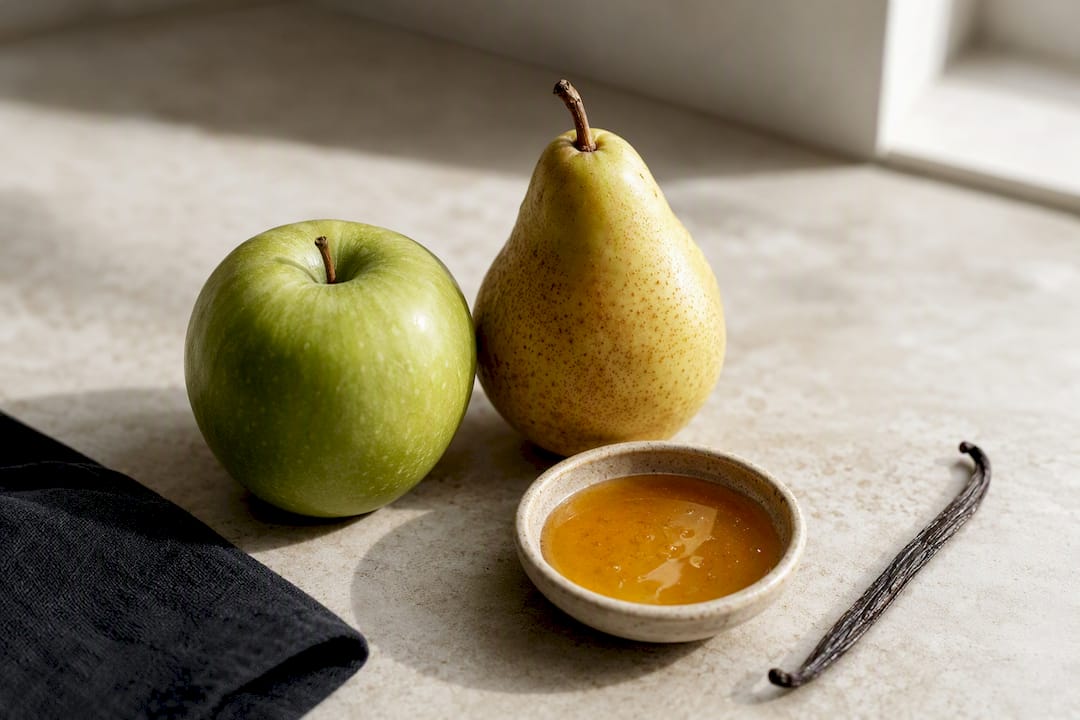
Gentle Speyside style. Light, sweet, and orchard-fruit forward, think apple, pear, honey, and a touch of vanilla. This is the safest possible entry point into single malt and suits anyone who enjoys white wine or a light, fruity cider.
Soft Lowland or Highland style. A little grassier or more floral than Speyside, often with a mild honey or heather note and less sweetness overall. Good for drinkers who find fruit-forward whisky a bit one-note and want something slightly drier.
Mellow blends. A well-balanced blend softens out the harsher edges you sometimes get in a young single malt, because it’s mixing grain whisky with malt whisky to smooth the overall profile. This is an underrated starting point; plenty of whisky drinkers write blends off before they’ve actually tried a good one.
Light-sherry finishes. Some approachable single malts spend most of their life in ex-bourbon casks, then finish for a shorter period in a sherry cask. You get a hint of that dried-fruit richness without the full, heavy sherry-bomb effect.
When you’re reading a product page, look for four things in this order: the tasting-note keywords (fruity, honeyed, soft, vinegary, peaty, intense), the ABV percentage, whether there’s an age statement (10, 12, 15 years, generally a sign of more consistent quality control, though its absence isn’t a red flag on its own), and the category label (single malt, blend, or grain). Those four data points tell you almost everything you need before you’ve spent a cent.
A simple exercise beats any amount of reading: buy two bottles from two different profiles above, taste them using the five-step method outlined earlier, and note which one you reach for again. That single comparison will tell you more about your own palate than any “top 10” list, including this one.
Why trust this guide
This guide comes from Brendan, whose beginner-focused writing on tasting technique and flavour education forms part of Uisuki’s broader educational content for new whisky drinkers. Uisuki isn’t purely a shopfront. Alongside its curated bottle listings, the site runs a growing library of practical guides covering beginner bottle selection, regional flavour differences, and appreciation techniques for drinkers at every stage.
That combination matters for someone starting out. A retailer that only sells bottles has no reason to talk you out of an expensive mistake. A retailer that also teaches tasting technique and offers samples has every reason to get you drinking something you’ll actually enjoy on your first try, because that’s what turns a first purchase into a second one. If you’re not sure which profile suits you, Uisuki’s sourcing service and sample options give you a lower-risk way to test the water before committing to a full bottle.
Why the “just buy a famous bottle” advice misses the point
Most beginner advice defaults to a list of brand names, which is exactly backwards. A famous label tells you nothing about whether you’ll enjoy what’s in the bottle; a tasting note does. The whisky world oversells the single malt versus blend debate too. A well-made blend at $50 will teach a new drinker more about their own preferences than an intimidating, over-hyped single malt at $150.
What actually matters, based on everything above, is sequencing: start gentle, taste properly, and only move toward peat, sherry bombs, or cask strength once you’ve built a reference point. Skipping straight to the “impressive” bottles is how good whisky gets written off after one bad experience. Prioritise the tasting method over the shopping list. Get that right and the right bottles find you.
— Brendan
Where to start with Uisuki
This site is set up for exactly the situation you’re in: unsure what to buy, not keen to gamble a lot on the wrong bottle. The curated Scotch collection lists ABV, cask details, and tasting notes on every product page, so you can apply everything above, ABV, tasting-note keywords, age statement, category, without guessing.

If you’re still narrowing down a profile, start smaller. Uisuki’s sample and sourcing options let you test a couple of approachable styles before committing to a full bottle, which is a far cheaper way to figure out whether you’re a Speyside drinker or a blend drinker. If you already know roughly what you’re after but can’t find it locally, personalised sourcing requests are worth using, particularly for harder-to-find bottles that don’t sit on general retail shelves. Head to the Scotch Whisky collection to browse by tasting profile, or reach out with a sourcing request if you’ve got a specific style in mind and want help tracking it down.
Sources
- The Scotch Whisky Regulations 2009 (UK legislation)
- How to taste whisky properly — TasteSCOT
- Best whisky for beginners — TasteSCOT
FAQ
What is a good Scotch whisky for beginners?
A gentle, fruit or honey-forward single malt from Speyside, or a well-made blend, gives you the smoothest introduction. Look for tasting notes mentioning vanilla, orchard fruit, or honey rather than “intense” or “peaty,” and stick to a standard ABV around 40%.
What is the best whisky for a beginner on a budget?
A well-balanced blend in the $40 to $90 range is usually the safest starting point, since it avoids both the harshness of very cheap bottles and the unnecessary premium of rare releases. Uisuki’s Scotch collection lists ABV and tasting notes on every page, which makes comparing options in that range straightforward.
How should a beginner drink scotch?
Use a tulip-shaped glass, pour around 25 to 30 millilitres, and nose it with short, gentle sniffs rather than one deep breath. Sip, hold it for two or three seconds, swallow, and try adding two or three drops of water to open up the aroma.
What is the smoothest Scotch for a beginner?
Whiskies matured mainly in ex-bourbon casks tend to be the smoothest, since that cask type contributes vanilla, caramel, and light fruit rather than heavy smoke or dried-fruit intensity. Avoid cask-strength bottlings and heavily peated Islay whiskies until you’ve built up some tasting experience.
Do I need to add water to Scotch whisky?
Water isn’t mandatory, but a few drops often reveal aromas that neat alcohol keeps hidden, especially on standard-strength bottlings. If you try a cask-strength whisky, water becomes far more important, and you may need several drops added gradually to bring the strength down to something manageable.