

Single malt whisky is malted barley, distilled in copper pot stills, from one distillery. Single grain whisky also comes from one distillery, but it can use other cereals like wheat or corn, usually run through a column still. That production gap is why single malts tend toward richer, distillery-specific character, while single grains lean lighter and more cask-driven. It shapes price, flavour, and even whether a bottle belongs in a cocktail or a collection.
TL;DR:
- Most single grain whiskies are produced at a single distillery using column stills and can be made from cereals like wheat or corn, not just malted barley.
- “Single” on a whisky label refers to one distillery and does not imply the whisky is single cask or single batch, which is a common misconception.
- The taste and complexity of a whisky depend heavily on age and cask type, with single malt generally being fuller-bodied and grain offering lighter, sweeter flavors.
- Quality single grain whiskies are increasingly available and can rival single malts, especially when well-aged and matured in quality casks.
- When choosing whisky, prioritize cask type, age, and maturation over label terms, and taste side-by-side to understand the differences.
Table of Contents
- Single grain vs single malt whiskey: the legal definitions that matter
- How mash bill and still choice shape the spirit
- What to expect in the glass, and how ageing changes it
- When to reach for single malt, and when single grain wins
- Common myths that trip up new buyers
- Who’s behind this comparison
- Why the “grain equals lesser” idea needs to die
- Ready to compare a few bottles yourself
- Sources
- FAQ
Single grain vs single malt whiskey: the legal definitions that matter
The word “single” trips up more drinkers than any other term on a whisky label. It means one distillery, full stop. It does not mean single cask, single batch, or single barrel. A single malt can be a blend of hundreds of casks from one site, and a single grain works the same way. Confusing “single” with “single cask” is the most common labelling mistake enthusiasts make, and it’s worth fixing before you spend a cent.
Under the Scotch Whisky Regulations, single malt and single grain share several legal baselines, but differ on grain content and still type:
- Single malt Scotch: made only from water, malted barley, and yeast, distilled entirely in copper pot stills at one distillery.
- Single grain Scotch: made from water, malted barley, and any other whole cereal grains (corn, wheat, rye), typically distilled in a column still, still at a single distillery.
- Minimum maturation: at least several years in oak casks, for both categories.
- Minimum bottling strength: a moderate minimum alcohol by volume, typically around 40%.
- The maximum distillation alcohol level: distillation must stay below a certain threshold which separates whisky from neutral grain spirit.
That 94.8% threshold rarely gets discussed outside distilling circles, but it’s the technical boundary that keeps grain whisky recognisable as whisky rather than industrial ethanol. Distillers deliberately stop short of it to preserve flavour compounds that a fully rectified spirit would strip away. Vodka producers chase purity above that line; whisky makers stay below it on purpose.
One more point worth locking in: a “single grain” bottling is still legally a single-distillery product, exactly like single malt. The word “grain” describes the cereal bill, not a lack of provenance.
How mash bill and still choice shape the spirit
Malted barley is barley that’s been steeped, sprouted, and dried to activate enzymes that convert starch into fermentable sugar. Single malt whisky uses only this grain. Single grain whisky uses a mixed mash bill, often majority corn or wheat with a smaller portion of malted barley added purely to supply those converting enzymes.
Still design does the rest of the work. Pot stills, used for all single malt Scotch, run in batches and retain more of the oily, flavour-carrying compounds called congeners, according to The Takeout’s breakdown of the distinction. Column stills, also known as Coffey stills, run continuously and strip out more of those compounds, producing a cleaner, lighter spirit. That’s precisely why column-distilled grain whisky historically became the backbone of blended Scotch: it’s mild enough to carry a blend’s structure without fighting the malt for attention.
A few things worth knowing about how this plays out in practice:
- Malting quality genuinely affects the final flavour, since enzyme activity during malting determines how much fermentable sugar (and flavour precursor) ends up in the wash.
- Some distilleries now experiment with hybrid approaches, running grain spirit through modified stills for extra character.
- VinePair’s comparison of the three Scotch categories confirms that still type, more than grain choice alone, drives the biggest sensory gap between the two styles.
Pro Tip: Check the product description for still type and cask history before you buy. A bottle that lists “pot still” and a first-fill sherry cask is chasing intensity; one that lists “column still” and a long ex-bourbon maturation is chasing smoothness and sweetness. Read the grain types used in Scotch if the mash bill isn’t spelled out.
What to expect in the glass, and how ageing changes it
Single malt typically delivers a fuller body: malt-driven sweetness, regional character (think peat smoke from Islay, orchard fruit from Speyside, spice from the Highlands), and a texture that holds up against ice or a splash of water. Single grain tends to run lighter and cleaner, often sweeter on the front palate, with vanilla, toffee, and coconut notes that come almost entirely from the cask rather than the base spirit.
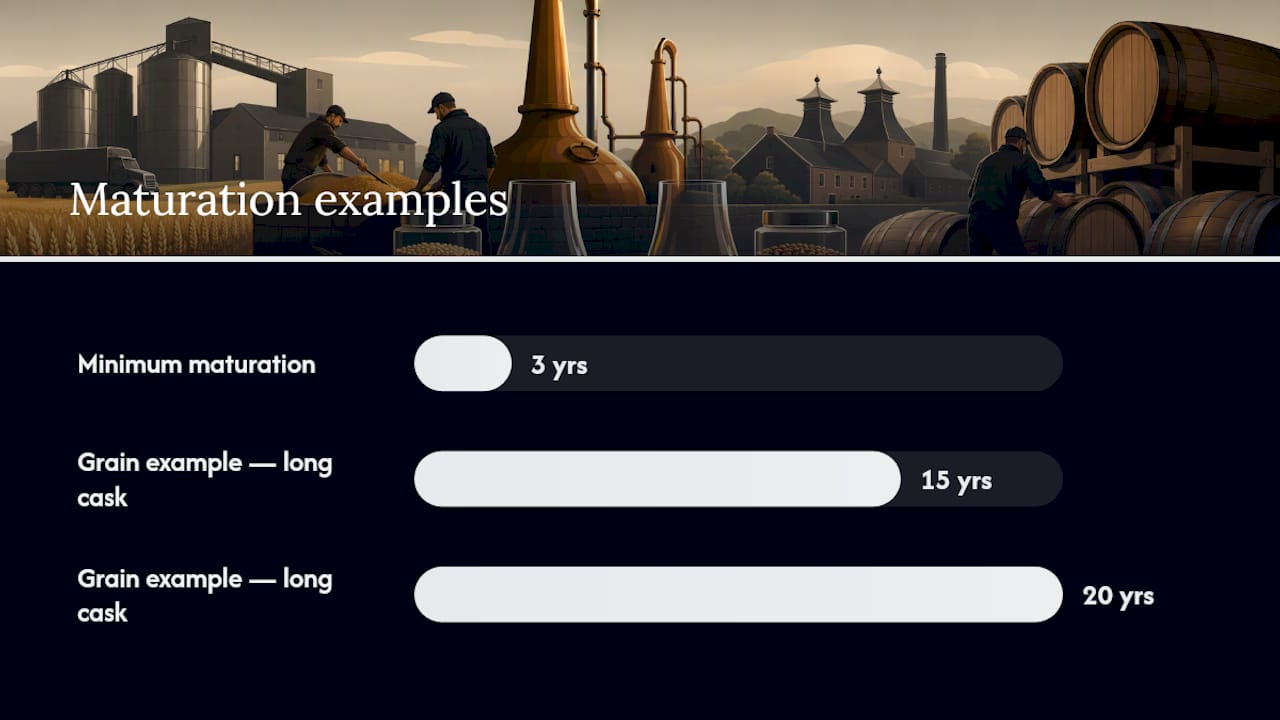
That cask influence is the detail most buyers underestimate. Both categories must mature at least three years in oak and bottle at a minimum of 40% ABV, per the Scotch Whisky Regulations’ shared thresholds for both styles, but because grain spirit starts out so much lighter, the cask does proportionally more of the flavour work. Put a grain whisky in an ex-sherry butt for fifteen or twenty years and it can develop a complexity that rivals a mid-range single malt.
- Single malt casks: ex-bourbon for vanilla and coconut, sherry for dried fruit and spice, wine casks for a red-fruit finish.
- Single grain casks: the same range, but the effect shows up more starkly since there’s less competing base-spirit character.
- Age statements: matter more for grain whisky, since a young grain can taste thin, while an older one often surprises drinkers who assume “grain” means “basic.” Our guide to reading age statements covers how to judge whether an age claim is doing real work or just filling a label.
When to reach for single malt, and when single grain wins
Neither style is objectively better. The right pick depends on what you’re actually trying to do with the bottle.
- Choosing a gift or a talking-point bottle: go single malt. Distillery character and regional identity (Islay peat, Speyside fruit) give the recipient something distinctive to talk about, and single malts dominate the collector market, which matters if the bottle needs to feel special.
- Building or upgrading a cocktail bar: single grain earns its place here. Its lighter, sweeter profile mixes cleanly without overpowering other ingredients, and it’s often better value per pour than an equivalent-age single malt.
- Buying your first “serious” whisky, or exploring cask-driven flavour out of curiosity: try a well-aged single grain standalone bottling. They’re rarer than you’d expect, since most single grain output historically goes straight into blends rather than being bottled solo, which makes a good one a genuine discovery rather than a compromise.
Whichever direction you lean, read the tasting notes before the price tag. A detailed comparison of malt and grain whisky will tell you more about what’s actually in the glass than the category label alone ever will.
Common myths that trip up new buyers
“Single” does not mean single barrel. It means single distillery, and most single malt or single grain bottles are a marriage of many casks. That misunderstanding alone probably causes more label confusion than any other term on a Scotch bottle.
“Grain” does not mean cheap or inferior. Grain whisky built the entire blended Scotch industry, and quality standalone releases are attracting real interest from collectors precisely because they’re overlooked.
- Blended Scotch: a mix of single malt and single grain whiskies from multiple distilleries.
- Single grain: one distillery, mixed cereal bill, usually column distilled.
- Single malt: one distillery, malted barley only, always pot distilled.
Who’s behind this comparison
This explainer draws on the legal text of the Scotch Whisky Regulations, distillery-published explainers, and long-form industry breakdowns of still design and mash bills, cross-checked against each other for consistency rather than taken at face value from any single source.
- Uisuki’s own single grain whisky guide goes deeper into specific styles and regional variations than a single article can cover.
- Product listings on Uisuki carry cask type, ABV, and tasting notes on every bottle, so you can compare a single malt and single grain side by side before buying.
- Regional flavour characteristics are worth a read if you’re narrowing down a single malt by taste rather than distillery reputation alone.
Why the “grain equals lesser” idea needs to die
The conventional wisdom treats single grain as the also-ran category, and that’s backwards. Grain whisky isn’t watered-down malt; it’s a different production philosophy that happens to have spent a century hidden inside blends instead of standing on its own.
What gets overrated in most whisky content is the assumption that pot still automatically means better. Pot stills produce more character, not automatically more quality. A poorly matured single malt loses to a beautifully cask-managed single grain every time, and buyers who skip grain releases purely on category bias are missing some of the best value in the category.
Prioritise the cask and the age statement over the label type. Read what a bottle actually went through before you decide whether “single malt” or “single grain” printed on the front tells you anything useful about what’s in the glass.
— Brendan
Ready to compare a few bottles yourself
There’s no substitute for tasting single malt and single grain side by side, and Uisuki’s shelves make that easy without the guesswork of hunting across multiple retailers.

Browse the Scotch Whisky collection for single malts and single grains listed with full cask, ABV, and tasting details on every product page, so you’re never buying blind. If Scotch isn’t the destination, the World Whiskies range covers non-Scotch single malts and grain-style whiskies from other countries, and the samples on the Uisuki homepage let you try a smaller pour before committing to a full bottle. Curated selections may include rare and hard-to-find releases, with personalised sourcing options possibly offered for specific single grain or single malt whiskies not currently listed. Have a look through the current Scotch listings and see which style actually matches what you want in the glass.
Sources
- Single Grain Scotch: The Overlooked Category Explained | Scotch Authority
- The Differences Between Single Malt, Blended, and Single Grain Scotch Whisky Infographic | VinePair
- Single-Malt Vs. Single-Grain Scotch Whisky: Is There A Difference? | The Takeout
FAQ
Is single grain better than single malt?
Neither is objectively better. Single malt usually offers more distillery character, while single grain tends to be lighter, more affordable, and often better suited to cocktails or long-aged cask-driven exploration.
Is Johnnie Walker blended or single malt?
Johnnie Walker is a blended Scotch, meaning it combines single malt and single grain whiskies from multiple distilleries rather than coming from just one.
Is Jack Daniel’s a single malt?
No. Jack Daniel’s is a Tennessee whiskey made mainly from corn, which places it outside the Scotch single malt category entirely, since single malt Scotch must be 100% malted barley from one distillery.
What are the four types of whiskey?
The broad categories are single malt, single grain, blended, and grain whisky more generally (which includes bourbon, rye, and other cereal-based styles outside Scotland). Each differs by grain bill, still type, and regional production rules.