

This page is a curated, shopping ready list of single malt Scotch whisky styles, organised by flavour and buyer experience rather than an endless brand roll call. Use it to work out which style suits your palate, check the label cues that matter, then head to a curated collection to buy with confidence. The Scotch Whisky Association’s own guidance and awards like the World Whiskies Awards are your reference points along the way.
TL;DR:
- Most single malt Scotch whiskies are distilled at a single distillery from malted barley using pot stills, with no blending from other distilleries.
- Whisky regions like Speyside and Islay offer distinct flavor profiles, but regional taste can vary widely depending on cask choices and production methods.
- Entry-level bottles aged at 10 to 12 years and bottled at standard strength are best for beginners to learn regional styles and house flavors.
- Cask strength and experimental releases offer more intensity and unique flavors but often require careful dilution and tasting experience.
- Buying guides recommend matching the flavor profile to your preferences, checking for non-chill filtered labels, and considering recent awards for quality assurance.
Table of Contents
- What actually counts as a single malt Scotch whisky?
- Scotch whisky regions and what they taste like
- A practical list of single malt styles to try
- How to choose the right single malt: a buyer’s checklist
- Why trust this guide
- Shop single malts from Uisuki’s Scotch collection
- A note on curation
- Sources
- FAQ
What actually counts as a single malt Scotch whisky?
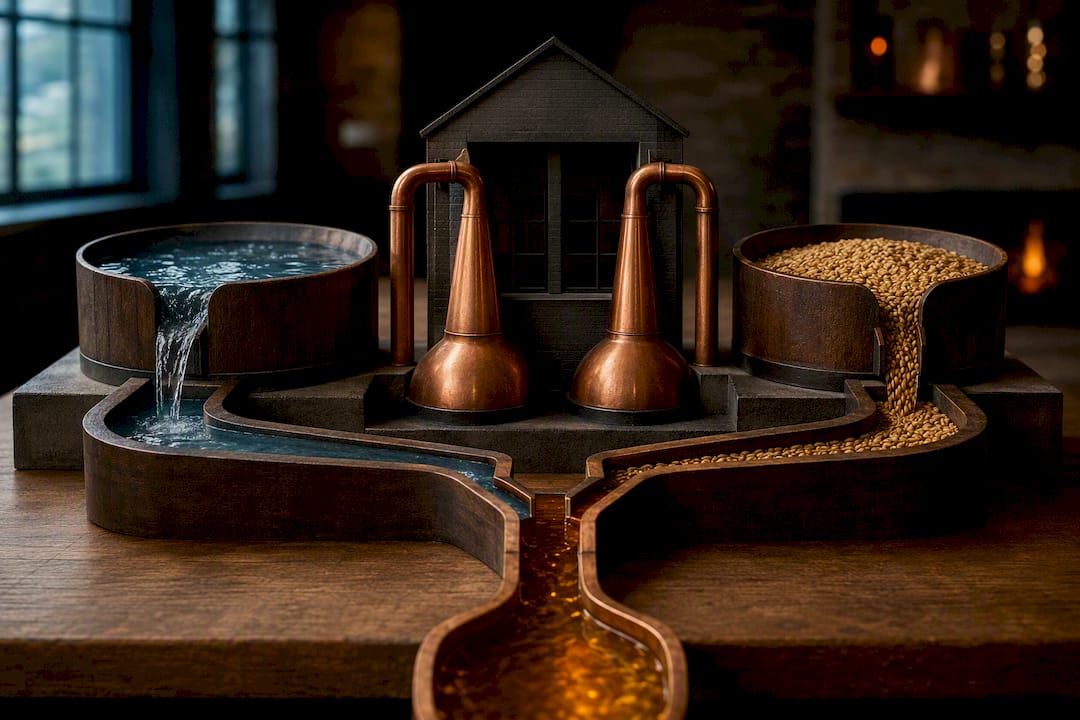
The definition isn’t up for debate. Under Scotch Whisky Association guidance, a Single Malt Scotch Whisky must be distilled entirely from water and malted barley at one distillery, using pot stills, and it can never be blended with whisky from another distillery. That single word, “single,” is doing all the work: it refers to the distillery, not the cask or the barrel.
Once you know that, the rest of the label starts making sense. An age statement tells you the youngest whisky in the bottle, not the average. Cask finish language (sherry, port, ex bourbon) tells you what the spirit spent its final months resting in before bottling.
Three quick label habits worth building:
- Check the age statement location. No number usually means it’s a blend of ages, not necessarily young whisky.
- Look for “cask strength” or “natural strength” if you want the whisky undiluted from the cask.
- Scan for “non-chill filtered,” a texture cue explained further in the buying checklist below.
Scotch whisky regions and what they taste like
Scotland’s whisky regions aren’t just geography lessons. They’re a rough flavour map, even though modern distilling means the lines blur more than they used to.
Speyside produces fruity, honeyed, often lightly sherried malts, and it dominates by sheer number. Islay is the smoky, medicinal, peat forward end of the spectrum, thanks to local peat used in malting. Highlands cover the widest range, from heathery and light in the north to richer, spicier drams further south. Lowlands are generally the softest and most floral, a good entry point for someone new to malt whisky. Campbeltown, once a whisky boomtown, now has a handful of producers making briny, slightly oily malts. The Islands (Skye, Orkney, Mull, Jura and others, excluding Islay) sit somewhere between coastal salinity and Highland structure.
Speyside by the numbers: The Scotch Whisky Association’s list of operating distilleries shows more than 150 distilleries currently running across Scotland, with Speyside having the largest concentration of any single region.
Region is a starting point, not a guarantee. Two Speyside distilleries a few kilometres apart can taste completely different depending on their stills, fermentation times, and the casks they choose. Cask selection and cut point shape a whisky’s character at least as much as its postcode does, so treat regional profiles as a shortlist for exploration rather than a fixed rulebook. A useful next step is reading up on how whisky regions shape your palate before you commit to a bottle.
Quick regional cheat sheet:
- Speyside: honey, orchard fruit, light sherry
- Islay: smoke, iodine, sea spray
- Highlands: heather, spice, variable body
- Lowlands: grass, citrus, soft finish
- Campbeltown: brine, oil, faint funk
- Islands: salt, pepper, coastal minerality
A practical list of single malt styles to try
Forget browsing an alphabetical brand list. Shopping by style gets you to a bottle you’ll actually enjoy faster, and it’s how Uisuki’s own style guide approaches new drinkers too.
- Approachable and entry-level. Usually aged 10 to 12 years, bottled around 40 to 43% ABV, with gentle vanilla, malt and light oak notes. Search terms: “10-year-old,” “classic,” “signature malt.” Experts consistently point to this age bracket as the best way to learn a distillery’s house style before spending more on rarer releases.
- Sherried and sweet. Matured wholly or partly in ex sherry casks, delivering dried fruit, dark chocolate and Christmas cake flavours. Search terms: “sherry cask,” “oloroso finish,” “PX finish.” Pro Tip: Taste sherried malts after lighter styles, never before. The sugar and spice will flatten anything more delicate that follows.
- Peaty and smoky. Malted barley dried over peat smoke gives these a campfire, tar or bandage-like character, most associated with Islay. Search terms: “peated,” “heavily peated,” “phenol PPM.” Pro Tip: Nose it first without swirling. Peat opens up in the glass and can overwhelm your palate if you drink too fast.
- Cask strength and collector releases. Bottled undiluted, often 55 to 65% ABV, unfiltered, sometimes single cask. Search terms: “cask strength,” “single cask,” “limited release.” Pro Tip: Add a few drops of water. It doesn’t weaken a good cask strength whisky, it opens the aroma.
- Experimental and innovation driven. Unusual cask finishes (wine, rum, tequila barrels), novel fermentation, or non-traditional maturation. Search terms: “finished in,” “experimental cask,” “innovation series.” These reward curious drinkers who’ve already built a baseline with the styles above.
For a broader look at where these categories overlap, exploring the diverse world of single malt types is worth a read before you buy.
How to choose the right single malt: a buyer’s checklist
Standing in front of a shelf, or scrolling a product page, gets easier with a short mental checklist.
- Match the bottle to your flavour map: sweet and fruity, smoky, or somewhere between.
- Decide on cask type and check the age statement. No age statement isn’t a red flag, but it means you’re trusting the distillery’s consistency over a guaranteed minimum age.
- Choose your ABV preference. Standard strength (around 40 to 46%) is easier to drink neat; cask strength rewards a splash of water.
- Check for non-chill filtration if texture matters to you. It preserves the fatty acids and esters that give whisky a fuller mouthfeel, at the cost of slight cloudiness when cold.
- Weigh up awards against price. A recent World Whiskies Awards win, like GlenAllachie taking World’s Best Single Malt in 2025, tends to push both demand and resale prices up quickly. Blind tasting panels judge balance over age, which is why a well-made 15 or 18-year-old often beats an older but less refined dram at competition.
Pro Tip: If you’re building a tasting flight, work light to heavy: approachable, then sherried, then peated, then cask strength. Reversing that order ruins your palate for everything that follows.
Why trust this guide
The catalogue includes detailed information such as ABV, cask type and batch details for each bottle, offering rare, hard-to-find releases alongside more approachable everyday drams.
- A catalogue covering a variety of whisky categories including Scotch, Japanese, Australian and American whisky.
- Product pages include details such as ABV, cask information and batch specifics for bottles.
- Options for personalised sourcing requests for bottles not currently listed.
- Shipping options that include local and international delivery, with free shipping thresholds provided at checkout.
This guide was put together with those same principles: taste-first recommendations, clear label reading, and a bias toward genuine detail over marketing copy.
Shop single malts from Uisuki’s Scotch collection
Uisuki is the alternative to hunting through scattered retailer listings for one style at a time. Instead of an A to Z brand dump, the Scotch Whisky collection is organised so you can move from the styles above straight to bottles that match, with cask, ABV and batch details listed on every product page rather than buried in a PDF spec sheet.
The range covers everything from approachable 10-year-old malts through to peated Islay drams and cask strength collector bottlings, and if the exact bottle you want isn’t listed, Uisuki takes personalised sourcing requests for hard-to-find releases. Browse the Scotch Whisky collection now and pick your first bottle, or your next one, based on the style that matches what you just read.
A note on curation
Good single malt recommendations come down to three things: does it taste like what it claims to be, is it fairly priced for what’s in the bottle, and can you trust where it came from. Those principles shaped every style category above. If you’ve read this far and still can’t find the exact bottle or cask type you’re after, get in touch with Uisuki directly and ask for personalised sourcing help.
— Brendan
Sources
- Guidance for bottlers and producers (Scotch Whisky Association) 2025
- GlenAllachie crowned best single malt Scotch whisky at the 2025 World Whiskies Awards — Forbes
- The 30 Best Scotch Whiskies for 2025 — VinePair
FAQ
What are the best single malt Scotch whiskies to start with?
Entry-level bottlings around 10 to 12 years old are the most accessible starting point because they show a distillery’s house style clearly without the price tag of older releases. From there, most drinkers branch into sherried or lightly peated styles once they know what they enjoy.
What is a good single malt Scotch whisky for someone new to whisky?
A Lowland or Speyside malt bottled at standard strength (around 40 to 43% ABV) tends to be the gentlest introduction, since these regions typically favour fruity, floral or lightly honeyed profiles. Avoid cask strength or heavily peated bottles until you’ve built a baseline for what you like.
What are the top Scotch whiskies right now?
Awards shift year to year, but the 2025 World Whiskies Awards named GlenAllachie’s expression World’s Best Single Malt, a reminder that balance and judging panel preference often matter more than age or price. Checking recent award lists alongside your own flavour preferences, using the checklist above, is a more reliable approach than chasing a single “top” bottle.
How many single malt Scotch whisky distilleries are there?
The Scotch Whisky Association’s most recent count lists well over 150 operating distilleries across Scotland, with Speyside holding the largest concentration by far. That number changes as new distilleries open and older ones occasionally close or pause production.
Where can I buy rare or hard-to-find single malt Scotch whisky?
Uisuki’s Scotch Whisky collection lists curated, rare and approachable bottles with ABV, cask and batch details on every product page. If a specific bottle isn’t in stock, Uisuki also accepts personalised sourcing requests for whiskies that are harder to find elsewhere.