

A single bottle crafted in a boutique Australian distillery can fetch prices rivalling those from established Scottish or Japanese producers, highlighting the powerful role of true whisky craftsmanship. For Australian collectors and enthusiasts, understanding the artistry behind every step—from malting and distillation to innovative aging—is essential for making informed choices in the premium market. Discover how regional techniques, heritage, and artisan skill combine to elevate the value and enjoyment of each coveted pour.
Table of Contents
- Defining Whisky Craftsmanship And Its Legacy
- Regional Styles And Unique Production Methods
- Key Stages From Grain To Glass
- Innovations Versus Tradition In Distilling
- How Craftsmanship Influences Value And Rarity
Key Takeaways
| Point | Details |
|---|---|
| Whisky craftsmanship is an art form. | It combines tradition, skill, and cultural heritage to create unique flavour profiles. |
| Regional influences shape whisky characteristics. | Local resources and production methods contribute to diverse whisky styles across the globe. |
| Craftsmanship enhances value and rarity. | Unique production techniques and limited editions can significantly increase market desirability. |
| Innovation respects tradition. | New techniques complement established methods, allowing for creative evolution in whisky production. |
Defining Whisky Craftsmanship and Its Legacy
Whisky craftsmanship represents far more than a simple production process - it is an intricate art form blending generations of tradition, meticulous skill, and profound cultural heritage. At its core, craftsmanship transforms humble ingredients like grain, water, and yeast into a complex sensory experience that tells a profound story about regional identity and human expertise.
The journey of whisky craftsmanship begins with understanding fundamental techniques passed down through generations of distillers. Whisky Heritage Explored: Global Traditions and Impact reveals how different cultures have developed unique approaches to spirit production, each reflecting local environmental conditions, available resources, and deeply rooted cultural practices. Whether crafted in the misty Scottish Highlands, rugged Japanese mountainsides, or Australian boutique distilleries, whisky represents a liquid narrative of human creativity and technical precision.
Traditional whisky craftsmanship involves several critical stages that demand extraordinary skill and patience. Malting, mashing, fermentation, distillation, and maturation each represent complex chemical and sensory transformations. Experienced distillers understand that craftsmanship is about controlling these subtle processes with an almost intuitive understanding - manipulating temperature, selecting specific wooden barrels, and determining precise aging times to create distinctive flavour profiles that cannot be replicated through industrial methods.
Pro tip: When exploring whisky craftsmanship, pay close attention to a distillery’s heritage, production methods, and regional characteristics to truly appreciate the nuanced artistry behind each bottle.
Regional Styles and Unique Production Methods
Whisky production represents a remarkable tapestry of regional diversity, with each geographical area contributing distinctive characteristics that shape the spirit’s ultimate flavour profile. Comprehensive whisky production techniques worldwide reveal how local environmental conditions, ingredient availability, and cultural traditions dramatically influence whisky’s sensory experience.
Scottish whisky, or Scotch, remains renowned for its complex regional variations. The Highlands produce robust, full-bodied spirits with hints of heather and maritime influences, while Islay whiskies are famous for their intense, peaty characteristics. Japanese distilleries have emerged as global leaders, applying meticulous precision to whisky crafting, often using techniques that blend traditional Scottish methods with uniquely Japanese attention to detail and aesthetic refinement.
Each whisky-producing region brings unique production nuances that transform basic ingredients into extraordinary spirits. Artisanal whisky traditions across different cultures demonstrate how local water sources, specific grain selections, distinctive fermentation techniques, and specialised aging processes contribute to creating whiskies with profound regional identities. American bourbon, for instance, requires at least 51% corn in its mash bill, while Canadian whiskies often incorporate rye, creating fundamentally different flavour profiles.
Here’s a comparison of regional whisky styles and their distinctive influences:
| Region | Key Ingredient | Distinctive Character | Typical Ageing Method |
|---|---|---|---|
| Scotland | Barley | Peaty, smoky, or floral notes | Ex-bourbon or sherry casks |
| Japan | Barley & local water | Subtle, elegant, umami-rich | Mix of Japanese and imported wood |
| America | Corn (bourbon) | Sweet, robust, vanilla notes | New charred oak barrels |
| Canada | Rye and corn | Spicy, light, smooth | Used or new oak barrels |
Pro tip: When exploring regional whisky styles, pay attention to the specific geographical indicators on bottles, as these often reveal intricate details about production methods and local traditions.
Key Stages From Grain to Glass
The journey of whisky production is an intricate process that transforms simple agricultural ingredients into a complex, nuanced spirit through a series of meticulously controlled stages. 7 Key Moments in the History of Whisky Styles highlights how these transformative techniques have evolved, reflecting both scientific precision and artistic interpretation.
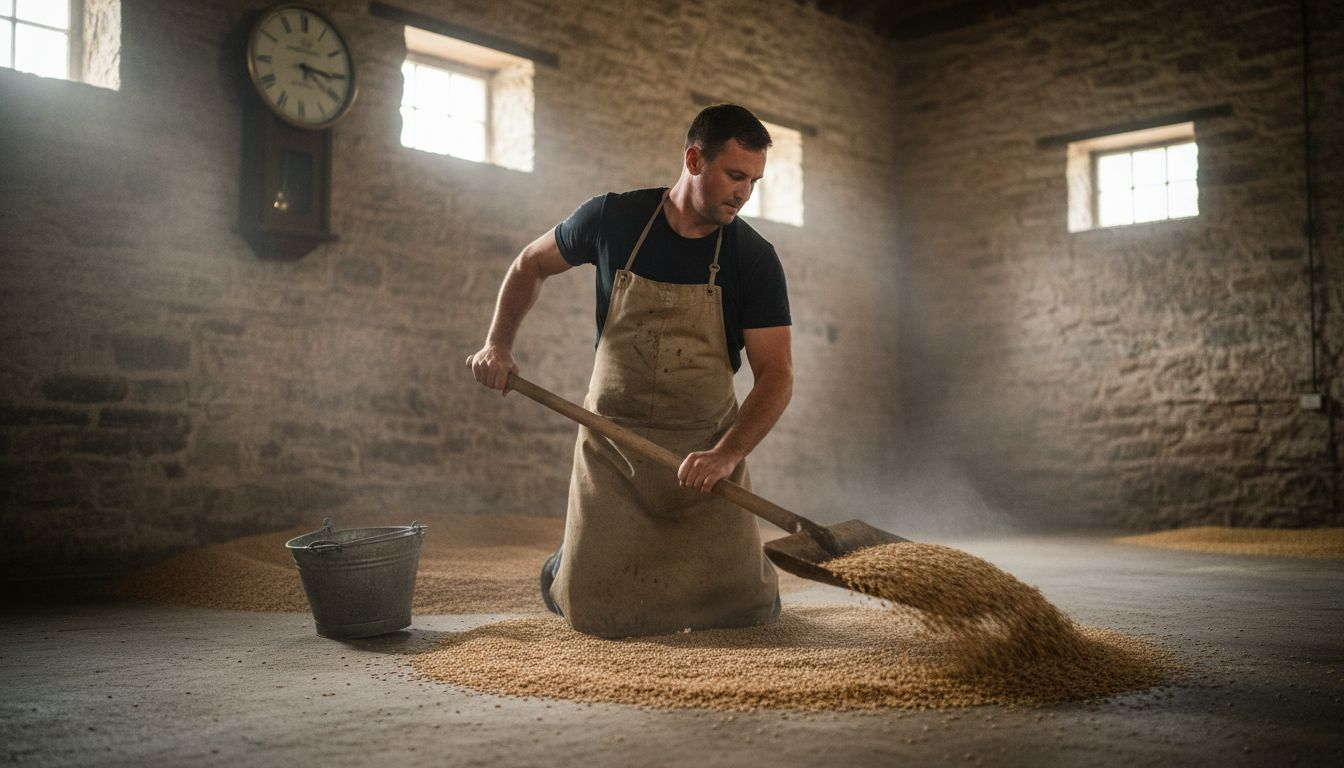
Malting represents the first critical stage, where carefully selected grains - typically barley - are steeped in water and allowed to germinate. This process activates enzymes that convert complex starches into fermentable sugars, creating the foundational flavour profile. During germination, distillers carefully monitor temperature and moisture, stopping the process at precisely the right moment to preserve essential enzymatic activity. Some distilleries still practice traditional floor malting, where grains are spread across stone floors and turned manually, a technique that requires extraordinary skill and intuition.
Following malting, mashing involves grinding the malted grains and mixing them with hot water in large vessels called mash tuns. This process extracts sugars and creates a liquid known as wort, which becomes the basis for fermentation. The temperature and duration of mashing significantly impact the final spirit’s character, with experienced distillers making minute adjustments based on grain type, desired flavour complexity, and regional traditions. Fermentation then transforms the sweet wort into a low-alcohol liquid through the introduction of carefully selected yeast strains, each contributing unique flavour nuances.
Pro tip: When exploring whisky production, pay attention to the specific malting and mashing techniques used, as these early stages fundamentally shape the spirit’s ultimate character and complexity.
Innovations Versus Tradition in Distilling
The world of whisky production represents a delicate dance between time-honoured traditions and cutting-edge innovations, where master distillers carefully navigate the fine line between preserving heritage and embracing technological advancement. Innovations in whisky production techniques reveal a complex landscape where scientific precision meets artisanal craftsmanship, challenging long-established methodologies while simultaneously respecting fundamental principles of spirit production.
Traditional distilleries have long relied on copper pot stills, wooden casks, and generational knowledge to create exceptional spirits. However, contemporary producers are introducing groundbreaking approaches that challenge conventional wisdom. Experimental techniques now include alternative grain selections, advanced fermentation processes, and innovative aging methods that push the boundaries of traditional whisky production. Some distilleries are exploring unconventional barrel treatments, using different wood types or implementing precise temperature-controlled environments to accelerate or modify maturation processes.
The tension between innovation and tradition is not about replacement, but about thoughtful evolution. Cutting-edge technologies are being carefully integrated to enhance, rather than eliminate, time-tested techniques. Sophisticated monitoring systems now allow distillers to capture minute details of fermentation and distillation with unprecedented accuracy, while still maintaining the human touch that defines true craftsmanship. This approach ensures that technological advancements complement rather than compromise the essential character of whisky production.
Pro tip: When exploring innovative whisky production, look for distilleries that balance technological advancement with respect for traditional craftsmanship, as these represent the most exciting developments in the spirit’s ongoing evolution.
How Craftsmanship Influences Value and Rarity
Craftsmanship in whisky production transcends mere technical skill, emerging as a fundamental driver of a spirit’s perceived value and collectible status. Whisky heritage and its impact on market valuation reveals how meticulous artisanal techniques, generational knowledge, and unique production narratives transform whisky from a simple beverage into a highly prized cultural artifact.
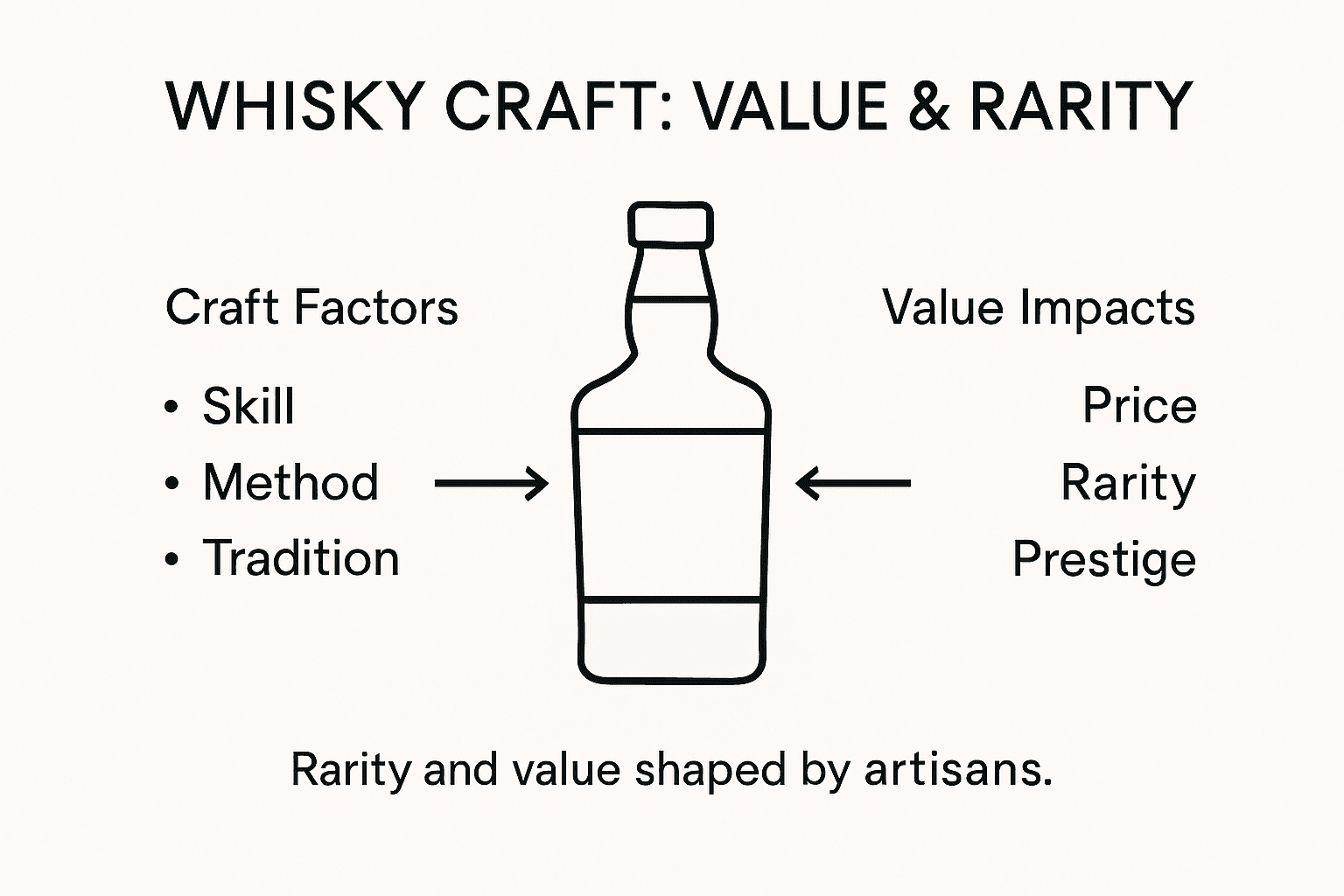
The nuanced relationship between craftsmanship and value is particularly evident in limited edition and small-batch productions. Distilleries that demonstrate exceptional skill in selecting rare ingredients, implementing complex aging processes, and maintaining uncompromising quality standards can command extraordinary premiums. Collectors and enthusiasts are willing to invest significant resources in bottles that represent not just a drink, but a testament to human creativity and technical mastery. Rare whisky releases often become investment-grade assets, with some bottles appreciating in value exponentially based on the perceived craftsmanship behind their creation.
Beyond monetary value, craftsmanship influences rarity through intricate production methods that cannot be easily replicated. Factors such as specific geographical terroir, unique barrel selections, unconventional fermentation techniques, and generational distilling knowledge contribute to creating whiskies with extraordinary complexity. These distinctive characteristics transform certain spirits from commodities into cultural narratives, where each bottle represents a unique expression of human skill and environmental interaction.
The following table summarises how craftsmanship impacts whisky value and rarity:
| Craftsmanship Factor | Impact on Value | Example in Rare Bottles |
|---|---|---|
| Traditional techniques | Higher desirability | Limited edition floor-malted |
| Unique local resources | Collectability | Regional single cask releases |
| Innovative processes | Distinct flavour offerings | Experimental barrel finishes |
| Generational expertise | Story-driven appreciation | Famous family-owned brands |
Pro tip: When evaluating a whisky’s potential value, look beyond age statements and focus on the specific craftsmanship details that make each bottle truly exceptional.
Discover the Art of Whisky Craftsmanship with Uisuki
Unlock the rich legacy and intricate flavours shaped by masterful whisky craftsmanship at Uisuki.com.au. Whether you seek the smoky depth of classic Scotch or the subtle elegance of Japanese whisky, our curated selection mirrors the authentic techniques and unique regional styles that define each bottle’s prestige. Explore our collection featuring exceptional expressions like Glenfiddich and innovative new releases highlighted in New Arrivals for an unparalleled tasting journey.

Elevate your whisky experience today by choosing from expertly crafted spirits that embody generations of heritage and craftsmanship. Visit Uisuki.com.au now to find rare bottles, insightful descriptions, and enjoyment delivered to your door. Embark on your flavour adventure and appreciate the true value of artisanal whisky with every sip.
Frequently Asked Questions
What are the key stages of whisky production that influence flavour?
The key stages include malting, mashing, fermentation, distillation, and maturation. Each stage involves precise techniques that impact the final flavour profile of the whisky.
How does craftsmanship affect the value of whisky?
Craftsmanship enhances the perceived value of whisky through meticulous production techniques, generational knowledge, and unique narratives, transforming a bottle into a highly prized cultural artifact.
What role does regional diversity play in whisky production?
Regional diversity influences the flavour profile of whisky by incorporating local resources, ingredients, and traditional production methods, resulting in distinctive characteristics unique to each area.
How do traditional and innovative techniques coexist in whisky craftsmanship?
Traditional methods focus on generational knowledge and time-honoured practices, while innovative techniques introduce cutting-edge technologies that enhance production without compromising the essence of craftsmanship.