

Most myths about whisky provenance can mislead even experienced collectors, complicating high-value purchases and investments. For those seeking truly exceptional bottles, understanding provenance means uncovering stories of spirit identity, regional heritage, and production craft from Scotch to Australian whiskies. With over 60 percent of rare whisky transactions now dependent on documented provenance, the stakes for authenticity have never been higher. This introduction explores how the details of origin separate wise decisions from costly mistakes.
Table of Contents
- Defining Whisky Provenance And Common Myths
- Regional Origins And Influence On Flavour
- Provenance Across Australian, Scotch, And World Whiskies
- Authenticity, Value And Investment Impacts
- Risks Of Fraud And How To Avoid Them
Key Takeaways
| Point | Details |
|---|---|
| Understanding Provenance | Whisky provenance details its origin and production journey, impacting the spirit’s identity and quality. Establishing traceability is crucial for appreciation and valuation. |
| Misconceptions to Avoid | Many myths, such as the belief that older whiskies are superior, can mislead collectors. Understanding the intricate factors affecting whisky character is essential. |
| Regional Influence on Flavour | The region where whisky is produced significantly influences its flavour profile. Appreciating these distinctions enriches tasting experiences. |
| Authentication Importance | Provenance documentation is vital for investment value and authenticity assurance. Always request comprehensive records when considering rare whiskies. |
Defining Whisky Provenance and Common Myths
Whisky provenance represents the comprehensive backstory and origin of a particular spirit, extending far beyond simple geographic labelling. At its core, provenance serves as a whisky’s authentic passport, tracing its journey from raw ingredients through distillation to final bottling. Provenance reveals the spirit’s true identity by illuminating the specific environmental, social, and production conditions that shape its character.
Understanding whisky provenance means recognising that each bottle tells a unique narrative about its creation. This involves tracking crucial details like the specific farm where barley was grown, the water source used in distillation, the precise location of barrel aging, and the local craftspeople involved in production. Some producers, particularly in regions like Islay, take extraordinary measures to ensure complete traceability, documenting every step of their whisky’s journey.
Numerous myths surround whisky provenance that collectors and enthusiasts should understand. Common misconceptions about whisky origins include believing that older whiskies are automatically superior, assuming single malt means from a single barrel, or thinking sherry-cask whiskies taste exactly like sherry. These myths overlook the complex interplay of factors that genuinely determine a whisky’s quality and character.
The landscape of whisky provenance is nuanced, requiring collectors to look beyond surface-level indicators. Authenticity comes from understanding the full production context: the terroir, traditional methods, local expertise, and commitment to sustainable practices that transform simple ingredients into exceptional spirits.
Pro tip: When evaluating a whisky’s provenance, request detailed documentation about its origin, focusing on specific details about the barley source, distillation process, and aging conditions rather than relying solely on age statements or marketing claims.
Regional Origins and Influence on Flavour
Whisky’s character is profoundly shaped by its regional origins, with each geographical area contributing unique characteristics that define the spirit’s identity. Whisky provenance reveals distinctive regional styles that reflect local traditions, ingredients, and production techniques. Scottish regions like Islay, Speyside, and the Highlands each produce whiskies with remarkably different flavour profiles, demonstrating how deeply geography influences taste.
In Scotland, regional variations are particularly pronounced. The Scotch whisky flavour is fundamentally tied to local production methods, with factors like water source, barley type, and distillation equipment playing critical roles. Islay whiskies are renowned for their intense peaty character, while Speyside produces smoother, fruitier expressions. The Highlands offer a more diverse range, with each distillery expressing a unique interpretation of the regional style.
Beyond Scotland, other whisky-producing regions contribute their own distinctive characteristics. Irish whiskey typically offers a smoother, more elegant profile through triple distillation, contrasting with the robust, often peaty nature of Scotch whisky. American bourbon brings a sweeter, corn-based flavour profile, while Japanese whisky demonstrates a remarkable ability to blend traditional Scottish techniques with unique local innovations. These regional differences extend beyond mere taste, representing deep cultural and historical approaches to spirit production.
Here’s a comparison of distinct whisky regional styles and influences:
| Region | Notable Traits | Typical Flavour Profile | Example Production Technique |
|---|---|---|---|
| Islay (Scotland) | Maritime, peaty notes | Intense smoke, brine, seaweed | Peat smoked barley |
| Speyside (Scotland) | Fruity, elegant | Apple, pear, honey | Wooden washbacks |
| Highlands (Scotland) | Varied, robust | Spice, heather, gentle smoke | Diverse fermentation methods |
| Ireland | Triple distilled, smooth | Soft, creamy, light spice | Pure pot still distillation |
| USA (Bourbon) | Corn-based, charred oak | Vanilla, caramel, baking spices | New oak barrel maturation |
| Japan | Precision, subtlety | Delicate, floral, well-balanced | Mizunara oak ageing |
Understanding regional origins allows collectors and enthusiasts to appreciate the nuanced complexity of whisky. Each bottle becomes a liquid narrative, telling stories of local terroir, generational craftsmanship, and the intricate relationship between environment and production techniques.
Pro tip: When exploring regional whisky styles, create a tasting flight that compares whiskies from different regions to appreciate the subtle distinctions in flavour, aroma, and character.
Provenance Across Australian, Scotch, and World Whiskies
Whisky provenance represents a complex global narrative, with each region contributing its unique cultural and environmental signature to the spirit’s identity. Global whisky provenance reveals remarkable diversity through distinctive production approaches that reflect local traditions and natural conditions. Australian whisky producers, for instance, have emerged as innovative pioneers, challenging traditional whisky-making paradigms with their distinctive local ingredients and experimental techniques.
Scotch whisky remains the gold standard of provenance, with deeply entrenched geographical indications and strict production regulations defining its character. In contrast, Australian and world whiskies offer unique regional expressions that demonstrate remarkable creativity and local interpretation. Australian distilleries leverage unique local barley varieties, distinctive water sources, and innovative maturation techniques that set them apart from traditional whisky-producing regions.
Beyond Scotland and Australia, world whiskies from Japan, the United States, and emerging regions like Taiwan showcase how local terroir profoundly influences spirit production. Japanese whisky, for example, demonstrates extraordinary precision by adapting Scottish techniques to local ingredients, creating a style that respects tradition while expressing unique regional characteristics. American bourbon brings its own distinctive approach, with corn-based recipes and specific oak ageing requirements that reflect American agricultural and cultural traditions.
The global whisky landscape continues to evolve, with each region telling its own story through carefully crafted spirits. Provenance is no longer just about geographic origin but represents a complex narrative of cultural heritage, environmental conditions, and innovative production techniques that transform simple ingredients into extraordinary experiences.
Pro tip: When exploring world whiskies, collect bottles that represent different regional styles to create a comprehensive understanding of global whisky diversity and provenance.
Authenticity, Value and Investment Impacts
Authenticity in whisky provenance represents a critical factor that directly influences collector value and investment potential. Whisky heritage safeguards market reputation by establishing a transparent lineage that distinguishes genuine, high-quality spirits from potential counterfeits. Collectors and investors increasingly scrutinise a whisky’s origin, production methods, and historical context to validate its intrinsic worth beyond mere age or brand recognition.
The investment landscape for rare whiskies has transformed dramatically, with provenance becoming a primary driver of value appreciation. Limited edition releases, distillery-exclusive bottlings, and whiskies with documented historical significance command premium prices. Serious collectors seek comprehensive documentation that traces a bottle’s entire journey from grain to glass, including specific details about production techniques, barrel selection, and environmental conditions that contribute to its unique character.
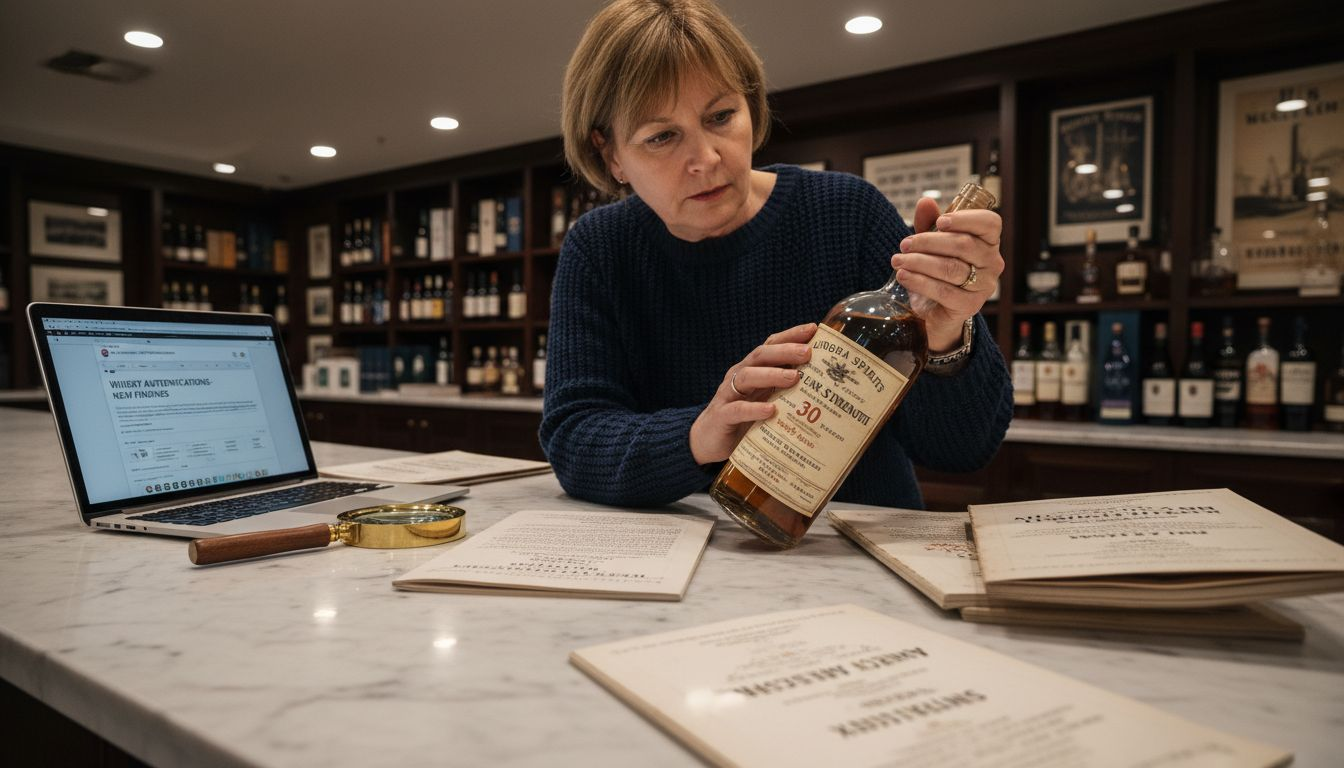
Beyond monetary value, authenticity represents a deeper connection to cultural heritage and craftsmanship. Each verified bottle tells a story of regional tradition, family expertise, and generations of refined production techniques. Investors and collectors are not simply purchasing a liquid asset but acquiring a tangible piece of cultural narrative that represents the culmination of decades of expertise and environmental interaction.
The verification of whisky provenance has become increasingly sophisticated, with advanced technologies and rigorous documentation processes helping to protect the market’s integrity. Collectors now have access to sophisticated tracking methods, scientific analysis, and comprehensive databases that can authenticate a whisky’s true origin and validate its historical significance.
Pro tip: Always request comprehensive provenance documentation when investing in rare whiskies, including detailed production records, distillery certificates, and independent verification of the bottle’s authenticity.
Risks of Fraud and How to Avoid Them
The whisky collector’s market is increasingly vulnerable to sophisticated fraud schemes that threaten both financial investment and collector enthusiasm. Whisky provenance fraud challenges market integrity through complex counterfeiting techniques that can deceive even experienced collectors. Fraudulent bottles often mimic authentic packaging with remarkable precision, making visual identification challenging and necessitating advanced verification methods.
Counterfeiting strategies have evolved beyond simple label reproduction, involving intricate methods of replicating bottle design, aging marks, and even creating seemingly authentic documentation. Collectors must develop a multi-layered approach to authentication that goes beyond surface-level examination. This involves understanding technical details like glass composition, printing techniques, seal integrity, and microscopic manufacturing differences that distinguish genuine bottles from sophisticated forgeries.
Technological advances now provide collectors with robust tools for verification. Digital tracking systems, blockchain authentication, advanced spectroscopic analysis, and comprehensive provenance databases have emerged as powerful weapons against fraudulent practices. Serious collectors increasingly rely on expert certification, scientific testing, and comprehensive documentation that can trace a bottle’s entire historical journey from distillery to current ownership.

Below is a summary of key methods for verifying whisky authenticity and reducing risk:
| Verification Method | Description | Collector Advantage |
|---|---|---|
| Digital tracking | Unique ID tracing bottle history | Instant provenance validation |
| Expert certification | Evaluation by recognised whisky professionals | Trusted assessment of authenticity |
| Scientific analysis | Confirm composition using lab techniques | Detects forgeries and tampering |
| Comprehensive documentation | Full records of distillation and ownership | Enhances resale and collection value |
Maintaining market trust requires collective vigilance from collectors, distilleries, and regulatory bodies. Sharing information about known fraudulent practices, supporting transparent supply chains, and investing in advanced authentication technologies are critical strategies for protecting the whisky collector’s ecosystem. The most effective defence remains a combination of expert knowledge, technological verification, and a sceptical approach to extraordinary claims about rare bottles.
Pro tip: Always purchase rare whiskies from reputable dealers with comprehensive authentication processes, and consider investing in professional verification services before making significant acquisitions.
Discover Authenticity and Unique Flavours at Uisuki
Understanding whisky provenance is key for collectors who value authenticity and deep connection to their bottles. Many enthusiasts face challenges verifying origin and trustworthiness while seeking rare, genuinely crafted spirits. At Uisuki, we share your passion for provenance. Our carefully curated selection includes exceptional whiskies from Scotland, Japan, Australia, and beyond—with detailed descriptions and provenance insights to support informed collecting.
Explore distinguished regional styles like those from Speyside and Islay with our Scotch Whisky (all) - Glenglassaugh – Uisuki.com.au collection or discover rich heritage in our Glendronach – Uisuki.com.au range. Every bottle on our platform is chosen for authenticity and craftsmanship to help you build a meaningful collection with confidence.

Elevate your whisky journey today by browsing Uisuki’s premium selections and expert guidance at uisuki.com.au. Secure your next authentic bottle now and experience provenance like never before.
Frequently Asked Questions
What is whisky provenance?
Whisky provenance refers to the detailed backstory of a whisky, tracing its journey from raw ingredients to final bottling, including specific conditions of production and the local environment that influenced its character.
Why is provenance important for whisky collectors?
Provenance is crucial for collectors as it ensures authenticity, affects the valuation of the whisky, and provides insights into the quality and uniqueness of the spirit, enriching the collector’s experience and investment potential.
What are some common myths about whisky provenance?
Common myths include the belief that older whiskies are always better, that single malt means whisky from a single barrel, and that sherry-cask whiskies taste exactly like sherry, all of which overlook the complexities that define a whisky’s quality.
How can collectors verify a whisky’s provenance?
Collectors can verify provenance by requesting comprehensive documentation, utilizing advanced authentication technologies, and seeking expert certification to confirm a whisky’s origin and historical significance.